

The Sunk Cost Fallacy: Why You Hold On to Losing Investments
The sunk cost fallacy keeps Australians in losing shares, bad funds and money-pit renovations. How to spot it, and the one question that breaks it.
 By Timothy Hirou GaschereauPublished
 8 min read
🪤 What the sunk cost fallacy is
The sunk cost fallacy is the habit of continuing with something because of what you have already put into it, rather than because of what it will give you from here. The money is already spent. It is gone whichever option you pick next. So it should carry zero weight in the decision, and yet it usually carries most of it.
Economists call the already-spent money a sunk cost. The word sunk is doing the work: it is at the bottom of the ocean, and no decision you make today brings it back up. The only question that matters is what happens next.
Every decision you make from this moment is about the future. What you already paid is a fact about the past. Those two things feel connected. They are not.
🧠 Why your brain does it
Three things are happening at once, and none of them are stupidity.
- Losses hurt more than equivalent gains feel good. Dropping $5,000 stings considerably more than making $5,000 pleases. So we go a long way to avoid making a loss official. How a choice is worded can flip the decision too, which is the framing effect at work.
- We want to be consistent with our past selves. Selling means the person who bought was wrong. Holding means the story is still being written. One of those is much more comfortable.
- Effort feels like ownership. The more research you did before buying, the harder it is to walk away. Ironically, the investors who did the most homework are often the most stuck. This overlaps with the endowment effect, where we value something more simply because it is ours.
This is why simply knowing about the fallacy does not cure it. You need a rule that works when you are not feeling rational, which is exactly when it matters.
📉 The share you cannot bring yourself to sell
Here is the version almost every Australian investor meets eventually. You bought a stock at $40. It is now $12. You have watched it for three years. You will sell, you tell yourself, once it gets back to what you paid.
That sentence contains the entire fallacy. The market does not know what you paid and has no obligation to return there. Your purchase price is information about your past, not about the company's future. A share that has fallen 70% needs to rise 233% just to get you back to flat, and there is no rule saying the same business is the best place for that money.
🎯 The essential: The real test is not whether you are down. It is whether you would buy this today, at today's price, with money you had sitting in your account. If the answer is no, you are not investing in it. You are just refusing to sell it.
The same trap shows up in a thematic ETF bought at the top of a hype cycle, an expensive active fund that has trailed its index for five years, or a single speculative crypto position from 2021. If the reason you are still holding is the entry price, that is not a thesis. For what a genuine market decline looks like and how long recoveries usually take, our guide to bear markets is worth reading alongside this.
🏚️ Where else it costs Australians money
| Situation | What the fallacy says | What actually matters |
|---|---|---|
| A renovation running well over budget | We have spent $80,000, we cannot stop now | What will the next $40,000 add to the sale price, or to how you live in the home? |
| An underperforming managed fund | I have held it for eight years | Is the fee still justified by the result, compared with a lower-cost alternative? |
| An investment property that never worked | Think of the stamp duty we paid | Stamp duty is gone either way. Does the yield and the growth outlook justify holding from here? |
| A course or qualification you no longer want | I have already paid a year of fees | Does finishing it improve your income or your life enough to justify the remaining time? |
Notice that the right-hand column never mentions what was already spent. That is the whole discipline, and it is harder than it sounds.
🎯 The one question that breaks it
There is a single question that cuts through nearly every version of this trap.
If I did not already own this, and I had the cash in my hand today, would I buy it right now at this price?
If yes, keep holding. You are making a genuine forward-looking decision and your entry price is irrelevant. If no, then holding is a decision to buy it again today, because that is functionally what you are doing every morning you do not sell.
Most people find this question uncomfortable, which is a good sign it is working. It removes the escape hatch of waiting for break-even and forces the question the market is actually asking you.
🧾 A loss is not wasted money
Australians often talk about a realised loss as though the money has evaporated at the moment of selling. It has not. The value went when the price went. Selling only changes the paperwork.
And the paperwork can work for you. Under Australian tax rules, a realised capital loss can be applied against capital gains, either in the same financial year or carried forward to offset gains in later years. It cannot be applied against your salary or other ordinary income, which is a common misunderstanding worth getting right.
🎯 The essential: This is a reason not to fear the sell button, not a reason to sell. Never let the tax tail wag the investment dog, and speak with a registered tax agent about your own circumstances before acting.
If you want the mechanics in full, see our guides to capital gains tax on shares and using losses to cut a tax bill.
🛠️ Rules that stop it happening again
Willpower in the moment loses. Rules set in advance win. Three that work:
- Write the thesis down when you buy. One paragraph on why you bought and what would make you wrong. Reading your own words later is far more persuasive than arguing with yourself from memory.
- Review on a schedule, not on a feeling. A calendar reminder twice a year beats checking the app during a bad week. Decisions made while watching a price move are rarely your best ones.
- Prefer structures that make the question rare. Broad, diversified holdings bought regularly give you far fewer individual sell decisions to agonise over. That is not a coincidence, it is most of the appeal. Our guide to building a simple portfolio covers the practical side.
The goal is not to become someone who never makes a bad investment. It is to become someone whose bad investments stay small, because they get closed on evidence rather than held out of pride.
SnowLetter
Australia's money news and our best reads, once a week.
❓ Frequently asked questions
What is the sunk cost fallacy in simple terms?
+
It is the habit of sticking with something because of what you have already spent on it, rather than because of what it will do for you from here. The money, time or effort already spent cannot be recovered no matter what you choose next, so it should not influence the decision at all. It almost always does.
Why is it so hard to sell a share that has fallen?
+
Because selling turns a loss you can still describe as temporary into one that is final and on the record. Nothing about your wealth actually changes at the moment you sell. The value dropped when the price dropped. But the feeling of admitting a mistake is real, and most people will pay a surprising amount to avoid it.
Is holding a losing share always the sunk cost fallacy?
+
No, and this is the important distinction. If you would happily buy that share today at today's price with fresh money, holding it is a considered decision, not a fallacy. The fallacy is holding purely because of what you paid. The purchase price is a fact about your past, not about the company's future.
Does selling at a loss have any upside in Australia?
+
A realised capital loss can be used to offset capital gains, either in the same financial year or carried forward to future years. It cannot be offset against your salary or other ordinary income. This does not turn a bad investment into a good one, but it does mean the loss is not simply money thrown away. Speak with a registered tax agent about your own situation.
How do I know if I am holding on for the wrong reason?
+
Ask yourself what you would need to see to sell. If you cannot answer, or if the only answer is getting back to what you paid, that is the fallacy talking. A real thesis has conditions attached. Break-even is not a condition, it is a wish.
Does the sunk cost fallacy affect anything besides investing?
+
Constantly. Finishing a renovation that has stopped making financial sense, staying in a course you no longer want, keeping a gym membership because of the joining fee, sitting through a film you are not enjoying. Investing just happens to be where it costs the most, because the amounts are larger and the decision repeats.
📚 Recommended reading
The Psychology of Money
Morgan Housel
The Psychology of Money
19 short stories on how people actually think and feel about money, not just the maths of it.
Thinking, Fast and Slow
Daniel Kahneman
Thinking, Fast and Slow
The Nobel laureate's classic on the two systems driving how we think, and why our fast, intuitive brain makes such expensive money mistakes. It explains the behavioural traps behind nearly every bad investing decision.
The Barefoot Investor
Scott Pape

The Barefoot Investor
Australia's best-selling money book ever. A simple system for accounts, budgeting, debt and a real emergency fund in one.
Some links above are affiliate links. If you buy through them, Snowball Invest may earn a small commission at no extra cost to you. We only recommend books we'd suggest anyway.
Where to next
Sources
This article contains general information only and does not constitute personal financial or tax advice. Consider your own circumstances and speak with a licensed financial adviser or registered tax agent before making investment decisions.
Was this article useful?
Put it to your own numbers
Every calculator runs entirely in your browser, with nothing stored. See what these numbers look like for your own situation.
Explore the calculators →General information only. This article is educational and does not constitute personal financial advice. It does not account for your circumstances. Consider your own situation and seek advice from a licensed adviser before acting. Read our full disclaimer.

Timothy Hirou Gaschereau
Founder of Snowball Invest, not a financial adviser.
I write about what I'm learning myself, because nobody ever taught us how to take control of our own money. It's a skill, not a mystery, and it's never too late to learn it. The best day to start was yesterday, the second best is today.
LinkedIn →Related articles
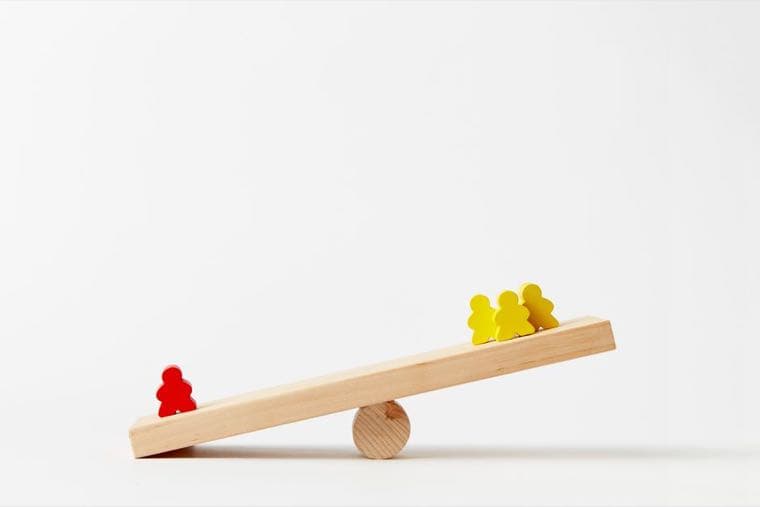
Loss Aversion: Why Losing $100 Hurts More Than Gaining $100 Feels Good
Losing $100 feels about twice as bad as gaining $100 feels good. How loss aversion quietly shapes Australian money decisions, and how to work with it.

The Endowment Effect: Why You Think Your Stuff Is Worth More Than It Is
The endowment effect makes you overvalue what you own. How it costs Australians money in investing, selling and everyday choices, and how to beat it.

Anchoring Bias: Why the First Number You Hear Decides What You Pay
The first number you hear sets the price you think is fair, from auction guides to salary talks. How anchoring works in Australia, and how to beat it.