

The Endowment Effect: Why You Think Your Stuff Is Worth More Than It Is
The endowment effect makes you overvalue what you own. How it costs Australians money in investing, selling and everyday choices, and how to beat it.
 By Timothy Hirou GaschereauPublished
 8 min read
Think about your old car. It's got a dent, dodgy air con, and 180,000 km on the clock, yet you list it for $3,000 more than every comparable one on Gumtree. Why? Because it's yours. That gap between what you'd accept to sell and what someone else would pay to buy is the endowment effect, and once you see it you'll spot it everywhere. This is part of our wider guide to money mindset on Snowball Invest.
This article is general information only, not personal financial advice. Consider your own circumstances before making investment or selling decisions.
Quick answer
The endowment effect is a cognitive bias that makes you value something more the moment you own it, even when nothing about the thing has changed. It shows up in investing (holding losing shares too long), selling (overpricing your car or house), and hoarding (keeping stuff you'd never buy today). You can beat it with a few simple mental checks before you buy, sell, or hold.
In this guide
- →What the endowment effect is, and how ownership inflates value
- →The famous mug experiment that reshaped economics
- →Where it costs Australians real money, from shares to Marketplace
- →Four decision rules that reduce its grip
☕ What is the endowment effect?
The endowment effect is the tendency to place a higher value on something simply because you own it. Not because it's better quality. Not because the market moved. Just because it's yours. It's one of the most well-documented findings in behavioural economics.
That dented old car is worth exactly what a willing buyer will pay for it today. But you drove it to the footy, packed it for road trips, and replaced the tyres twice, and that emotional history inflates the price in your head, even though the buyer couldn't care less about any of it.
🔬 The mug experiment that changed economics
The most famous demonstration comes from a 1990 study by Daniel Kahneman, Jack Knetsch and Richard Thaler. Half the participants were given a coffee mug. The other half got nothing. Both groups were asked to name their price: sellers stated the minimum they'd accept to give up the mug, buyers the maximum they'd pay to get one.
Sellers consistently demanded roughly twice as much as buyers were willing to pay, for the exact same mug. The paper, published in the Journal of Political Economy, helped reshape how economists think about human decision-making. We're not the perfectly rational agents classical economics assumed. Richard Thaler went on to win the 2017 Nobel Prize in Economics, with the endowment effect among his most cited work.
💰 Where it costs Australians money
Holding a losing share or crypto too long. You buy 500 shares at $4.00 each, and the price drops to $2.50. Rationally you'd ask, "Would I buy this today at $2.50?" If the answer is no, you should probably sell and redeploy. But you don't, because it's your stock now, and selling at a loss feels like admitting defeat. The sunk cost fallacy compounds the problem: the money's already spent, but your brain treats it as a reason to keep holding.
Overpricing your car or house on Marketplace. Your $8,000 Mazda is worth exactly what a willing buyer will pay for it today, not what you paid in 2019, and not what it means to you. The same applies to property: a buyer compares your home to every other listing in the suburb and makes a cold-eyed decision.
Hoarding stuff you'd never buy today. Open your wardrobe, check the garage. How much of it would you actually pay for at a garage sale? If the honest answer is "not much," the endowment effect is at work, and it carries real costs: storage, mental load, and the opportunity cost of not selling things someone else would pay for.
A close cousin is the IKEA effect: people overvalue things they built themselves. Your DIY deck, your handmade gift, your sourdough starter feel worth more because your labour went into them. That's lovely until you try to sell them for twice what a buyer thinks they're worth.
🛠️ How to beat it
You can't fully switch off a cognitive bias, but you can build habits that loosen its grip.
- The "would I buy this today?" test. Before you hold, sell, or price anything, ask: if I didn't already own this, would I buy it right now at this price? If no, that's a signal. It forces you to judge the thing on its current merits, not its history with you.
- Zero-based thinking. Imagine you don't own it. What would you honestly pay for this item, investment, or subscription if you came to it fresh today? That number is usually closer to real market value than the inflated figure ownership generates.
- The one-year rule for decluttering. If you haven't used something in 12 months, you probably don't need it. Sell it, donate it, or bin it, and let someone else value it with fresh eyes.
- Set sell rules before you buy. For investors this is the most powerful tool. Before you buy, decide the price you'll sell at if it drops, and your target on the upside. Write it down. A stop-loss isn't weakness, it's a pre-commitment to rational behaviour made before you get attached.
🎯 The essential: Almost every fix here is the same move: separate the thing from the fact that it's yours, and value it the way a stranger would.
SnowLetter
Australia's money news and our best reads, once a week.
❓ Frequently asked questions
What is the endowment effect in simple terms?
+
The endowment effect is the tendency to value something more just because you own it. If you own a mug, you'll typically demand more to sell it than you'd be willing to pay to buy the same mug if you didn't own it. Ownership inflates perceived value, even when nothing about the object has changed.
Is the endowment effect the same as loss aversion?
+
They're closely related but not identical. Loss aversion is the broader principle that losses feel more painful than equivalent gains feel good. The endowment effect is one expression of it: giving up something you own feels like a loss, so you demand more to part with it than it's objectively worth. Think of loss aversion as the engine and the endowment effect as one of the wheels.
How does the endowment effect affect investing?
+
The main danger is holding losing positions too long. Once you own a share or crypto asset, you feel attached to it. Selling at a loss feels worse than the rational calculus suggests it should, so you hold on, hoping for a recovery that may never come. This keeps capital tied up in underperforming assets instead of being redeployed somewhere with better prospects.
Why do people overprice things when selling?
+
Because they're valuing the item through the lens of ownership, not through the eyes of a buyer. Sellers factor in what they paid, what they've spent on it, and the sentimental history they have with it. Buyers don't share any of that context. They're comparing your item to every alternative available to them right now.
Can you overcome the endowment effect?
+
You can't eliminate it entirely, but you can reduce its influence. The most effective strategies are asking 'would I buy this today?' before any hold or sell decision, using zero-based thinking to reset your valuation, and setting sell rules for investments before you buy them. Awareness plus structured decision rules makes a real difference.
What is the IKEA effect?
+
The IKEA effect is a related cognitive bias where people overvalue things they've built or made themselves. Named after the flat-pack retailer, it was documented by Norton, Mochon and Ariely in 2012. It explains why your DIY project feels worth more to you than it does to anyone else, and why it can be hard to price handmade or self-built items realistically.
📚 Recommended reading
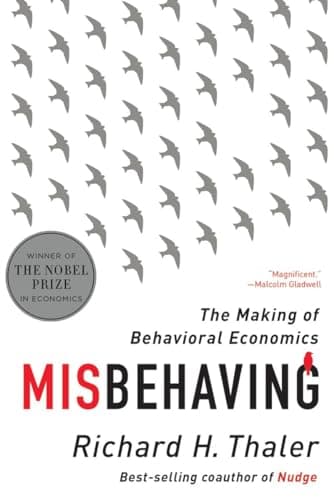
Misbehaving
Richard H. Thaler
Misbehaving
Nobel winner Richard Thaler shows why real humans are messy, emotional money-spenders, not the cool robots economics assumes. Understanding your own bias is the first step to calmer decisions with your cash and your super.
Thinking, Fast and Slow
Daniel Kahneman
Thinking, Fast and Slow
The Nobel laureate's classic on the two systems driving how we think, and why our fast, intuitive brain makes such expensive money mistakes. It explains the behavioural traps behind nearly every bad investing decision.
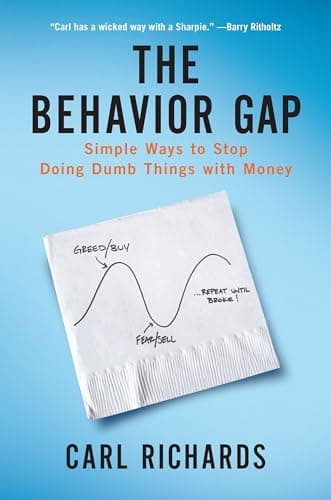
The Behavior Gap
Carl Richards
The Behavior Gap
Carl Richards uses simple napkin sketches to explain why we buy high, sell low, and generally get in our own way. Closing the gap between smart plans and messy human behaviour is worth more than any hot stock tip.
Some links above are affiliate links. If you buy through them, Snowball Invest may earn a small commission at no extra cost to you. We only recommend books we'd suggest anyway.
Sources
- 1. Kahneman, D., Knetsch, J. L. and Thaler, R. H. (1990). Experimental Tests of the Endowment Effect and the Coase Theorem. Journal of Political Economy.
- 2. Norton, M. I., Mochon, D. and Ariely, D. (2012). The IKEA effect: When labor leads to love. Journal of Consumer Psychology.
- 3. How to invest, Moneysmart, Australian Securities and Investments Commission.
- 4. How our biases can affect investment decisions, ASX Investor Update (November 2024).
- 5. Endowment Effect, The Decision Lab.
Was this article useful?
Put it to your own numbers
Every calculator runs entirely in your browser, with nothing stored. See what these numbers look like for your own situation.
Explore the calculators →General information only. This article is educational and does not constitute personal financial advice. It does not account for your circumstances. Consider your own situation and seek advice from a licensed adviser before acting. Read our full disclaimer.

Timothy Hirou Gaschereau
Founder of Snowball Invest, not a financial adviser.
I write about what I'm learning myself, because nobody ever taught us how to take control of our own money. It's a skill, not a mystery, and it's never too late to learn it. The best day to start was yesterday, the second best is today.
LinkedIn →Related articles
Loss Aversion: Why Losing $100 Hurts More Than Gaining $100 Feels Good
Losing $100 feels about twice as bad as gaining $100 feels good. How loss aversion quietly shapes Australian money decisions, and how to work with it.
The Sunk Cost Fallacy: Why You Hold On to Losing Investments
The sunk cost fallacy keeps Australians in losing shares, bad funds and money-pit renovations. How to spot it, and the one question that breaks it.

Anchoring Bias: Why the First Number You Hear Decides What You Pay
The first number you hear sets the price you think is fair, from auction guides to salary talks. How anchoring works in Australia, and how to beat it.