

The Psychology of Lifestyle Inflation: Why More Money Rarely Feels Like Enough
Explore the psychology of lifestyle inflation: why Australians upgrade spending as income rises, from hedonic adaptation to identity-driven consumption. Backed by research.
 By Timothy Hirou GaschereauPublished
 11 min read
You earn more, but somehow there's still nothing left over. This article is about why, and it's part of a wider guide to money mindset on Snowball Invest.
This article is general information only and does not constitute financial advice.
Quick answer
Your brain adapts to every upgrade, so the happiness boost from a nicer car, apartment or holiday fades faster than you expect. Social comparison, turbocharged by Instagram and TikTok, keeps shifting what "normal" spending looks like. And what you buy quietly becomes part of who you think you are, which makes it hard to notice, let alone undo. The fix isn't willpower. It's understanding the psychological machinery underneath, so you can choose deliberately instead of drifting automatically.
In this guide
- →Why the brain resets its happiness baseline after every upgrade (the hedonic treadmill)
- →How social comparison, and social media, quietly move the goalposts on what counts as normal spending
- →Why the "I've earned it" story escalates spending without you noticing
- →How purchases become props in a story about who you are, and why that makes lifestyle inflation so sticky
- →A diagnostic for telling identity-driven spending apart from value-driven spending, plus five mindset shifts that actually work
🕳️ The income-spending gap nobody talks about
You get a pay rise. You feel good for a week or two. Then, somehow, the money just disappears into a slightly more expensive version of your life, and you're back to the same low-grade financial anxiety you had before.
This is not a budgeting failure. It's a psychological one.
Australian Bureau of Statistics data from June 2026 shows discretionary household spending rising 6.7% year on year, outpacing non-discretionary spending at 4.6%. Australians are spending more on the things they choose, not just the things they have to. And yet, according to Finder research, 52% of Australians occasionally or always run out of money before payday.
More income. More spending. Same feeling of not quite having enough.
🎯 The essential: The question worth asking isn't "where does the money go?" It's why spending expands so reliably to meet, and then exceed, income. That's the territory of lifestyle inflation psychology, and the answer lives in the brain, not the budget. For the practical budgeting mechanics of managing this pattern, see our guide to lifestyle creep. This article is about something different: the psychological and social forces that make lifestyle inflation happen in the first place.
🎢 The hedonic treadmill: your brain's happiness reset button
In 1971, psychologists Philip Brickman and Donald Campbell introduced a concept they called the "hedonic treadmill." The idea is straightforward and a little unsettling. People adapt to positive changes in their lives and return to a relatively stable baseline of happiness, a process known as hedonic adaptation. The upgrade that excited you becomes the new normal.
The most famous test of this came in 1978, when Brickman, Coates and Janoff-Bulman studied lottery winners. They found that major lottery winners were not significantly happier than people who hadn't won. The initial joy was real. But it faded. The winners adapted.
Brickman and Campbell's 1971 concept: every upgrade resets the baseline, which is why the next one always feels necessary.
The implication for spending is direct: every lifestyle upgrade produces a temporary happiness boost that erodes over time, requiring a new upgrade to restore it. Think about the new car smell. The first week in a better apartment. The first business-class flight. Each one felt significant. Then it became ordinary. Then it became the floor.
Later research by Lyubomirsky, Sheldon and Schkade (2005) refined this picture. Their work found that only around 10% of our happiness comes from life circumstances, including income and material conditions. The other 90% comes from our genetic baseline and our intentional activities. Changing your circumstances, buying a nicer car or moving to a better suburb, rarely produces lasting wellbeing gains. You adapt. The treadmill keeps moving.
This is not a character flaw. It's how the brain works. The same adaptation that stops you being overwhelmed by the smell of your own house stops you being permanently thrilled by your new kitchen. The brain normalises everything, which means the pursuit of happiness through consumption is, structurally, a losing game.
📱 Social comparison and the invisible scoreboard
In 1954, psychologist Leon Festinger published his theory of social comparison processes. The core idea: people evaluate their own standing by comparing themselves with others, especially others who are similar to them. We don't compare ourselves to billionaires or people in poverty. We compare ourselves to our peers, our colleagues, our friends.
Thorstein Veblen saw this coming in 1899. In The Theory of the Leisure Class, he described what he called conspicuous consumption, buying and displaying goods not for their practical value, but to signal wealth and social status. The car, the suburb, the restaurant, the holiday. All of them function partly as social signals, visible proof that you've arrived.
What Veblen couldn't have imagined was Instagram and TikTok.
A 2024 Finder survey found that 30% of Australians feel pressured to spend money because of their social circle. Among Gen Z, that figure rises to 54%. And the social circle is no longer just the people you see in person. It's everyone you follow, everyone the algorithm shows you, a curated stream of aspirational lives presented as normal.
Research by Kharmalki and Shadap (2026) found a correlation coefficient of 0.827 between FOMO (fear of missing out) and impulse buying among Gen Z consumers. That's a very strong relationship. The mechanism is social comparison: you see what others have, you feel the gap, you close the gap with a purchase.
CommBank research from June 2026 found that 86% of Australians now see at least one everyday activity as a luxury compared to a year ago. Dining out, entertainment, social events. The baseline keeps shifting. What was a treat becomes an expectation. What was an expectation becomes a minimum. The scoreboard is invisible, but everyone is playing.
🎁 "I've earned it": the identity narrative that keeps the treadmill spinning
There's a specific story we tell ourselves when income rises. It goes: I've worked hard, I've sacrificed, I deserve this. It's not irrational. It's deeply human. But it has a structural problem.
Behavioural economist Richard Thaler described the mechanism in his 1985 theory of mental accounting. People don't treat all money as interchangeable. They mentally categorise it into separate accounts with different rules. A salary bonus, a tax refund, a windfall, these feel different from regular income. They feel like "extra" money, and extra money feels like permission to spend on rewards.
Milkman and Beshears (2009) demonstrated this empirically. When online grocery customers received a $10 coupon, they spent an average of $1.59 more than the coupon's value, and the extra spending landed on items they wouldn't normally buy. A small windfall, mentally coded as separate, changed behaviour.
Scale this up to a pay rise, a promotion or a bonus, and the "I've earned it" narrative becomes a powerful engine of lifestyle inflation. The self-reward loop runs like this: work hard, achieve something, feel depleted, reach a milestone, buy something nice, feel better. The brain learns to associate achievement with consumption. Over time, the threshold for what counts as a reward-worthy achievement drops, and the size of the reward escalates.
UBank research from 2021 found that Australians were spending almost $500 per month on discretionary items. For Millennials, that figure was $773 per month. These aren't people who don't work hard. These are people whose spending has grown alongside their income, often without a conscious decision to let it.
🎯 The essential: The "I've earned it" narrative is not wrong. The problem is when it becomes automatic, when every income increase is immediately converted into a higher spending floor, when the reward becomes the default rather than the exception.
🪞 Spending as identity: who are you when you buy?
Here's a more uncomfortable question than "where does the money go?" It's: what does your spending say about who you are?
Psychologist Daphna Oyserman's Identity-Based Motivation framework argues that people are more likely to make a choice when it feels congruent with who they are, or who they want to be. Spending decisions are filtered through identity. When a purchase feels like "something a person like me would do," it feels natural and compelling. When it doesn't, it feels wrong or pointless.
This is why lifestyle inflation is so sticky. As income rises, a new identity script activates: the successful person. And the successful person has a particular set of props. The car that signals achievement. The suburb that signals taste. The restaurant that signals sophistication. The holiday that signals freedom. These aren't just purchases. They're identity statements.
Self-congruity theory in consumer psychology supports this: people prefer products that match their actual or ideal self-image. The purchase isn't just about the thing. It's about what buying the thing says about you.
ASIC's MoneySmart Gen Z Financial Behaviours Report (2026) found that 63% of Gen Z use social media as a source of financial information, and 72% use digital and social sources overall. This matters because social media doesn't just show products. It shows identity scripts. It shows what a successful, interesting, fulfilled person in your demographic looks like, what they wear, where they eat, where they travel. Those scripts shape what feels like a reasonable, even necessary, level of spending.
There's also a social cost to downgrading. If your peer group has normalised a certain lifestyle, stepping back from it can feel like admitting failure. The fear of looking like you're not succeeding is a real psychological force. It keeps people locked into spending patterns long after the income that justified them has disappeared. If any of this sounds familiar, our guide to tall poppy syndrome and money covers the flip side of this same social dynamic, the pressure to not stand out too far in the other direction either.
🇦🇺 The Australian context: keeping up in a high-cost country
Lifestyle inflation psychology plays out differently depending on the economic environment. In Australia, there's a specific tension that makes it particularly acute for Millennials and Gen Z.
The traditional markers of adult success, home ownership above all, are increasingly out of reach. Finder data shows average weekly rent at $634, and average weekly household spending at $2,856. Housing affordability has collapsed for a generation that was told ownership was the goal.
When the traditional status marker is inaccessible, spending shifts to visible consumption. Travel. Dining. Fashion. Experiences. These become the available signals of a life going well. The Cheddar survey (2024) found that young Australians are spending up to $1,500 per month on music, fashion and travel. Australia Post's 2026 eCommerce Report found that Millennials spent $24.9 billion online in 2024, accounting for 36% of total online spend, while Gen Z spent $11.9 billion.
This is not frivolity. It's a rational response to a status system where the old markers are inaccessible. If you can't buy a house in your 20s, you can still signal that your life is going well through the experiences you have and the things you wear. The psychology of conspicuous consumption, described by Veblen over a century ago, finds new expression in a housing market that has locked out a generation.
Finder's cost of living research (2024) found that 78% of Australians have reduced spending due to cost of living pressures. And yet discretionary spending keeps rising. CommBank's 2026 research found that 88% of Australians have adopted "new money rules," finding smarter ways to stay social while managing costs. People are adapting. But the baseline of what counts as a normal lifestyle keeps moving upward, even as the financial pressure intensifies.
🔍 How to tell if you're spending from identity or from genuine value
Not all lifestyle upgrades are a problem. Some spending genuinely improves your life in lasting ways. The question is whether you're choosing deliberately or drifting automatically.
| Identity-driven | Value-driven | |
|---|---|---|
| Motivation | To signal, to keep up, to feel like "someone who has made it" | Aligns with actual priorities and produces lasting satisfaction |
| Visibility | Would feel less compelling if no one could see it | Would still feel right if no one knew about it |
| Timing | Happens automatically after income rises or achievements | Happens after deliberate consideration |
| Feeling after | Temporary relief, then neutral or mild regret | Genuine satisfaction that holds over time |
| Reversibility | Hard to downgrade without feeling like failure | Easy to adjust without identity threat |
Five diagnostic questions worth asking before a significant purchase:
- Would I still want this if no one could see it or know about it?
- Am I buying this because I genuinely want it, or because I feel I should want it at this income level?
- Does this purchase reflect who I am, or who I think I should be?
- Will this still feel worth it in six months?
- Am I spending to avoid feeling left behind?
These aren't guilt-trip questions. They're tools for self-awareness. The goal isn't to stop spending. It's to spend from choice rather than from psychological autopilot.
🌱 Mindset shifts that actually work
Understanding the psychology of lifestyle inflation is useful. But understanding it doesn't automatically change it. Here are five approaches grounded in the research.
1. Redefine your reference group deliberately. Festinger's social comparison theory tells us we compare with similar others. But "similar" is partly a choice. If your reference group is people who spend aggressively on visible consumption, your sense of normal will shift accordingly. Deliberately spending time with people who have different relationships with money, who prioritise financial independence, frugality or different kinds of status, changes the baseline.
2. Slow the adaptation cycle. Lyubomirsky's research on hedonic adaptation prevention found that appreciation and variety slow the process of adaptation. Before upgrading something, ask whether you've fully appreciated what you already have. The new car smell fades. But deliberately noticing what you enjoy about your current situation can extend the satisfaction of what you already have, reducing the pull toward the next upgrade.
3. Separate identity from spending. You are not your lifestyle. Identity can be built through non-consumption activities: skills, relationships, creative work, community, physical practice. When identity is anchored in things that don't require ongoing spending to maintain, the pressure to signal success through consumption weakens.
4. Notice the "I've earned it" trigger before acting on it. The self-reward loop is real and not inherently bad. But there's a gap between the trigger ("I've achieved something") and the action ("I'll buy this"). Inserting a pause into that gap, even 24 hours, changes the dynamic. The emotional charge of the achievement fades slightly, and the purchase decision becomes more deliberate.
5. Use the 72-hour rule for non-essential purchases above a threshold. For any discretionary purchase above a personal threshold, say $100 or $200, wait 72 hours before buying. This is not about deprivation. It's about converting impulse into choice. Most purchases that survive 72 hours of consideration are genuinely wanted. Most that don't survive were driven by the moment.
Where these psychological patterns come from in the first place, childhood, family, culture, is worth understanding too. Our guide to money scripts covers the unconscious beliefs about money that often sit underneath patterns like these. And for the practical budgeting mechanics of managing lifestyle inflation once you spot it, see our guide to lifestyle creep.
SnowLetter
Australia's money news and our best reads, once a week.
❓ Frequently asked questions
What is lifestyle inflation psychology?
+
Lifestyle inflation psychology refers to the psychological and social forces that cause people to increase their spending as their income rises, often without a conscious decision to do so. It involves mechanisms like hedonic adaptation (the brain normalising upgrades), social comparison (spending to match peer groups), identity-based consumption (buying to signal who you are), and mental accounting (treating income increases as permission to reward yourself). The result is that financial comfort rarely keeps pace with rising income.
Is lifestyle inflation always bad?
+
No. Spending more as you earn more is not inherently a problem. The issue is when spending escalates automatically and unconsciously, driven by social pressure or identity needs rather than genuine priorities. Deliberate lifestyle upgrades that produce lasting satisfaction and align with your actual values are a reasonable use of higher income. The problem is drift, not choice.
How does social media make lifestyle inflation worse?
+
Social media turbocharged the social comparison mechanism that Leon Festinger described in 1954. It exposes you to a curated stream of aspirational lifestyles, presented as normal, at a scale and frequency that was impossible before. Research by Kharmalki and Shadap (2026) found a correlation of 0.827 between FOMO and impulse buying among Gen Z. The algorithm is designed to keep you in a state of mild anxiety about missing out, which is a powerful driver of spending.
What's the difference between lifestyle inflation and lifestyle creep?
+
The terms are often used interchangeably. In this article, "lifestyle inflation" refers to the broader psychological phenomenon, the tendency for spending to rise with income, driven by hedonic adaptation, social comparison and identity. "Lifestyle creep" is often used more specifically to describe the gradual, incremental nature of the process, where small upgrades accumulate over time without any single dramatic decision. For the practical budgeting side of managing it, see our guide to lifestyle creep.
How do I know if I'm experiencing lifestyle inflation?
+
Some signs: your savings rate has stayed flat or declined even as your income has risen, you've upgraded your regular spending (restaurants, subscriptions, accommodation) without a deliberate decision to do so, you feel financial pressure at an income level that would have seemed comfortable to you a few years ago, or you find it hard to imagine downgrading your current lifestyle without it feeling like failure. If any of these resonate, you're probably experiencing some degree of lifestyle inflation.
Can you reverse lifestyle inflation once it starts?
+
Yes, but it requires deliberate effort because downgrading feels psychologically costly in a way that upgrading didn't. The most effective approach is to distinguish between spending that genuinely adds value and spending that's driven by identity or social pressure, and to reduce the latter category intentionally. This is easier when you've built a clear sense of what actually matters to you, separate from what signals success to others.
Where to next
📚 Recommended reading
The Psychology of Money
Morgan Housel
The Psychology of Money
19 short stories on how people actually think and feel about money, not just the maths of it.
Your Money or Your Life
Vicki Robin
Your Money or Your Life
The book that basically kicked off the FIRE movement, reframing money as 'life energy' you trade your hours for. The nine-step program is pure gold, just swap the US retirement-account chapter for super.
Atomic Habits
James Clear
Atomic Habits
Tiny changes, remarkable results. Clear shows how 1 percent improvements compound, and the same system that fixes your gym routine works on your saving habits too.
Some links above are affiliate links. If you buy through them, Snowball Invest may earn a small commission at no extra cost to you. We only recommend books we'd suggest anyway.
Sources
- 1. Monthly Household Spending Indicator, June 2026, Australian Bureau of Statistics
- 2. Financial Peer Pressure Survey, 2024, Finder
- 3. Cost of Living Report, 2024, Finder
- 4. "New Money Rules" Consumer Research, June 2026, CommBank
- 5. Gen Z Financial Behaviours Report, 2026, ASIC MoneySmart
- 6. eCommerce Report 2025, Australia Post
- 7. Know Your Numbers Research, 2021, UBank
- 8. Consumer Sentiment Survey, Q1 2026, NAB
- 9. Brickman, P., & Campbell, D.T. (1971). Hedonic relativism and planning the good society.
- 10. Brickman, P., Coates, D., & Janoff-Bulman, R. (1978). Lottery winners and accident victims: Is happiness relative? Journal of Personality and Social Psychology, 36, 917-927.
- 11. Lyubomirsky, S., Sheldon, K.M., & Schkade, D. (2005). Pursuing happiness: The architecture of sustainable change. Review of General Psychology, 9(2), 111-131.
- 12. Sheldon, K.M., & Lyubomirsky, S. (2006). Achieving sustainable gains in happiness: Change your actions, not your circumstances. Journal of Happiness Studies, 7, 55-86.
- 13. Festinger, L. (1954). A theory of social comparison processes. Human Relations, 7(2), 117-140.
- 14. Veblen, T. (1899). The Theory of the Leisure Class. Macmillan.
- 15. Thaler, R. (1985). Mental accounting and consumer choice. Marketing Science, 4(3), 199-214.
- 16. Milkman, K.L., & Beshears, J. (2009). Mental accounting and small windfalls: Evidence from an online grocer. Journal of Economic Behavior & Organization, 71(2), 384-394.
- 17. Kharmalki, B., & Shadap, W.J. (2026). FOMO and the checkout cart: Exploring Gen Z's spending habits in the age of influence. International Journal of Scientific Development and Research, 11(6).
- 18. Klausen, S.H., et al. (2022). The many faces of hedonic adaptation. Philosophical Psychology, 35(2), 253-278.
- 19. Oyserman, D., Identity-Based Motivation framework, USC Dornsife
Was this article useful?
Put it to your own numbers
Every calculator runs entirely in your browser, with nothing stored. See what these numbers look like for your own situation.
Explore the calculators →General information only. This article is educational and does not constitute personal financial advice. It does not account for your circumstances. Consider your own situation and seek advice from a licensed adviser before acting. Read our full disclaimer.

Timothy Hirou Gaschereau
Founder of Snowball Invest, not a financial adviser.
I write about what I'm learning myself, because nobody ever taught us how to take control of our own money. It's a skill, not a mystery, and it's never too late to learn it. The best day to start was yesterday, the second best is today.
LinkedIn →Related articles

Underconsumption Core: The Anti-Spending Trend That's Actually About Contentment
Underconsumption core went viral in 2024 for good reason. Here's the financial psychology behind why buying less feels so right now.

Money Comparison Anxiety: Why You Keep Comparing Your Finances (and How to Stop)
Comparing your finances to friends or social media? Learn why money comparison anxiety is rising in Australia and how to break the cycle.
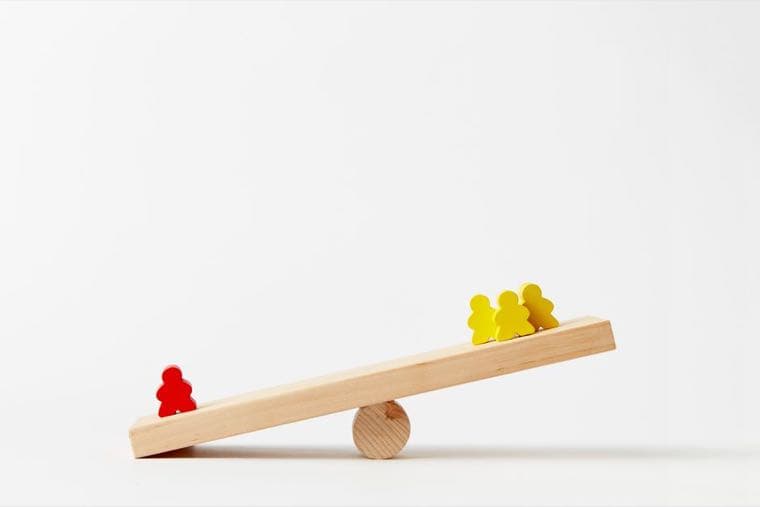
Loss Aversion: Why Losing $100 Hurts More Than Gaining $100 Feels Good
Losing $100 feels about twice as bad as gaining $100 feels good. How loss aversion quietly shapes Australian money decisions, and how to work with it.