

The Diderot Effect: Why One Purchase Always Leads to Another
One new purchase triggers a spiral of more. Here's what the Diderot effect is, why it happens, and how to stop it before it wrecks your budget.
 By Timothy Hirou GaschereauPublished
 8 min read
Try it yourself
You buy a new couch. Suddenly the rug looks terrible. So you replace the rug. Now the coffee table looks out of place. Before you know it, you've spent $4,000 updating a living room that was perfectly fine three weeks ago. That's the Diderot effect, and it's quietly draining Australian bank accounts every single day. This article is part of our money mindset series.
🎯 The essential: The Diderot effect is when acquiring one new possession triggers a chain of further purchases to bring everything else “up to the same level.” It's a normal feature of how brains work, it quietly fuels lifestyle creep, and you can catch it once you can name it. The fix: decouple purchases, add waiting periods, and define your own version of enough.
The story behind the Diderot effect
In 1769, French philosopher Denis Diderot received a gift: a beautiful scarlet dressing gown. He loved it. He put it on, sat at his desk, and looked around his study. The study that had felt perfectly comfortable for years suddenly looked shabby. The old desk, worn out. The chair, embarrassing. One by one, Diderot replaced everything in the room to match the elegance of the gown, spending money he didn't have and going into debt.
He wrote about it in his essay Regret on Parting with My Old Dressing Gown, lamenting: “I was the absolute master of my old dressing gown, but I have become the slave of my new one.” The lesson sat there for over two centuries before anthropologist Grant McCracken finally gave it a label in 1988.
So what is the Diderot effect, exactly?
The Diderot effect is the phenomenon where acquiring one new possession triggers a chain of further purchases, as you try to bring everything else up to the same level. The new item raises the bar. Everything around it suddenly looks inadequate by comparison. McCracken described two key ideas:
- Diderot unities: our possessions naturally cluster into sets that feel like they belong together (a rustic kitchen, a minimalist desk). These unities have an internal logic.
- The coherence drive: when a new item doesn't fit the existing unity, it creates discomfort, and that discomfort pushes you to restore coherence, usually by spending more.
The new item isn't just a thing. It's a disruption, and your brain wants to resolve the disruption.
Diderot effect examples in real life
You don't need a scarlet dressing gown. The Diderot effect is everywhere.
- The new iPhone. You upgrade your phone. Now your case looks cheap, your earbuds are the old wired ones, your desk setup looks dated. The phone cost $1,400. The accessories cost another $600.
- Moving into a new house. The old IKEA furniture looks wrong. So you replace the couch, then the dining table, then the curtains, then the garden. Six months later you're wondering where $15,000 went.
- Having a baby. The nursery needs a theme, the theme needs a matching pram, the pram needs a nappy bag that fits the vibe, which triggers activewear for the morning walk. You started with a cot and ended with a lifestyle overhaul.
- New activewear. One new set. But now your old shoes look daggy, your gym bag is falling apart, and your shaker is from 2019. The $80 set has become a $400 fitness rebrand.
Why your brain falls for it every time
The Diderot effect isn't a character flaw. It's a feature of how human brains work.
- Identity and possessions. We use our stuff to signal who we are. A new item that represents a more aspirational version of you makes everything else feel like it belongs to the old you. The same attachment to what we own drives the endowment effect, where we overvalue things simply because they are ours.
- The consistency drive. Cognitive dissonance is the discomfort of holding two conflicting ideas: “I have good taste” and “my rug is from 2014 and looks it.” Spending is the path of least resistance to resolve the tension.
- Hedonic adaptation. The new item quickly becomes your normal, the excitement fades, and the baseline shifts upward. This is why the upgrade treadmill never ends.
- Social comparison. Instagram home tours and TikTok setup videos are Diderot trigger machines, showing you curated overhauls and making your own space feel like a before photo.
How the Diderot effect quietly fuels lifestyle creep
Lifestyle creep is what happens when your spending rises to match your income, leaving your savings rate unchanged no matter how much you earn. The Diderot effect is one of its main engines. You get a $20,000 pay rise, buy a nicer car, which makes your wardrobe feel wrong, so you update that, which makes your apartment feel tired. Just like that, the pay rise is gone, absorbed into a higher baseline of spending.
This is why people earning $150,000 can feel just as stretched as when they earned $70,000. Income went up, lifestyle went up to match, and the gap between them (where savings live) stayed exactly the same. The Diderot effect resets your entire financial baseline upward, quietly, one reasonable upgrade at a time. See our deep dive on the psychology of lifestyle inflation.
How to avoid the Diderot effect
The good news: once you know what it is, you can catch it. Here's how.
- Name it when you feel it. The moment you think “now that I have X, I need Y,” say “that's the Diderot effect.” Naming it creates a pause, and the pause is where you make a better decision.
- The one-in-one-out rule. For every new item that comes in, one goes out. This limits accumulation and forces deliberate choices.
- The 72-hour (or 30-day) waiting period. Don't buy non-essentials immediately. Most Diderot-driven urges dissolve on their own. This is delayed gratification in action, see our guide on building that muscle.
- Define your own version of enough. Write down what a complete version of your home or wardrobe looks like. When you have it, stop.
- Decouple purchases deliberately. One purchase does not automatically justify another. A new sofa is not a reason to replace the rug. Each purchase stands alone.
- Audit your social feeds. If your feeds are full of renovation accounts and hauls, you're being served triggers on a platter. Curate them like your financial future depends on it.
- Automate savings before creep hits. When income rises, increase your savings or super contributions before your spending adjusts. If the money never hits your spending account, the spiral never starts.
Diderot spiral vs mindful alternative
Trigger purchase: a new couch ($1,800).
| Stage | Diderot spiral | Mindful alternative |
|---|---|---|
| The trigger purchase | New couch: $1,800 | New couch: $1,800 |
| First follow-on thought | The rug looks terrible next to it | The rug is fine. It's just a rug. |
| First follow-on purchase | New rug: $600 | No purchase |
| Second follow-on purchase | New coffee table: $450 | No purchase |
| Third follow-on purchase | New curtains: $320 | No purchase |
| Total spend | $3,170 | $1,800 |
| Extra cost of the spiral | $1,370 | $0 (redirected to savings) |
The bottom line: the couch was always going to cost $1,800. The spiral cost an extra $1,370 and delivered exactly zero additional happiness after the first week. Invested at 7% over 10 years, that $1,370 could grow to roughly $2,700. Name the spiral, decouple your purchases, and redirect the difference to something that compounds.
SnowLetter
Australia's money news and our best reads, once a week.
❓ Frequently asked questions
Is the Diderot effect the same as lifestyle creep?
+
They're related but not identical. Lifestyle creep is the broad pattern of spending rising to match income over time. The Diderot effect is one of the mechanisms that drives it: a single purchase triggers a cascade of further spending that permanently raises your baseline. Think of lifestyle creep as the destination and the Diderot effect as one of the roads that gets you there.
Can the Diderot effect happen with experiences, not just things?
+
Yes. A luxury holiday can make your usual weekend plans feel dull. A business-class flight can make economy feel unbearable. A five-star restaurant can ruin your appreciation of your regular local. Experiences create reference points, and new reference points shift what feels normal. The mechanism is identical.
Is the Diderot effect always bad? Is there a positive version?
+
It can work in your favour. If a new habit or environment triggers a cascade of positive changes (a gym membership leads to better sleep, which leads to better eating, which leads to more energy), that's the same coherence drive working constructively. The key difference is whether the cascade costs money or builds something. Intentional unity building around health, learning, or relationships is a feature. Unintentional spending cascades are the bug.
How do I know if I'm already in a Diderot spiral?
+
Ask yourself: did I buy this because I genuinely needed it, or because something else I bought recently made it feel necessary? If the honest answer is the second one, you're in a spiral. Other signs: you've made three or more purchases in the same category within a month, each one justified by the previous one; or you're redecorating or re-equipping an area of your life that was perfectly functional before one trigger purchase.
Does the Diderot effect happen more online?
+
Significantly more. Online shopping removes friction (no travel, no queue, one-click purchase), and social media constantly surfaces curated complete aesthetics that make your own setup feel like a work in progress. Algorithms are designed to show you what you're likely to buy next, which is often exactly what would complete your current Diderot unity. Shopping apps are Diderot accelerators.
What's the fastest way to stop a spiral once it's already started?
+
Name it, then pause. Literally say I'm in a Diderot spiral and write down every purchase you've made in the last 30 days that was triggered by the original item. Seeing the chain laid out is usually enough to break the momentum. Then apply the decoupling rule: the next purchase needs to justify itself entirely on its own merits, with no reference to what came before it.
📚 Recommended reading
The Psychology of Money
Morgan Housel
The Psychology of Money
19 short stories on how people actually think and feel about money, not just the maths of it.
Atomic Habits
James Clear
Atomic Habits
Tiny changes, remarkable results. Clear shows how 1 percent improvements compound, and the same system that fixes your gym routine works on your saving habits too.
Your Money or Your Life
Vicki Robin
Your Money or Your Life
The book that basically kicked off the FIRE movement, reframing money as 'life energy' you trade your hours for. The nine-step program is pure gold, just swap the US retirement-account chapter for super.
Some links above are affiliate links. If you buy through them, Snowball Invest may earn a small commission at no extra cost to you. We only recommend books we'd suggest anyway.
Sources
This article is general information only and does not constitute financial advice. Consider your own circumstances and, if you need it, speak with a licensed financial adviser.
Was this article useful?
Put it to your own numbers
Every calculator runs entirely in your browser, with nothing stored. See what these numbers look like for your own situation.
Try the Compound Interest calculator →General information only. This article is educational and does not constitute personal financial advice. It does not account for your circumstances. Consider your own situation and seek advice from a licensed adviser before acting. Read our full disclaimer.

Timothy Hirou Gaschereau
Founder of Snowball Invest, not a financial adviser.
I write about what I'm learning myself, because nobody ever taught us how to take control of our own money. It's a skill, not a mystery, and it's never too late to learn it. The best day to start was yesterday, the second best is today.
LinkedIn →Related articles

Lifestyle Creep: What It Is and How to Actually Stop It
Why spending quietly rises to match income, the hedonic adaptation psychology behind it, real Australian statistics, and the one habit that actually stops it.

The Subtle Art of Not Giving a F*ck by Mark Manson: An Honest Review
Our honest review of Mark Manson's bestseller through a money lens: not a finance book, but its values-over-status message is a real antidote to lifestyle inflation.
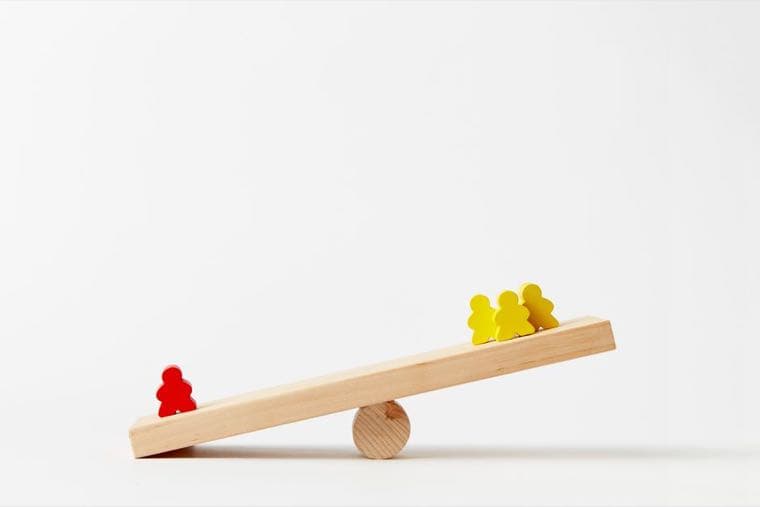
Loss Aversion: Why Losing $100 Hurts More Than Gaining $100 Feels Good
Losing $100 feels about twice as bad as gaining $100 feels good. How loss aversion quietly shapes Australian money decisions, and how to work with it.