

Delayed Gratification: The Money Skill That Beats Everything Else
Delayed gratification is the most powerful wealth-building habit there is. The science, the compounding maths, and 8 practical strategies to build it.
 By Timothy Hirou GaschereauPublished
 9 min read
Try it yourself
You don't need a higher income, a hot stock tip, or a side hustle to build real wealth. You need one skill: the ability to choose future-you over present-you, consistently, over a long period of time. That's delayed gratification, and it's the engine behind almost every meaningful financial outcome. This article is part of our money mindset series.
🎯 The essential: Delayed gratification means choosing a larger, later reward over a smaller, immediate one. It's a skill, not a fixed personality trait, and you can build it at any age by designing your environment rather than relying on willpower. The compounding maths rewards patience like nothing else.
What is delayed gratification?
Delayed gratification means choosing a larger, later reward over a smaller, immediate one. That's it. It's not about deprivation, being a miser, or never enjoying your money. It's about making a deliberate trade: less now, more later.
The everyday money version looks like this. You skip the $6 takeaway coffee on your commute and transfer that $6 to your investment account instead. That sounds trivial. Run the numbers and it stops being trivial very quickly. Six dollars a day is roughly $180 a month. Invested at 8% p.a. over 20 years, that's around $107,000, from about $43,200 of actual contributions. The gap is compounding doing its job, which is present bias at work. Delayed gratification and money are inseparable because of this maths.
The marshmallow test (and what the research actually shows)
In the late 1960s and early 1970s, psychologist Walter Mischel ran a now-famous series of experiments at Stanford University. The setup was beautifully simple: a researcher sat a young child in a room with one marshmallow. You can eat it right now, or wait 15 minutes while the researcher steps out and get two marshmallows when they return. Some kids ate it immediately. A handful waited the full 15 minutes, often using creative distraction tactics.
The original finding was striking. When Mischel followed up years later, the children who had waited longer tended to have better academic results and stronger social skills. Self-control in a four-year-old seemed to predict life outcomes decades later. But here's the nuance that often gets left out.
In 2018, Tyler Watts and colleagues at NYU published a large-scale replication study using a much bigger and more diverse sample. The finding? When you control for family income, home environment, and the child's level of trust in the researcher, the predictive power of waiting largely disappears. A child who ate the marshmallow immediately wasn't necessarily impulsive by nature. They may have simply learned that adults don't always follow through on promises. If you grow up in an unstable environment where delayed rewards often don't materialise, eating the marshmallow now is the rational choice.
Delayed gratification is shaped by your environment, your experiences, and your trust in the system, not by some fixed willpower gene you either have or don't. That's empowering: it means you can build this skill at any age, by changing your environment and your systems.
Why delayed gratification is the engine behind wealth
Compound interest is often attributed to Einstein, who allegedly called it “the eighth wonder of the world.” Whether he actually said it is debatable. That it's true is not. Here's a worked example that makes the point clearly.
| Start at 25 | Start at 35 | |
|---|---|---|
| Monthly contribution | $500 | $500 |
| Years invested | 30 | 20 |
| Total contributed | $180,000 | $120,000 |
| Estimated value at 55 | ~$745,000 | ~$294,000 |
That 10-year delay costs you roughly $451,000 in final wealth, despite only a $60,000 difference in total contributions. Time is the variable that matters most, and you can't buy it back. Superannuation is Australia's built-in delayed gratification machine. Your employer contributes 12% of your salary into a fund you can't touch until preservation age. It's compulsory patience, and for most people it will be the largest pool of wealth they ever accumulate. For money outside super, broad-market index ETFs are the practical vehicle most Australians use to put compounding to work: invest regularly, don't touch it, let time do the heavy lifting.
Why instant gratification is so hard to resist
Here's something worth saying plainly: struggling with instant gratification spending is not a character flaw. It's a predictable response to an environment specifically engineered to exploit your brain's reward system. When you see something you want, your brain releases dopamine, which fires in anticipation of the reward. That's why scrolling through a shopping app feels exciting even before you've bought anything. The catch is that the thrill fades fast once you own the thing, a pattern called hedonic adaptation, which is exactly why the next purchase always beckons.
Modern commerce is built around this. One-click purchasing removes the friction that used to create a natural pause. Push notifications create artificial urgency. Social feeds trigger comparison spending. And then there's Afterpay and the broader BNPL ecosystem. BNPL removes what behavioural economists call the “pain of payment.” When you hand over cash or watch a credit card balance climb, there's a psychological sting that acts as a natural brake. BNPL splits the cost into four invisible instalments and moves the pain into the future, where it feels abstract. You get the dopamine hit without the immediate sting. It's a masterclass in exploiting delayed gratification psychology, in reverse. None of this is your fault. But knowing how it works gives you a fighting chance.
Practical strategies to build the delayed gratification muscle
The research is clear: willpower alone is a losing strategy. The people who are best at delaying gratification design their environment so the temptation barely arises. Here's how to do that.
- Automate savings and investments. Set up an automatic transfer the day after your pay hits. You never see the money, so you never miss it. The single highest-leverage move you can make.
- Use the 24/48-hour rule. Before buying anything that isn't food, fuel, or a bill, wait 24 hours for purchases under $100 and 48 hours above. A huge proportion of impulse buys evaporate during the wait.
- Make saving frictionless. Use a high-interest savings account at a different bank (out of sight, out of mind). Try a round-up app that sweeps spare change into savings automatically.
- Reframe the reward. Instead of “I'm skipping this purchase,” think “I'm buying future-me a better life.” Visualise a specific goal: the house deposit, the trip, financial independence.
- Use if-then implementation intentions. Pre-commit: “If I want to buy something not in my budget, then I'll add it to a wishlist and check back in 48 hours.” The decision is already made.
- Reduce friction on good habits, add it to bad ones. Delete BNPL apps. Remove saved card details from shopping sites. Meanwhile, set up recurring investment buys so investing is the easy path.
- Celebrate small wins. When you wait and it pays off, acknowledge it. Positive reinforcement builds the habit faster than guilt.
- Find your why and attach it to a timeline. “Save more money” is not a goal. “Save $30,000 for a house deposit by December 2027” is. Specific goals with deadlines make the future reward feel concrete, so the present sacrifice feels smaller. A budget is where this starts.
Instant vs delayed gratification money habits
| Habit | Instant version | Delayed version | Long-term outcome |
|---|---|---|---|
| Shopping | Buy now, budget later | 48-hour rule, wishlist first | Less debt, intentional spending |
| Investing | Wait until you "have more" | Automate a set amount from day one | Compounding starts immediately |
| Super | Ignore it, it's far away | Review, consolidate, contribute | Larger retirement balance |
| Debt | Pay the minimum, spend the rest | Attack high-interest debt first | Thousands saved in interest |
| Savings | Spend first, save what's left | Pay yourself first via auto-transfer | A buffer that builds over time |
| BNPL | Split into four, buy today | Save for it, buy it outright | No debt, no fees to track |
The bottom line: delayed gratification is not about suffering through life with a spreadsheet and no fun. It's about being deliberate, choosing the bigger future reward over the smaller immediate one, again and again, until the habit is so embedded you barely notice. Start with one thing. Automate one transfer. Delete one BNPL app. Wait 48 hours on one purchase. That's enough to begin. If impulse spending is your weak spot, our guide on doom spending goes deeper.
SnowLetter
Australia's money news and our best reads, once a week.
❓ Frequently asked questions
Is delayed gratification the same as being cheap?
+
No. Being cheap means avoiding spending at all costs, often at the expense of quality of life or relationships. Delayed gratification is about being intentional: spending on what genuinely matters to you and skipping what doesn't. You can absolutely enjoy your money. The goal is to make conscious choices rather than reactive ones.
Can you learn delayed gratification as an adult?
+
Yes, absolutely. The 2018 NYU replication study reinforced that this is a behaviour shaped by environment and experience, not a fixed trait. Adults can build the habit through system design (automation, friction reduction), practice (the 48-hour rule), and by building trust in their own financial systems. It gets easier over time.
How does BNPL undermine delayed gratification?
+
Buy Now Pay Later services like Afterpay remove the immediate pain of payment that naturally slows spending. By splitting costs into instalments, they make purchases feel smaller and more affordable in the moment. This is instant gratification spending dressed up as financial flexibility. The debt is still real; it just feels abstract until the instalments hit.
What is the connection between delayed gratification and superannuation?
+
Superannuation is compulsory delayed gratification. Your employer is legally required to contribute a percentage of your salary into a fund you can't access until retirement. It works because the decision is automated and the money is locked away. The result, for most Australians, is their largest lifetime asset. It's a powerful illustration of what systematic patience can achieve.
Is it okay to spend on things you enjoy?
+
Absolutely. A sustainable approach to money includes spending on things that genuinely bring you joy. The point of delayed gratification isn't to never enjoy your money; it's to make sure your spending reflects your actual priorities rather than just whatever's in front of you at the time. Spend deliberately on what matters, cut ruthlessly on what doesn't.
How long does it take to build the delayed gratification habit?
+
Research on habit formation suggests most behaviours take anywhere from a few weeks to a few months to become automatic, depending on complexity and how consistently you practise. Start with one or two changes (automate a transfer, delete a BNPL app) and let those bed in before adding more. The goal is to make patience the path of least resistance, not a daily act of willpower.
📚 Recommended reading
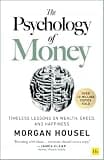
The Psychology of Money
Morgan Housel
The Psychology of Money
19 short stories on how people actually think and feel about money, not just the maths of it.
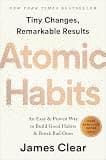
Atomic Habits
James Clear
Atomic Habits
Tiny changes, remarkable results. Clear shows how 1 percent improvements compound, and the same system that fixes your gym routine works on your saving habits too.
The Barefoot Investor
Scott Pape

The Barefoot Investor
Australia's best-selling money book ever. A simple system for accounts, budgeting, debt and a real emergency fund in one.
Some links above are affiliate links. If you buy through them, Snowball Invest may earn a small commission at no extra cost to you. We only recommend books we'd suggest anyway.
Sources
This article is general information only, not financial advice. Investment returns vary and past performance is not a reliable indicator of future results. The worked examples use standard assumptions to illustrate compounding and are not projections of any specific product. Consider your personal circumstances and speak with a licensed financial adviser before making decisions.
Was this article useful?
Put it to your own numbers
Every calculator runs entirely in your browser, with nothing stored. See what these numbers look like for your own situation.
Try the Compound Interest calculator →General information only. This article is educational and does not constitute personal financial advice. It does not account for your circumstances. Consider your own situation and seek advice from a licensed adviser before acting. Read our full disclaimer.

Timothy Hirou Gaschereau
Founder of Snowball Invest, not a financial adviser.
I write about what I'm learning myself, because nobody ever taught us how to take control of our own money. It's a skill, not a mystery, and it's never too late to learn it. The best day to start was yesterday, the second best is today.
LinkedIn →Related articles

Loss Aversion: Why Losing $100 Hurts More Than Gaining $100 Feels Good
Losing $100 feels about twice as bad as gaining $100 feels good. How loss aversion quietly shapes Australian money decisions, and how to work with it.

Anchoring Bias: Why the First Number You Hear Decides What You Pay
The first number you hear sets the price you think is fair, from auction guides to salary talks. How anchoring works in Australia, and how to beat it.

Mental Accounting: Why You Treat a Tax Refund Differently to Your Salary
A refund dollar buys the same groceries as a salary dollar, but your brain disagrees. How mental accounting costs Australians money, and how to flip it.