

Hedonic Adaptation: Why More Money Rarely Feels Like Enough
Hedonic adaptation keeps you chasing the next buy no matter how much you earn. The psychology, the real cost, and four ways to break the cycle.
 By Timothy Hirou GaschereauPublished
 8 min read
You land the promotion, the salary jumps, and for a month or two life feels genuinely different. Then, somewhere around month three, it all just feels normal again, and you're already eyeing the next thing. That's hedonic adaptation, and once you understand how it works you can stop letting it quietly drain your bank account. This is part of our wider guide to money mindset on Snowball Invest.
This article is general information only, not personal financial advice. Consider your own circumstances, or speak with a qualified professional, before making money decisions.
Quick answer
Hedonic adaptation is the brain's habit of turning today's thrill into tomorrow's baseline. You get a pay rise, feel great for a few weeks, then feel exactly the same as before, only with higher expenses. The fix isn't earning more. It's spending smarter, automating savings before you adapt, and deliberately choosing experiences over stuff.
In this guide
- →What hedonic adaptation (the hedonic treadmill) actually is
- →The lottery-winner research that proved it
- →How lifestyle creep is the financial version of it
- →Four practical ways to work with it, not against it
🎢 What is hedonic adaptation?
You finally land that promotion. Your salary jumps from $75,000 to $90,000 a year. For a month or two, life feels genuinely different. You upgrade your car, move to a nicer suburb, start buying the good coffee. Then, somewhere around month three, it all just feels normal. The excitement fades. The new car is just your car. And you're already eyeing the next thing.
That's hedonic adaptation in action. It's the psychological process where we return to a relatively stable level of happiness after a positive (or negative) change in our lives. In plain English: your brain gets used to things, fast.
It's also called the hedonic treadmill, and the name is perfect. You keep walking, you keep spending, but you never actually get anywhere happier. This isn't a personal failing. It's wiring.
🧠 The psychology behind it
The landmark study here is Brickman, Coates and Janoff-Bulman (1978), published in the Journal of Personality and Social Psychology. The researchers compared three groups: 22 major lottery winners, 29 people who had become paraplegic or quadriplegic through accidents, and a control group.
The results were striking. Lottery winners were not significantly happier than the control group when measured on present happiness. They also reported less pleasure from ordinary everyday activities, like chatting with a friend or eating breakfast. The accident victims, meanwhile, were less happy than the controls, but not nearly as miserable as most people would predict. Both groups had adapted, in opposite directions, toward something closer to their original emotional baseline.
This is the core of set-point theory: the idea that each of us has a relatively stable baseline level of wellbeing, shaped partly by temperament. Later research (Diener, Lucas and Scollon, 2006) refined this, showing set points aren't perfectly fixed and that some events, particularly long-term unemployment or widowhood, can cause lasting shifts. But the general pattern holds: adaptation is real, it's powerful, and it applies directly to money.
The practical upshot? That $90,000 salary feels like $75,000 within a few months. So you start looking for $110,000. The number keeps moving, and the satisfaction keeps resetting.
💸 Why it quietly wrecks your finances
Lifestyle creep is the financial expression of hedonic adaptation. As income rises, spending rises to match it, almost automatically. The extra $15,000 a year doesn't go into super or an index fund. It goes to a bigger rent, a newer phone, a streaming service you barely use, and restaurant meals that used to feel like a treat but now feel like Tuesday. Our guide to lifestyle inflation digs into that pattern in detail.
A few specific traps to watch for:
- The upgrade trap. You buy a new laptop, love it for three weeks, then notice your colleague has a slightly better one. Adaptation has already happened, and now comparison kicks in on top of it.
- Chasing the next purchase. The dopamine hit from buying something new is real, but it's short. So you buy again. And again. This is the treadmill in motion.
- Normalising luxury. Business class once feels amazing. Business class twice feels normal. Economy on the third trip feels like a punishment, even though nothing has actually changed.
The financial result is that people on genuinely good incomes often find themselves with very little to show for it. ASIC's Moneysmart points out that tracking your spending is the first step to spotting these patterns, and most people are genuinely surprised when they see where the money actually goes.
🛠️ How to beat it with your money
You can't switch off adaptation. But you can work with it, and against it, in ways that protect your finances and actually improve your long-term happiness.
1. Spend on experiences, not things. Research by psychologist Thomas Gilovich at Cornell consistently finds that experiential purchases (travel, concerts, a cooking class, a weekend camping trip) produce more lasting happiness than material ones. Experiences are harder to compare with someone else's, they become part of your identity and your stories, and they don't sit in your garage depreciating. A weekend on the Great Ocean Road fades more slowly than a new pair of headphones.
2. Automate savings before you adapt to a raise. This is the single most powerful move when your income goes up. If your salary jumps by $1,000 a month, automate $600 of that immediately, on the same day your pay lands. You'll adapt to the remaining $400 without even noticing. Let the full $1,000 flow into your spending account first, though, and lifestyle creep absorbs every cent within 90 days.
3. Use gratitude and the 30-day rule. Research in Psychological Science found that a gratitude practice reduces economic impatience, meaning grateful people are more willing to wait for a larger reward later. Pair it with the 30-day rule: when you want something non-essential, write it down with the date and price, then wait 30 days. Most of the time the urge passes.
4. Do intentional splurges right. Deliberately cutting back on something you've normalised, then reintroducing it, can reset your adaptation level. If you've been eating out four nights a week and it no longer feels special, drop it to one night for a month. That one dinner out will feel genuinely good again. Intentional scarcity, used selectively, is a reset button for enjoyment.
🎯 The essential: The goal isn't to earn more and hope it finally feels like enough. It's to divert the raise before you adapt, and to spend what's left on things that stay meaningful.
SnowLetter
Australia's money news and our best reads, once a week.
❓ Frequently asked questions
What is hedonic adaptation in simple terms?
+
Hedonic adaptation is the tendency to return to a baseline level of happiness after something good or bad happens. You get excited about a new purchase or a pay rise, then after a few weeks it just feels normal. Your brain has adapted, and the emotional boost disappears.
Does hedonic adaptation affect everyone?
+
Yes, it's a universal human tendency, though the speed and degree vary between people. Some people adapt faster than others, and some life events produce more lasting changes than others. But no one is immune to it entirely.
How long does it take to adapt to something new?
+
It depends on the person and the purchase, but research suggests the adaptation process often kicks in within a few weeks to a few months. For a new car or a salary increase, most of the emotional boost has typically faded within three months.
Can you use hedonic adaptation to your advantage?
+
Absolutely. You can use it to adapt downward as well as upward. Cutting back on something you've normalised (a daily takeaway coffee, for example) is uncomfortable for a few weeks, then becomes your new normal. You've effectively lowered your spending baseline without a lasting hit to your happiness.
What is the hedonic treadmill?
+
The hedonic treadmill is another name for hedonic adaptation, specifically the idea that we keep striving for more (more money, more stuff, more status) but our happiness level stays roughly the same. Like a treadmill, you're moving but not getting anywhere. The term was popularised by Brickman and Campbell in 1971 and is closely linked to set-point theory.
📚 Recommended reading
The Psychology of Money
Morgan Housel
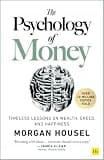
The Psychology of Money
19 short stories on how people actually think and feel about money, not just the maths of it.
Die With Zero
Bill Perkins
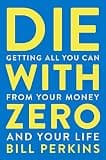
Die With Zero
Stop hoarding cash for a someday that never comes. Perkins makes the case for spending on experiences while you are still young enough to enjoy them.
Your Money or Your Life
Vicki Robin
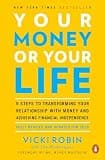
Your Money or Your Life
The book that basically kicked off the FIRE movement, reframing money as 'life energy' you trade your hours for. The nine-step program is pure gold, just swap the US retirement-account chapter for super.
Some links above are affiliate links. If you buy through them, Snowball Invest may earn a small commission at no extra cost to you. We only recommend books we'd suggest anyway.
Sources
- 1. Brickman, P., Coates, D. and Janoff-Bulman, R. (1978). Lottery winners and accident victims: Is happiness relative? Journal of Personality and Social Psychology.
- 2. Diener, E., Lucas, R. E. and Scollon, C. N. (2006). Beyond the hedonic treadmill. American Psychologist.
- 3. Gilovich, T. and Kumar, A. We'll always have Paris: The hedonic payoff from experiential and material investments, Cornell University.
- 4. DeSteno, D. et al. (2014). Gratitude: A tool for reducing economic impatience. Psychological Science.
- 5. Track your spending, Moneysmart, Australian Securities and Investments Commission.
Was this article useful?
Put it to your own numbers
Every calculator runs entirely in your browser, with nothing stored. See what these numbers look like for your own situation.
Explore the calculators →General information only. This article is educational and does not constitute personal financial advice. It does not account for your circumstances. Consider your own situation and seek advice from a licensed adviser before acting. Read our full disclaimer.

Timothy Hirou Gaschereau
Founder of Snowball Invest, not a financial adviser.
I write about what I'm learning myself, because nobody ever taught us how to take control of our own money. It's a skill, not a mystery, and it's never too late to learn it. The best day to start was yesterday, the second best is today.
LinkedIn →Related articles

The No-Buy Challenge: How to Do It, What You'll Save, and Why It Actually Works
How to run a no-buy challenge in Australia, with a realistic worked example, the psychology that makes it stick, and pitfalls to avoid. Save hundreds.
The Framing Effect: How the Same Fact Can Cost You Thousands
The framing effect tricks your brain into bad money calls every day. Learn the psychology, spot the retail traps, and defend your wallet with 3 tactics.

Money Personality Types: Which One Are You (And What To Do About It)?
Discover the 6 money personality types, from the Spender to the Avoider. Find your type, spot your blind spots, and build better money habits today.