

Money Personality Types: Which One Are You (And What To Do About It)?
Discover the 6 money personality types, from the Spender to the Avoider. Find your type, spot your blind spots, and build better money habits today.
 By Timothy Hirou GaschereauPublished
 9 min read
You save obsessively; your partner spends freely. Neither of you is "bad with money," yet you argue about it constantly and can't figure out why. That tension usually comes down to money personality types, and understanding yours gives you a practical roadmap for changing the patterns holding you back. This is part of our wider guide to money mindset on Snowball Invest.
This article is general information only, not personal financial advice. Consider your own circumstances before acting.
Quick answer
Your money personality type is the set of beliefs and habits driving how you earn, spend, save, and stress about money. There are six main archetypes: The Spender, The Saver, The Avoider, The Money Worshipper, The Security Seeker, and The Status Seeker. Knowing yours helps you play to your strengths, catch your blind spots, and stop repeating the same mistakes.
In this guide
- →Why your money personality shapes decisions you don't notice
- →The Klontz money-scripts research it's built on
- →The six archetypes, with strengths, blind spots and one fix each
- →What helps when two types share a bank account
🎭 Why your money personality matters
Picture you and your partner both earning decent salaries. You feel vaguely anxious about money most of the time; they never seem to think about it. You save obsessively; they spend freely. Neither of you is "bad with money" exactly, but you argue about it constantly.
That tension usually comes down to money personality types, and you're far from alone. ASIC's Moneysmart research found that 41% of Australians worry about money often or all the time. Stress is common, but the reasons behind it, and the solutions, are different for everyone. Understanding your financial personality doesn't just explain your past behaviour, it gives you a practical roadmap for changing it.
🔬 The research behind the types
The most credible backbone comes from financial psychologist Dr Brad Klontz and colleagues. Their 2011 paper, Money Beliefs and Financial Behaviors, published in the Journal of Financial Therapy, identified four core money scripts: deeply held, often unconscious beliefs about money formed in childhood that quietly run the show in adulthood.
Klontz's research found these scripts predict real financial behaviours, from compulsive spending to hoarding cash to avoiding bank statements. This article builds on that foundation with a practical six-archetype model. The archetypes overlap, and most people are a blend of two or three, but one usually dominates. Our guide to money scripts covers the underlying beliefs in more detail.
🧩 The six money personality types
1. The Spender. You treat yourself "just this once" more often than you'd admit, and shopping genuinely lifts your mood. Strength: you're generous and not paralysed by fear around money. Blind spot: lifestyle creep. Fix: automate a savings transfer on payday, before you see the money. Even $50 a fortnight adds up to $1,300 a year.
2. The Saver. You feel anxious spending even on things you need, and you know your exact balance at any moment. Strength: you build wealth steadily. Blind spot: under-investing in experiences and health, or hoarding cash while inflation erodes it. Fix: create a "guilt-free spending" category you're allowed to enjoy without second-guessing.
3. The Avoider (the Ostrich). Unopened bills, unchecked apps, and a wave of dread when money comes up. Strength: you're low-stress day to day. Blind spot: small problems compound fast. Fix: schedule one 20-minute "money date" a week. Just you, your banking app, and a cup of tea. Familiarity reduces dread.
4. The Money Worshipper. You believe more money would solve most problems and tie self-worth to net worth. Strength: high drive; often out-earns peers. Blind spot: the goalposts keep moving. Fix: define "enough" concretely, the actual dollar figure, then ask what you'd do differently if you already had it.
5. The Security Seeker. You have an emergency fund and a backup emergency fund, and volatile investments keep you up at night. Strength: excellent risk management. Blind spot: over-caution costs you long-term growth. Fix: start small with a low-cost index ETF, enough to experience market movement without betting the house.
6. The Status Seeker. You care what your car, suburb, or wardrobe says about you. Strength: motivated and socially aware, which can drive income growth. Blind spot: spending to signal wealth prevents building it. Fix: track your net worth monthly and compete with your past self instead of your neighbour.
Most people are a blend, with one dominant type and strong secondary traits. The point isn't to box yourself in, it's to spot which patterns serve you and which quietly cost you.
🧭 Money personality quiz
Not sure which archetype fits? Take the quiz for a personalised breakdown of your dominant type, your strengths, and the habits worth working on.
💞 When your types clash
The classic flashpoint is a Saver paired with a Spender. The Saver sees the Spender as reckless; the Spender sees the Saver as joyless. Both are wrong, and both are right. Here's what actually helps couples with different money personalities:
- Talk about values, not transactions. "You spent $300 on shoes" is a fight starter. "I feel anxious when our savings don't grow" is a conversation starter.
- Keep a joint account for shared goals, plus personal accounts. Each person gets a no-questions spending allowance, which removes the guilt and the power dynamic.
- Agree on a "big purchase" threshold. Anything over, say, $500 gets a quick chat first. Below that, no approval needed.
- Revisit money goals together every quarter. A 30-minute check-in, not a tribunal.
Mixed-type couples do better when they stop trying to convert each other and start designing systems that work for both. A Saver's discipline plus a Spender's willingness to enjoy life can be a powerful combination.
🌱 How to shift unhelpful patterns
- Name the script. Most financial behaviours trace back to a belief formed before age 10. "Rich people are greedy." "We can't afford nice things." Write down the belief you heard most growing up.
- Reframe it. "Spending money is irresponsible" can become "spending intentionally on things I value is a good use of money." Small shift, big behaviour change.
- Build one tiny habit. Don't overhaul everything. For Avoiders, the weekly money date. For Status Seekers, the monthly net-worth tracker. For Spenders, the automated transfer.
- Get help if you're stuck. If money patterns are causing real harm, a financial counsellor or financial therapist can help. ASIC's Moneysmart lists free financial counselling services across Australia.
🎯 The essential: Your archetype isn't a life sentence. Naming the pattern, then changing one habit that counters your blind spot, is where the real progress happens.
SnowLetter
Australia's money news and our best reads, once a week.
❓ Frequently asked questions
What are money personality types?
+
Money personality types are patterns of financial behaviour and belief that shape how you earn, spend, save, and think about money. They're influenced by your upbringing, culture, and personal experiences. Common frameworks identify between four and six core types, from savers and spenders to avoiders and status seekers.
Can my money personality change?
+
Yes, absolutely. Your core tendencies are shaped early, but they're not fixed. Awareness is the first step, and deliberate habit changes, reframing old beliefs, and sometimes working with a professional can shift your financial personality meaningfully over time. Most people find their relationship with money evolves through major life events like buying a home or having kids.
What if I'm a mix of types?
+
That's the norm, not the exception. Most people have a dominant type with strong secondary traits. You might be primarily a Security Seeker with a streak of Money Worshipper when work gets stressful. The goal isn't to fit neatly into one box but to recognise which patterns are serving you and which ones aren't.
How do money personalities affect relationships?
+
Different archetypes create predictable friction points, especially when one partner is a natural Saver and the other is a Spender. The underlying issue is usually a mismatch in values and risk tolerance, not the actual dollars. Understanding each other's financial personality makes it much easier to design shared systems that work for both people.
Is there a quiz to find my money personality type?
+
Yes. Take our money personality quiz for a quick, personalised result. It covers your spending habits, savings behaviour, and emotional relationship with money to identify your dominant archetype and give you practical next steps.
📚 Recommended reading
The Psychology of Money
Morgan Housel
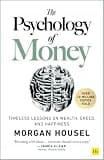
The Psychology of Money
19 short stories on how people actually think and feel about money, not just the maths of it.
Atomic Habits
James Clear

Atomic Habits
Tiny changes, remarkable results. Clear shows how 1 percent improvements compound, and the same system that fixes your gym routine works on your saving habits too.
The Barefoot Investor
Scott Pape

The Barefoot Investor
Australia's best-selling money book ever. A simple system for accounts, budgeting, debt and a real emergency fund in one.
Some links above are affiliate links. If you buy through them, Snowball Invest may earn a small commission at no extra cost to you. We only recommend books we'd suggest anyway.
Sources
- 1. Klontz, B., Britt, S. L., Mentzer, J. and Klontz, T. (2011). Money Beliefs and Financial Behaviors: Development of the Klontz Money Script Inventory. Journal of Financial Therapy.
- 2. Young People and Money research, Moneysmart, ASIC (2024).
- 3. Free financial counselling services, Moneysmart, ASIC.
- 4. Money Scripts overview, Financial Psychology Institute.
Was this article useful?
Put it to your own numbers
Every calculator runs entirely in your browser, with nothing stored. See what these numbers look like for your own situation.
Explore the calculators →General information only. This article is educational and does not constitute personal financial advice. It does not account for your circumstances. Consider your own situation and seek advice from a licensed adviser before acting. Read our full disclaimer.

Timothy Hirou Gaschereau
Founder of Snowball Invest, not a financial adviser.
I write about what I'm learning myself, because nobody ever taught us how to take control of our own money. It's a skill, not a mystery, and it's never too late to learn it. The best day to start was yesterday, the second best is today.
LinkedIn →Related articles

Mental Accounting: Why You Treat a Tax Refund Differently to Your Salary
A refund dollar buys the same groceries as a salary dollar, but your brain disagrees. How mental accounting costs Australians money, and how to flip it.

Present Bias: Why Future You Keeps Getting Stitched Up
Present bias makes $50 today beat $100 next year. How it drains your super, powers buy now pay later, and why automation beats willpower every time.

Status Quo Bias: Why Doing Nothing Is Costing You Money
Staying put feels safe and quietly costs you, on insurance, energy, your mortgage and your super. What status quo bias is, and the yearly review that beats it.