
The No-Buy Challenge: How to Do It, What You'll Save, and Why It Actually Works
How to run a no-buy challenge in Australia, with a realistic worked example, the psychology that makes it stick, and pitfalls to avoid. Save hundreds.
 By Timothy Hirou GaschereauPublished
 8 min read
Somewhere between the third Uber Eats order of the week and a "treat yourself" shopping cart, a lot of Australians have started asking a reasonable question: where is all my money actually going? That's the question behind the no-buy challenge, one of the biggest personal finance trends of recent years. It's not about deprivation, it's about intention. This is part of our wider guide to money mindset on Snowball Invest.
This article is general information only, not personal financial advice. Figures are illustrative and subject to change.
Quick answer
A no-buy challenge means banning discretionary purchases in specific categories (clothes, takeaway, beauty, impulse buys) for a set period, while still paying bills and genuine essentials. A typical Australian in their 30s could save $500 to $900 a month by cutting a few common spending leaks. You don't have to go cold turkey on everything: define your own rules, write them down, and stick to them.
In this guide
- →How a no-buy challenge differs from a stricter no-spend one
- →The four steps to set yours up, including your ban and allow lists
- →A realistic worked example of what you could save
- →Why it sticks psychologically, and the pitfalls that trip people up
🔀 No-buy vs no-spend
These terms get used interchangeably online, but they differ. A no-spend challenge is the stricter version: zero discretionary spending, full stop. Every dollar out the door is rent, utilities, groceries, transport, or medical. It's intense, usually done for a short burst as a reset. Our no-spend challenge guide covers that stricter version.
A no-buy challenge is more flexible, and more sustainable. You choose specific categories to ban, and everything else stays on the table. You might ban new clothes, beauty, décor, and takeaway, but still allow your existing Netflix, your gym membership, and the groceries you actually need. The key rule: bills and genuine essentials are always allowed.
🧰 How to run a no-buy challenge
You don't need an app. You need four things.
Step 1: Pick your timeframe. Start with something achievable. A no-buy month (try September) is a great entry point. Want a bigger reset? Commit to a no-buy year and review quarterly.
Step 2: Define your ban list and your allow list. This is the most important step. Write both lists down and be specific.
Common ban-list items: new clothing and shoes, takeaway and delivery, takeaway coffee, beauty and skincare beyond what you have, home décor, and impulse online shopping. Common allow-list items: rent, utilities and insurance, real groceries, medication and healthcare, transport, and existing budgeted subscriptions.
Step 3: Plan for slip-ups before they happen. Decide now what a slip-up looks like and what you'll do. An "acknowledge it, move on" policy works better than shame spirals. Some people use an "urge jar" and drop $5 in every time they resist a purchase, turning willpower into savings.
Step 4: Track your progress. Check your bank account weekly. Seeing the number grow is genuinely motivating.
💵 What could you actually save?
Let's run a realistic example for a 30-year-old on a median income in a capital city. Takeaway coffee now averages $5.53 (Compare the Market, July 2025), which is roughly $110 a month at one a weekday. Takeaway and delivery runs around $87 to $98 a month. Apparel averages about $101 a month (CommBank iQ). And the average subscriber spends $136 a month on paid services (ING, April 2026), much of it barely used.
| Category | Typical monthly spend | No-buy saving |
|---|---|---|
| Takeaway coffee (5 days/week) | $110 | $110 |
| Takeaway food and delivery | $90 | $70 (keep one meal out) |
| New clothing | $100 | $80 (keep basics) |
| Unused subscriptions | $60 | $60 |
| Impulse online shopping | $80 | $80 |
| Total | $440 | $400 |
That's $400 saved in a single month, or roughly $4,800 over a no-buy year, and it's a conservative estimate. $400 is a mortgage repayment, a chunk off a credit card, or the start of an emergency fund.
🧮 Budget planner
Plug in your own numbers to see what a no-buy month would free up, then watch the total climb week by week.
🧠 The psychology behind it
It breaks the dopamine loop. Online shopping is engineered to trigger small dopamine hits: the scroll, the add-to-cart, the "your order is on its way" notification. A no-buy challenge interrupts that loop and, over a few weeks, resets your baseline.
It resets your spending defaults. Most discretionary spending is habitual, not intentional. Remove those defaults for 30 days and you discover which ones you actually missed and which you barely noticed.
It creates an identity shift. After a few weeks of saying "I don't buy that right now," many people stop identifying as someone who shops for entertainment and start identifying as someone who's building something. That shift from "shopper" to "saver" is surprisingly durable, and it's what makes the habits stick.
⚠️ Common pitfalls to avoid
- The deprivation mindset. Frame it as "I'm choosing where my money goes," not "I can't have anything nice." Small language shift, big difference.
- Not defining your rules clearly. Vague rules create loopholes. "I won't buy any new clothing unless an existing item is unwearable" beats "I won't buy clothes."
- White-knuckling it alone. Tell someone, a partner, a friend, or a supportive community. Accountability makes a measurable difference.
- The binge-spend rebound. The most common failure mode. Plan a small, intentional reward at the end, then ease back with a proper budget rather than going back to old habits cold.
🎯 The essential: A no-buy month is achievable for almost anyone, and it's the smartest place to start. Do it once and you'll know exactly which spending leaks are worth plugging for good.
SnowLetter
Australia's money news and our best reads, once a week.
❓ Frequently asked questions
What counts as essential during a no-buy challenge?
+
Essentials are the things you genuinely can't function without: rent or mortgage, utilities, groceries (real food, not snacks and treats), medication, transport to work, and insurance. Everything else is discretionary and subject to your ban list. The line between essential and non-essential is something you define before you start, not in the moment when you're tempted.
Can I do a no-buy month instead of a no-buy year?
+
Absolutely, and for most people it's the smarter starting point. A no-buy month (like No-Spend September) gives you a real taste of the challenge without the long-term commitment. You'll learn which categories are hardest, build savings momentum, and decide from there whether a longer challenge makes sense.
What if I slip up and buy something I wasn't supposed to?
+
You acknowledge it, figure out what triggered it (boredom? stress? a sale email?), and keep going. One slip-up doesn't cancel a month of progress. The worst thing you can do is use a single mistake as a reason to abandon the whole challenge. Logging slip-ups in a journal can help you spot patterns.
Does a no-buy challenge work for families?
+
Yes, but it needs a family conversation first. Everyone in the household needs to agree on the rules, or the challenge creates friction rather than savings. For families, it often works best to focus on one or two shared categories (takeaway, impulse shopping) rather than trying to overhaul everything at once.
Can I still use subscriptions I already pay for?
+
Generally yes. Most no-buy frameworks allow existing subscriptions already in your budget, because the goal is to stop new discretionary spending. That said, the challenge is a great time to audit your subscriptions and cancel any you're not using. ING's research found Australians spend an average of $136 per month on paid services.
How do I track my savings during the challenge?
+
The simplest method is to note your balance at the start, then check again at the end of each week. The difference, minus essential spending, is your saving. You can also log every purchase you chose not to make, which some people find motivating. A free budgeting tool from Moneysmart is another solid option.
📚 Recommended reading
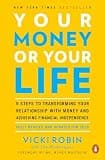
Your Money or Your Life
Vicki Robin
Your Money or Your Life
The book that basically kicked off the FIRE movement, reframing money as 'life energy' you trade your hours for. The nine-step program is pure gold, just swap the US retirement-account chapter for super.
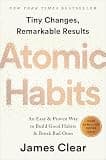
Atomic Habits
James Clear
Atomic Habits
Tiny changes, remarkable results. Clear shows how 1 percent improvements compound, and the same system that fixes your gym routine works on your saving habits too.
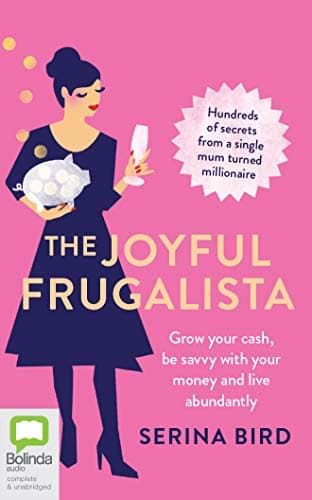
The Joyful Frugalista
Serina Bird
The Joyful Frugalista
Frugal living that feels fun instead of miserable, from an Aussie who saved a fortune without hating her life. Packed with everyday tips to spend less, save more and still enjoy the good stuff.
Some links above are affiliate links. If you buy through them, Snowball Invest may earn a small commission at no extra cost to you. We only recommend books we'd suggest anyway.
Sources
- 1. Could you buy nothing for a whole year? Sydney Morning Herald (January 2025).
- 2. No-Spend September financial challenge, ABC News (August 2025).
- 3. Average cost of takeaway coffee in Australia 2025, Compare the Market.
- 4. Australia's love for subscriptions adds up to $26.5 billion annually, ING Newsroom (April 2026).
- 5. Managing your money, Moneysmart, Australian Securities and Investments Commission.
Was this article useful?
Put it to your own numbers
Every calculator runs entirely in your browser, with nothing stored. See what these numbers look like for your own situation.
Explore the calculators →General information only. This article is educational and does not constitute personal financial advice. It does not account for your circumstances. Consider your own situation and seek advice from a licensed adviser before acting. Read our full disclaimer.

Timothy Hirou Gaschereau
Founder of Snowball Invest, not a financial adviser.
I write about what I'm learning myself, because nobody ever taught us how to take control of our own money. It's a skill, not a mystery, and it's never too late to learn it. The best day to start was yesterday, the second best is today.
LinkedIn →Related articles

Hedonic Adaptation: Why More Money Rarely Feels Like Enough
Hedonic adaptation keeps you chasing the next buy no matter how much you earn. The psychology, the real cost, and four ways to break the cycle.
Average Cost of Living in Australia: What It Really Costs
What does it actually cost to live in Australia in 2025-26? Real monthly budget figures for singles, couples and families, by city, plus how to spend less.
Mental Accounting: Why You Treat a Tax Refund Differently to Your Salary
A refund dollar buys the same groceries as a salary dollar, but your brain disagrees. How mental accounting costs Australians money, and how to flip it.