
The Joyful Frugalista by Serina Bird: An Honest Review
Our honest Joyful Frugalista review: Serina Bird's guilt-free, genuinely Australian take on frugal living, its strengths, its limits, and who should read it.
 By Timothy Hirou GaschereauPublished
 8 min read
A warm, memoir-style guide that reframes frugality as a lifestyle choice rather than a punishment. Genuinely useful for beginners, but experienced money nerds may find the ground familiar. It's part of our personal finance book reviews on Snowball Invest.
Quick answer
A part-memoir, part-money handbook that reframes frugal living as creativity and empowerment rather than deprivation, backed by practical Australian tips. Best for anyone who feels guilty or embarrassed about spending less, or who needs a mindset reset around money. Skip it if you're already deep into personal finance and want advanced investing or tax strategy. Our rating: 4 out of 5.
Want to read The Joyful Frugalista?
Frugal living that feels fun instead of miserable, from an Aussie who saved a fortune without hating her life.
In this guide
- →What the book covers: frugal-living tips plus the mindset reframe
- →The genuine strengths and the honest weaknesses
- →Who it's for, and who already knows this
- →What critics and readers say
- →The Australian angle: cost-of-living, savings rate and financial independence
📖 What is The Joyful Frugalista about?
The Joyful Frugalista is Serina Bird's first book, published in 2019 by Murdoch Books. It's part personal memoir, part practical handbook, covering energy bills, weddings, clothing, eating out, waste reduction, mortgage payoff and wealth building, with each chapter ending in a concrete "Frugalista Challenge" you can act on straight away. The central argument is simple but genuinely refreshing: don't think of frugal living as deprivation. Bird reframes it as creativity, abundance, choice, empowerment and environmental soundness. Spend less not because you're broke, but because you're choosing something better with that money.
Bird weaves her own story throughout. A former Australian diplomat, she rebuilt her financial life from the ground up through deliberate, joyful frugality after separating with two young children. That personal arc gives the book real weight: this isn't theory from someone who's never had to count the dollars. She's since written a follow-up on paying off your mortgage faster, so she's clearly not a one-hit wonder.
⚖️ Strengths and weaknesses
What it gets right
- ✓The mindset reframe is genuinely powerful: it tackles the shame, social pressure and identity stuff that makes frugal living feel like failure.
- ✓Written for real Australian life: local grocery, energy and housing strategies, not a US book with a dollar sign added.
- ✓The Frugalista Challenges make it actionable: specific, concrete tasks that actually change behaviour.
- ✓The memoir sections are honest and human, which earns trust polished aspirational content rarely does.
- ✓It connects frugality to bigger goals: mortgage payoff, wealth building and financial independence.
Where it falls short
- ✕Experienced readers may find it light on depth: if you already run a high savings rate and invest regularly, much will feel like revision.
- ✕The memoir sections won't resonate with everyone, given the author's specific background.
- ✕The audiobook narration drew some criticism, worth knowing if you plan to listen.
- ✕It's not an investing manual: it's about the spending side, not ETFs, super strategy or debt recycling.
👤 Who should read it, and who should skip it?
Read it if you
- ✓Feel guilty or conflicted about spending less than your peers.
- ✓Are new to intentional spending and want a warm, encouraging entry point.
- ✓Are cutting costs during the cost-of-living crunch and need motivation, not just tactics.
- ✓Are interested in the sustainability angle of consuming less.
- ✓Want to see how frugal living connects to bigger goals like paying off your mortgage or reaching financial independence.
Skip it if you
- ✕Already have a solid savings rate and an established investing routine.
- ✕Want advanced content: tax strategy, portfolio construction or property analysis.
- ✕Find memoir-style writing frustrating when you just want the numbers.
🔍 What do critics say?
There aren't major newspaper or magazine reviews of The Joyful Frugalista in the public record; media coverage of Serina Bird has focused on interviews and features rather than formal book criticism, which is normal for Australian personal finance titles. What does exist is warm reader and blog commentary that consistently highlights the book's central reframe, linking frugality to creativity, appreciation, abundance, choice, empowerment and environmental soundness rather than scarcity or stinginess. A well-received follow-up book suggests the first one landed well enough to justify a second.
💬 What do readers say?
Reader reception is broadly positive, especially for the mix of practical frugality tips with broader ideas about goals and mindset, exactly the tactical-plus-philosophical combination Bird is going for. The critical minority tend to be readers who already live and breathe this stuff: some found the author's background hard to relate to or felt they learnt little new, and a few flagged the audiobook narration. Her companion podcast is well rated, which suggests the audience she's built is genuinely engaged.
The book has a smaller public review footprint than the big-name titles, which is not unusual for a specialist Australian frugal-living book and doesn't reflect its quality. It circulates by recommendation within its audience rather than racking up thousands of online ratings.
🇦🇺 The Australian angle
This matters, because frugal living in Australia isn't a lifestyle quirk, it's a financial strategy:
- A higher savings rate means faster financial independence. This is the maths the FIRE movement is built on. Earn $90,000 and spend $60,000 and you're saving a third; spend $45,000 instead and your savings rate jumps to half. As an illustrative rule of thumb, a 50% savings rate can get you to financial independence in roughly 17 years from a standing start. Every dollar you don't spend can go into super, ETFs or your mortgage offset.
- The cost-of-living crunch is real. Grocery, energy and housing costs have all surged, so Bird's practical tips are directly applicable to genuine pressure, not just a fun challenge.
- Sustainability resonates here. The argument that spending less is also better for the planet is a genuine alignment of values many Australian readers find compelling.
- It's a mindset book for a market that needs one. Australian personal finance content skews toward property and super; the spending side, and the psychology behind it, gets less attention.
For the FIRE maths this feeds into, our Money School review (a genuinely Australian FIRE book) is a natural next read, and for the philosophy behind trading money for life energy, see our Your Money or Your Life review.
💰 The verdict
The Joyful Frugalista does what it sets out to do extremely well: it reframes frugality as a positive, empowering choice rather than a sign of failure, and backs that up with practical, Australian-specific tips. The memoir format won't suit everyone, and experienced readers will find the content familiar. But for anyone who's been quietly spending more than they want to because they haven't yet given themselves permission to stop, this book is the permission slip. It's also a genuinely easy read: you can get through it in a weekend and come out with a changed relationship to your spending. That's not nothing. Our rating: 4 out of 5.
Want to read The Joyful Frugalista?
Want to spend less without feeling deprived? Grab a copy and try the first Frugalista Challenge this week.
SnowLetter
Australia's money news and our best reads, once a week.
❓ Frequently asked questions
What is The Joyful Frugalista about?
+
A part-memoir, part-money handbook by Australian author Serina Bird, published in 2019. It covers frugal living tips across areas like groceries, energy, clothing and weddings, while also addressing the mindset side of spending less: self-worth, gratitude, intentional spending, and the connection between frugality and financial independence.
Who is Serina Bird?
+
Serina Bird is an Australian former diplomat who worked for the Department of Foreign Affairs and Trade and holds a Master of Arts in International Relations from the Australian National University. She rebuilt her financial life through deliberate frugality after separating, and is now an author, money coach and podcaster who has appeared across Australian media.
Is The Joyful Frugalista suitable for Australian readers?
+
Yes, very much so. The examples, strategies and context are all Australian, covering grocery shopping, energy bills and housing costs rather than relying on US-centric examples.
What rating would you give it?
+
We give it 4 out of 5. It's an excellent entry point for anyone new to intentional spending or who needs a mindset shift around money. It's less useful for experienced personal finance readers who already have a high savings rate and an established investing routine.
Does Serina Bird have other books?
+
Yes. She published a follow-up focused on paying off your mortgage faster, the logical next step for readers who want to go deeper on the property and debt side of the equation.
Is it relevant during the cost-of-living crunch?
+
Absolutely. With grocery prices, energy bills and housing costs all elevated, the practical frugal-living tips are more relevant than ever, and the mindset reframe (that spending less is empowerment rather than deprivation) is especially useful when financial pressure comes from outside rather than choice.
📚 Get the book (and two companions)
The Joyful Frugalista
Serina Bird
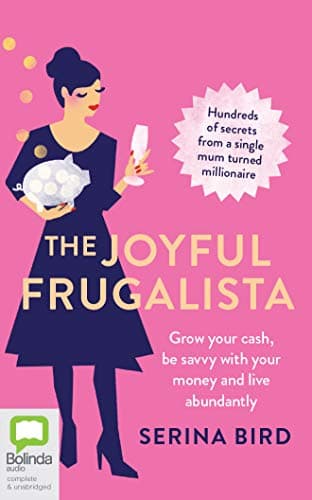
The Joyful Frugalista
Frugal living that feels fun instead of miserable, from an Aussie who saved a fortune without hating her life. Packed with everyday tips to spend less, save more and still enjoy the good stuff.
Your Money or Your Life
Vicki Robin
Your Money or Your Life
The book that basically kicked off the FIRE movement, reframing money as 'life energy' you trade your hours for. The nine-step program is pure gold, just swap the US retirement-account chapter for super.
Money School
Lacey Filipich
Money School
Lacey Filipich shows how to buy back your time, not just budget your dollars, with a clear path from saving to financial independence. It is refreshingly Australian and genuinely doable, even if maths was never your thing.
Some links above are affiliate links. If you buy through them, Snowball Invest may earn a small commission at no extra cost to you. We only recommend books we'd suggest anyway.
Sources
Was this article useful?
Put it to your own numbers
Every calculator runs entirely in your browser, with nothing stored. See what these numbers look like for your own situation.
Explore the calculators →General information only. This article is educational and does not constitute personal financial advice. It does not account for your circumstances. Consider your own situation and seek advice from a licensed adviser before acting. Read our full disclaimer.

Timothy Hirou Gaschereau
Founder of Snowball Invest, not a financial adviser.
I write about what I'm learning myself, because nobody ever taught us how to take control of our own money. It's a skill, not a mystery, and it's never too late to learn it. The best day to start was yesterday, the second best is today.
LinkedIn →Related articles

I Will Teach You to Be Rich Review: An Australian Take
An honest Australian review of Ramit Sethi's I Will Teach You to Be Rich: what works, what doesn't, and how to adapt the system for super, offset accounts and ETFs.
Smashed Avocado by Nicole Haddow: An Honest Review
Our honest Smashed Avocado review: Nicole Haddow's relatable Aussie first-home-buyer memoir, the smashed avocado debate, its strengths, and who it's for.

Get Good with Money by Tiffany Aliche: An Honest Review
Our honest Get Good with Money review for Australians: Tiffany Aliche's 10-step 'financial wholeness' framework, what translates here, and what needs localising.