
Get Good with Money by Tiffany Aliche: An Honest Review
Our honest Get Good with Money review for Australians: Tiffany Aliche's 10-step 'financial wholeness' framework, what translates here, and what needs localising.
 By Timothy Hirou GaschereauPublished
 9 min read
Tiffany Aliche's Get Good with Money is a genuinely excellent beginner personal finance book, with one important caveat for Australian readers: a fair chunk of the mechanics are built around the US financial system. It's part of our personal finance book reviews on Snowball Invest.
Quick answer
Warm, practical, and covers the full financial picture in a way most finance books don't bother to. Best for beginners and anyone rebuilding their finances from scratch. Australian caveat: the credit score, retirement account and tax content is US-specific, so treat those sections as a framework and localise using Australian resources. Our rating: 4 out of 5.
Want to read Get Good with Money?
The Budgetnista's warm, ten-step guide to 'financial wholeness', from budgeting all the way to estate planning. Confidence-building for beginners.
In this guide
- →What the book is about: 'financial wholeness' and the ten steps
- →The genuine strengths and the honest weaknesses
- →Who it's for, and who's past this stage
- →What critics and r/povertyfinance readers say
- →The Australian angle: credit reports, super and ASX ETFs
📖 What is Get Good with Money about?
The book is built around a concept Tiffany Aliche calls "financial wholeness": being good with money isn't just budgeting or investing in isolation, it's getting every part of your financial life working together, from the basics right through to estate planning. Aliche, better known as The Budgetnista, is a New York Times bestselling author and one of the most recognised money educators in the US, and her credibility isn't just academic: she lost her job during the 2008 financial crisis, fell victim to a financial scam, and rebuilt from near zero. That backstory gives the book a warmth and honesty a lot of finance books lack. In one sentence: ten sequential steps that take you from financial chaos to financial wholeness, in plain English, with worksheets and exercises throughout.
| Step | Name | What it covers |
|---|---|---|
| 1 | Build a budget | Create and automate a workable monthly budget. |
| 2 | Get good at saving | Build emergency, goal and investing savings buckets. |
| 3 | Dig out of debt | Make a plan to reduce and eliminate debt. |
| 4 | Build your credit | Improve and manage your credit strategically. |
| 5 | Learn to earn | Increase income through raises, side income or better opportunities. |
| 6 | Invest like an insider | Invest consistently for retirement and long-term wealth. |
| 7 | Use insurance | Protect your income and assets with the right cover. |
| 8 | Set net worth goals | Track assets minus liabilities and grow that number. |
| 9 | Pick your money team | Work with trusted professionals and accountability partners. |
| 10 | Leave a legacy | Create an estate plan for what happens to your assets. |
It's aimed squarely at beginners and especially resonant for women and anyone who feels behind or overwhelmed. The US-centric content on credit scores, retirement accounts and tax specifics means Australian readers will need to do some translation work along the way.
⚖️ Strengths and weaknesses
What it gets right
- ✓Genuinely warm and non-judgmental: Aliche writes like a knowledgeable friend, with no shame and no jargon.
- ✓Action-oriented throughout: each step comes with practical exercises and worksheets.
- ✓Covers the full financial picture, from budgeting to estate planning, which most beginner books don't.
- ✓Aliche's personal story (rebuilding from hardship and a scam) makes the advice feel earned, not theoretical.
- ✓Confidence-building sequencing: by the time you reach investing, you've already sorted budget, savings and debt.
Where it falls short
- ✕US-centric mechanics: the credit-score content is built around the US FICO system, and the accounts and tax specifics are American.
- ✕Credit-repair steps don't map to Australia, where the system works quite differently.
- ✕Foundational, not advanced: great for beginners, but familiar if you've read a few finance books.
- ✕The investing chapter stays surface-level, so experienced investors will want more depth elsewhere.
👤 Who should read it, and who should skip it?
Read it if you
- ✓Are starting your financial journey and want a clear, encouraging framework to follow.
- ✓Have tried budgeting before but never got the full picture working together.
- ✓Are rebuilding after debt, a job loss, a relationship breakdown or another setback.
- ✓Want a book that covers everything from budgeting to estate planning in one place.
Skip it if you
- ✕Already have your budget, savings, debt and investment strategy sorted.
- ✕Are looking for advanced investing content, portfolio theory or tax strategy.
- ✕Want an Australia-specific finance book with local product and super guidance baked in.
🔍 What do critics say?
The consensus is consistent: clear, actionable, and delivered in a supportive, judgment-free style that makes personal finance feel approachable rather than intimidating. Critics broadly agree it works best as a beginner foundation, with some noting it doesn't go deep enough for readers who already have a handle on the basics, and that the investing chapter, while solid, leaves room for more nuance. As a starting point for getting your whole financial life in order, it's hard to fault.
💬 What do readers say? Goodreads and Reddit
On Goodreads it holds around 4.3 out of 5 from several thousand ratings, with the large majority giving it four or five stars. This isn't a book that divides opinion: most people who read it come away positive. On Reddit's r/povertyfinance, readers praise its practical, easy-to-apply guidance on budgeting and saving, with the advice on dealing with creditors and managing credit-card debt getting specific mentions as genuinely useful.
Readers consistently describe it as walking you through the fundamentals in an easy-to-read, easily applicable way. It's a book people finish and actually act on, which for a beginner finance title is the whole point.
🇦🇺 The Australian angle
What translates well: the budgeting, saving, debt payoff, income growth, insurance and legacy-planning steps are broadly universal, and Aliche's framework for thinking about your financial life is genuinely useful regardless of country.
What doesn't translate directly: the US credit-score system is built around FICO scores and a credit-repair industry that doesn't exist in the same form here. In Australia your credit information is held by Equifax, Experian and illion, and you can request a free copy of your credit report from each bureau every three months at no cost. The US retirement-account content (401(k)s, IRAs) maps loosely to super, but super has its own rules around concessional contributions, preservation age and investment options, so go to the ATO for the authoritative detail. On investing, Aliche's core message (invest consistently in low-cost index funds) translates perfectly, applied through ASX-listed ETFs via a low-cost Australian broker.
The practical approach: use Get Good with Money as your mindset and framework guide, then localise the mechanics with Australian resources. For a genuinely local women's-finance companion, see our Financial Feminist review and, for the Australian foundations, our Barefoot Investor review.
💰 The verdict
Get Good with Money is one of the best beginner personal finance books available anywhere, and that includes Australia. The warm, non-judgmental tone, the full-picture coverage and the practical step-by-step structure make it genuinely useful for anyone who wants to get their financial life in order. The US-centric mechanics are a real limitation for Australian readers: the credit-score and retirement-account sections will need translation, and you'll want to supplement with local resources for the specifics. But the framework and mindset are universal, and that's the more valuable part of the book anyway. If you're a beginner, someone rebuilding, or someone who's never quite got the full picture working together, it's worth your time and money. Our rating: 4 out of 5.
Want to read Get Good with Money?
Starting from scratch or rebuilding? Grab a copy for the warm, ten-step framework, then localise the US bits.
SnowLetter
Australia's money news and our best reads, once a week.
❓ Frequently asked questions
Is Get Good with Money suitable for Australian readers?
+
Yes, with some caveats. The budgeting, saving, debt payoff, income, insurance and estate-planning content is broadly universal. The US credit-score system and retirement-account content (401(k)s, IRAs) don't map directly to Australia, so supplement those sections with local resources like MoneySmart and the ATO. Treat the book as a framework guide and localise the mechanics.
What is 'financial wholeness'?
+
Aliche's term for having every major area of your financial life working together, not just budgeting or investing in isolation. It covers ten areas: budgeting, saving, debt, credit, income, investing, insurance, net worth, your financial team and estate planning. The idea is that true financial health means all ten are functioning, not just one or two.
Is it good for complete beginners?
+
Absolutely. It's one of the strongest beginner personal finance books available. The tone is warm and non-judgmental, the steps are clearly sequenced, and each chapter includes practical exercises. If you've never seriously engaged with your finances before, it's a very good place to start.
How does the US credit-score advice apply in Australia?
+
It doesn't map directly. Aliche's credit content is built around the US FICO system and credit-repair industry. In Australia, credit information is held by Equifax, Experian and illion, and you can get a free copy of your credit report from each bureau every three months. For local guidance, ASIC's MoneySmart is the best resource.
Does it cover investing?
+
Yes, one of the ten steps covers investing. Aliche's core message is to invest consistently in low-cost index funds for long-term wealth, which translates well to Australia through ASX-listed ETFs via a low-cost broker. The chapter is a solid introduction rather than a deep dive on portfolio construction.
Where can I buy it in Australia?
+
It's available through Penguin Australia and major Australian online retailers in hardback and paperback, and as an audiobook on Audible. Search for the full title to make sure you get the right edition.
📚 Get the book (and two companions)
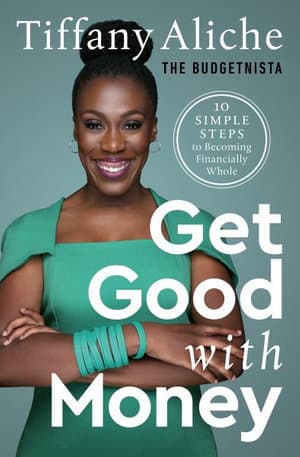
Get Good with Money
Tiffany Aliche
Get Good with Money
The Budgetnista's warm, ten-step guide to 'financial wholeness', from budgeting all the way to estate planning. Beginner-friendly and confidence-building, just localise the US credit and account bits.
Financial Feminist
Tori Dunlap
Financial Feminist
A warm, funny guide to money aimed at women, covering everything from killing shame around spending to negotiating pay and starting to invest. The mindset and salary chapters land hard, just apply an Australian lens.
Broke Millennial
Erin Lowry
Broke Millennial
A relatable, jargon-free starter guide for young adults on budgeting, killing debt and having awkward money talks. The practical habits carry over neatly, just read the US credit-score chapters through an Australian lens.
Some links above are affiliate links. If you buy through them, Snowball Invest may earn a small commission at no extra cost to you. We only recommend books we'd suggest anyway.
Sources
Was this article useful?
Put it to your own numbers
Every calculator runs entirely in your browser, with nothing stored. See what these numbers look like for your own situation.
Explore the calculators →General information only. This article is educational and does not constitute personal financial advice. It does not account for your circumstances. Consider your own situation and seek advice from a licensed adviser before acting. Read our full disclaimer.

Timothy Hirou Gaschereau
Founder of Snowball Invest, not a financial adviser.
I write about what I'm learning myself, because nobody ever taught us how to take control of our own money. It's a skill, not a mystery, and it's never too late to learn it. The best day to start was yesterday, the second best is today.
LinkedIn →Related articles

Clever Girl Finance by Bola Sokunbi: An Honest Review
Our honest Clever Girl Finance review for Australians: Bola Sokunbi's empowering, women-focused starter on mindset, debt and wealth, and what needs localising.

I Will Teach You to Be Rich Review: An Australian Take
An honest Australian review of Ramit Sethi's I Will Teach You to Be Rich: what works, what doesn't, and how to adapt the system for super, offset accounts and ETFs.

The Richest Man in Babylon: An Honest Review
Our honest Richest Man in Babylon review for Australians: the timeless lessons, the real weaknesses, and how the parables map to super, ETFs and modern money habits.