

Broke Millennial by Erin Lowry: An Honest Review
Our honest Broke Millennial review for Australians: Erin Lowry's friendly beginner money guide, what's universal, what's US-only, and who should read it.
 By Timothy Hirou GaschereauPublished
 9 min read
A solid beginner's guide to money, with a few chapters that need translating for the Australian context. It's the friendliest introduction to personal finance you'll find, even if some of the fine print is written in American. It's part of our personal finance book reviews on Snowball Invest.
Quick answer
The friendliest introduction to personal finance you'll find, even if some of the fine print is written in American. Best for complete beginners, recent graduates and anyone who avoids thinking about money. Skip it if you already budget regularly, understand debt repayment, or want Australian-specific advice. Our rating: 3.5 out of 5.
Want to read Broke Millennial?
A relatable, jargon-free starter guide for young adults on budgeting, killing debt and having awkward money talks.
In this guide
- →What the book covers: mindset, five budgeting styles, debt, credit and money talks
- →The genuine strengths and the honest weaknesses
- →Who it's for, and who's better off elsewhere
- →What critics and readers say
- →The Australian angle: what translates and what needs a local swap
📖 What is Broke Millennial about?
Broke Millennial: Stop Scraping By and Get Your Financial Life Together is Erin Lowry's 2017 debut, the first in the Broke Millennial series (the sequel is Broke Millennial Takes On Investing). Lowry founded the Broke Millennial blog in 2013 and describes herself as a "financial translator", making money feel less like a tax return and more like a chat with a switched-on mate. The book covers a wide sweep of beginner territory: money psychology (understanding your emotional relationship with money), budgeting (five different approaches so you can pick what suits you), debt (including student loans), talking about money with partners, friends and family, credit, saving even while in debt, and just enough investing to get you started.
The tone is deliberately casual: Lowry writes like she's texting you advice, not lecturing from a podium. That's a feature, not a bug, especially if you've bounced off drier personal finance books before.
⚖️ Strengths and weaknesses
What it gets right
- ✓The money-psychology chapter is genuinely useful, asking why you behave the way you do around money before getting to the numbers.
- ✓Five budgeting approaches, not one: pick the system that fits your personality, which is rare in a beginner book.
- ✓An eye-opening debt tip: paying fortnightly instead of monthly means 26 half-payments a year, one extra full payment with no extra effort.
- ✓Makes the case for saving while in debt, so one unexpected bill doesn't send you back to square one.
- ✓A salary negotiation chapter that could be worth real money: not negotiating is always the more expensive choice.
- ✓The money-conversations chapter is underrated: splitting bills, talking finances with a partner, the stuff nobody teaches you.
Where it falls short
- ✕It's a US book, full stop: the credit-score chapter is built around the American FICO system, which doesn't exist here.
- ✕The student-loan chapter maps only loosely to HECS-HELP, which works completely differently.
- ✕The investing section is very thin, with 401k and Roth IRA references irrelevant to Australians.
- ✕The author graduated debt-free, which occasionally makes the framing feel a little breezy for those with a harder start.
- ✕The 2010s millennial slang and references date it a little.
👤 Who should read it, and who should skip it?
Read it if you
- ✓Are new to managing your own money and don't know where to start.
- ✓Have avoided thinking about your finances because it feels overwhelming.
- ✓Want to understand budgeting but aren't sure which approach suits you.
- ✓Are about to have 'the money talk' with a partner and want a framework.
- ✓Are a recent graduate looking for a broad overview before going deeper.
Skip it (or read it second) if you
- ✕Already have a budget you stick to and a debt repayment plan in place.
- ✕Want Australian-specific guidance on super, HECS-HELP or ASX investing.
- ✕Are looking for intermediate or advanced strategies.
- ✕Find the US-centric framing frustrating.
🔍 What do critics say?
Critical reception has been positive, particularly for beginners. It was named among the better money books of its release year, and reviewers consistently single out the same highlights: the five budgeting approaches, the fortnightly debt-payment strategy, the case for saving while in debt, and the salary-negotiation research. The most common criticism is that the writing is conversational to the point of occasionally feeling simple, and that the 2010s millennial framing has dated a touch. The recommendation lands squarely on recent graduates and young adults entering the workforce.
💬 What do readers say? Goodreads and Reddit
On Goodreads it holds around 3.9 out of 5 from thousands of ratings, skewing positive. The pattern is consistent: beginners love it, and people who already have their finances sorted find it too basic, which isn't really a criticism so much as a sign it's doing exactly what it sets out to do.
On Reddit it appears regularly in beginner recommendation threads on r/personalfinance and r/financialindependence, usually alongside Your Money or Your Life and I Will Teach You to Be Rich, with the caveat that it's a foundation-builder rather than a deep dive into strategy.
🇦🇺 The Australian angle
What translates directly:
- The money psychology and mindset content is universal: how you feel about money doesn't change because you live in Melbourne instead of Manhattan.
- The budgeting chapter works anywhere; the five approaches are practical and adaptable in any currency.
- The money-conversations content (partners, friends, family) is just as relevant here.
- The saving-while-in-debt and fortnightly-payment strategies apply to Australian debts just as well.
- The salary-negotiation message reflects a dynamic that applies in Australian workplaces too.
What needs a local translation:
- Credit scores: Australia doesn't use FICO. Our credit reporting works through Equifax, Experian and illion, and the mechanics differ.
- Student loans: HECS-HELP is indexed and repaid through the tax system once your income hits a threshold, a fundamentally different beast from US student loans. Read the chapter for the mindset, not the mechanics.
- Retirement investing: forget 401k and Roth IRA. For Australians the equivalent conversation is super (employer contributions, salary sacrifice, fund selection) and investing in ASX ETFs through a brokerage account.
For where to go next, our I Will Teach You to Be Rich review and Your Money or Your Life review cover two of the books most often recommended alongside this one.
💰 The verdict
Broke Millennial is a genuinely good beginner's book. The tone is warm and non-judgmental, the structure is logical, and the budgeting section alone is worth the cover price for someone who's never found a system that sticks. It's not a perfect fit for Australian readers: three chapters (credit scores, student loans, retirement accounts) require you to mentally substitute local equivalents, and if you're already financially literate, you'll find it too light. But for the person who's been putting off sorting out their money because it all feels too hard, this is the book. Read it, apply the universal bits, skip the FICO chapter, then follow up with something locally focused. Our rating: 3.5 out of 5.
Want to read Broke Millennial?
Been avoiding your finances because it all feels too hard? Grab a copy and start with the budgeting chapter.
SnowLetter
Australia's money news and our best reads, once a week.
❓ Frequently asked questions
Is Broke Millennial worth reading for Australians?
+
Yes, with caveats. The budgeting, money psychology, debt repayment and money-conversations content is universally applicable. The credit-score and retirement-account chapters are US-specific and need mental translation. For a complete beginner, it's still one of the friendliest entry points to personal finance available.
What is Broke Millennial about?
+
A beginner's guide to personal finance covering money mindset, five budgeting approaches, debt repayment strategies, saving, credit, salary negotiation, and how to talk about money with partners and friends. It's written in a casual, conversational style for people who find traditional finance books intimidating.
Who is Erin Lowry?
+
Erin Lowry is a US personal finance writer and speaker who founded the Broke Millennial blog in 2013 and has become one of the more recognisable money voices in America. She describes herself as a 'financial translator', making money concepts feel less like a tax return and more like a chat with a switched-on friend.
What's the difference between Broke Millennial and Broke Millennial Takes On Investing?
+
The first book covers the foundations: budgeting, debt, saving, credit and money conversations. Broke Millennial Takes On Investing is the follow-up and goes deeper into investing for beginners. If you're already comfortable with the basics, you might go straight to the second book (though it's still US-focused).
Does it cover investing in detail?
+
No. The first book covers just enough to get you started (why to invest and a few foundational terms). The 401k and Roth IRA references are irrelevant for Australians, who should think super and ASX ETFs instead. If investing is your main interest, go to the sequel or a locally focused resource.
Is the review generally positive?
+
Yes. Reviewers, particularly for beginners, rate it well, and it was named among the better money books of its release year. The most common criticism is that it's too basic for readers who already have a handle on their finances, which is more a targeting issue than a quality one.
📚 Get the book (and two companions)
Broke Millennial
Erin Lowry
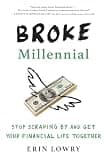
Broke Millennial
A relatable, jargon-free starter guide for young adults on budgeting, killing debt and having awkward money talks. The practical habits carry over neatly, just read the US credit-score chapters through an Australian lens.
I Will Teach You to Be Rich
Ramit Sethi
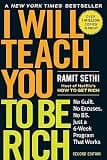
I Will Teach You to Be Rich
A funny, no-guilt six-week plan for automating your money and spending on what you love. The automation and psychology are spot on, just ignore the US Roth IRA bits and use super and Aussie ETFs.
Financial Feminist
Tori Dunlap
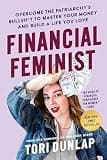
Financial Feminist
A warm, funny guide to money aimed at women, covering everything from killing shame around spending to negotiating pay and starting to invest. The mindset and salary chapters land hard, just apply an Australian lens.
Some links above are affiliate links. If you buy through them, Snowball Invest may earn a small commission at no extra cost to you. We only recommend books we'd suggest anyway.
Sources
Was this article useful?
Put it to your own numbers
Every calculator runs entirely in your browser, with nothing stored. See what these numbers look like for your own situation.
Explore the calculators →General information only. This article is educational and does not constitute personal financial advice. It does not account for your circumstances. Consider your own situation and seek advice from a licensed adviser before acting. Read our full disclaimer.

Timothy Hirou Gaschereau
Founder of Snowball Invest, not a financial adviser.
I write about what I'm learning myself, because nobody ever taught us how to take control of our own money. It's a skill, not a mystery, and it's never too late to learn it. The best day to start was yesterday, the second best is today.
LinkedIn →Related articles

Get Good with Money by Tiffany Aliche: An Honest Review
Our honest Get Good with Money review for Australians: Tiffany Aliche's 10-step 'financial wholeness' framework, what translates here, and what needs localising.

Clever Girl Finance by Bola Sokunbi: An Honest Review
Our honest Clever Girl Finance review for Australians: Bola Sokunbi's empowering, women-focused starter on mindset, debt and wealth, and what needs localising.

I Will Teach You to Be Rich Review: An Australian Take
An honest Australian review of Ramit Sethi's I Will Teach You to Be Rich: what works, what doesn't, and how to adapt the system for super, offset accounts and ETFs.