

Clever Girl Finance by Bola Sokunbi: An Honest Review
Our honest Clever Girl Finance review for Australians: Bola Sokunbi's empowering, women-focused starter on mindset, debt and wealth, and what needs localising.
 By Timothy Hirou GaschereauPublished
 9 min read
A solid entry-level read that genuinely delivers on mindset and behaviour, but Australians will need to do some translation on the US-specific mechanics. Here's exactly what you get, what you don't, and who should bother. It's part of our personal finance book reviews on Snowball Invest.
Quick answer
Best for women who are brand new to personal finance and want an encouraging, no-jargon starting point. Strong on money mindset and behaviour, foundational on the mechanics. Skip it if you already have a solid finance foundation or you're after advanced investing strategy. Our rating: 3.5 out of 5.
Want to read Clever Girl Finance?
An encouraging, women-focused starter on money mindset, budgeting, ditching debt and getting invested. Strong on the emotional side of money.
In this guide
- →What the book is about: mindset first, then budgeting, debt, saving and investing
- →The genuine strengths and the honest weaknesses
- →Who it's for, and who's past this stage
- →What critics and readers say
- →The Australian angle: super, credit reports and ASX ETFs
📖 What is Clever Girl Finance about?
The book is built around one central idea: that women deserve practical, empowering money education, not dry textbooks written for someone else. Bola Sokunbi is a Certified Financial Education Instructor and the founder of one of the largest personal finance platforms for women in the US, and she has said she wrote the book after not finding money books that reflected women like her. That origin story shapes the whole tone. The book moves through a clear sequence: money mindset (limiting beliefs, emotional spending, the stories you tell yourself), getting organised, budgeting (with "Take Action" worksheets throughout), building an emergency fund, ditching debt, boosting income, saving intentionally, and an introduction to investing for long-term wealth.
The "clever girl" approach leans heavily on real stories from women who've turned their finances around. It's encouraging, occasionally funny and deliberately accessible. It's also US-centric on specific accounts and credit mechanics, and it stays firmly at a foundational level throughout.
⚖️ Strengths and weaknesses
What it gets right
- ✓The tone is the whole point: Sokunbi writes like a smart friend, with no condescension and no assumed knowledge.
- ✓The mindset chapters are the best in the book, flipping the usual ratio and spending real time on behaviour, not just tactics.
- ✓'Take Action' exercises at the end of every chapter, which readers consistently call the most useful part.
- ✓Real stories from real women navigating debt, low income and financial anxiety, which makes the advice feel achievable.
- ✓Genuinely good for absolute beginners, meeting you exactly where you are.
- ✓Treats the emotional side of money as central, not a footnote.
Where it falls short
- ✕US-centric on the mechanics: 401(k)s, Roth IRAs and the US credit-scoring system scattered throughout.
- ✕Stays at a foundational level: the investing chapter is an introduction, not a portfolio guide.
- ✕Light on depth for experienced readers, who'll cover familiar ground quickly.
- ✕The gendered framing (handbag and shoe references) reads as a bit broad to some readers.
- ✕A few saving and investing examples assume a level of disposable income not every reader will have.
👤 Who should read it, and who should skip it?
Read it if you
- ✓Are new to personal finance and want a clear, friendly starting point.
- ✓Want a genuine mindset reset around money, not just tactics.
- ✓Are a woman who has felt excluded or bored by traditional finance books.
- ✓Want practical worksheets and 'Take Action' exercises to work through.
Skip it if you
- ✕Already have a solid understanding of budgeting, debt management and investing.
- ✕Want advanced investing strategy or portfolio construction.
- ✕Will be frustrated by US-specific account types and credit mechanics without a workaround.
- ✕Are looking for an Australian-specific guide from the start.
🔍 What do critics say?
Sokunbi and the Clever Girl Finance platform have been featured widely across major US media, and the coverage is broadly positive, focusing on the empowerment angle, her personal story, and the gap she identified in the personal finance book market (she couldn't find money books for women like her, so she wrote one). No significant negative critical reviews from major publications have surfaced, and her financial-education credentials add weight to the practical advice.
💬 What do readers say? Goodreads and Reddit
On Goodreads it holds around 3.8 out of 5 from over a thousand ratings. Common praise: accessible, friendly writing that doesn't talk down to beginners; the "Take Action" sections; the mindset shift around debt and spending; the real-life examples; and the women-focused perspective. Common criticism: too basic for readers who already have a foundation, some examples feel less realistic for lower-income readers, and the gendered tone lands as broad for some.
On Reddit, personal finance and book-recommendation threads consistently position it as a go-to for women new to finance. It's a "start here" title: strong on confidence and habits, less so on advanced strategy.
🇦🇺 The Australian angle
Most of the book travels well: the mindset content, budgeting frameworks, debt strategies, savings habits and income-growth advice are all universal and need no US bank account. The parts that need translation:
- 401(k) and Roth IRA map to superannuation and voluntary super contributions. Same principle (tax-advantaged long-term investing), different vehicle. The ATO has clear guidance on super.
- US credit scores map to Australian credit reports, which you can access free through Equifax, Experian or illion. Different mechanics, same message: know your credit, protect it, improve it.
- US savings accounts map to Australian high-interest savings accounts through most banks and online lenders.
- Investing basics apply here via low-cost ASX ETFs through a brokerage account, and the ASX has introductory resources for new investors.
Read Clever Girl Finance with a tab open to MoneySmart and you get the best of both: the mindset and motivation from Sokunbi, and the Australian-specific mechanics from ASIC. For genuinely local women-focused reads, our She's on the Money review and Girls Just Wanna Have Funds review cover the same territory in an Australian context.
💰 The verdict
Clever Girl Finance is a genuinely good entry-level personal finance book. The mindset and behaviour chapters are the strongest parts, and they're the kind of content that actually changes how people relate to money rather than just adding to their reading list. For Australian readers, the US-specific mechanics require a bit of translation, but the core lessons travel well, so think of it as a mindset and framework book, not a how-to for Australian accounts and products. It's not the book for advanced investors or deep ETF strategy, but if you're starting from scratch, or need a confidence boost and a clear framework to get moving, it's a solid choice. Pair it with local resources for the mechanics and it earns its place on the shelf. Our rating: 3.5 out of 5.
Want to read Clever Girl Finance?
New to money and want a confidence boost? Grab a copy, do the 'Take Action' worksheets, and localise the US bits.
SnowLetter
Australia's money news and our best reads, once a week.
❓ Frequently asked questions
Is Clever Girl Finance suitable for Australian readers?
+
Yes, with some caveats. The mindset, budgeting, debt and savings content is universal and applies directly. The US-specific mechanics (401k, Roth IRA, US credit scores) need translating to Australian equivalents: super, Australian credit reports and high-interest savings accounts. Pair it with MoneySmart for local tools and guidance.
Is the book only for women?
+
It's written with women as the primary audience, and the tone, examples and framing reflect that. But the core content (budgeting, debt, saving, investing) is relevant to anyone new to managing money, and plenty of readers who aren't the target audience have found it useful, even if some references feel more targeted.
How long does it take to read?
+
The original edition runs around 240 pages, so most readers get through it in four to six hours; a later expanded edition is longer. The 'Take Action' worksheets add time if you work through them as you go, which is the recommended approach.
Is it good for beginners?
+
Yes, it's specifically designed for beginners. It assumes no prior knowledge and builds from the ground up, starting with money mindset before moving into budgeting, debt, saving and investing. Readers consistently describe it as one of the more accessible personal finance books for beginners.
Does it cover investing?
+
At an introductory level. The investing chapter explains long-term wealth building and getting started, but doesn't go deep on portfolio construction, asset allocation or specific vehicles. For Australians wanting to go further, the ASX has free resources on ETFs and getting started.
Are there Australian alternatives?
+
Yes. She's on the Money by Victoria Devine covers super, tax and investing in an Australian context, and Girls Just Wanna Have Funds by Molly Benjamin has a similar accessible, empowering tone. For a broader Australian foundation, The Barefoot Investor is a staple, and MoneySmart is a free, comprehensive resource built for Australians.
📚 Get the book (and two women-focused companions)
Clever Girl Finance
Bola Sokunbi
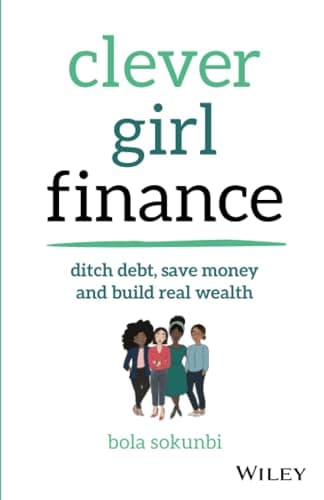
Clever Girl Finance
An encouraging, women-focused starter on money mindset, budgeting, ditching debt and getting invested. Strong on the emotional side of money, just localise the US accounts and credit bits.
She's on the Money
Victoria Devine
She's on the Money
Written for millennials, walks through budgeting, clearing debt, saving, investing and buying property with real stories.
Girls Just Wanna Have Funds
Molly Benjamin

Girls Just Wanna Have Funds
Molly Benjamin, founder of Australia's Ladies Finance Club, makes money feel fun and doable, covering budgeting, investing and confidence in one friendly package. Perfect if you want to sort your finances without the jargon or the guilt.
Some links above are affiliate links. If you buy through them, Snowball Invest may earn a small commission at no extra cost to you. We only recommend books we'd suggest anyway.
Sources
Was this article useful?
Put it to your own numbers
Every calculator runs entirely in your browser, with nothing stored. See what these numbers look like for your own situation.
Explore the calculators →General information only. This article is educational and does not constitute personal financial advice. It does not account for your circumstances. Consider your own situation and seek advice from a licensed adviser before acting. Read our full disclaimer.

Timothy Hirou Gaschereau
Founder of Snowball Invest, not a financial adviser.
I write about what I'm learning myself, because nobody ever taught us how to take control of our own money. It's a skill, not a mystery, and it's never too late to learn it. The best day to start was yesterday, the second best is today.
LinkedIn →Related articles

Women & Money by Suze Orman: An Honest Review
Our honest Women & Money review for Australians: Suze Orman's empowerment-first take on the psychology of money, the US-centric bits, and who it's for.

Rich AF by Vivian Tu: An Honest Review
Our honest Rich AF review for Australians: Vivian Tu's fun, beginner-friendly STRIP framework, what translates here, and what needs localising to super and Aussie tax.

Get Good with Money by Tiffany Aliche: An Honest Review
Our honest Get Good with Money review for Australians: Tiffany Aliche's 10-step 'financial wholeness' framework, what translates here, and what needs localising.