

I Will Teach You to Be Rich Review: An Australian Take
An honest Australian review of Ramit Sethi's I Will Teach You to Be Rich: what works, what doesn't, and how to adapt the system for super, offset accounts and ETFs.
 By Timothy Hirou GaschereauPublished
 10 min read
You've probably seen I Will Teach You to Be Rich recommended in every money thread you've ever scrolled. Ramit Sethi built a cult following with it, and the updated 2nd edition is still one of the most-recommended personal finance books in the world. But is it actually useful if you're Australian? Here's our honest take. It's part of our personal finance book reviews on Snowball Invest.
Quick answer
A genuinely excellent book for anyone in their 20s or 30s who feels overwhelmed by money and wants a real system, not just another lecture about cutting coffee. The automation framework and conscious spending plan are the highlights. The catch: it's written for Americans, so some chapters need translating, and Sethi's confident tone won't be for everyone. Our rating: 4 out of 5.
Want to read I Will Teach You to Be Rich?
A six-week system you'll actually finish and act on. One of the best beginner money books going.
In this guide
- →What the book is actually about: the six-week program and the conscious spending plan
- →Genuine strengths and the real criticisms, side by side
- →Who it's for, and who should skip it
- →What critics and readers say, on Goodreads and Reddit
- →The Australian angle: what translates, and what to swap for super and ETFs
📖 What is I Will Teach You to Be Rich actually about?
The book is a six-week program, each week a different pillar of personal finance, building toward a system that mostly runs itself. The heart of it is the conscious spending plan: instead of tracking every dollar, you divide your income into four buckets and fund your priorities first, then spend whatever's left without guilt. Spend extravagantly on what you love, cut costs mercilessly on what you don't.
| Bucket | What goes in |
|---|---|
| Fixed costs | Rent, bills, subscriptions, minimum loan repayments. |
| Savings | Emergency fund and short-term goals, funded automatically. |
| Investments | Long-term investing, also automated on payday. |
| Guilt-free spending | Whatever's left, yours to enjoy without guilt. |
The other big ideas: automation (money flows automatically on payday so no willpower is needed), the "Big Wins" philosophy (a few high-leverage decisions like negotiating salary and choosing low-fee accounts beat obsessing over small expenses), and a strong case for low-cost index fund investing. The savings bucket does double duty as your emergency fund. The credit-card chapter is heavily US-centric, but the rest travels well.
- Fixed costs50 to 60%
- Guilt-free spending20 to 35%
- Savings goals5 to 10%
- Investments~10%
⚖️ Strengths and weaknesses
A genuinely useful system, with a few real caveats. Both worth knowing.
What it gets right
- ✓The automation system is genuinely transformative and removes the need for willpower.
- ✓The conscious spending plan reframes money as permission, not guilt and restriction.
- ✓The 'Big Wins' framing correctly says a few big decisions beat cutting back on brunch.
- ✓The six-week structure forces action: you set things up, not just read theory.
- ✓The tone works for people who find finance boring or intimidating.
- ✓The index-fund investing philosophy is sound and well-evidenced.
Where it falls short
- ✕It's heavily US-centric: Roth IRAs, 401ks and US credit-card churning don't apply here.
- ✕The confident tone tips into brashness for some readers, motivating for others.
- ✕Property is barely covered, a meaningful gap for an Australian audience.
- ✕It assumes a regular, stable income, so freelancers need to adapt the framework.
- ✕Some product context hasn't aged perfectly since the 2019 edition.
👤 Who should read it, and who should skip it?
Read it if you
- ✓Are in your 20s or 30s and feel you should be doing more with your money.
- ✓Have a regular salary and want a system that runs on autopilot.
- ✓Feel overwhelmed by finance and want someone to just tell you what to do.
- ✓Want a framework, not a budget spreadsheet, with a bit of personality.
Skip it if you
- ✕Already have a solid system and want advanced strategies.
- ✕Are self-employed with highly irregular income (automation won't map neatly).
- ✕Want Australian-specific product or super fund guidance.
- ✕Find a confident American authorial voice irritating.
🔍 What do critics say?
The book has been widely praised in personal finance circles since the first edition in 2009, and it's consistently recommended as one of the best starting points for young adults getting serious about money. The main professional criticism echoes the readers: the US-centricity limits its usefulness for international audiences, and Sethi's occasionally smug tone is a recurring complaint. Neither is fatal to the book's core value, but both are worth knowing before you buy.
💬 What do readers say? Goodreads and Reddit
On Goodreads the book holds an average of around 4.2 out of 5 across tens of thousands of ratings, firmly in the top tier of personal finance books by reader satisfaction.
On r/personalfinance and r/AusFinance it's regularly recommended as a strong starting point, with the standard Australian caveat: filter out the US-specific chapters and swap in local equivalents. Several r/AusFinance commenters note The Barefoot Investor covers similar ground with an Australian context, and the two complement each other well.
🇦🇺 The Australian angle: what translates and what doesn't
The automation philosophy is the most universally applicable idea in the book, and the Australian version is clean: your employer pays your Super Guarantee contributions automatically (your version of the 401k/Roth automation Sethi describes), you set up automatic transfers from your everyday account to a high-interest savings or offset account on payday, and you automate regular investments into a diversified index ETF. Different mechanics, identical principle. The conscious spending plan, the Big Wins philosophy and the index-fund mindset all translate directly too.
What to ignore or adapt: the Roth IRA and 401k specifics (your equivalent is superannuation, and you should check current contribution rules with the ATO and ASIC Moneysmart), the US credit-card churning tactics (Australian rewards are far less generous, though the pay-it-off-in-full principle holds), and the specific US bank account picks. For the local how-to on the investing side, our guide to passive investing in Australia picks up where the book's US chapters leave off. Do your own research and compare fees rather than following any specific product from the book.
💰 The verdict
I Will Teach You to Be Rich is one of the best personal finance books available for people new to managing money seriously, and that holds even for Australians. The core framework, automation, conscious spending, Big Wins and index investing, is genuinely useful and directly applicable with a little translation. You'll need to skip the US-specific chapters, but what's left is well worth your time. Our rating is 4 out of 5.
Want to read I Will Teach You to Be Rich?
Ready to put your money on autopilot? Grab the 2nd edition and work the six weeks.
SnowLetter
Australia's money news and our best reads, once a week.
❓ Frequently asked questions
Is I Will Teach You to Be Rich suitable for Australians?
+
Yes, with caveats. The core framework (automation, conscious spending, index investing) translates directly. Skip the chapters on Roth IRAs, 401ks and US credit-card churning, and apply the principles using Australian accounts and superannuation instead. For local guidance on super and investing, ASIC Moneysmart is the best starting point.
What is the conscious spending plan in Ramit Sethi's book?
+
It divides your income into four buckets: fixed costs, savings, investments and guilt-free spending. The idea is that you don't track every dollar. You set up a system where savings and investments are funded automatically, fixed costs are covered, and whatever's left in your everyday account is yours to spend without guilt. It's a system, not a budget.
Is the 2nd edition worth buying over the 1st?
+
Yes. The 2nd edition (2019) updates the investing sections, adds new case studies, and removes some of the more dated US-specific advice from the original 2009 version. If you're buying it for the first time, get the 2nd edition.
Does Ramit Sethi recommend index funds?
+
Yes. He's a strong advocate for low-cost index fund investing, arguing that most people (including most professionals) can't consistently beat the market, so a diversified, low-fee index fund is the smarter choice. That maps well onto the Australian ETF landscape.
How does it compare to The Barefoot Investor?
+
They cover similar ground and complement each other well. The Barefoot Investor is Australian-specific with a step-by-step bucket system, while I Will Teach You to Be Rich is US-written but stronger on automation and the psychology of guilt-free spending. Read Barefoot for local mechanics and Sethi for the system and mindset.
📚 Get the book (and two worthy next reads)
I Will Teach You to Be Rich
Ramit Sethi
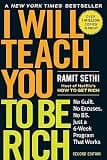
I Will Teach You to Be Rich
A funny, no-guilt six-week plan for automating your money and spending on what you love. The automation and psychology are spot on, just ignore the US Roth IRA bits and use super and Aussie ETFs.
The Barefoot Investor
Scott Pape
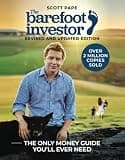
The Barefoot Investor
Australia's best-selling money book ever. A simple system for accounts, budgeting, debt and a real emergency fund in one.
The Automatic Millionaire
David Bach
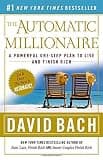
The Automatic Millionaire
The big idea is to make saving and investing automatic so willpower never gets a vote, plus the famous latte factor on how small daily leaks sink your wealth. Just read the US account bits as super and salary sacrifice.
Some links above are affiliate links. If you buy through them, Snowball Invest may earn a small commission at no extra cost to you. We only recommend books we'd suggest anyway.
Sources
Was this article useful?
Put it to your own numbers
Every calculator runs entirely in your browser, with nothing stored. See what these numbers look like for your own situation.
Explore the calculators →General information only. This article is educational and does not constitute personal financial advice. It does not account for your circumstances. Consider your own situation and seek advice from a licensed adviser before acting. Read our full disclaimer.

Timothy Hirou Gaschereau
Founder of Snowball Invest, not a financial adviser.
I write about what I'm learning myself, because nobody ever taught us how to take control of our own money. It's a skill, not a mystery, and it's never too late to learn it. The best day to start was yesterday, the second best is today.
LinkedIn →Related articles

Smashed Avocado by Nicole Haddow: An Honest Review
Our honest Smashed Avocado review: Nicole Haddow's relatable Aussie first-home-buyer memoir, the smashed avocado debate, its strengths, and who it's for.

The Joyful Frugalista by Serina Bird: An Honest Review
Our honest Joyful Frugalista review: Serina Bird's guilt-free, genuinely Australian take on frugal living, its strengths, its limits, and who should read it.

Get Good with Money by Tiffany Aliche: An Honest Review
Our honest Get Good with Money review for Australians: Tiffany Aliche's 10-step 'financial wholeness' framework, what translates here, and what needs localising.