

The Automatic Millionaire by David Bach: An Honest Review
Our honest The Automatic Millionaire review for Australians: David Bach's automation and pay-yourself-first formula, what maps to super and ETFs, and what to skip.
 By Timothy Hirou GaschereauPublished
 9 min read
A genuinely useful beginner book with one powerful idea, wrapped in a lot of American context you'll need to translate yourself. If you've been meaning to sort your finances out for the past three years and haven't, this might actually get you moving. It's part of our personal finance book reviews on Snowball Invest.
Quick answer
A solid, beginner-friendly personal finance book built around one core insight: automate your finances so your future self doesn't rely on your present self's willpower. For Australians, the philosophy maps well onto super, ETFs and high-interest savings accounts. The US account types (401k, IRA, Roth IRA) are irrelevant here, and it repeats itself more than it needs to. Our rating: 3.5 out of 5.
Want to read The Automatic Millionaire?
Make saving and investing automatic so willpower never gets a vote, plus the famous Latte Factor. Read the US account bits as super.
In this guide
- →What the book is about: automation, pay yourself first and the Latte Factor
- →The genuine strengths and the honest weaknesses
- →Who it's for, and who already does this
- →What critics and r/personalfinance readers say
- →The Australian angle: super as pay-yourself-first, ETFs and fortnightly repayments
📖 What is The Automatic Millionaire about?
The Automatic Millionaire is David Bach's international bestseller, first published in 2003/2004 and updated across later editions. Its central argument is simple: you don't need a budget, you don't need willpower, and you don't need to earn a fortune. You just need to set up automatic systems that move money to the right places before you can spend it. The core ideas:
- Automate your finances. Set up automatic transfers so saving and investing happen without ongoing effort or discipline.
- Pay yourself first. Before bills or anything else, a portion of every pay cheque goes straight to savings and investments, automatically.
- The Latte Factor. Small, recurring daily spending adds up over time; redirect even a fraction into investments and compounding does the rest.
- Automatic mortgage payoff. Fortnightly rather than monthly repayments effectively means one extra repayment a year, shaving years off your loan.
- Ordinary earners can build real wealth through consistent automated saving over decades, not a big income.
The core message has aged well even if some of the specific tools haven't.
⚖️ Strengths and weaknesses
What it gets right
- ✓Automation removes willpower from the equation: humans are terrible at choosing the future over the present, so remove the choice. It works.
- ✓Beginner-friendly and actually actionable: you can set up the whole plan in an afternoon.
- ✓The Latte Factor reframes small spending: it's about noticing unconsidered spending that quietly bleeds your wealth.
- ✓Motivating and readable, more conversation than textbook, easy to finish in a weekend.
- ✓The core message is timeless: consistency beats complexity, and compounding does the heavy lifting.
Where it falls short
- ✕The Latte Factor is oversimplified: cutting your coffee won't fix a structural income problem or a big HECS debt.
- ✕Heavily US-centric: the framework is built around 401(k)s and IRAs that don't exist here.
- ✕Repetitive: the core message is restated so often the book feels padded.
- ✕Optimistic assumptions and very bullish on home ownership, a more complicated conversation in Australia.
- ✕Thin on investing depth beyond 'automate into index funds', and little value for experienced readers.
👤 Who should read it, and who should skip it?
Read it if you
- ✓Are a beginner who keeps meaning to 'start' but never does.
- ✓Struggle with budgeting willpower and want a set-and-forget approach.
- ✓Want a short, motivating read to kickstart good money habits.
Skip it if you
- ✕Are an intermediate or advanced reader who already has super sorted and auto-transfers running.
- ✕Are dealing with high debt or irregular income (the framework assumes a stable pay cheque).
- ✕Want Australian-specific guidance on super, tax and investing.
🔍 What do critics say?
On launch, the book was a runaway bestseller, and critics acknowledged its appeal while noting that much of the advice is self-evident: Bach repackages familiar personal finance wisdom in an accessible format. Later reviews from respected finance sites treat it as a solid beginner guide, praising the automation framework while flagging that it glosses over the role of income and isn't the only path to wealth. The recurring theme is consistent: useful for beginners, repetitive and light on depth for experienced readers.
💬 What do readers say? Goodreads and Reddit
On Goodreads it holds around 3.9 out of 5 from tens of thousands of ratings, a solid if not spectacular result, with the majority finding it genuinely useful. On Reddit the picture is similar: r/personalfinance consistently recommends it as a strong starting point for beginners, singling out the automation framework, while experienced readers find it repetitive and basic. The Latte Factor gets a mixed reception, useful reframe to some, dismissive of structural challenges to others.
On r/AusFinance the core automation principle is broadly seen as applicable to the Australian context, with the standard caveat that the US-specific account types require mental translation. Treat it as a philosophy book, not a how-to manual.
🇦🇺 The Australian angle
The good news: the automation principle maps perfectly to Australia. Set up an automatic transfer from your transaction account to a high-interest savings account on payday, and a regular brokerage contribution into an ASX ETF. Done. That's the automatic millionaire framework in Australian English.
- Super is literally "pay yourself first." Your employer contributes 12% of your ordinary time earnings to your super (the Super Guarantee rate rose to 12% from 1 July 2025), before you ever see it. On top of that, voluntary concessional contributions (salary sacrifice) are taxed at just 15% rather than your marginal rate, and it's automatic once set up.
- The Latte Factor works the same here. A $6 flat white every weekday is around $1,560 a year; invested consistently in a low-cost ETF, it compounds into a meaningful sum over decades, see our guide to compound interest for the maths. Small, automatic, consistent beats large, irregular and willpower-dependent every time.
- The US account types don't translate. The closest Australian parallels are super (tax-advantaged, locked until preservation age, similar flavour to a 401k) and a standard brokerage account for ETFs outside super. There's no direct equivalent of the Roth IRA's tax-free growth.
- Fortnightly mortgage repayments do work here (check your lender first, as some products have restrictions), paying down principal faster and saving on interest.
- The home-ownership emphasis needs context, given Sydney and Melbourne price-to-income ratios among the highest in the world. The equity principle still applies, but the path there looks very different for most Australians.
For a genuinely Australian take on the same automation idea, our Barefoot Investor review covers Scott Pape's local system, and our Richest Man in Babylon review traces where "pay yourself first" originally came from.
💰 The verdict
The Automatic Millionaire is genuinely useful for one specific reader: the person who knows they should be saving and investing but keeps not doing it. Bach's core insight (automate so your future self doesn't rely on your present self's willpower) is backed by decades of behavioural economics and is as relevant now as in 2004. For Australians the translation work is real but not onerous: super replaces the 401(k), a brokerage account with regular ETF contributions replaces the IRA, and a high-interest savings account on auto-transfer replaces the "dream account." Where it falls short is depth and originality: it's not a comprehensive investing guide, and if you've read a few finance books you'll nod along without learning much new. But as a first book, or a mindset reset for a procrastinator, it earns its place. Our rating: 3.5 out of 5.
Want to read The Automatic Millionaire?
Been procrastinating on your finances? Grab a copy and set up your first automatic transfer this week.
SnowLetter
Australia's money news and our best reads, once a week.
❓ Frequently asked questions
Is The Automatic Millionaire worth reading?
+
For beginners, yes. If you've never set up automatic savings or investments and keep putting it off, the book makes a compelling case for why automation beats willpower, with a simple framework to act on. If you're already across the basics, you can probably skip it.
What is the Latte Factor?
+
The idea that small, recurring daily expenses (Bach uses a morning coffee) add up to a significant amount over time. The real point isn't that coffee is bad, it's that unconscious, habitual spending quietly erodes your ability to invest. In Australia, a $6 flat white every weekday is around $1,560 a year before you've even thought about it. Redirect a portion into automatic investments and compounding takes over.
Is David Bach's advice applicable in Australia?
+
The core philosophy (automate your finances and pay yourself first) maps well onto the Australian system. The specific US account types (401k, IRA, Roth IRA) don't have direct Australian equivalents. Here, the relevant vehicles are super (including voluntary concessional contributions), a standard brokerage account for ETFs, and a high-interest savings account. The principle is the same; the implementation differs.
What is pay yourself first?
+
Directing a portion of your income to savings or investments before spending anything else. Rather than saving whatever's left at month's end (often nothing), you automate a transfer on payday so the money moves before you can spend it. In Australia, employer super contributions are the most common example already happening automatically.
How does it compare to The Barefoot Investor?
+
Both advocate automating your finances and keeping things simple. The Barefoot Investor is designed for Australians, uses local account types and banks, and addresses the Australian tax system directly, so most Australian readers will find it more immediately actionable. The Automatic Millionaire is worth reading for its behavioural framing, but Barefoot is the more practical starting point here.
Is it good for beginners?
+
Yes. It's one of the better beginner personal finance books precisely because it's short, readable and focused on a single actionable idea. Just be prepared to do your own research on the Australian implementation, since the account-type references are all American.
📚 Get the book (and two companions)
The Automatic Millionaire
David Bach
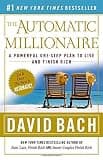
The Automatic Millionaire
The big idea is to make saving and investing automatic so willpower never gets a vote, plus the famous latte factor on how small daily leaks sink your wealth. Just read the US account bits as super and salary sacrifice.
The Barefoot Investor
Scott Pape
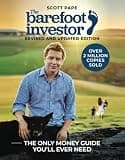
The Barefoot Investor
Australia's best-selling money book ever. A simple system for accounts, budgeting, debt and a real emergency fund in one.
The Richest Man in Babylon
George S. Clason
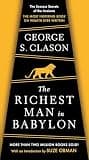
The Richest Man in Babylon
The original pay-yourself-first playbook, dressed up as ancient Babylonian parables. Almost a century old and the advice still lands.
Some links above are affiliate links. If you buy through them, Snowball Invest may earn a small commission at no extra cost to you. We only recommend books we'd suggest anyway.
Sources
Was this article useful?
Put it to your own numbers
Every calculator runs entirely in your browser, with nothing stored. See what these numbers look like for your own situation.
Explore the calculators →General information only. This article is educational and does not constitute personal financial advice. It does not account for your circumstances. Consider your own situation and seek advice from a licensed adviser before acting. Read our full disclaimer.

Timothy Hirou Gaschereau
Founder of Snowball Invest, not a financial adviser.
I write about what I'm learning myself, because nobody ever taught us how to take control of our own money. It's a skill, not a mystery, and it's never too late to learn it. The best day to start was yesterday, the second best is today.
LinkedIn →Related articles

Get Good with Money by Tiffany Aliche: An Honest Review
Our honest Get Good with Money review for Australians: Tiffany Aliche's 10-step 'financial wholeness' framework, what translates here, and what needs localising.

Clever Girl Finance by Bola Sokunbi: An Honest Review
Our honest Clever Girl Finance review for Australians: Bola Sokunbi's empowering, women-focused starter on mindset, debt and wealth, and what needs localising.

I Will Teach You to Be Rich Review: An Australian Take
An honest Australian review of Ramit Sethi's I Will Teach You to Be Rich: what works, what doesn't, and how to adapt the system for super, offset accounts and ETFs.