

The Richest Man in Babylon: An Honest Review
Our honest Richest Man in Babylon review for Australians: the timeless lessons, the real weaknesses, and how the parables map to super, ETFs and modern money habits.
 By Timothy Hirou GaschereauPublished
 9 min read
The Richest Man in Babylon is one of the most recommended personal finance books of all time, and for good reason. Written by George S. Clason and first published as a series of pamphlets in the 1920s, it teaches the basics of building wealth through short parables set in ancient Babylon. It's not a perfect book. But for a complete beginner, it might be the most valuable two or three hours you'll spend this year. It's part of our personal finance book reviews on Snowball Invest.
Quick answer
A century-old classic that still lands its core punch. Best for beginners and anyone who needs a mindset reset on saving and spending. Read it for the shift in how you think about money, then layer on the Australian-specific mechanics from elsewhere. Our rating: 4 out of 5.
Want to read The Richest Man in Babylon?
The original pay-yourself-first playbook, dressed up as ancient Babylonian parables. Short, memorable, still true.
In this guide
- →What the book is about: parables, and the pay-yourself-first core idea
- →The Seven Cures for a Lean Purse and the Five Laws of Gold
- →The genuine strengths and the honest weaknesses
- →Who it's for, and who can skip it
- →The Australian angle: how the parables map to super and ETFs
📖 What is The Richest Man in Babylon about?
This isn't a textbook, it's a collection of parables. Clason teaches his financial lessons through fictional characters in ancient Babylon, which sounds gimmicky but genuinely works. The stories stick in a way that a list of bullet points simply doesn't.
The core thesis is disarmingly simple: "a part of all you earn is yours to keep." Clason's prescription is to save at least one-tenth of everything you earn before you pay anyone else. Pay yourself first. Everything else comes after. From that foundation the book builds two frameworks: the Seven Cures for a Lean Purse (the practical playbook) and the Five Laws of Gold (the philosophical backbone). The big themes running through the lot: control your spending, make your money multiply, guard against loss, and keep increasing your ability to earn.
📜 The Seven Cures for a Lean Purse (and the Five Laws of Gold)
This is the part worth bookmarking. Here's the short version, in plain English.
The Seven Cures for a Lean Purse
- Start thy purse to fattening. Save at least 10% of everything you earn, the first 10%, before anything else.
- Control thy expenditures. Budget to what you need, not what you want. Desire always outpaces income unless you set limits.
- Make thy gold multiply. Don't just save, invest. Put your money to work so it earns more money.
- Guard thy treasures from loss. Protect your principal before you chase a return. Don't invest in things you don't understand.
- Make of thy dwelling a profitable investment. Own your home if you can. Controversial in today's Sydney, perhaps, but the logic holds.
- Insure a future income. Plan for a time when you can't work. Set money aside now so future-you isn't dependent on anyone.
- Increase thy ability to earn. Invest in yourself. Skills and knowledge compound too, especially early in your career.
The Five Laws of Gold
- Gold comes to those who save at least one-tenth of their earnings.
- Gold labours diligently for the wise owner who finds it profitable employment.
- Gold clings to the cautious owner who invests under wise guidance.
- Gold slips away from those who invest in things they don't understand.
- Gold flees anyone who forces it to chase impossible returns.
The Five Laws are essentially a 100-year-old warning against get-rich-quick schemes. Point them at a dodgy crypto pitch or a hot stock tip promising 40% a year and they still work perfectly.
⚖️ Strengths and weaknesses
What it gets right
- ✓Pay yourself first is timeless: save before you spend, the single most effective savings habit, made to feel obvious rather than preachy.
- ✓Short and readable: most people finish it in a weekend, so there's no excuse not to.
- ✓The parable format makes abstract ideas memorable in a way textbooks rarely manage.
- ✓A genuine mindset shift for beginners: for someone who's never thought seriously about money, it can be a turning point.
- ✓Cheap or free: the original text is easy to find online at no cost.
- ✓The Five Laws of Gold are still a sharp filter for dodgy investments.
Where it falls short
- ✕The archaic pseudo-Biblical language wears thin fast, and some readers bounce off the style entirely.
- ✕The advice is basic: if you've read a few finance books, nothing here will surprise you.
- ✕It's repetitive, cycling the same ideas through parable after parable.
- ✕Zero Australian context: no super, no ETFs, no franking credits. You do the translation yourself.
- ✕Some dated social attitudes reflect 1920s America, worth being aware of going in.
- ✕No real investment mechanics: it says invest wisely, but not how (no diversification, no index funds).
👤 Who should read it, and who can skip it?
Read it if you
- ✓Are new to personal finance and want a simple, memorable starting point.
- ✓Keep spending everything you earn and can't figure out why.
- ✓Need a mindset shift more than a technical guide.
- ✓Want to understand where the pay-yourself-first idea actually comes from.
- ✓Have an hour or two and fancy a genuine classic of the genre.
Skip or skim it if you
- ✕Already have a savings habit and a basic investment strategy in place.
- ✕Want practical Australian guidance on super, ETFs or tax.
- ✕Have already read two or three finance books and want something new.
- ✕Struggle with old-fashioned prose and find it distracting.
🔍 What do critics say?
The critical consensus has been remarkably consistent for decades. Reviewers praise it as a simple, memorable introduction to the fundamentals, and agree its core lessons (save consistently, invest carefully, avoid foolish risks) are sound and timeless. The criticism is equally consistent: it's repetitive, the style is dated, and it offers broad principles with almost no practical detail on how to implement them in a modern context. Most reviewers land in the same place: it's more valuable as a mindset reset than as a technical investing guide. On that narrower goal, it succeeds.
💬 What do readers say? Goodreads and Reddit
Readers love it. On Goodreads it holds around 4.2 out of 5 from hundreds of thousands of ratings, with about half handing out five stars, which is a remarkable result for a book that's been around for a century. On Reddit it appears in almost every "best personal finance books" thread, and it's a long-standing fixture on r/personalfinance's recommended reading list.
The minority view is worth noting: readers who already have some financial literacy often find it repetitive, preachy and too basic for its reputation. Both reactions make sense. The book is genuinely transformative for some and genuinely underwhelming for others, and the difference usually comes down to where you're starting from.
🇦🇺 The Australian angle
Here's the thing most reviews won't tell you: the lessons translate almost perfectly to the Australian system. You just have to do the translation yourself.
- "Pay yourself first" is literally what superannuation does. Your employer contributions come out before you ever see the money. Salary sacrificing extra into super is the same principle, automated and tax-effective.
- "Make your gold multiply" is the case for index investing. Clason doesn't know what an ETF is, but his point (idle money earns nothing, invested money compounds) maps directly onto low-cost investing on the ASX.
- "Guard against loss" is a diversification argument. Don't put all your savings into one stock, one sector or one hot tip from a mate.
- "Increase your ability to earn" is as relevant as ever. Upskilling, further study and seeking out mentors are the modern versions of Clason's advice.
The honest caveat: treat this book as a mindset foundation. It'll get your head right. But you'll need other resources for how super actually works, how to invest in ETFs, and how franking credits affect your returns. MoneySmart and the ATO are good places to start, and our Barefoot Investor review points to a more practical Australian follow-up.
💰 The verdict
The Richest Man in Babylon is not a complete guide to personal finance, and it never claimed to be. What it is, is a short, readable, surprisingly durable argument for saving consistently, investing carefully, and not doing anything stupid with your money. For a beginner it's close to essential, because the parable format makes the lessons stick. The pay-yourself-first principle alone, properly understood and acted on, is worth more than the hour or two it takes to read. For someone already financially literate, it's a pleasant read that probably won't change anything. The real value for Australians in their 20s and 30s is the mindset shift: once "a part of all you earn is yours to keep" sinks in, you start to see your super contributions, your automatic ETF buys and your spending decisions differently. Read it, then read something with actual Australian mechanics in it. Our rating: 4 out of 5.
Want to read The Richest Man in Babylon?
Want the mindset foundation before the mechanics? Grab a copy and read the Seven Cures this weekend.
SnowLetter
Australia's money news and our best reads, once a week.
❓ Frequently asked questions
Is The Richest Man in Babylon worth reading?
+
Yes, particularly if you're new to personal finance or have never really thought seriously about saving and investing. The core lessons are timeless and the book is short enough that the time investment is minimal. If you're already financially literate, you'll find it basic but not without charm.
How long does it take to read?
+
Most readers finish it in two to three hours. It's short and the chapters are quick. It's the kind of book you can read on a long flight or across a couple of evenings.
Is it relevant to Australian readers?
+
The mindset lessons are completely relevant. The practical mechanics are not. There's no mention of super, ETFs, the Australian tax system or anything specifically Australian. Treat it as a foundation, then build on it with Australian-specific resources.
What is the main message of The Richest Man in Babylon?
+
Save at least 10% of everything you earn before you spend anything else. Put those savings to work through careful investment. Protect your principal before chasing returns. And keep investing in your own skills and earning capacity. That's the whole book, really.
Is The Richest Man in Babylon free?
+
The original 1920s text is old enough to be freely available online, including on the Internet Archive. Some modern editions with introductions or commentary cost a few dollars, but the core text is easy to find at no cost.
What should I read after The Richest Man in Babylon?
+
Once you've got the mindset foundation, move to something with practical, modern mechanics. The Psychology of Money is a great next step on behaviour, and for Australian specifics The Barefoot Investor covers super, banking and a step-by-step system.
📚 Get the book (and two natural next reads)
The Richest Man in Babylon
George S. Clason
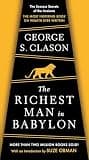
The Richest Man in Babylon
The original pay-yourself-first playbook, dressed up as ancient Babylonian parables. Almost a century old and the advice still lands.
The Psychology of Money
Morgan Housel
The Psychology of Money
19 short stories on how people actually think and feel about money, not just the maths of it.
The Barefoot Investor
Scott Pape
The Barefoot Investor
Australia's best-selling money book ever. A simple system for accounts, budgeting, debt and a real emergency fund in one.
Some links above are affiliate links. If you buy through them, Snowball Invest may earn a small commission at no extra cost to you. We only recommend books we'd suggest anyway.
Sources
Was this article useful?
Put it to your own numbers
Every calculator runs entirely in your browser, with nothing stored. See what these numbers look like for your own situation.
Explore the calculators →General information only. This article is educational and does not constitute personal financial advice. It does not account for your circumstances. Consider your own situation and seek advice from a licensed adviser before acting. Read our full disclaimer.

Timothy Hirou Gaschereau
Founder of Snowball Invest, not a financial adviser.
I write about what I'm learning myself, because nobody ever taught us how to take control of our own money. It's a skill, not a mystery, and it's never too late to learn it. The best day to start was yesterday, the second best is today.
LinkedIn →Related articles

The Wealthy Barber by David Chilton: An Honest Review
Our honest Wealthy Barber review for Australians: David Chilton's pay-yourself-first classic, what still holds up, what's dated, and how it maps to super and ETFs.

Get Good with Money by Tiffany Aliche: An Honest Review
Our honest Get Good with Money review for Australians: Tiffany Aliche's 10-step 'financial wholeness' framework, what translates here, and what needs localising.

Clever Girl Finance by Bola Sokunbi: An Honest Review
Our honest Clever Girl Finance review for Australians: Bola Sokunbi's empowering, women-focused starter on mindset, debt and wealth, and what needs localising.