

The Wealthy Barber by David Chilton: An Honest Review
Our honest Wealthy Barber review for Australians: David Chilton's pay-yourself-first classic, what still holds up, what's dated, and how it maps to super and ETFs.
 By Timothy Hirou GaschereauPublished
 9 min read
A decades-old Canadian book about a fictional barber is still one of the most recommended personal finance reads on the planet. That either says a lot about the book, or a lot about how little the basics of money have changed. Probably both: the mindset is timeless, the mechanics are dated. It's part of our personal finance book reviews on Snowball Invest.
Quick answer
A genuinely readable personal finance classic with timeless principles, let down only by specific numbers and investment mechanics that are well past their use-by date. Best for complete beginners who want a painless introduction to saving, investing and the right money mindset. Skip it if you already know the basics and want practical, Australia-specific guidance. Our rating: 4 out of 5.
Want to read The Wealthy Barber?
Personal finance taught as a story: a small-town barber dishes out timeless wisdom on paying yourself first and investing steadily.
In this guide
- →What the book is about: the story format and 'pay yourself first'
- →The genuine strengths and the honest, dated weaknesses
- →Who it's for, and who already knows this
- →What critics and readers say
- →The Australian angle: mapping it to super and ASX ETFs
📖 What is The Wealthy Barber about?
The Wealthy Barber was first published in 1989 and became a massive bestseller in Canada, selling over two million copies. The premise is simple: three young adults visit Roy, a local barber who has quietly built serious wealth on an ordinary income, and over a series of visits he teaches them the fundamentals of personal finance through relaxed, everyday conversation. The core rule Roy keeps coming back to is pay yourself first: save 10% of every pay cheque before anything else, automate it so you never see it, and invest it in diversified funds for the long term. Don't time the market, don't chase hot tips, just let compounding do its thing over decades.
Beyond that central idea, the book covers sensible insurance, writing a will, buying a home without overextending yourself, and avoiding get-rich-quick schemes. None of it is flashy; all of it is solid. The reason it worked (and still works to a degree) is the format: Chilton wrote a story, not a textbook. The barber-shop setting makes dry concepts feel like a chat with a smart mate rather than a lecture from an accountant. That was genuinely novel in 1989 and remains the book's biggest asset.
⚖️ Strengths and weaknesses
What it gets right
- ✓The 'pay yourself first' rule is timeless: automate 10% before you spend anything, and behavioural economics has since confirmed the approach.
- ✓The narrative format makes it actually readable, delivering lessons in small, digestible doses.
- ✓It cuts through complexity with simple, actionable principles, no jargon or formulas.
- ✓Strong on the psychology of money: lifestyle inflation, keeping up with the Joneses and the pull of get-rich-quick schemes.
- ✓Accessible for absolute beginners, a warm first money book for a young adult.
Where it falls short
- ✕The specific numbers are very dated: 1989 house prices, tax thresholds and rosy assumed returns.
- ✕The investment advice is outdated: it recommends actively managed funds, where the evidence now favours low-cost index funds.
- ✕Canadian and US account specifics (RRSPs, 401ks) don't apply here, creating a constant translation exercise.
- ✕The dialogue can feel a bit wooden and cheesy by modern standards.
- ✕The 2011 follow-up, The Wealthy Barber Returns, exists precisely because the original needed updating.
👤 Who should read it, and who should skip it?
Read it if you
- ✓Are completely new to personal finance and want a foundation without your eyes glazing over.
- ✓Struggle to make financial concepts stick (the story format really helps).
- ✓Want to understand the mindset and habits behind wealth-building.
- ✓Are buying a first money book for a young adult in your life.
Skip it if you
- ✕Already automate savings, invest in index funds and think long-term.
- ✕Need Australian-specific guidance (super, the First Home Super Saver Scheme, franking, ASX ETFs).
- ✕Want current investment mechanics rather than 1989 advice.
🔍 What do critics say?
Critical reception has always been broadly positive, with honest caveats about its limitations. Reviewers describe it as a good primer for common-sense personal finance concepts, an accessible beginner's guide rather than a technical manual, and note that its down-to-earth, wise-to-common-mistakes quality is why it endures. The more critical takes are fair too, flagging its dated tax references, unrealistic assumed returns and obsolete contribution limits. The pattern is consistent everywhere: strong on principles, weak on specifics, worth reading for the former and not the latter.
💬 What do readers say? Goodreads and Reddit
On Goodreads it holds around 4 out of 5 from over 11,000 ratings, a remarkably solid score for a book nearly four decades old. Readers who love it highlight the conversational style, the accessibility and the immediately actionable lessons, and many credit it as the book that got them started. Critics within the same communities point to the dated specifics, the cheesy dialogue and the outdated fund recommendations.
The broad consensus, especially among more serious personal finance communities, is consistent: read it for the mindset and the habits, then find a more current, local resource for the how-to. It's a Canadian classic, so most of the discussion lives outside Australian forums, but the core message travels fine.
🇦🇺 The Australian angle
Here's how the ideas translate to Australia:
- "Pay yourself first" works perfectly here. Set up an automatic transfer from your everyday account to a separate savings or investment account on payday. Every Australian bank supports it, it takes five minutes, and it needs zero ongoing willpower.
- The 10% savings rule is a solid target. Australia already has compulsory super, with employers contributing 12% of your salary (the Super Guarantee reached 12% on 1 July 2025), a form of forced pay-yourself-first built into the system. Chilton's 10% is a useful target for additional voluntary savings on top of super.
- Chilton's "diversified funds" become low-cost ASX ETFs and super. The principle (invest regularly in diversified, low-cost assets and leave it alone) is identical; only the vehicle differs.
- The RRSP/401k specifics have no direct Australian equivalent, but the underlying logic maps cleanly to super: use whatever tax-advantaged vehicle your country offers, contribute consistently, and don't touch it.
The core philosophy (compounding, simplicity, consistency, avoiding get-rich-quick schemes) has no postcode. For the Australian-specific mechanics, pair this book with local resources like MoneySmart and the ASX's education pages, and our Barefoot Investor review covers the closest Australian equivalent. For where "pay yourself first" originally came from, see our Richest Man in Babylon review.
💰 The verdict
The Wealthy Barber is a genuinely good book that has aged unevenly. The mindset is timeless; the mechanics are not. Chilton's central insight, that ordinary people can build real wealth through consistent, automated saving and patient long-term investing, remains as true today as in 1989, and the pay-yourself-first concept alone is worth the price of the book. But the specific numbers, investment recommendations and account structures are a product of 1989 Canada, and following them literally could lead you astray. Read it for the philosophy, the habits, and because it's genuinely enjoyable, then find current, Australia-specific resources for the practical implementation. Our rating: 4 out of 5.
Want to read The Wealthy Barber?
Want the fundamentals in a story that actually sticks? Grab a copy, then set up your first automatic transfer.
SnowLetter
Australia's money news and our best reads, once a week.
❓ Frequently asked questions
Who is David Chilton?
+
David Chilton is a Canadian author and personal finance advocate best known for The Wealthy Barber (1989), one of the best-selling personal finance titles in Canadian history. He later wrote The Wealthy Barber Returns (2011) to update the original's dated advice, and appeared as an investor on the Canadian version of Dragons' Den.
Is The Wealthy Barber still worth reading today?
+
Yes, with caveats. The core principles (pay yourself first, invest consistently in diversified assets, harness compounding, avoid get-rich-quick schemes) are as sound as ever. The specific numbers, investment recommendations and account types are dated and shouldn't be followed literally. Read it for the mindset and habits, then supplement with current resources for the mechanics.
What is pay yourself first?
+
Automatically directing a portion of your income (Chilton recommends 10%) into savings or investments before you pay any bills or spend anything. The key word is automatically: set up a transfer on payday and the money's gone before you can spend it, removing willpower from the equation. Over time, compounding turns those regular contributions into serious wealth.
Is The Wealthy Barber relevant for Australians?
+
The philosophy is completely relevant; the specifics are not. Pay yourself first, low-cost diversified investing, the power of compounding and avoiding lifestyle inflation all apply directly. The Canadian and US account specifics (RRSPs, 401ks) don't translate, but the underlying principle maps to Australian super. For the mechanics, pair the book with Australian resources like ASIC's MoneySmart.
What's the difference between The Wealthy Barber and The Wealthy Barber Returns?
+
The Wealthy Barber (1989) is the original, written as a fictional story set in a barber shop. The Wealthy Barber Returns (2011) is a follow-up Chilton wrote to address the original's dated advice; it drops the story format and deals more directly with contemporary realities. The sequel is more current, the original is more readable.
What are some good Australian alternatives?
+
Scott Pape's The Barefoot Investor is the closest Australian equivalent in accessibility and practical habit-building. For investing mechanics, the ASX's investor education and ASIC's MoneySmart are free and current. For a deeper index-investing philosophy, JL Collins' The Simple Path to Wealth is widely recommended, though it's US-focused and needs some translation.
📚 Get the book (and two companions)
The Wealthy Barber
David Chilton
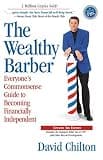
The Wealthy Barber
Personal finance taught as a story, where a small-town barber dishes out timeless wisdom on paying yourself first and investing steadily. The narrative makes the basics stick and the pay-yourself-first rule feeds your super just fine.
The Barefoot Investor
Scott Pape
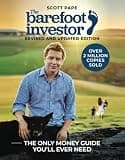
The Barefoot Investor
Australia's best-selling money book ever. A simple system for accounts, budgeting, debt and a real emergency fund in one.
The Richest Man in Babylon
George S. Clason
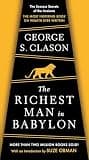
The Richest Man in Babylon
The original pay-yourself-first playbook, dressed up as ancient Babylonian parables. Almost a century old and the advice still lands.
Some links above are affiliate links. If you buy through them, Snowball Invest may earn a small commission at no extra cost to you. We only recommend books we'd suggest anyway.
Sources
Was this article useful?
Put it to your own numbers
Every calculator runs entirely in your browser, with nothing stored. See what these numbers look like for your own situation.
Explore the calculators →General information only. This article is educational and does not constitute personal financial advice. It does not account for your circumstances. Consider your own situation and seek advice from a licensed adviser before acting. Read our full disclaimer.

Timothy Hirou Gaschereau
Founder of Snowball Invest, not a financial adviser.
I write about what I'm learning myself, because nobody ever taught us how to take control of our own money. It's a skill, not a mystery, and it's never too late to learn it. The best day to start was yesterday, the second best is today.
LinkedIn →Related articles

The Richest Man in Babylon: An Honest Review
Our honest Richest Man in Babylon review for Australians: the timeless lessons, the real weaknesses, and how the parables map to super, ETFs and modern money habits.

Get Good with Money by Tiffany Aliche: An Honest Review
Our honest Get Good with Money review for Australians: Tiffany Aliche's 10-step 'financial wholeness' framework, what translates here, and what needs localising.

Clever Girl Finance by Bola Sokunbi: An Honest Review
Our honest Clever Girl Finance review for Australians: Bola Sokunbi's empowering, women-focused starter on mindset, debt and wealth, and what needs localising.