

What Is Compound Interest? (And Why It's the Whole Point of Investing Early)
A plain-English explanation of compound interest, why starting early matters more than the amount, and how the same effect works against you on debt.
 By Timothy Hirou GaschereauPublished
 8 min read
Try it yourself
"Let your money snowball" isn't just a nice phrase, it's literally describing compound interest. A snowball rolling downhill doesn't just pick up snow at a steady rate, it picks up more per roll as it gets bigger. Money invested works the same way. This is part of a wider guide to getting started with investing on Snowball Invest.
Quick answer
Compound interest is interest (or investment growth) calculated on both your original amount and whatever it's already earned, not just the original amount. That means your returns start earning their own returns, and the growth accelerates the longer the money is left alone.
In this guide
- →The actual difference between simple and compound interest, side by side
- →Why starting early beats investing more later
- →The documented psychological reason compounding is so easy to underestimate
- →How to see it play out with your own numbers
- →Why the same mechanism works against you on debt
⚖️ Simple interest vs compound interest
🎯 The essential: Simple interest pays you the same amount every year. Compound interest pays you more each year, because you're earning a return on last year's return too.
Simple interest is calculated only on your original amount, every single time. Compound interest is recalculated on the original amount plus everything it's already earned, so each period's growth is calculated on a slightly bigger number than the last.
| Simple interest | Compound interest | |
|---|---|---|
| How it's calculated | 7% of the original $10,000, every year | 7% of the current balance, every year |
| Year 1 growth | $700 | $700 |
| Year 20 growth | $700 (same, every year) | $2,532 (growth on the growth) |
| Balance after 20 years | $24,000 | $38,697 |
Both start identically. The gap only opens up over time, because compound interest is earning a return on last year's return, not just the original amount. That $14,697 difference above is purely the effect of compounding, nothing else changed.
⏳ Why starting early matters more than the amount
Because compounding needs time to actually do the accelerating part, an early dollar has vastly more time to compound than a later one. Someone investing a modest amount in their 20s can end up ahead of someone investing considerably more starting in their 40s, purely because of how many extra years of compounding the earlier money gets. You don't need a lump sum to get this working for you, investing smaller amounts regularly gets the same compounding effect started sooner.
🧠 Why compounding is so hard to actually feel
🎯 The essential: This isn't a personal failing, it's a well-documented, near-universal blind spot.
Research from the London School of Economics on what's called "exponential-growth bias" found that around 96% of people systematically underestimate compound growth, picturing it as a straight line instead of a curve that steepens over time. About a third of people studied were "fully biased," meaning they treated compounding as pure simple interest, missing the mechanism entirely. The same research found people were confidently wrong, not just unsure, which is exactly why the maths needs to be seen rather than just described to actually land.
The practical consequence is well documented too: underestimating how much a given savings rate will actually grow to makes people more likely to undersave for retirement, since the number in their head is quietly, systematically too low.
🔢 See it with your own numbers
The formula is simple enough to state, final amount equals your starting amount multiplied by (1 + rate) raised to the power of however many periods it compounds. But it's far more intuitive to just see it play out with your own figures than to sit with the formula.
In practice, most people get this compounding effect from something like an index fund rather than a fixed interest rate, the mechanism is the same, the return just varies year to year instead of staying constant. This is also why starting a child on a small regular contribution early is so effective, see our guide to investing for kids in Australia for how that plays out over a childhood, or model your own numbers with the Investing for Kids Calculator. For the full breakdown, including worked examples with contributions and realistic Australian return rates, head to the compound interest calculator page.
⚠️ It works the same way against you
Compounding isn't inherently good, it's just maths, and it applies equally to debt. A credit card charging interest on a balance you're not fully paying off compounds against you the exact same way, which is exactly why a balance that only grows slowly on paper can snowball into something much bigger over a few years of minimum payments.
Not all debt compounds against you the same way though. HECS-HELP debt only gets indexed once a year and charges no interest at all, which is exactly why the "pay it off early or invest instead" question comes down to comparing that low indexation rate against what compounding could do for the same money elsewhere. Our HECS repayment calculator walks through that trade-off with your own numbers.
💳 Credit Card Minimum Payment Trap Calculator
See how the same compounding effect works against you on debt.
What I actually use
Pearler
This is the broker I personally use. Do your own research and form your own opinion, but I genuinely recommend it, it's built for long-term investors rather than day traders, and makes it easy to automate regular investing. Sign up through my link or with the code TIMOTHY269825 and you'll both get a $20 cash bonus once you make your first investment (Pearler's current offer, T&Cs apply).
Sign up to Pearler →This is a referral link. If you sign up through it, I get a bonus too, at no extra cost to you.
SnowLetter
Australia's money news and our best reads, once a week.
❓ Frequently asked questions
What's the actual formula for compound interest?
+
Final amount = starting amount × (1 + rate)^time. The rate and time need to match, an annual rate compounded yearly, or divided down for monthly compounding, the mechanism is the same either way.
Does compound interest apply to shares and ETFs, not just savings accounts?
+
Yes, in effect. When an investment grows in value or pays a distribution you reinvest, that growth then earns its own growth the following year, the same compounding mechanism as interest, just driven by investment returns instead of a fixed rate.
How often should interest compound for the best result?
+
More frequent compounding (monthly instead of annually, for example) does produce a slightly higher result at the same stated rate, but the effect is small compared to the impact of the rate itself and how long the money is invested.
Is there a quick way to estimate how long money takes to double?
+
The "rule of 72" is a rough shortcut: divide 72 by your annual growth rate to estimate the years to double. At 8% growth, that's roughly 9 years, at 6%, roughly 12 years.
📚 Recommended reading
The Wealthy Barber
David Chilton
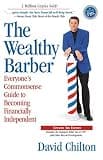
The Wealthy Barber
Personal finance taught as a story, where a small-town barber dishes out timeless wisdom on paying yourself first and investing steadily. The narrative makes the basics stick and the pay-yourself-first rule feeds your super just fine.
She's on the Money
Victoria Devine
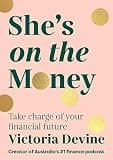
She's on the Money
Written for millennials, walks through budgeting, clearing debt, saving, investing and buying property with real stories.
Sort Your Money Out and Get Invested
Glen James
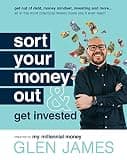
Sort Your Money Out and Get Invested
From the host of the my millennial money podcast, a step-by-step Aussie plan to fix your spending, clear debt and actually start investing. Practical and refreshingly free of finance-bro nonsense.
Some links above are affiliate links. If you buy through them, Snowball Invest may earn a small commission at no extra cost to you. We only recommend books we'd suggest anyway.
Sources
Was this article useful?
Put it to your own numbers
Every calculator runs entirely in your browser, with nothing stored. See what these numbers look like for your own situation.
Try the Compound Interest calculator →General information only. This article is educational and does not constitute personal financial advice. It does not account for your circumstances. Consider your own situation and seek advice from a licensed adviser before acting. Read our full disclaimer.

Timothy Hirou Gaschereau
Founder of Snowball Invest, not a financial adviser.
I write about what I'm learning myself, because nobody ever taught us how to take control of our own money. It's a skill, not a mystery, and it's never too late to learn it. The best day to start was yesterday, the second best is today.
LinkedIn →Related articles
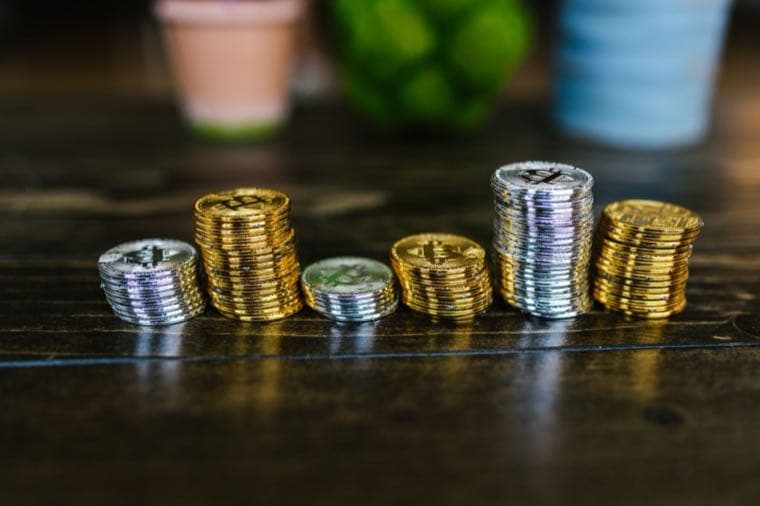
Lump Sum vs Dollar-Cost Averaging: Which Is Better?
Lump sum vs dollar-cost averaging: which strategy wins for Australian investors? See what the evidence says and find the approach that suits you.

The Rule of 72: How Long Until Your Money Doubles
Divide 72 by your return and you get the years until your money doubles. Worked Australian examples for super, ETFs, savings accounts and fees.
How Much Should I Invest in ETFs Each Month?
No magic number exists, but there is a smart framework. Here is how to work out how much to invest in ETFs each month as an Australian investor.