

Investing for Kids Calculator
See how a small head start today could grow into a meaningful sum by the time your child reaches adulthood.
Built and checked byTimothy Hirou GaschereauFigures verified at the source on
Your details
Projected balance at age 18
$18,739
Initial deposit
$500
Total contributions
$9,600
Investment return
$8,639
In today's dollars, that's worth about $12,623 by age 18, still a serious head start, just measured in what it would buy now.
Worth knowing before you start: investments held in a child's name are taxed at penalty minor rates once their unearned income tops $416 a year (up to 66%), so many parents invest in the lower-earning parent's name or use an investment bond instead. See how to structure it.
This calculator gives an estimate only, assuming a constant annual growth rate. It does not account for taxes, fees or inflation, and is not financial advice.
How to use this calculator
- 1. Enter your child's current age and the age you're investing until, such as 18.
- 2. Enter an initial deposit and how much you plan to add regularly, plus your expected growth rate.
- 3. The calculator projects the balance at your chosen target age, with a year-by-year breakdown.
What actually happens to the money before your child turns 18
The calculator above shows you a number. This section covers the mechanics behind it, so the plan you build is one you can actually follow through on.
A minor can't legally hold shares or ETFs on the ASX in their own name in Australia. The usual workaround is a bare trust, also called a minor trust or custodian account. You open the account in your own name “as trustee for” the child, so it might read something like “Jane Smith ATF Tom Smith”. You make the investment decisions, but the child is the beneficial owner, and it's their name the income gets taxed under. No formal trust deed needed, most platforms handle the paperwork in a few clicks.
Not every broker offers this. Pearler, Sharesies, Stockspot, Betashares Direct and Vanguard Personal Investor all support a bare trust or custodian structure for kids. Worth flagging: CommSec doesn't. If you open a standard CommSec account and invest “for” your child in it, the shares are legally yours, not theirs.
What you invest in matters less than staying consistent. Most parents who do this well keep it simple, one or two broad, diversified ETFs rather than individual stocks or themed funds, so there's almost no ongoing decision to make. Whether that's a small automatic monthly contribution or a lump sum once a year, the key is showing up. Markets will drop at some point during an 18-year window, that's not a reason to pause.
Keep records from day one: the date, units and price of every purchase. That history is the cost base, and it matters because a bare trust transfer at 18 generally doesn't trigger a capital gains tax event, the child simply inherits the original cost base. Confirm the exact process with your platform before your child turns 18, and get them a Tax File Number early. Without one, the ATO requires 47% withholding on unfranked dividends.
What $50 or $100 a month can turn into by 18
Here's what 216 monthly contributions, from birth to age 18, actually add up to at a few different growth rates. Plug your own numbers into the calculator above, but this gives you a feel for the shape of it.
| Monthly contribution | Return (p.a.) | Value at 18 | Total contributed |
|---|---|---|---|
| $50 | 5% | ~$15,174 | $10,800 |
| $50 | 7% | ~$19,745 | $10,800 |
| $50 | 9% | ~$26,047 | $10,800 |
| $100 | 5% | ~$30,348 | $21,600 |
| $100 | 7% | ~$39,491 | $21,600 |
| $100 | 9% | ~$52,093 | $21,600 |
Assumes monthly compounding, no tax drag, and returns that are illustrative only, not a promise. At 7% p.a., a reasonable long-run assumption for a diversified share portfolio, $100 a month from birth turns into nearly $40,000 by 18. That's a genuine head start on a first car, a uni fund, or their own investing journey. It's the same compound interest engine that powers every long-term goal on this site, an 18-year runway just happens to be a very long one.
Bare trust, investment bond, or something else
A bare trust holding ETFs is the simplest, cheapest option for most families, and it's where most parents start. The main platforms that support it:
| Platform | Structure | Fee note |
|---|---|---|
| Pearler (Headstart) | Custodian / bare trust | $6.50 brokerage on ASX; auto-invest available |
| Sharesies | Bare trust (Kids account) | 1.9% per trade; $2/month plan covers $500 in orders |
| Stockspot | Custodian, CHESS-sponsored | Free until $10,000 or age 18; managed ETF portfolios |
| Betashares Direct | Custodian | $0 brokerage on Betashares ETFs; fractional shares |
| Vanguard Personal Investor | Custodian | $0 brokerage on Vanguard ETFs; $200 minimum |
The alternative worth knowing about is an investment bond (also called an insurance bond). The bond issuer pays tax internally at the 30% corporate rate, so the income never touches your child's tax return and the penalty rates below simply don't apply. Hold it 10 years without withdrawing and the proceeds come out completely tax-free. The “125% rule” lets you increase contributions by up to 125% of the prior year's amount without resetting that 10-year clock, miss a year entirely though and it resets. Generation Life, Foresters Financial and Australian Unity are the main Australian providers. Fees tend to run higher than a plain ETF account, so it's worth it mainly if you expect the child's investment income to blow past the threshold below, or you have estate planning goals as a grandparent.
The tax trap: the $416 threshold
This is the bit most parents miss until it bites. The ATO taxes a child's unearned income, dividends, interest, trust distributions, at rates deliberately designed to stop families sheltering income in kids' names.
| Income range | Tax rate |
|---|---|
| $0 to $416 | Nil |
| $417 to $1,307 | 66% of the amount over $416 |
| Over $1,307 | 45% of the entire amount |
That last row catches people out, it's 45% of the whole amount, not just the bit over $1,307. Say a child earns $2,000 in dividends in a year: tax comes to 45% × $2,000 = $900. An adult earning the same $2,000 with no other income would pay nothing, they're under the tax-free threshold. Same money, wildly different outcome. This only applies to unearned income though, wages from an actual part-time job are “excepted income” and taxed at normal adult rates.
Two practical ways to manage it: keep the portfolio growth-focused so distributions stay modest (international ETFs like VGS typically yield under 2%, so a portfolio under roughly $20,000 usually stays under $416), or use an investment bond so the minor tax rates never come into play at all. Franking credits help too, a child holding Australian shares with franked dividends may get some or all of that liability offset.
Common mistakes worth avoiding
- Waiting too long to start. Every year of delay is a year of compounding lost, starting at five instead of birth with $100/month at 7% p.a. costs roughly $8,000 in final value.
- Parking a long-term goal in a savings account. Fine for short-term needs, but over 18 years inflation eats real returns from cash.
- Losing track of the $416 threshold as the portfolio grows, and getting hit with 66% to 45% rates without realising it was coming.
- Skipping the child's TFN. No TFN means 47% withholding on unfranked dividends, money that goes to the ATO instead of the portfolio.
- Picking high-fee active funds over a low-cost index ETF. A 1.5% annual fee drag over 18 years can quietly cost tens of thousands compared to an ETF charging 0.07% to 0.20% p.a.
- Not planning for the handover at 18. The child gets full legal control at that point, so it's worth involving them in the portfolio well before then, not springing it on them.
For the full breakdown, including bare trusts versus investing in your own name, the investment bond rules in more detail, and a step-by-step checklist, see our guide to investing for kids in Australia. And once your child starts working, the First Home Super Saver Scheme is worth a look as a way to keep the momentum going toward their first home deposit.
FAQ
Why does starting early make such a difference?
The longer money stays invested, the more time it has to compound. Starting from birth instead of waiting a few years, even with the same small monthly amount, can be the difference of thousands of dollars by age 18. Try both starting ages in the calculator above to see it for yourself.
Can a child own shares directly in Australia?
No. Minors can't enter a binding contract, so they can't hold shares on the ASX register in their own name. The standard workaround is a bare trust (custodian) account, where an adult holds the shares as trustee for the child. The child is the beneficial owner, and legal ownership transfers to them at 18 without triggering a capital gains tax event.
What's the best investment for a child in Australia?
For most families with a 10+ year horizon, a low-cost diversified ETF held in a bare trust is the usual answer. Something like a broad Australian and international ETF, or an all-in-one diversified fund, gives wide exposure with fees typically under 0.30% p.a. For shorter horizons under three to five years, a high-interest savings account suits better.
How much tax does a child pay on investment income?
The first $416 a year of unearned income (dividends, interest, distributions) is tax-free. Income from $417 to $1,307 is taxed at 66% of the amount over $416. Above $1,307, it's 45% of the entire amount, not just the excess. These rates don't apply to wages from an actual job, which are taxed at normal adult rates.
What is a bare trust and how does it work for kids?
A bare trust, or custodian account, is where an adult opens an account "as trustee for" a named child, no formal trust deed required. The adult controls the investing, the child is the beneficial owner and the tax is assessed in their name. At 18, the assets transfer to the child, keeping their original cost base rather than triggering a CGT event.
Should I use an investment bond instead of a share account for my child?
It's worth considering if you expect the child's investment income to regularly exceed $416 a year, since a bond pays tax internally at 30% and sidesteps the minor tax rates entirely. Hold it 10 years without withdrawing and it comes out tax-free. The trade-off is generally higher fees and less flexibility than a plain ETF account, so it suits larger amounts or grandparents with estate planning goals more than a simple $50 a month plan.
Can grandparents invest for grandchildren too?
Yes, and it's one of the most useful features of these structures. Grandparents can open their own bare trust or investment bond for a grandchild, or simply contribute into an account the parents have already set up. Investment bonds are particularly popular with grandparents since they sit outside the estate and can vest at an age of their choosing.
What is the $416 threshold and why does it matter?
It's the amount of unearned income a child can earn each year before the ATO's penalty minor tax rates kick in. Below $416, the income is effectively tax-free. Above it, the rate jumps sharply, so it's worth keeping an eye on as the portfolio grows, particularly once it passes roughly $10,000 to $20,000 depending on the yield.
Should I use a savings account or shares for my child?
It comes down to time horizon. Under three to five years, a high-interest savings account protects the capital with a predictable return. For 10+ years, a diversified share portfolio has historically outpaced cash by a wide margin, and over an 18-year window, that gap tends to be the whole point.
What happens to the investment account when my child turns 18?
In a bare trust, the child gains full legal control of the assets. Most platforms handle it as a straightforward account conversion, though a few may require selling and repurchasing in the child's name, which can trigger a CGT event, so it's worth checking your platform's process ahead of time. Either way, have the conversation with your child well before it happens.
Do I need a formal trust deed to invest for my child?
No. An informal bare trust needs no trust deed, you just open the account in your name as trustee for the child and provide their TFN. A formal discretionary trust does require a deed and typically costs upward of $1,000 a year to run, only worth it for much larger sums where the flexibility justifies the cost.
Which platforms let you open a kids investment account in Australia?
Pearler, Sharesies, Stockspot, Betashares Direct and Vanguard Personal Investor all support a minor or custodian account structure. CommSec does not, a standard CommSec account invested "for" a child remains legally yours. For investment bonds, the main providers are Generation Life, Foresters Financial and Australian Unity.
Related reading
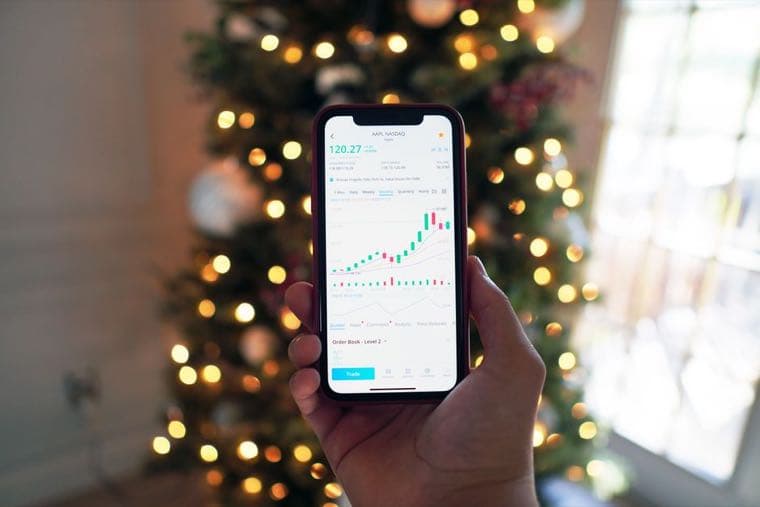
Investing for Kids in Australia: How It Actually Works
How to invest for a child in Australia: minor trust accounts vs your own name, the penalty tax on kids' unearned income, and how it compounds over 18 years.
Where these numbers come from
Every rate and threshold in this calculator was read off the official page, not copied from another calculator. Check them yourself, they change.
📚 Recommended reading
The Barefoot Kids
Scott Pape
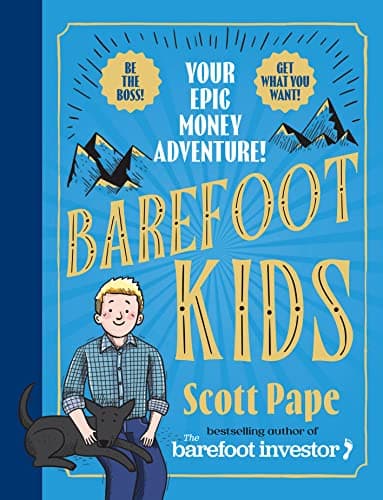
The Barefoot Kids
From the guy behind The Barefoot Investor, this one turns your kids into little money machines with real projects, stickers and stories. Aussie parents made it a number 1 bestseller for a reason.
The Barefoot Investor for Families
Scott Pape
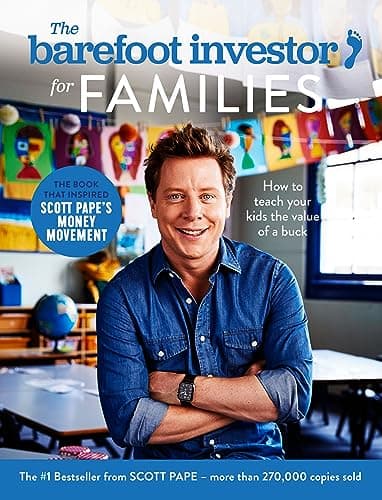
The Barefoot Investor for Families
Scott Pape takes his mega-selling Barefoot system and points it at raising money-smart kids, with age-by-age jobs, pocket money and jam-jar tricks. If you want your kids to grow up good with money, this is the Aussie classic.
Some links above are affiliate links. If you buy through them, Snowball Invest may earn a small commission at no extra cost to you. We only recommend books we'd suggest anyway.
SnowLetter
Australia's money news and our best reads, once a week.
Disclaimer
The results provided by this calculator are estimates only, based on the assumptions you enter, and are not a prediction or financial advice. Actual investment returns will vary. Consider speaking with a licensed financial adviser before making any financial decision.