

Investing for Kids in Australia: How It Actually Works
How to invest for a child in Australia: minor trust accounts vs your own name, the penalty tax on kids' unearned income, and how it compounds over 18 years.
 By Timothy Hirou GaschereauPublished
 9 min read
Try it yourself
Kids under 18 can't legally open a brokerage account in their own name in Australia, which is the first thing that trips parents up. This is part of a wider guide to getting started with investing on Snowball Invest.
Quick answer
You can't open a standard brokerage account for a child directly. Instead, you either hold the investments in an informal trust (a minor trust account, with you as trustee) or in your own name on the child's behalf. The child's unearned investment income is taxed at penalty rates once it passes $416 a year, which surprises a lot of parents, so the choice between the two structures comes down to tax and how much you plan to invest.
In this guide
- →The two ways to actually hold investments for a child in Australia
- →The penalty tax on kids' unearned income most parents don't know about
- →What compounding actually looks like over a real childhood
- →The practical steps to open an account and get started
👪 Whose name does the investment go in?
🎯 The essential: Children can't legally enter financial contracts, so the investment has to sit in an adult's name, either as a trustee for the child or in the adult's own name outright.
The most common setup is an informal trust, or minor trust account. You open a brokerage account in your own name, designated as trustee for the child (the account name typically looks something like “Jane Smith <Billy Smith>”). You control the account and make the investment decisions, but the child is the beneficial owner, and investment income is assessed in the child's hands for tax purposes. Most major Australian brokers offer this structure. When the child turns 18, the investments can typically transfer into their own name without triggering a capital gains tax event, because beneficial ownership never actually changed.
The alternative is simpler: just invest in your own name, with the intention of handing the money over later. There's no trust designation, no separate TFN requirement, and you keep full control, including the option not to hand it over at 18 if circumstances change. The trade-off is tax, every dollar of income and any eventual capital gain is assessed at your marginal rate, not the child's. And if you do eventually gift the shares, that's a capital gains tax event for you at that point.
For most families investing modest amounts regularly, the minor trust structure is the more common choice, since the child's penalty tax (below) only bites once the portfolio starts generating real income. For larger amounts, your own marginal rate might work out cheaper. It genuinely depends on your tax situation.
⚠️ The tax trap most parents don't see coming
🎯 The essential: Neither structure is tax-free. It's a trade-off between the child's penalty rates and your own marginal rate.
The ATO applies deliberately punishing tax rates to children's unearned income (dividends, interest, trust distributions), specifically to stop parents sheltering large amounts of income in a child's name to dodge tax. The rates:
| Unearned income | Tax rate |
|---|---|
| $0 to $416 | 0% (tax-free) |
| $417 to $1,307 | 66% on the amount over $416 |
| $1,308 and above | 45% on the entire amount |
A few things worth knowing. The Low Income Tax Offset doesn't apply to a child's unearned income, so there's no offset softening the blow the way there is for an adult on a low income. The 45% rate genuinely applies to the whole amount once income passes $1,307, not just the excess. And franked dividends still bring their franking credits along, which can offset some of the liability.
It's worth being clear this only applies to unearned income. Money a child earns from actual work is “excepted income” and taxed at normal adult rates, including the tax-free threshold.
In practice, at a typical dividend yield of 3 to 4%, a portfolio doesn't generate enough income to hit the $416 threshold until it's worth somewhere around $10,000 to $14,000. For most families starting with $50 a month, that's years away, but it's worth knowing it's coming as the balance grows.
📈 How compounding plays out over a childhood
Say you invest a $1,000 lump sum at birth, then add $50 a month into a diversified investment returning an average 7% a year.
| Age | Approximate portfolio value |
|---|---|
| 0 (start) | $1,000 |
| 5 | ~$5,200 |
| 10 | ~$10,800 |
| 15 | ~$19,000 |
| 18 | ~$25,700 |
Over 18 years you'd have contributed roughly $11,800 in total. The remaining ~$13,900 is pure growth, more than doubling what was actually put in. Push the contribution up to $100 a month and the age-18 figure climbs to roughly $42,000. Run your own numbers through our Investing for Kids Calculator to see how different amounts and timeframes play out.
This is exactly the mechanism covered in our article on what compound interest actually is and why time in the market matters more than the size of any single contribution.
🧒 Investing for Kids Calculator
Model your own contribution amount, timeframe and assumed return.
✅ Practical steps to get started
Once you've picked a structure, the setup is fairly mechanical.
- Get your child a Tax File Number. You can apply through the ATO, either via myGov or a paper form. It's free, and avoids the broker withholding tax at the top rate on dividends.
- Choose a broker that offers minor trust accounts. Not every broker does. Compare brokerage fees, minimum amounts, and whether holdings are CHESS-sponsored (registered directly on the ASX register) rather than just held by the broker.
- Open the account in the correct trust format. The account name needs to be correctly designated as a minor trust, your broker will guide you through the exact format.
- Choose your investments. A low-cost diversified ETF is a common starting point for a childhood-length time horizon, more about giving compounding time to work than picking winners.
- Automate a regular contribution. Consistency matters more than timing. A $25 or $50 automatic transfer each month removes the decision entirely.
If you're new to investing yourself first, our step-by-step guide to starting to invest in Australia covers choosing a broker and buying your first ETF. And for the everyday money habits that come first, see our guide to teaching kids about money.
What I actually use
Pearler
This is the broker I personally use. Do your own research and form your own opinion, but I genuinely recommend it, it's built for long-term investors rather than day traders, and makes it easy to automate regular investing. Sign up through my link or with the code TIMOTHY269825 and you'll both get a $20 cash bonus once you make your first investment (Pearler's current offer, T&Cs apply).
Sign up to Pearler →This is a referral link. If you sign up through it, I get a bonus too, at no extra cost to you.
SnowLetter
Australia's money news and our best reads, once a week.
❓ Frequently asked questions
Can a child under 18 own shares in Australia?
+
Not directly through a standard brokerage account. Shares are held in a minor trust account, where a parent or guardian acts as trustee on the child's behalf. The child is the beneficial owner, the adult holds legal control until the child turns 18.
Do kids need a Tax File Number to invest?
+
Not strictly, but practically yes. Without a TFN linked to the account, the broker is required to withhold tax from dividends at the top marginal rate. Getting a TFN for your child is free and worth doing before you open the account.
What's a sensible first investment for a child in Australia?
+
There's no single right answer, but a low-cost diversified ETF tracking a broad index is a common starting point for families who want simplicity over picking individual stocks.
Can grandparents invest for grandchildren?
+
Yes. Grandparents can open a minor trust account themselves, or contribute to an account the parents have already set up. Some platforms also allow one-off contributions from family and friends into an existing account.
What happens to the investment when the child turns 18?
+
With a minor trust account, the investments can typically move into the child's own name without triggering a capital gains tax event, because beneficial ownership never changed, only legal control does. The child then takes over the account.
Does the penalty tax apply if my child earns money from a job instead?
+
No. Employment income is treated as excepted income and taxed at normal adult rates, including the tax-free threshold. The penalty rates only apply to unearned income like dividends and interest.
📚 Recommended reading
The Barefoot Kids
Scott Pape
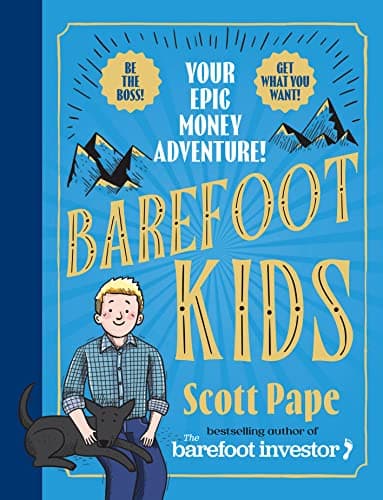
The Barefoot Kids
From the guy behind The Barefoot Investor, this one turns your kids into little money machines with real projects, stickers and stories. Aussie parents made it a number 1 bestseller for a reason.
She's on the Money
Victoria Devine
She's on the Money
Written for millennials, walks through budgeting, clearing debt, saving, investing and buying property with real stories.
Sort Your Money Out and Get Invested
Glen James
Sort Your Money Out and Get Invested
From the host of the my millennial money podcast, a step-by-step Aussie plan to fix your spending, clear debt and actually start investing. Practical and refreshingly free of finance-bro nonsense.
Some links above are affiliate links. If you buy through them, Snowball Invest may earn a small commission at no extra cost to you. We only recommend books we'd suggest anyway.
Sources
Was this article useful?
Put it to your own numbers
Every calculator runs entirely in your browser, with nothing stored. See what these numbers look like for your own situation.
Try the Investing for Kids calculator →General information only. This article is educational and does not constitute personal financial advice. It does not account for your circumstances. Consider your own situation and seek advice from a licensed adviser before acting. Read our full disclaimer.

Timothy Hirou Gaschereau
Founder of Snowball Invest, not a financial adviser.
I write about what I'm learning myself, because nobody ever taught us how to take control of our own money. It's a skill, not a mystery, and it's never too late to learn it. The best day to start was yesterday, the second best is today.
LinkedIn →Related articles

The Rule of 72: How Long Until Your Money Doubles
Divide 72 by your return and you get the years until your money doubles. Worked Australian examples for super, ETFs, savings accounts and fees.

How Much Should I Invest in ETFs Each Month?
No magic number exists, but there is a smart framework. Here is how to work out how much to invest in ETFs each month as an Australian investor.

Dividend Reinvestment Plans (DRP): Should You Use One?
A DRP automatically reinvests your dividends into more shares. Here's how it works in Australia, the tax traps to know, and whether it suits you.