

The Barefoot Kids Review: Is Scott Pape's Kids Book Worth It?
Our honest Barefoot Kids review: the jam jars system, the kid-repreneur ideas, who it's for, and whether Scott Pape's money book for kids is worth buying.
 By Timothy Hirou GaschereauPublished
 9 min read
The Barefoot Kids reportedly sold more than 200,000 copies in its first eight weeks, making it the fastest-selling book by an Australian author on record. Scott Pape has done it again. But sales don't tell you whether it'll actually work at your kitchen table, with your actual kids. That's what this review is for. It's part of our personal finance book reviews on Snowball Invest.
Quick answer
The most practical, Australian-specific money guide for kids you'll find right now. It's genuinely good, hands-on rather than preachy, and it works best when you show up for it as a parent. It's not a cover-to-cover read and it's obviously only useful if you have kids. Our rating: 4.2 out of 5.
Want to read The Barefoot Kids?
Around $30 and one of the best money gifts for a 6 to 14 year old, or your own kids.
In this guide
- →What the book is actually about: the six steps and the four-bucket system
- →How the jam jars (Spend, Save, Give, Grow) work in practice
- →Genuine strengths and the real criticisms
- →Who it's for, and who should skip it
- →The Australian angle: why it's genuinely local, and how it pairs with the other Barefoot books
📖 What is The Barefoot Kids about?
It's a 224-page activity-and-story hybrid written directly to children, not to parents about children, which is a meaningful distinction. It's built around six steps: earn some money, stash your cash (the four-bucket system), be a Barefoot boss (kid-repreneur challenges), get what you want (intentional spending), make someone smile (the Give bucket), and grow your money (an intro to investing and compound interest).
Woven through are 45 stories from real, named Australian kids who earned money, started businesses and invested, with actual dollar figures attached. One turned dyslexia into a business selling reading rulers, and a dog-walking and pet-sitting business made $10,000 in its first year. Real kids and real numbers matter enormously for young readers, and there are physical stickers to track progress, which keeps younger kids engaged in a way plain text never would.
🫙 What is the jam jars system?
The jam jars are the physical version of the four-bucket framework. Instead of abstract bank accounts, kids use actual labelled jars, and each time they get paid (pocket money or earnings from jobs) they divide it across them. Adults use a grown-up version of the same idea, our guide to the cash envelope method covers it, so the whole family can end up speaking the same budgeting language.
| Jar | What it's for |
|---|---|
| Spend | Everyday purchases and small treats, things they want right now. |
| Save | A bigger goal they're working toward, a toy, a game, something specific. |
| Give | Charity, a cause they care about, or helping someone out. |
| Grow | Money that goes toward investing, with a parent's help, for the long term. |
The Grow jar is where the book breaks new ground for younger readers. Pape explains compound interest with simple charts and the analogy of planting an apple tree: the earlier you plant it, the more fruit you get. Parents need to be involved to actually open an investment account for a minor, and our guide to investing for kids in Australia covers the local how-to.
⚖️ Strengths and weaknesses
What it gets right
- ✓Written specifically for Australian families: no US dollars, no American tax, no foreign examples.
- ✓Genuinely hands-on: activities, projects and stickers mean kids do things, not just read.
- ✓The four-bucket system (Spend, Save, Give, Grow) is simple and age-appropriate.
- ✓The kid-repreneur ideas are creative, varied and come with real earnings figures.
- ✓It pairs naturally with The Barefoot Investor so the whole household runs on one framework.
- ✓The sticker and reward system is a smart design choice for the target age range.
Where it falls short
- ✕Only useful if you have kids (roughly 6 to 14).
- ✕It works best when parents actively do the activities, passive reading gets maybe 30% of the value.
- ✕Some of the Barefoot philosophy feels repetitive if you've read the earlier family book.
- ✕The activity-book format isn't a cover-to-cover read, which some parents find disorienting.
- ✕The age range is broad, so a 7 year old and a 13 year old will experience the same chapter very differently.
👤 Who should read it, and who should skip it?
Read it if you
- ✓Are a parent of kids roughly 6 to 14 who wants a practical, Australian money framework.
- ✓Already use the Barefoot Investor system and want to bring the kids into it.
- ✓Want to teach money as a family activity, not a school subject.
- ✓Are a grandparent, aunt or uncle after a genuinely useful gift for a child.
Skip it if you
- ✕Are an adult without children (or with kids under 5 or over 14).
- ✕Want investment strategy or personal finance advice for yourself.
- ✕Want a traditional, linear read-through book.
- ✕Already have a solid money system running at home and don't need another framework.
💬 What do readers and critics say?
The sales numbers say a lot: reportedly the fastest-selling book by an Australian author since Nielsen BookScan records began. On Goodreads it holds around 4.33 out of 5, with over half of readers giving it five stars.
The one consistent criticism, in both reader reviews and the general reception, is that it requires parental time investment. It's not set-and-forget: the system only works when parents help set up the jars, have the conversations and follow through on the chore-payment structure. On r/fiaustralia there's an active thread of parents comparing micro-investing apps for the Grow bucket, a good sign that people are actually implementing it.
🇦🇺 The Australian angle
This isn't an American book adapted for Australia, it was written from the ground up for Australian families, and it shows in every chapter: the business examples feature Australian kids, the language is Australian, and the context is local. For parents who've tried US-origin kids' money books and spent the whole time translating, that's a genuine relief.
It also frames financial literacy as a family activity rather than a school subject, which matters given Australian schools don't consistently teach money skills in any depth. It sits naturally alongside The Barefoot Investor for parents sorting their own finances, and The Barefoot Investor for Families for the household system. Together they form a coherent framework that can run across a whole family's financial life.
💰 Is The Barefoot Kids worth it?
Yes. At around $30 it's strong value for families with children aged 6 to 14. It teaches earning, saving, giving and investing in a format kids will actually engage with. The jam jars are simple enough for a six year old to grasp and meaningful enough for a twelve year old to take seriously, the kid-repreneur challenges are genuinely inspiring, and the 45 real stories give young readers something to measure themselves against. The caveat is the same one that applies to every practical parenting resource: it only works if you use it. Buy it, set up the jars, do the activities, have the conversations. Our rating: 4.2 out of 5.
Want to read The Barefoot Kids?
Ready to raise a money-smart kid? Grab a copy and set up the jars this weekend.
SnowLetter
Australia's money news and our best reads, once a week.
❓ Frequently asked questions
What age is The Barefoot Kids suitable for?
+
It's aimed at children aged roughly 6 to 14, though it works best for the 6 to 12 range. Younger children need more parental guidance, and older kids already familiar with money concepts may find some sections a bit young in tone, though most still find the business and investing chapters relevant.
What is the jam jars system in The Barefoot Kids?
+
It uses four physical, labelled jars: Spend, Save, Give and Grow. When a child earns or receives money, they divide it across the four jars. The physical act of handling cash and allocating it makes budgeting concrete and immediate for young children.
Is The Barefoot Kids different from The Barefoot Investor?
+
Yes, significantly. The Barefoot Investor is written for adults and covers personal finance, banking, super and investing. The Barefoot Kids is written directly to children and focuses on earning pocket money, the jars, starting small businesses and an intro to investing. The philosophy is consistent, but the content, format and audience are completely different.
Do I need to have read The Barefoot Investor first?
+
No. The Barefoot Kids stands on its own and you don't need any prior knowledge of the series to use it with your children. That said, if you've read The Barefoot Investor or Barefoot Investor for Families, the household system fits together naturally.
Is The Barefoot Kids only for Australian families?
+
It's written specifically for Australian families, so the examples, context and references are all local. Families elsewhere could still use the core framework (the four jars, the business ideas, the investing intro), but some specific examples and resources are Australia-specific.
How do I use The Barefoot Kids with my children?
+
Set up the four jars together first, then work through how your child will earn pocket money. From there, follow the steps at whatever pace suits your family. The book is designed to be written in and returned to, so treat it as an ongoing resource rather than a one-time read.
📚 Get the book (and two for the whole family)
The Barefoot Kids
Scott Pape
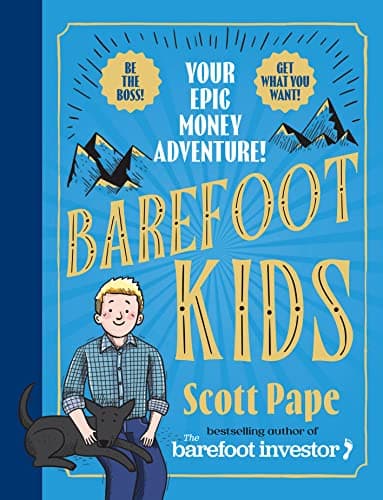
The Barefoot Kids
From the guy behind The Barefoot Investor, this one turns your kids into little money machines with real projects, stickers and stories. Aussie parents made it a number 1 bestseller for a reason.
The Barefoot Investor for Families
Scott Pape
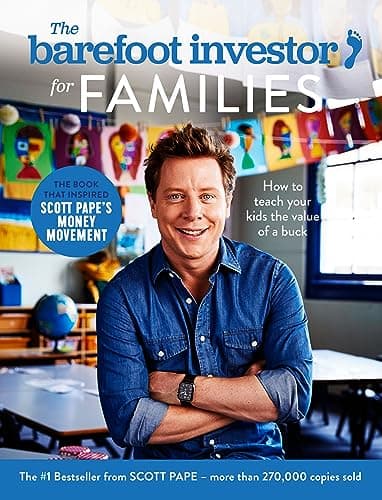
The Barefoot Investor for Families
Scott Pape takes his mega-selling Barefoot system and points it at raising money-smart kids, with age-by-age jobs, pocket money and jam-jar tricks. If you want your kids to grow up good with money, this is the Aussie classic.
The Barefoot Investor
Scott Pape
The Barefoot Investor
Australia's best-selling money book ever. A simple system for accounts, budgeting, debt and a real emergency fund in one.
Some links above are affiliate links. If you buy through them, Snowball Invest may earn a small commission at no extra cost to you. We only recommend books we'd suggest anyway.
Sources
Was this article useful?
Put it to your own numbers
Every calculator runs entirely in your browser, with nothing stored. See what these numbers look like for your own situation.
Explore the calculators →General information only. This article is educational and does not constitute personal financial advice. It does not account for your circumstances. Consider your own situation and seek advice from a licensed adviser before acting. Read our full disclaimer.

Timothy Hirou Gaschereau
Founder of Snowball Invest, not a financial adviser.
I write about what I'm learning myself, because nobody ever taught us how to take control of our own money. It's a skill, not a mystery, and it's never too late to learn it. The best day to start was yesterday, the second best is today.
LinkedIn →Related articles

The Barefoot Investor for Families: An Honest Review
Our honest Barefoot Investor for Families review: Scott Pape's jam jars and the Barefoot Ten, what it gets right, where it falls short, and who it's for.

The Barefoot Investor Review: Honest, Unfiltered, Australian
Our honest Barefoot Investor review covers the bucket system, the 9 steps, the real criticisms, and whether Scott Pape's book is still worth it for Australians.

She's on the Money Review: Honest and Actually Useful
Our honest She's on the Money book review: what Victoria Devine gets right, where it falls short, and whether it's worth your time as an Australian reader.