

The Barefoot Investor for Families: An Honest Review
Our honest Barefoot Investor for Families review: Scott Pape's jam jars and the Barefoot Ten, what it gets right, where it falls short, and who it's for.
 By Timothy Hirou GaschereauPublished
 9 min read
Short verdict: it's genuinely useful, but only if you have kids in the right age range. Raising money-smart kids is one of those things Australian parents know they should be doing but often have no idea how to start. Scott Pape wrote this book to fix exactly that, giving parents a structured, step-by-step roadmap for teaching kids about money from roughly age four to eighteen. It's part of our personal finance book reviews on Snowball Invest.
Quick answer
A practical, warm and distinctly Australian guide to raising money-smart kids, built around the three-jar system and ten family money milestones (the Barefoot Ten). Best for parents of kids roughly aged 4 to 15. Skip it if you want investment strategy depth, you don't have children, or your kids are already in their late teens. Our rating: 4 out of 5.
Want to read The Barefoot Investor for Families?
Scott Pape's Barefoot system, pointed at raising money-smart kids. Jam jars, chores and age-by-age milestones.
In this guide
- →What the book is about: jam jars, money meals and the Barefoot Ten
- →The genuine strengths and the honest weaknesses
- →Who it's for, and who should skip it
- →What the experts and r/AusFinance parents say
- →The Australian angle: why local context matters for pocket money
📖 What is The Barefoot Investor for Families about?
This is Scott Pape's 2018 follow-up to The Barefoot Investor, written specifically for Australian parents who want to raise financially capable kids. The core idea is simple: teach children about money through regular "money meals" (weekly dinner-table chats), a physical three-jar system, and ten structured milestones called the Barefoot Ten.
The three jars are labelled Splurge, Save and Give. Every time your child earns pocket money, they split it across all three. It's hands-on, tangible, and works especially well for younger kids who need something physical to connect with, not unlike the cash envelope method many adults use for their own budgets. The Barefoot Ten are ten money milestones running from roughly age three to eighteen, covering everything from the value of hard work and setting up a bank account, to buying and selling second-hand goods, cooking low-cost meals, volunteering and understanding super. If you want more on how the maths of investing on a child's behalf actually works in Australia, that's a natural next read once the jam jars are set up. Each is tied to an age group, so the book works as a long-term roadmap rather than a one-off read. It's not a book about investing or building wealth. It's about instilling money habits early, and it does that job well.
⚖️ Strengths and weaknesses
What it gets right
- ✓Genuinely practical: it doesn't just say 'talk to your kids about money', it gives you the actual scripts and activities.
- ✓The jam jar system is a Sunday-afternoon setup you can start using the same week.
- ✓Kid-repreneur challenges push earning and doing (chores, selling second-hand, cooking) over just receiving.
- ✓Written from scratch for Australian families: local banking, schools and pocket money norms throughout.
- ✓Warm, plain-English tone with light humour, encouraging without being preachy.
Where it falls short
- ✕Only useful if you have kids roughly 4 to 15: no children, or teens 16-plus, and it's not your book.
- ✕The book can't do the work for you: the system needs consistent parental follow-through over months and years.
- ✕Existing Barefoot fans will find the mindset sections familiar; the novelty is in the family-specific content.
- ✕Some 2018 banking product references may be dated, so verify specifics independently.
👤 Who should read it, and who should skip it?
Read it if you
- ✓Are a parent of kids aged roughly 4 to 15 who wants a structured way to teach money.
- ✓Loved the original Barefoot Investor and want to extend those principles into family life.
- ✓Feel awkward or unsure about starting money conversations with your kids (the scripts alone earn their keep).
Skip it if you
- ✕Are childless, or your kids are already 16 or older.
- ✕Want investment strategy, portfolio construction or anything beyond foundational habits.
- ✕Are already deep into financial literacy resources and want something more advanced.
🔍 What do critics say?
The most substantive Australian coverage came from an ABC News piece by Lucia Stein in 2019, which canvassed two finance academics. An RMIT business professor was broadly positive, describing it as a great get-started guide for young people while cautioning it shouldn't be treated as the only money advice you'll ever need. A Griffith Business School lecturer was more measured, noting that a buckets and jars approach has been around for a long time and goes in and out of favour, and that no single system suits every household. Pape himself was candid in the same piece, conceding that "the only money guide you'll ever need" is a big call for what is really a general guide. The fair read: useful as a starting point, not a substitute for advice tailored to your family, and not guaranteed to click for everyone.
💬 What do readers say? Goodreads and Reddit
Readers rate it highly. On Goodreads it sits around 4.3 out of 5, with the large majority landing in the top two tiers, a strong result for a personal finance book. Parents consistently praise the practical scripts and the jam jar system for making money conversations feel manageable rather than intimidating. The most common note of caution is honest rather than critical: implementation takes sustained effort.
On r/AusFinance the book comes up regularly in threads about teaching children about money, and is frequently recommended as a solid starting point for Australian families. Not universally loved, but consistently respected as one of the better locally relevant options.
🇦🇺 The Australian angle
It's worth being specific about what makes this book distinctly Australian, because it matters for pocket money here. Pape wrote it from scratch for Australian families. It is not an adaptation of a US title. The banking references, the school context, the cultural touchstones and the pocket money norms are all Australian, which is rarer than you'd think in a space where a lot of content is imported and only lightly localised.
It also pairs naturally with the original Barefoot Investor as a household set. If you've already run your own finances through the Barefoot system, this gives you a consistent framework to extend into your kids' financial education, with the same language, values and approach. For a younger-skewing companion, Pape's Barefoot Kids covers similar ground written more directly for the kids themselves.
💰 The verdict
The Barefoot Investor for Families does what it sets out to do. It gives Australian parents a practical, warm and genuinely usable framework for teaching kids about money, from the jam jar system for young children through to the Barefoot Ten milestones that stretch into the late teens. The limitations are real but narrow: it's not for you if you don't have kids in the right age range, it won't teach investment strategy, and it won't do the parenting for you. But for the audience it's written for, it's hard to beat as a starting point. The scripts, the Australian context and the structured milestone approach give parents something concrete to work with rather than vague encouragement to "talk to your kids about money." If you want a similar structured approach for your own goals as a parent, our guide to how to set financial goals pairs well with the Barefoot Ten. Our rating: 4 out of 5.
Want to read The Barefoot Investor for Families?
Kids in the 4 to 15 range? Grab a copy, set up the jars this weekend, and start the first money meal.
SnowLetter
Australia's money news and our best reads, once a week.
❓ Frequently asked questions
Is The Barefoot Investor for Families suitable for very young kids?
+
Yes, with some caveats. The jam jar system works well from around age four or five, when kids can grasp splitting money into containers. The Barefoot Ten milestones include content from roughly age three, though the meatier activities are aimed at primary-school age and up. The sweet spot is parents of kids aged four to fifteen.
Do I need to have read The Barefoot Investor first?
+
No. It stands on its own and doesn't assume you've read the original. That said, if you have, you'll recognise the philosophy and framework, which makes the family version easy to slot into your existing approach. Reading both gives you a consistent money system across the household.
How does the jam jar system work?
+
Three physical jars labelled Splurge, Save and Give. When your child earns pocket money, they split it across all three: Splurge for spending now, Save for a bigger goal, Give for charity or helping others. The physical jars make money tangible for young kids in a way a bank account can't.
Is the book still relevant given it was published in 2018?
+
Mostly yes. The core principles around earning, saving, giving and having regular money conversations are timeless, and the Barefoot Ten milestones remain practical and age-appropriate. The one thing to double-check is specific banking product references, which may have changed since 2018. Use the principles as your guide and verify any product details independently.
How does it compare to The Barefoot Investor (the original)?
+
The original is written for adults managing their own finances (budgeting, debt, super, investing). This one is for parents teaching kids about money (pocket money, chores, money conversations, age-appropriate milestones). Same philosophy and tone, different problems. They complement rather than overlap.
Where can I buy The Barefoot Investor for Families in Australia?
+
It's available on Amazon AU, at major Australian bookshops, and through most public library networks. There's also an audiobook narrated by Scott Pape himself if you prefer to listen.
📚 Get the book (and two Barefoot companions)
The Barefoot Investor for Families
Scott Pape
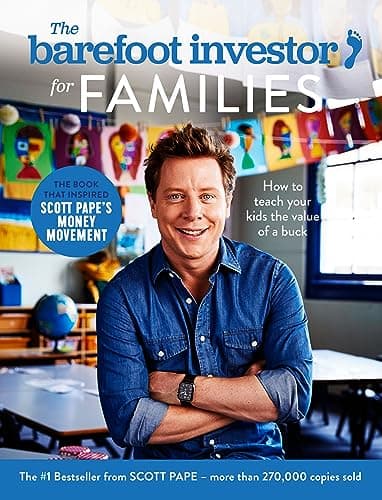
The Barefoot Investor for Families
Scott Pape takes his mega-selling Barefoot system and points it at raising money-smart kids, with age-by-age jobs, pocket money and jam-jar tricks. If you want your kids to grow up good with money, this is the Aussie classic.
The Barefoot Kids
Scott Pape
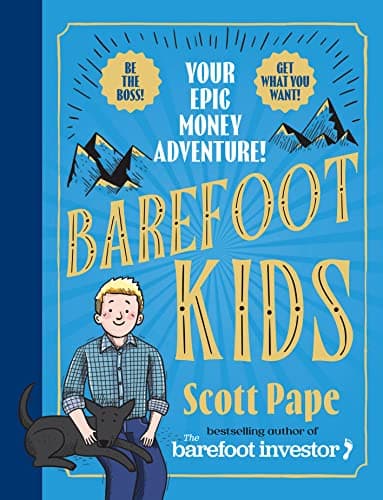
The Barefoot Kids
From the guy behind The Barefoot Investor, this one turns your kids into little money machines with real projects, stickers and stories. Aussie parents made it a number 1 bestseller for a reason.
The Barefoot Investor
Scott Pape
The Barefoot Investor
Australia's best-selling money book ever. A simple system for accounts, budgeting, debt and a real emergency fund in one.
Some links above are affiliate links. If you buy through them, Snowball Invest may earn a small commission at no extra cost to you. We only recommend books we'd suggest anyway.
Sources
Was this article useful?
Put it to your own numbers
Every calculator runs entirely in your browser, with nothing stored. See what these numbers look like for your own situation.
Explore the calculators →General information only. This article is educational and does not constitute personal financial advice. It does not account for your circumstances. Consider your own situation and seek advice from a licensed adviser before acting. Read our full disclaimer.

Timothy Hirou Gaschereau
Founder of Snowball Invest, not a financial adviser.
I write about what I'm learning myself, because nobody ever taught us how to take control of our own money. It's a skill, not a mystery, and it's never too late to learn it. The best day to start was yesterday, the second best is today.
LinkedIn →Related articles
The Barefoot Kids Review: Is Scott Pape's Kids Book Worth It?
Our honest Barefoot Kids review: the jam jars system, the kid-repreneur ideas, who it's for, and whether Scott Pape's money book for kids is worth buying.

The Barefoot Investor Review: Honest, Unfiltered, Australian
Our honest Barefoot Investor review covers the bucket system, the 9 steps, the real criticisms, and whether Scott Pape's book is still worth it for Australians.

She's on the Money Review: Honest and Actually Useful
Our honest She's on the Money book review: what Victoria Devine gets right, where it falls short, and whether it's worth your time as an Australian reader.