

Present Bias: Why Future You Keeps Getting Stitched Up
Present bias makes $50 today beat $100 next year. How it drains your super, powers buy now pay later, and why automation beats willpower every time.
 By Timothy Hirou GaschereauPublished
 10 min read
You have promised yourself you will start topping up your super next month. You made that promise last month too, and the month before. Future you is extremely reliable, right up until the moment future you becomes present you. This is part of our wider guide to money mindset on Snowball Invest.
This article is general information only, not personal financial advice. Consider your own circumstances, and the rules that apply to you, before making decisions about super or debt.
Quick answer
Present bias is the habit of overvaluing whatever is available right now and steeply discounting anything in the future. It is why $50 today can beat $100 next year, why buy now pay later works so well, and why compulsory super exists at all. You do not beat it with willpower. You beat it by deciding once, in advance, and then automating the decision away.
In this guide
- →Why present bias is not the same thing as being impatient
- →What the marshmallow test really showed, and what the 2018 replication found
- →Why the Super Guarantee is compulsory rather than optional
- →The commitment devices that work because they remove the choice
⏳ What present bias actually is
Everyone prefers sooner to later. That is ordinary impatience and it is perfectly rational. Present bias is something odder than that.
The model behind it is hyperbolic discounting. Standard economics assumes we discount the future at a steady rate, like compound interest running backwards. Hyperbolic discounting says we do something else entirely: we apply an enormous discount to anything just slightly ahead of now, then a much gentler one to delays further out.
Ask someone whether they want $50 today or $100 in a year and plenty take the fifty. Ask the same person whether they want $50 in five years or $100 in six and almost everyone waits. The wait is identical. Only its distance from today changed.
That inconsistency is the whole thing. You are not impatient across the board. The present moment gets a special weight that no other moment in your life receives, which is why the plan you make on Monday gets quietly overruled by Thursday.
🍬 The marshmallow test, and the replication nobody quotes
Walter Mischel's Stanford experiments in the late 1960s offered children one marshmallow now or two if they could wait about fifteen minutes. Follow-up work suggested the children who waited did better later in life, and the story took off. Delay gratification as a child, succeed as an adult.
Then in 2018 Tyler Watts, Greg Duncan and Haonan Quan ran a far larger and more diverse replication. Once they controlled for family background, early cognitive ability and home environment, the predictive power shrank dramatically. It did not vanish, but it was roughly half the original effect, and it faded further once family controls were added.
The useful conclusion is not that willpower is worthless. It is that the ability to wait is itself shaped by circumstances. A child who has learned that adults do not always come back with the second marshmallow has an excellent reason to eat the first one. Present bias is partly a response to uncertainty and trust, not just character.
Which matters for adults and money, because it means telling yourself to have more willpower is not a plan. Building something that removes the decision is.
🏦 Why super is the purest example in Australia
Superannuation is present bias turned into policy.
Look at the shape of the ask. You are twenty-eight. Someone wants you to put money aside that you cannot touch for roughly forty years, in exchange for a retirement you can barely picture. The cost is immediate and concrete. The reward is distant and abstract. That is the worst possible trade for a present-biased brain.
Left to choose, most people would not save enough, which is precisely why Australia made it compulsory in 1992. The Super Guarantee is 12% of your qualifying earnings, and since 1 July 2026 it is paid on every payday rather than quarterly. It is compulsory because given a vote, the present-biased version of you wins.
Compounding is what makes this expensive. An extra $1,000 contributed at thirty is worth considerably more at retirement than the same $1,000 at fifty, because it has twenty more years to grow. Every time you defer a voluntary contribution, that is the trade you are losing.
🎯 The essential: The compulsory 12% is handled for you. The voluntary part is not, and that is exactly where present bias gets its vote back: salary sacrifice, after-tax contributions and the government co-contribution are all optional, which means all three are things you can put off forever.
🛒 How buy now pay later and card minimums use it
Buy now pay later is, mechanically, a present bias machine. The design collapses the felt cost of a purchase: you get the thing now, and the pain arrives in small instalments spread over weeks. Each payment feels trivial. The total, and what that money could have done elsewhere, never quite lands.
That is not a criticism, it is the product working as designed. In Australia these contracts are now regulated as credit. Under the Treasury Laws Amendment (Responsible Buy Now Pay Later and Other Measures) Act 2024, ASIC confirms that from 10 June 2025 anyone providing them must hold an Australian credit licence and be a member of the Australian Financial Complaints Authority. Regulation changes your protections. It does not change the psychology.
Credit card minimum repayments run the same play, just slower. The minimum is a small slice of the balance. Paying it feels responsible and keeps the account in order, which is the trick: it satisfies the part of you that wants to feel fine today, while stretching the debt out and adding interest for years.
📅 Why next month never actually arrives
The planning fallacy is present bias's close relative: we systematically underestimate how long things take and how much will get in the way, while overestimating what we will manage.
In money terms it sounds like I will start salary sacrificing once this card is paid off, or I will set up the transfer once work settles down. Next month arrives and something else has claimed the money or the attention, because the future self who was going to handle it turns out to be exactly as present-biased as you are.
What works better is a plan with a date, an amount and a mechanism attached. I will set up a $200 transfer on the first of next month is a plan. I will save more soon is a wish with better marketing.
⚙️ Why automation beats willpower
Willpower is a bad foundation for anything that has to run for thirty years. It runs down across a day and competes with stress, tiredness and everything else going on.
Automation removes the decision. If the money leaves before you see it, there is no moment of resistance to win. Thaler and Benartzi's Save More Tomorrow programme worked on exactly this principle: workers committed in advance to directing part of future pay rises into retirement savings, so the commitment was made by a calm version of them and the money never appeared in take-home pay.
In practice that means transfers timed to payday, salary sacrifice that redirects income before it lands, and investment contributions on a fixed date. None of them ask you to be disciplined in the moment. They ask for one decision, once.
🪢 Commitment devices
A commitment device is a promise made now that is deliberately hard for future you to wriggle out of. Ulysses had himself tied to the mast so he could hear the Sirens without being able to act on it.
Salary sacrifice is the cleanest financial version. You agree with your employer to redirect part of your pre-tax pay into super before it ever reaches you. You never see it, so you never have to decide not to spend it.
Automatic transfers to a separate account work on friction rather than impossibility. You could reverse one, but the small inconvenience is usually enough. That inconvenience is the feature.
Term deposits go further, since breaking one early costs you. For someone who knows they would otherwise dip in, that penalty is doing useful work.
🎯 The essential: The thread running through all of them is the same. They shift the decision to a moment when you are not under the influence of present bias, then keep running while you are.
🔭 Today you, ten years from now
| The decision | What today you does | What future you wanted |
|---|---|---|
| A $300 want, on four instalments | Splits it, barely registers the cost, does it again next week | Waited, or paid outright, and never normalised debt for wants |
| A voluntary super top-up | Leaves the $500 in the everyday account, where it quietly evaporates | Put it in super, where decades of compounding were waiting |
| The credit card minimum | Pays it, feels responsible, carries the balance for years | Paid it down properly and stopped renting the money |
| An extra mortgage repayment | Spends it on the weekend, promises to double up next month | Made the repayment, cut the principal and the interest behind it |
SnowLetter
Australia's money news and our best reads, once a week.
❓ Frequently asked questions
What is present bias in simple terms?
+
Present bias is the tendency to put far more weight on something available right now than on the same thing available later. It is why a smaller reward today can beat a larger one next week, even when you know waiting is better. It is not laziness. It is a predictable quirk in how brains handle time, and it affects nearly everyone.
How does present bias affect superannuation?
+
Super is the textbook case. The reward sits three or four decades away while the cost lands today, so left to choose, most people underfund it. That is exactly why Australia made it compulsory in 1992. The Super Guarantee is 12% of your qualifying earnings, and it is compulsory because governments know voluntary saving for a distant future is something people reliably fail at.
Is present bias the same as hyperbolic discounting?
+
They are close but not identical. Hyperbolic discounting is the model describing how people discount heavily for short delays and far more gently for long ones. Present bias is the behaviour that falls out of it, the disproportionate weight the present moment receives. Think of one as the mechanism and the other as what you actually experience.
Can you overcome present bias?
+
You cannot switch it off, but you can design around it. The effective strategies do not rely on willpower at all. Automation moves money before you see it, commitment devices like salary sacrifice remove the decision, and deciding in advance means the choice gets made while you are thinking clearly rather than at the checkout.
Why does buy now pay later appeal to present-biased shoppers?
+
Splitting a purchase into instalments shrinks the felt cost at the moment you decide. You get the item immediately and the consequence feels small and distant. In Australia these contracts are now regulated as credit: since 10 June 2025 providers must hold an Australian credit licence and be a member of AFCA. Regulation does not change the psychology, only the protections.
What is the difference between present bias and procrastination?
+
They overlap heavily. Procrastination is present bias applied to effort rather than money, where the discomfort of starting now outweighs the benefit of having finished. In money terms the two combine: you put off setting up the transfer or reviewing your super because the effort is now and the payoff is later. The fix is the same, reduce the friction on the good action.
📚 Recommended reading
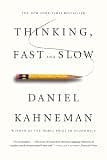
Thinking, Fast and Slow
Daniel Kahneman
Thinking, Fast and Slow
The Nobel laureate's classic on the two systems driving how we think, and why our fast, intuitive brain makes such expensive money mistakes. It explains the behavioural traps behind nearly every bad investing decision.
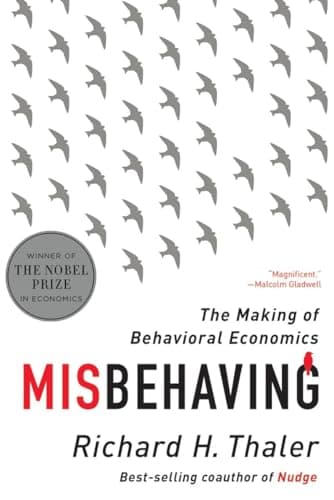
Misbehaving
Richard H. Thaler
Misbehaving
Nobel winner Richard Thaler shows why real humans are messy, emotional money-spenders, not the cool robots economics assumes. Understanding your own bias is the first step to calmer decisions with your cash and your super.
The Barefoot Investor
Scott Pape

The Barefoot Investor
Australia's best-selling money book ever. A simple system for accounts, budgeting, debt and a real emergency fund in one.
Some links above are affiliate links. If you buy through them, Snowball Invest may earn a small commission at no extra cost to you. We only recommend books we'd suggest anyway.
Sources
- 1. Buy now pay later credit contracts: Credit licensing, Australian Securities and Investments Commission (Information Sheet 285).
- 2. Super guarantee rate, maximum contribution base and Payday Super, Australian Taxation Office.
- 3. Superannuation, Moneysmart, Australian Securities and Investments Commission.
- 4. Watts, T. W., Duncan, G. J. and Quan, H. (2018). Revisiting the Marshmallow Test. Psychological Science, 29(7), 1159 to 1177.
- 5. Present bias, Mini Encyclopedia of Behavioral Economics.
Was this article useful?
Put it to your own numbers
Every calculator runs entirely in your browser, with nothing stored. See what these numbers look like for your own situation.
Explore the calculators →General information only. This article is educational and does not constitute personal financial advice. It does not account for your circumstances. Consider your own situation and seek advice from a licensed adviser before acting. Read our full disclaimer.

Timothy Hirou Gaschereau
Founder of Snowball Invest, not a financial adviser.
I write about what I'm learning myself, because nobody ever taught us how to take control of our own money. It's a skill, not a mystery, and it's never too late to learn it. The best day to start was yesterday, the second best is today.
LinkedIn →Related articles

Status Quo Bias: Why Doing Nothing Is Costing You Money
Staying put feels safe and quietly costs you, on insurance, energy, your mortgage and your super. What status quo bias is, and the yearly review that beats it.

Retail Therapy: Does It Actually Work?
Does retail therapy work? The research says yes, briefly, and not for the reason you think. What it really does, and how long the lift lasts.

Mental Accounting: Why You Treat a Tax Refund Differently to Your Salary
A refund dollar buys the same groceries as a salary dollar, but your brain disagrees. How mental accounting costs Australians money, and how to flip it.