

Mental Accounting: Why You Treat a Tax Refund Differently to Your Salary
A refund dollar buys the same groceries as a salary dollar, but your brain disagrees. How mental accounting costs Australians money, and how to flip it.
 By Timothy Hirou GaschereauPublished
 9 min read
A dollar from your tax refund buys exactly the same groceries as a dollar from your pay. Your brain flatly refuses to believe this, and the gap between what is true and what it feels like is where a surprising amount of money quietly leaks away. This is part of our wider guide to money mindset on Snowball Invest.
This article is general information only, not personal financial advice. Consider your own circumstances before making decisions about debt, savings or investments.
Quick answer
Mental accounting is the habit of treating identical dollars differently depending on where they came from or what you have labelled them. It is why a refund gets splurged and a salary gets budgeted, and why people hold savings while carrying credit card debt. Used unconsciously it costs you. Used on purpose, through buckets and offset accounts, it is one of the best tools you have.
In this guide
- →Why your brain keeps a private set of books, and what it costs
- →The lost ticket experiment, and why the same $20 produces two answers
- →The single most expensive version, and how to spot it in your own accounts
- →How to use the same bias deliberately instead of being used by it
🧾 What is mental accounting?
The term comes from Richard Thaler, the economist who won the Nobel Prize in 2017 partly for this work. In a 1985 paper in Marketing Science, he argued that people simply do not treat money as the single interchangeable resource that economics assumes.
Instead we sort it into separate mental accounts, each with its own unwritten rules. Salary goes in the serious money account. A gift goes in the treat yourself account. A win at the races goes in the play money account. The amounts can be identical. The rules never are.
Economists call this a violation of fungibility, which is a heavy word for a simple idea: a dollar is a dollar, whatever its history. True in theory. Not remotely how it feels.
🎟️ The lost ticket experiment
The cleanest demonstration comes from Amos Tversky and Daniel Kahneman, in their 1981 paper on framing. Two scenarios, same money.
You bought a $20 concert ticket. At the door you realise you have lost it. Do you buy another?
You were going to buy a $20 ticket at the door. On the way in you realise you have lost a $20 note. Do you still buy the ticket?
Around 46% said they would buy a replacement ticket. Around 88% said they would still buy a ticket after losing the cash. Losing the ticket charges the loss to the concert account, so the night now feels like it costs $40, which feels ridiculous. Losing the cash charges it to a vague bad luck account, leaving the concert account untouched at $20.
💰 Why your tax refund gets spent differently
Australians can lodge from 1 July each year, and the ATO says most returns lodged online through myTax are processed within about two weeks. The money lands, and for a lot of people it lands feeling like a gift.
It is not a gift. A refund is your own pay coming back. It is the slice your employer withheld across the year at slightly more than your actual liability. The ATO held it for up to twelve months without paying you a cent of interest on it, and has now returned it.
But because it arrives in one lump rather than dribbling in fortnightly, it gets filed under windfall instead of income, and windfall money runs on much looser rules. The same thing happens with a bonus, which routinely buys something you would never sign off from your salary.
The test that cuts through it: would I spend my salary on this? If the honest answer is no, then the refund should not go there either. It is the same money and it always was.
💳 The most expensive version
Picture someone with money sitting in a savings account earning a modest rate, and a credit card balance of roughly the same size charging a rate several times higher.
The arithmetic is not subtle. Paying the card down with the savings wins, every month, by the gap between the two rates. And yet plenty of people do not do it, because the savings account has been labelled emergency fund or holiday money. Touching it feels like going backwards, like dismantling something that took real effort to build.
Meanwhile the card sits in an entirely separate account in your head, compounding away. The two feel unrelated. They are not. They are both your money, and the difference between what one earns and what the other charges is a genuine cost you pay for the comfort of keeping them apart. Our guide to the avalanche and snowball methods walks through the order to attack debt in.
🎯 The essential: There is a reasonable exception. If clearing the card would leave you with nothing at all and no access to credit in a genuine emergency, keeping a modest buffer is a defensible trade. Just make it a decision you actually made, rather than one the labels made for you.
🪣 When it works in your favour
The same quirk that torches your refund can be pointed in a useful direction, and this is where it gets genuinely practical.
Named buckets. Splitting income into categories with labels on them is mental accounting used on purpose. The fun money bucket grants permission to spend without guilt. The savings bucket feels off limits. The labels do real work, which is the whole point.
Sinking funds. A fixed amount each month into an account named for a specific future cost: car registration, a holiday, the next laptop. Earmarked money is much harder to raid for something else.
The offset account is the most elegant version, because here the label and the mechanics finally agree. An offset account is linked to your home loan, and its balance reduces the amount of loan that interest is charged on. Interest you avoid paying is not taxable income, unlike interest you earn, so the same balance works harder sitting there than it would in a savings account.
📈 How it distorts your investing
The sneakiest version in investing is the house money effect. Once an investment is up, some people start treating the gain as somehow less real than the money they put in. It is only house money, so it can be risked in ways the original savings never could. The market has no idea which of your dollars are which.
The second is the disposition effect, which we cover in detail in the guide to loss aversion. Each holding sits in its own mental account. Selling a winner closes that account on a high. Selling a loser closes it on a confirmed loss, which feels considerably worse, so the losers get kept and the winners get cashed in early.
The counter-move is one question, asked honestly: if I did not already own this, would I buy it today at this price? If the answer is no, the mental account is making the decision, not the investment case.
⚔️ When to fight it, when to use it
You are not going to delete this. It is how brains handle money. The useful skill is telling the two modes apart.
Fight it when a windfall gets a different rulebook to your salary, when savings and expensive debt are being kept in separate worlds, when a losing investment is held purely so the loss stays hypothetical, and when gains are treated as play money.
Use it when you name buckets and sinking funds so saving feels concrete, when an offset gives your everyday cash an actual job, when you automate a transfer on payday before the money has a chance to blend into the general pile, and when a guilt-free spending allowance stops every dollar competing with every other dollar.
🎯 The essential: The dividing line is simple. When you choose the labels deliberately, the bias is a tool. When the labels form on their own, the bias is using you.
🏷️ The same $2,000, five different labels
| Where it came from | The label your brain applies | What usually happens | What it costs |
|---|---|---|---|
| Salary | Real money | Budgeted, bills first, spent carefully | Nothing. Treated appropriately |
| Tax refund | A bonus from the ATO | Spent on wants, rarely on debt or savings | Whatever clearing the debt would have saved |
| Work bonus | Extra, not really income | Buys something the salary would never approve | The same dollars, just spent worse |
| Investment gain | House money | Risked in ways the original capital never would be | Outsized losses from overconfidence |
| Savings held beside card debt | Untouchable | Preserved while the card compounds | The gap between the two rates, every month |
SnowLetter
Australia's money news and our best reads, once a week.
❓ Frequently asked questions
What is mental accounting?
+
Mental accounting is the habit of treating money differently depending on where it came from or what you have labelled it, rather than treating every dollar as interchangeable. The idea comes from Richard Thaler, who won the Nobel Prize in Economics in 2017. A tax refund and a pay cheque of the same size are the same money, but almost nobody spends them the same way.
Is mental accounting always a bad thing?
+
No. It is a shortcut, and like most shortcuts it helps or hurts depending on how it is used. Left unconscious it produces things like holding savings alongside expensive debt. Used deliberately, through named savings buckets, sinking funds or an offset account, it becomes one of the more effective habit-building tools available.
Why does a tax refund feel like free money?
+
Because it arrives as one lump sum rather than trickling in with each pay, so your brain files it as a windfall rather than as income. It is neither free nor a gift. It is your own overwithheld pay coming back, after the ATO has held it without paying you interest. Australians lodge from 1 July and the ATO says most online returns are processed within two weeks.
What is the costliest version of mental accounting?
+
Keeping savings in an account earning a modest rate while carrying credit card debt at a much higher one. The two feel like separate things, so the savings stay untouched and feel like an achievement while the card quietly compounds. They are not separate. They are both your money, and the gap between the two rates is a real cost you pay every month.
How can I use mental accounting deliberately?
+
Give money jobs before it has a chance to blend into one pile. Named sub-accounts for an emergency fund, a car service or a holiday make the money feel earmarked, which makes you far less likely to raid it. An offset account is the strongest version, because the label and the actual financial mechanics finally agree with each other.
How does mental accounting affect investing?
+
Two ways. The house money effect makes people treat investment gains as less real than their original capital, so they take risks with profits they would never take with savings. And because each holding sits in its own mental account, closing one at a loss feels far worse than closing one at a profit, which is why losers get held and winners get sold early.
📚 Recommended reading
Misbehaving
Richard H. Thaler
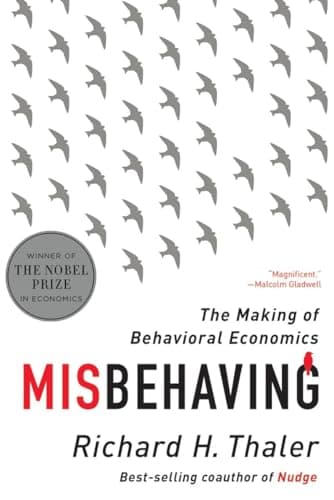
Misbehaving
Nobel winner Richard Thaler shows why real humans are messy, emotional money-spenders, not the cool robots economics assumes. Understanding your own bias is the first step to calmer decisions with your cash and your super.
Thinking, Fast and Slow
Daniel Kahneman
Thinking, Fast and Slow
The Nobel laureate's classic on the two systems driving how we think, and why our fast, intuitive brain makes such expensive money mistakes. It explains the behavioural traps behind nearly every bad investing decision.
The Behavior Gap
Carl Richards
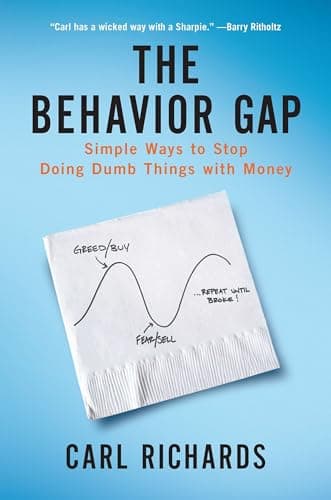
The Behavior Gap
Carl Richards uses simple napkin sketches to explain why we buy high, sell low, and generally get in our own way. Closing the gap between smart plans and messy human behaviour is worth more than any hot stock tip.
Some links above are affiliate links. If you buy through them, Snowball Invest may earn a small commission at no extra cost to you. We only recommend books we'd suggest anyway.
Sources
- 1. Thaler, R. H. (1985). Mental Accounting and Consumer Choice. Marketing Science, 4(3), 199 to 214.
- 2. Tversky, A. and Kahneman, D. (1981). The Framing of Decisions and the Psychology of Choice. Science, 211(4481), the source of the lost ticket problem.
- 3. Lodge your tax return online with myTax, Australian Taxation Office.
- 4. Mortgage offset accounts, Moneysmart, Australian Securities and Investments Commission.
- 5. How to do a budget, Moneysmart, Australian Securities and Investments Commission.
Was this article useful?
Put it to your own numbers
Every calculator runs entirely in your browser, with nothing stored. See what these numbers look like for your own situation.
Explore the calculators →General information only. This article is educational and does not constitute personal financial advice. It does not account for your circumstances. Consider your own situation and seek advice from a licensed adviser before acting. Read our full disclaimer.

Timothy Hirou Gaschereau
Founder of Snowball Invest, not a financial adviser.
I write about what I'm learning myself, because nobody ever taught us how to take control of our own money. It's a skill, not a mystery, and it's never too late to learn it. The best day to start was yesterday, the second best is today.
LinkedIn →Related articles

Present Bias: Why Future You Keeps Getting Stitched Up
Present bias makes $50 today beat $100 next year. How it drains your super, powers buy now pay later, and why automation beats willpower every time.

Status Quo Bias: Why Doing Nothing Is Costing You Money
Staying put feels safe and quietly costs you, on insurance, energy, your mortgage and your super. What status quo bias is, and the yearly review that beats it.

Retail Therapy: Does It Actually Work?
Does retail therapy work? The research says yes, briefly, and not for the reason you think. What it really does, and how long the lift lasts.