

Status Quo Bias: Why Doing Nothing Is Costing You Money
Staying put feels safe and quietly costs you, on insurance, energy, your mortgage and your super. What status quo bias is, and the yearly review that beats it.
 By Timothy Hirou GaschereauPublished
 10 min read
Nobody ever decided to overpay for home insurance. They just renewed it, the way they did last year, and the year before. Doing nothing does not feel like a decision, which is exactly what makes it such an expensive one. This is part of our wider guide to money mindset on Snowball Invest.
This article is general information only, not personal financial advice. Consider your own circumstances, and any exit costs or lost benefits, before switching anything.
Quick answer
Status quo bias is the pull towards keeping what you already have, even when changing would leave you better off. It is why default super options go unexamined for decades and why renewal notices get paid without a glance. The fix is not more discipline, it is one structured review a year, with a date in the calendar.
In this guide
- →Why inaction feels safe even when it demonstrably is not
- →How defaults quietly decide things you think you chose
- →What super stapling changed, and why your first fund now matters more
- →A seven step yearly review that takes an afternoon
🪑 What is status quo bias?
Status quo bias is a preference for the current state of things that goes beyond what the evidence justifies. Not laziness, and not ignorance. A genuine pull towards leaving things alone.
William Samuelson and Richard Zeckhauser named it in 1988, in a paper in the Journal of Risk and Uncertainty. They ran experiments where people were handed a portfolio and invited to rearrange it. Whenever one option was labelled the current holding, people kept it at rates no amount of logic could account for. The default simply won.
Three years later Kahneman, Knetsch and Thaler connected it to two things you may already know. Loss aversion makes giving up your familiar insurer feel like a loss rather than a swap. The endowment effect makes your current fund, plan or rate feel more valuable than it is, purely because it is yours.
Put those together and inaction starts to feel like the cautious option. It is not. It is just the option that does not require you to do anything.
☑️ Why defaults are so powerful
Consider organ donation. If the form asks you to tick a box to opt in, most people do not tick it. If the form asks you to tick a box to opt out, most people do not tick that one either. Countries with opt-out systems consistently register far more donors, not because their citizens value it differently, but because the box changed sides.
Retirement saving tells the same story. When employers switched from opt-in to automatic enrolment, participation jumped, which is the finding that made nudging famous. People do not pick the best option. They pick the one that requires nothing of them.
Australian super runs on precisely this. Your employer defaults you into a fund and into that fund's default investment option, and for an enormous number of people that is the last time either is ever considered.
🧾 The loyalty tax
The loyalty tax is the gap between what you pay as a long-standing customer and what the same company would offer you as a new one. It is most visible in insurance, energy and home loans.
It is not sinister, it is arithmetic. Companies know most customers will not move, so the sharpest pricing gets pointed at the people who might: new arrivals, and anyone who picks up the phone and threatens to leave. Everyone else drifts, slowly, towards worse terms, one quiet renewal at a time.
Your renewal notice may show last year's premium next to this year's. If yours does, that comparison is the most useful number on the page. If the figure has climbed and nothing about your risk has changed, treat it as a prompt rather than a bill. Our guides to comparing car insurance and energy plans walk through what to actually compare.
🎯 The essential: The practical move is to behave like a new customer once a year. Not because switching is always right, but because finding out what a new customer would be offered costs you nothing, and not finding out has a price.
🏦 Superannuation inertia and stapling
Super is where this does its most expensive work, because the sums are large and the horizon is long.
Most people are defaulted into their employer's fund, and into that fund's MySuper option, and never revisit either. Since 1 November 2021 the stapling rule means your existing fund follows you to a new job unless you actively choose otherwise. Your employer asks the ATO for your stapled fund if you do not nominate one.
Stapling is genuinely good. It stopped the old pattern of collecting a new account, and a new set of fees, at every job. But it also means the fund you were defaulted into at twenty-two is now considerably more permanent than it used to be.
The Super Guarantee is 12% of your qualifying earnings, arriving every payday for your whole working life. Over thirty or forty years, small differences in fees and returns compound into large differences in the final balance.
Staying put is fine if your option has low fees, sound long-run performance and a risk setting that suits your age. Plenty of default MySuper options are perfectly competitive. It is worth a look if you have never checked the fees, if you are in your twenties or thirties sitting in something conservative, or if you still have old accounts open somewhere. Our guide to comparing super funds covers what actually matters.
⏱️ The admin cost illusion
Ask why someone has not switched energy plans and you will hear that it is a hassle. Ask how long they think it takes and they will say hours.
It very rarely does. Comparing plans on the regulator's free site is a matter of minutes, and the incoming retailer does most of the rest. Changing an investment option inside your super fund is usually a few clicks in the member portal. Refinancing is more involved, but a broker carries most of it.
We reliably overestimate the effort of changing and underestimate the cost of staying. That asymmetry is the bias doing its job: it inflates the imagined hassle until staying feels justified.
📋 The yearly review that beats it
You do not need to reorganise your finances continuously. You need one structured session, once a year, asking the same questions in the same order.
- List every recurring payment. Insurance, energy, internet, mobile, streaming, gym, mortgage. Making the invisible visible is most of the work.
- Read your insurance renewal properly. If last year's premium is shown, compare it. Then get two competing quotes before you renew anything.
- Compare your energy plan on Energy Made Easy, the regulator's free service. If you have not moved or renegotiated in two years, you are probably not on the best rate available.
- Check your mortgage rate against what your own lender advertises to new customers. If there is a gap, ask them to match it. That call is free.
- Log into your super. Check the fund, the option, the fees and the balance, and consolidate any old accounts, after checking what insurance cover you might lose by closing them.
- Review your mobile and internet. These move fast, and a good deal from two years ago is usually a mediocre one now.
- Book next year's review before you close the laptop. Same week, next year.
💸 What staying put tends to cost
| What | How the gap appears | What to do about it |
|---|---|---|
| Home and car insurance | Premium creeps up each renewal without any change in your risk | Compare last year's premium, get two quotes before renewing |
| Electricity and gas | Older plans quietly stop being the sharpest available | Compare on Energy Made Easy, the regulator's free tool |
| Mortgage | Long-standing borrowers sit above what new borrowers are offered | Ask your own lender to match their new-customer rate |
| Super | Default option never reviewed, fees and returns never compared | Check fees and net returns, consolidate old accounts |
| Mobile and internet | Same price, less included than a current plan offers | Check what your provider offers new customers today |
SnowLetter
Australia's money news and our best reads, once a week.
❓ Frequently asked questions
What is status quo bias in simple terms?
+
Status quo bias is the pull towards keeping whatever you already have, even when switching would leave you better off. It is not the same as a considered preference for stability. It persists even when the evidence clearly favours changing. Economists trace it to loss aversion, where losses feel bigger than equivalent gains, and the endowment effect, where you overvalue what you already own.
Is status quo bias always bad?
+
No. Sometimes staying is genuinely the right call. If your super fund has low fees and sensible settings for your age, or your mortgage rate is already competitive and switching costs would swallow the gain, staying put is fine. The problem is when drifting gets mistaken for deciding. The aim is to make an active choice, not to end up somewhere by default.
What is the loyalty tax?
+
It is the gap between what long-standing customers pay and what a new customer is offered for the same thing. It shows up most often in insurance, energy and home loans. It is not a conspiracy, it is a predictable result of the fact that most people do not switch, so the sharpest pricing gets aimed at the people who might.
What is the superannuation stapling rule?
+
Since 1 November 2021, your existing super fund follows you when you change jobs rather than your new employer opening another account. If you do not nominate a fund, your employer asks the ATO for your stapled fund and pays your Super Guarantee there. It cuts down duplicate accounts and duplicate fees, but it also makes whichever fund you were first defaulted into far more permanent.
Can I change my investment option without changing super funds?
+
Usually yes. Most funds offer several options inside the same fund, from conservative through to high growth, and you can generally switch between them in the member portal. That is a different decision from moving funds entirely, and it is often the faster one. Check your fund's product disclosure statement for any cost or timing rules.
How long does switching an energy plan actually take?
+
Far less time than people expect, which is the whole point of the admin cost illusion. Comparing plans on the Australian Energy Regulator's free Energy Made Easy site takes minutes rather than hours, and the incoming retailer handles most of the process. The imagined hassle is usually a bigger barrier than the real one.
📚 Recommended reading
Misbehaving
Richard H. Thaler
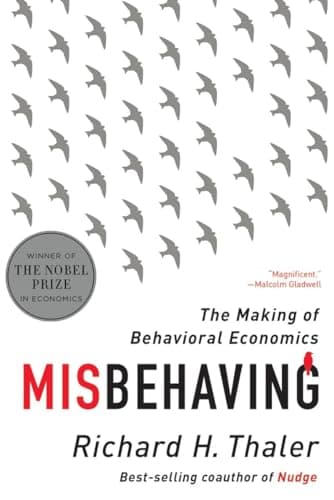
Misbehaving
Nobel winner Richard Thaler shows why real humans are messy, emotional money-spenders, not the cool robots economics assumes. Understanding your own bias is the first step to calmer decisions with your cash and your super.
Thinking, Fast and Slow
Daniel Kahneman
Thinking, Fast and Slow
The Nobel laureate's classic on the two systems driving how we think, and why our fast, intuitive brain makes such expensive money mistakes. It explains the behavioural traps behind nearly every bad investing decision.
The Barefoot Investor
Scott Pape

The Barefoot Investor
Australia's best-selling money book ever. A simple system for accounts, budgeting, debt and a real emergency fund in one.
Some links above are affiliate links. If you buy through them, Snowball Invest may earn a small commission at no extra cost to you. We only recommend books we'd suggest anyway.
Sources
- 1. Kahneman, D., Knetsch, J. L. and Thaler, R. H. (1991). Anomalies: The Endowment Effect, Loss Aversion, and Status Quo Bias. Journal of Economic Perspectives, 5(1).
- 2. Super investment options, Moneysmart, Australian Securities and Investments Commission.
- 3. Choosing a super fund, Moneysmart, Australian Securities and Investments Commission.
- 4. Energy Made Easy, the Australian Energy Regulator's free plan comparison service.
- 5. Super guarantee rate and Payday Super, Australian Taxation Office.
Was this article useful?
Put it to your own numbers
Every calculator runs entirely in your browser, with nothing stored. See what these numbers look like for your own situation.
Explore the calculators →General information only. This article is educational and does not constitute personal financial advice. It does not account for your circumstances. Consider your own situation and seek advice from a licensed adviser before acting. Read our full disclaimer.

Timothy Hirou Gaschereau
Founder of Snowball Invest, not a financial adviser.
I write about what I'm learning myself, because nobody ever taught us how to take control of our own money. It's a skill, not a mystery, and it's never too late to learn it. The best day to start was yesterday, the second best is today.
LinkedIn →Related articles

Present Bias: Why Future You Keeps Getting Stitched Up
Present bias makes $50 today beat $100 next year. How it drains your super, powers buy now pay later, and why automation beats willpower every time.

Mental Accounting: Why You Treat a Tax Refund Differently to Your Salary
A refund dollar buys the same groceries as a salary dollar, but your brain disagrees. How mental accounting costs Australians money, and how to flip it.

Retail Therapy: Does It Actually Work?
Does retail therapy work? The research says yes, briefly, and not for the reason you think. What it really does, and how long the lift lasts.