
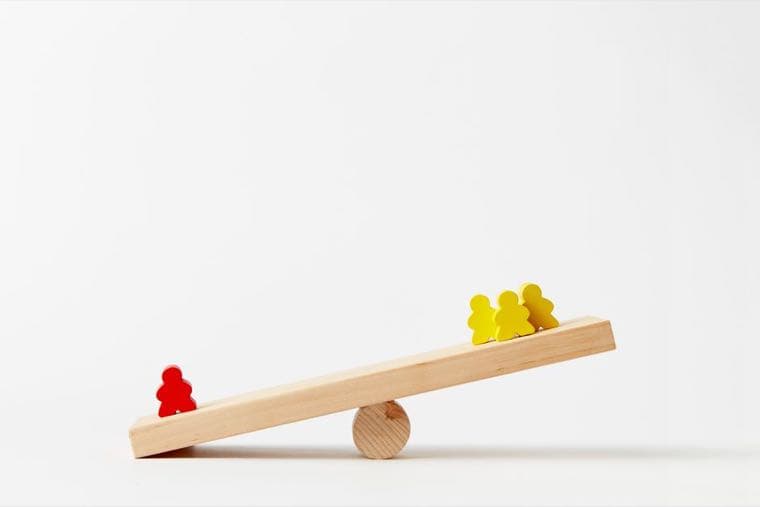
Retail Therapy: Does It Actually Work?
Does retail therapy work? The research says yes, briefly, and not for the reason you think. What it really does, and how long the lift lasts.
 By Timothy Hirou GaschereauPublished
 9 min read
Buying something when you feel low genuinely does lift your mood. That is not a rationalisation, it is a repeated finding, and for most people most of the time a small treat after a hard week is an entirely ordinary thing to do. This is part of our wider guide to money mindset on Snowball Invest.
This article is general information only. It is not financial, medical or psychological advice, and it is not a diagnostic tool. If spending is causing you distress, the support services listed near the end are free and confidential.
Quick answer
Retail therapy works by restoring a sense of control, not by giving you the thing you bought. The lift is real and it is brief. The useful question is not why do I do this, because the answer is that you are human. It is whether it is still working for you, or quietly working against you.
In this guide
- →What the research actually found, and why control is the active ingredient
- →The honest signals that separate a normal treat from a pattern worth examining
- →Why the wanting reliably feels better than the having
- →Alternatives that meet the same need, and where to get free help in Australia
🛍️ What retail therapy actually is
Retail therapy is shopping, or even just browsing, to change how you feel. The phrase gets used as a punchline, but the effect holds up.
Atalay and Meloy found in 2011 that a low mood leads to more unplanned treat purchases, and that those purchases did lift mood, without the regret people often assume comes with them. Rick, Pereira and Burson went further in 2014, and their finding is the interesting one: what does the work is making choices. Deciding, comparing, selecting. The mood lift came from restored personal control, not from the object.
Which reframes the whole thing. When you open a shopping app after a rough day, the thing you are reaching for is not a jumper or a kitchen gadget. It is the feeling of deciding something, at a moment when the rest of life is happening to you rather than with your input.
That matters, because it means the need underneath is real and reasonable. Anything else that gives you a genuine decision to make can meet the same need, usually for free.
⚖️ When it is fine, and when it is not
A treat after a stressful week is not a problem. Most people do it, the research supports it, and there is no need to build a moral case about it.
What is worth noticing is when it shifts from occasional relief into a pattern that leaves you worse off. Some honest signals:
- You are hiding purchases, deleting confirmation emails, or leaving bags in the car.
- You feel worse afterwards rather than better, and the guilt arrives before the lift fades.
- You are funding it with money you do not have.
- You are shopping to avoid a feeling rather than to mark one. There is a real difference between treating yourself and not wanting to think about something.
- The frequency is climbing, and what used to be occasional is now most days.
- The spending that was meant to ease the stress is now producing it.
None of these mean something is seriously wrong. They are just worth seeing clearly, because noticing is the part that makes anything else possible. This article is about what retail therapy is doing and whether it works. If what you actually want is to stop, our guide to emotional spending is the practical one.
📱 The triggers, and why online makes it harder
The triggers are consistent and unsurprising: stress, boredom, loneliness, sadness, and the low-grade unease of feeling like things are outside your control.
Online shopping has removed nearly every point of friction that used to slow an impulse down. No queue. No walk to the shops. No gap between deciding and doing in which you might change your mind. It is available at two in the morning, in bed, in a low moment, in one tap. And when payment is split into instalments, the cost lands softly enough that it barely registers.
Boredom is underrated here. Scrolling listings is genuinely stimulating, visual and novel, and it gives a restless brain something to do. It also happens to spend money.
📦 Why the wanting beats the having
The best part of a purchase is usually the part before it arrives.
The reward system is more active during anticipation than during the having. Choosing it, tracking the delivery, picturing using it: that is where the feeling concentrates. Then it arrives, and it is nice, and within a few days it is simply part of the furniture.
That is hedonic adaptation, the way people return to their baseline after good things happen. It is not a flaw and it is not about you. But it does explain why retail therapy has a short shelf life as a mood strategy: lean on it regularly and you need more of it to get the same lift.
🧰 What actually helps instead
Just stop spending is not advice, it is a scolding. What helps is meeting the same underlying need, which is the need to decide something and act on it.
When you are stressed and need to feel in control. Write down three things you can genuinely do something about today. Tidy or reorganise one small area, since imposing order on a space pulls on the same lever as choosing a purchase. Or look squarely at your actual numbers, which feels worse for ten minutes and better for a month.
When you are bored. Give yourself a browsing rule: add things to a wishlist rather than a cart, and revisit it in forty-eight hours. Most of the time the wanting has already gone. It keeps the enjoyable part and drops the invoice.
When you are flat or lonely. Message someone, or get outside for twenty minutes. Both are more durable than a parcel, and both are free.
When you simply want to treat yourself, which is allowed. Set a monthly amount that is yours to spend on whatever you like, with no justification required. A planned treat budget removes the guilt spiral and keeps the spending contained, which is the whole trick behind giving money a job before it disappears.
🤝 When it is worth talking to someone
If spending has become a source of real distress, or money stress is affecting your sleep, your relationships or your mental health, you do not have to sort it out alone. All of the following are free.
🎯 The essential: National Debt Helpline, 1800 007 007. Free, confidential financial counselling, weekdays 9:30am to 4:30pm, with live chat weekdays 9:00am to 8:00pm. Counsellors do not lend money and do not sell anything. As they put it themselves, the service is not for profit, and it is always free and confidential.
Beyond Blue, 1300 22 4636. Support for anxiety and depression, including resources specifically on money and mental wellbeing.
Lifeline, 13 11 14. Available twenty-four hours a day, every day, by phone, text or online chat.
Reaching out early is not an overreaction. Financial stress sits on a spectrum, and it is far easier to get help before things feel unmanageable than after.
🔍 Two versions of the same purchase
| Signal | An ordinary treat | A pattern worth a closer look |
|---|---|---|
| How often | Occasionally, after a genuinely hard stretch | Most days, regardless of what is going on |
| How you feel after | Fine, maybe a small lift | Guilty or numb, and it fades quickly |
| Was it planned | Broadly yes, you meant to treat yourself | No, you were not intending to buy anything |
| Money involved | Within what you have, no stress created | Stretching the budget, or on credit |
| Do you mention it | No reason not to | Hidden emails, hidden bags, unopened banking app |
SnowLetter
Australia's money news and our best reads, once a week.
❓ Frequently asked questions
Is retail therapy real, or just an excuse to spend?
+
It is real. Research in Psychology and Marketing (Atalay and Meloy, 2011) and the Journal of Consumer Psychology (Rick, Pereira and Burson, 2014) both found that shopping genuinely improves mood, and that the lift comes from restoring a sense of personal control rather than from the object. The effect is short-lived, but it is not imaginary, and using it occasionally is ordinary human behaviour.
How do I know if it has become a problem?
+
The signals worth noticing are secrecy, guilt, financial strain and rising frequency. Hiding purchases, spending money you do not have, or finding that shopping has become the main way you handle difficult feelings are all worth paying attention to. None of them mean something is seriously wrong. They mean the strategy has stopped working in your favour.
Why do I feel flat after buying something I really wanted?
+
That is hedonic adaptation. Your brain adjusts to new things quickly, and the reward system tends to be more active while you are anticipating than once you have the thing. The wanting genuinely does feel better than the having. It is a well documented feature of how people work, not a sign you chose badly.
What can I do instead when I am stressed?
+
The alternatives that work target the same need to feel in control. Tidying one small space, writing down three things you can actually act on today, going for a walk, or messaging someone all pull on similar mechanisms. A wishlist rule, where you add the thing and revisit it in forty-eight hours, lets you keep the browsing without the bill.
Does buy now pay later make emotional spending worse?
+
It can. Splitting a purchase into instalments softens the felt cost at the moment you decide, which makes it easier to buy in a low moment without the price fully registering. The debt is still real, only deferred. If you notice it is making impulse spending easier, removing it from your saved payment methods restores some useful friction.
Where can I get free help in Australia?
+
The National Debt Helpline on 1800 007 007 offers free, confidential financial counselling on weekdays. Counsellors do not sell products or lend money and work only in your interest. Moneysmart has free budgeting tools and a counsellor referral service. If money stress is affecting your mental health, Beyond Blue on 1300 22 4636 has resources on financial wellbeing.
📚 Recommended reading
The Behavior Gap
Carl Richards
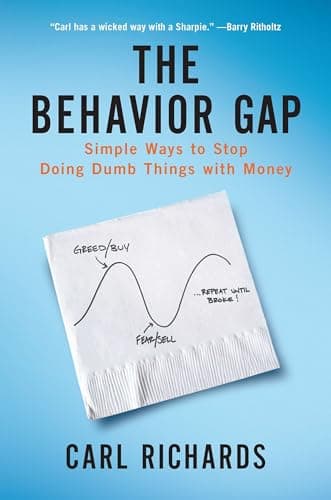
The Behavior Gap
Carl Richards uses simple napkin sketches to explain why we buy high, sell low, and generally get in our own way. Closing the gap between smart plans and messy human behaviour is worth more than any hot stock tip.
The Psychology of Money
Morgan Housel
The Psychology of Money
19 short stories on how people actually think and feel about money, not just the maths of it.
The Barefoot Investor
Scott Pape

The Barefoot Investor
Australia's best-selling money book ever. A simple system for accounts, budgeting, debt and a real emergency fund in one.
Some links above are affiliate links. If you buy through them, Snowball Invest may earn a small commission at no extra cost to you. We only recommend books we'd suggest anyway.
Sources
- 1. Atalay, A. S. and Meloy, M. G. (2011). Retail therapy: A strategic effort to improve mood. Psychology and Marketing.
- 2. Rick, S. I., Pereira, B. and Burson, K. A. (2014). The benefits of retail therapy: Making purchase decisions reduces residual sadness. Journal of Consumer Psychology.
- 3. Financial wellbeing, money and mental health, Beyond Blue.
- 4. Free financial counselling, National Debt Helpline.
- 5. Urgent help with money, Moneysmart, Australian Securities and Investments Commission.
Was this article useful?
Put it to your own numbers
Every calculator runs entirely in your browser, with nothing stored. See what these numbers look like for your own situation.
Explore the calculators →General information only. This article is educational and does not constitute personal financial advice. It does not account for your circumstances. Consider your own situation and seek advice from a licensed adviser before acting. Read our full disclaimer.

Timothy Hirou Gaschereau
Founder of Snowball Invest, not a financial adviser.
I write about what I'm learning myself, because nobody ever taught us how to take control of our own money. It's a skill, not a mystery, and it's never too late to learn it. The best day to start was yesterday, the second best is today.
LinkedIn →Related articles

Present Bias: Why Future You Keeps Getting Stitched Up
Present bias makes $50 today beat $100 next year. How it drains your super, powers buy now pay later, and why automation beats willpower every time.

Mental Accounting: Why You Treat a Tax Refund Differently to Your Salary
A refund dollar buys the same groceries as a salary dollar, but your brain disagrees. How mental accounting costs Australians money, and how to flip it.
Status Quo Bias: Why Doing Nothing Is Costing You Money
Staying put feels safe and quietly costs you, on insurance, energy, your mortgage and your super. What status quo bias is, and the yearly review that beats it.