

How to Invest in Yourself: A Practical Australian Guide
Investing in yourself, your skills, health and earning power, is often the highest-return move you can make. Here is how to do it, with the real compounding maths.
 By Timothy Hirou GaschereauPublished
 10 min read
Try it yourself
We tend to think of investing as shares, property, or super. All smart. But there is one asset almost every financial planner quietly agrees is the most valuable thing you own in your 20s and 30s: your human capital, the present value of everything you will earn over your working life.
For a 28-year-old on $75,000, that is potentially $3 million or more in lifetime earnings, far more than their share portfolio. Anything that raises your earning capacity compounds through your entire career. That is not a motivational poster; it is just maths. Here is how to invest in yourself, the practical, mostly low-cost way.
🎯 The essential: Investing in yourself, your skills, health, network and money habits, often has the highest return of any investment, because it raises your lifetime earning capacity and compounds for decades, and no market crash can take it away. A modest pay rise from upskilling, invested consistently, can grow into hundreds of thousands. Many of the best moves cost little or nothing, and some study may be tax deductible if it relates to your current job. It complements, not replaces, investing your money in ETFs and super. This is general information, not personal advice.
Your highest-return asset
Human capital is the value of all the income you will earn. A skill you learn at 27 pays off for 40 years. A pay rise you negotiate at 30 becomes the base for every future raise and every super contribution. A health habit you build at 25 keeps you productive for decades. Unlike shares, no crash wipes out your skills; unlike property, no one can repossess your knowledge. It is the one investment with no counterparty risk.
Skills and education
Upskilling is the most direct way to raise your income, and you do not need a $50,000 degree. Lower-cost options that Australian employers respect:
- Free and low-cost online (Coursera, edX, LinkedIn Learning, YouTube), many courses free to audit.
- TAFE: practical, affordable, and well regarded.
- Employer-funded training: many will pay for relevant study if you ask.
- Public libraries: free books and, in many councils, free online learning platforms.
If a course directly relates to your current job (maintaining or improving your skills, or likely to increase your income from that role), it may be tax deductible under the ATO's self-education rules, including course fees and textbooks. Study for a brand-new career generally does not qualify, and since 1 July 2022 the old $250 reduction is gone. This is general information, not tax advice, so confirm with a registered tax agent.
Your health is a financial asset
This is a financial argument, not a wellness lecture. Poor health reduces your earning capacity, raises your costs, and drains the mental energy good decisions need. Your body and mind are the engine behind every dollar you earn, and the highest-return maintenance is cheap:
- Exercise: a 30-minute walk costs nothing and measurably lifts mood and focus.
- Sleep: protecting it is free, and chronic deprivation impairs decisions.
- Preventative care: a GP check-up or dental visit is far cheaper than treating problems late.
- Mental health: a GP Mental Health Treatment Plan gives Medicare rebates for psychology sessions under Better Access.
Earning capacity and career capital
Skills get you to the door; career capital (your reputation, track record, and negotiation) gets you through it. Two things move the needle most:
- Ask for a pay rise. Negotiation is a skill that improves with practice. Know your market rate (Seek, LinkedIn), know your achievements, and pick your timing (after a win, at review, or with a competing offer).
- Move when it is right. Switching employers often yields bigger jumps than annual reviews. If your raises have been modest for a few years, the market may pay you more.
A side income (freelancing, tutoring, a small business) adds resilience and builds skills that feed back into your main career.
What a pay rise is actually worth
Sarah, 30, on $75,000, spends three months on a relevant certification, negotiates a $5,000 raise, and invests that extra $5,000 each year into a diversified ETF portfolio at an assumed 8%:
And the raise does not stay $5,000: future increases build on the higher base, super grows on the higher salary, and the whole trajectory lifts. See the compounding for yourself with our compound interest calculator.
Your network, financial literacy, and habits
Careers are built on skills and accelerated by people. A mentor can save you years of trial and error, and a contact who rates your work opens doors a cold application never will. Keep your LinkedIn current, use alumni networks and industry bodies, and stay close to former managers who have seen your work.
Financial literacy is itself investing in yourself. Learning how budgeting, investing, super and tax work costs little but informs decisions worth tens of thousands over a lifetime, and good habits, automating savings on payday, tracking spending for a month, reading one finance book, quietly build wealth while others wonder where their money went. Our guide on money scripts and boosting super via salary sacrifice are good next steps.
Ways to invest in yourself
| Area | Example actions | The payoff | Cost |
|---|---|---|---|
| Skills and education | Online courses, TAFE, employer training, certifications | Higher income, promotions, new options | Free to a few thousand (some deductible) |
| Health and wellbeing | Exercise, sleep, GP check-ups, mental health plan | Sustained productivity, lower costs | Free to low (Medicare rebates) |
| Career and earning | Negotiating a raise, moving jobs, a side income | Higher salary base, faster wealth, more super | Free (time) |
| Network and habits | LinkedIn, mentors, MoneySmart, automating savings | Better opportunities, smarter decisions | Free to low |
Investing in yourself is not hustle culture or $3,000 courses. It is deliberate, often free actions that raise your future income and wellbeing, and it complements putting that extra income into ETFs and super. Both engines running together is the goal.
Frequently asked questions
Is investing in yourself actually worth it financially?
+
Yes, and the maths supports it. Your lifetime earning capacity is likely your largest financial asset, especially in your 20s and 30s. Anything that raises your income compounds over decades through a higher salary base, more super, and more to invest. A $5,000 pay rise invested consistently at 8% grows to over $600,000 across 30 years in the worked example below.
What counts as investing in yourself?
+
Broadly, anything that raises your future earning capacity, wellbeing, or financial resilience: education and certifications, physical and mental health habits, career development (negotiating, networking, changing jobs strategically), financial literacy, and good money habits. It does not have to be expensive. Asking for a pay rise, getting enough sleep, and reading a finance book all count.
Can I claim self-education expenses as a tax deduction in Australia?
+
Possibly. Under the ATO's self-education rules, study that directly relates to your current job (maintaining or improving your skills, or likely to increase your income from that role) may be deductible, including course fees and textbooks. Study for a completely new career generally does not qualify, and since 1 July 2022 the old $250 reduction no longer applies. This is general information, not tax advice; confirm with a registered tax agent.
How do I invest in myself if I have no money?
+
Many of the highest-return options are free or nearly free. Exercise and sleep cost nothing, libraries give free access to books and often online learning, and YouTube and free-to-audit courses cover huge ground. Asking for a pay rise costs only preparation, networking costs time, and your employer may fund relevant training if you ask.
Is investing in yourself better than investing in shares or ETFs?
+
It depends on your stage. In your 20s and early 30s, when your human capital dwarfs your portfolio, the return on upskilling and raising your income can easily exceed financial returns. Later, as your portfolio grows, financial investing matters more. They are not competing: investing in yourself raises your income, and you deploy that extra income into assets.
How do I start investing in myself today?
+
Pick one concrete thing this week: book a GP check-up, ask your employer about training, spend 20 minutes on a budget planner, research your market rate, or start a free online course. The point is to start with something specific, not to overhaul your whole life at once.
Does investing in myself replace financial investing?
+
No, they work together. Investing in yourself raises your earning capacity and income; financial investing (shares, ETFs, super) grows your wealth over time. The goal is to do both, using your human capital to earn more and then putting that extra income to work.
Keep reading
Books worth reading
📚 Recommended reading
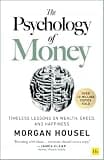
The Psychology of Money
Morgan Housel
The Psychology of Money
19 short stories on how people actually think and feel about money, not just the maths of it.
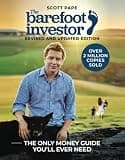
The Barefoot Investor
Scott Pape
The Barefoot Investor
Australia's best-selling money book ever. A simple system for accounts, budgeting, debt and a real emergency fund in one.
Making Money Made Simple
Noel Whittaker

Making Money Made Simple
Australia's classic, comprehensive money guide covering tax, super and investing, updated for today.
Some links above are affiliate links. If you buy through them, Snowball Invest may earn a small commission at no extra cost to you. We only recommend books we'd suggest anyway.
Sources
- ATO, self-education expenses
- ASIC Moneysmart, tools and guides
- Services Australia, mental health care and Medicare
General information only, not personal financial or tax advice. It does not take your circumstances into account. Consider a registered tax agent or licensed financial adviser before acting on it.
Was this article useful?
Put it to your own numbers
Every calculator runs entirely in your browser, with nothing stored. See what these numbers look like for your own situation.
Try the Compound Interest calculator →General information only. This article is educational and does not constitute personal financial advice. It does not account for your circumstances. Consider your own situation and seek advice from a licensed adviser before acting. Read our full disclaimer.

Timothy Hirou Gaschereau
Founder of Snowball Invest, not a financial adviser.
I write about what I'm learning myself, because nobody ever taught us how to take control of our own money. It's a skill, not a mystery, and it's never too late to learn it. The best day to start was yesterday, the second best is today.
LinkedIn →Related articles

Loss Aversion: Why Losing $100 Hurts More Than Gaining $100 Feels Good
Losing $100 feels about twice as bad as gaining $100 feels good. How loss aversion quietly shapes Australian money decisions, and how to work with it.

Anchoring Bias: Why the First Number You Hear Decides What You Pay
The first number you hear sets the price you think is fair, from auction guides to salary talks. How anchoring works in Australia, and how to beat it.

Mental Accounting: Why You Treat a Tax Refund Differently to Your Salary
A refund dollar buys the same groceries as a salary dollar, but your brain disagrees. How mental accounting costs Australians money, and how to flip it.