
Underconsumption Core: The Anti-Spending Trend That's Actually About Contentment
Underconsumption core went viral in 2024 for good reason. Here's the financial psychology behind why buying less feels so right now.
 By Timothy Hirou GaschereauPublished
 10 min read
Try it yourself
If your feed has recently swapped hundred-dollar hauls for someone proudly filming the same worn-out jeans they've had for six years, you've met underconsumption core. It's one of the more interesting money mindset shifts to come out of social media in years, not because it's flashy, but because it's the opposite of flashy. This is part of a wider guide to money mindset on Snowball Invest.
Quick answer
Underconsumption core is a TikTok-born trend, viral since July 2024, that celebrates using what you already own instead of constantly buying new things. The psychology behind it is genuine: the emotional boost from a purchase fades fast (hedonic adaptation), and this trend offers a real alternative to that cycle. It isn't about deprivation. The framing is "I have enough," not "I can't afford this," and you don't need a TikTok account to apply the underlying idea.
In this guide
- →What underconsumption core actually is, and how it differs from a haul
- →Where the trend came from, and how fast it spread in mid-2024
- →Why it resonates so strongly right now, economically and culturally
- →The financial psychology behind it, hedonic adaptation and decision fatigue
- →The critical difference between underconsumption core and deprivation
- →The honest caveats, including who gets to choose this and who doesn't
🎥 What is underconsumption core?
Underconsumption core is a social media trend built around a simple idea: use what you already have, buy only what you genuinely need, and stop treating constant acquisition as a default setting. In practice, that looks like someone filming their bathroom shelf with four half-used products instead of forty, or showing off the jeans they've worn for six years. No haul, no unboxing, no "TikTok made me buy it."
The "core" part is social media shorthand for an aesthetic or vibe, which creates a neat irony. As Depop trend specialist Agus Panzoni put it, "the irony lies in the fact that underconsumption is a practice, while 'core' refers to an aesthetic." At its heart, though, the trend is a pushback against haul culture, influencer-driven overconsumption, and the algorithmic pressure to buy more, all the time, whether you need it or not.
Underconsumption core isn't anti-spending in some absolute sense. It's anti-default-spending, questioning the assumption that new is automatically better and that owning more is automatically the goal.
📱 Where did it come from?
The trend exploded on TikTok in July 2024. One of the earliest viral posts came from Maya, an 18-year-old creator from Germany, who posted a video showing her old hair dryer and clothes she'd been wearing since seventh grade. That clip hit 2.3 million views and more than 446,000 likes. Sustainability creator Sabrina Pare (@sab.sustainable) started posting underconsumption core content around the same time, and her videos on the theme have accumulated nearly 15 million likes across her 250,000-follower account.
By September 2024, Google searches for "underconsumption core" had spiked 4,250% year-over-year. Mainstream coverage followed quickly: The New York Times ran a piece on 25 July 2024, The Guardian on 7 August, and ABC News Australia on 30 July.
It's worth placing this alongside the trend that came before it. Underconsumption core followed "deinfluencing," which peaked in 2023 and had creators telling audiences not to buy overhyped products, but usually still recommending alternatives, so it stayed fundamentally about buying. Underconsumption core went further: buy less overall, and try to interrupt the acquisition cycle itself rather than just redirect it.
🤔 Why it resonates so deeply right now
The economic context is real. Gen Z is dealing with inflation eroding purchasing power, dwindling pandemic-era savings, a tighter job market, and housing costs that feel permanently out of reach. Business Insider research found Gen Z earning less than millennials did at the same age, a decade earlier. Australians reading this will recognise a lot of that shape, even if the exact numbers differ locally. Our guides to financial nihilism and doom spending go deeper on the Australian housing and cost-of-living data driving similar feelings here.
The cultural context matters too. For years, aspirational content meant hauls: thousands of dollars of clothing, shelves of collectible cups, skincare collections filling a bathroom cabinet twice over. Sustainable fashion creator Jade Taylor told The New York Times that "flagrant displays of wealth that were once aspirational are now insensitive, out-of-touch."
The trust shift is significant. Y-Pulse research found 53% of people aged 13 to 22 prefer recommendations from regular people over influencers, and 45% don't believe creators hold the same authority they once did. That shows up in the engagement numbers too: underconsumption-related posts averaged 633 likes per post, compared with 238 likes per post for #TikTokMadeMeBuyIt.
Megan Doherty Bea, assistant professor of consumer science at the University of Wisconsin-Madison, summed up the underlying shift well: "It's really pushing back against this idea that you need to constantly be buying things to have a happy and fulfilling life."
🧠 The financial psychology behind it
Hedonic adaptation. The emotional boost from a new purchase fades surprisingly quickly. You buy the thing, feel good, and within days or weeks it's just a thing you own. Your baseline resets, so you buy something else, and the cycle repeats. This is the dopamine-driven acquisition loop that underconsumption core, at its best, interrupts, not by telling you that wanting things is bad, but by creating a pause between the algorithmic prompt to buy and the actual decision to spend.
Underconsumption core, at its best, is a deliberate pause inserted right before the top of this loop.
Decision fatigue. Constantly evaluating new products is exhausting. A default of "use what I have" removes a surprising number of small decisions from your day, which is its own kind of relief.
The compounding effect. Every dollar not spent on something you didn't genuinely need can go elsewhere, an emergency fund, a mortgage deposit, an investment. It's not dramatic in any single instance, but it accumulates the same way any other consistent habit does.
🎯 The essential: Underconsumption core, stripped of the hashtag, reconnects spending with actual need or genuine want, rather than with whatever the algorithm happened to show you today.
⚖️ Underconsumption core vs. deprivation: a critical difference
This is the distinction that separates a genuinely useful mindset shift from a stricter, less sustainable form of restriction.
| Deprivation | Underconsumption core | |
|---|---|---|
| The framing | "I can't afford this" | "I have enough" |
| The feeling | Constrained, stressful, often shame or anxiety | Abundance, a choice made from a place of sufficiency |
| Who it's for | Anyone facing genuine financial constraint | Often people who could spend more, and choose not to |
| What it does long-term | Tends to create resentment and rebound spending | Tends to be more sustainable, because it comes from your own values |
Sabrina Pare's own framing captures it well: the trend celebrates using what you have, it doesn't punish you for wanting things. There's no moral hierarchy where buying something new makes you a bad person. Restriction imposed from the outside tends to create resentment and rebound spending. A genuine internal shift toward "enough," coming from your own values rather than financial pressure, tends to be more sustainable and more satisfying.
The question worth asking isn't "can I afford this?" It's "do I actually want this, or did the algorithm just tell me I should want it?"
🛠️ How people are actually applying it
- Using up what you have before buying more. Finishing the moisturiser before opening the new one.
- A moratorium on non-essential purchases for a set period. A "low-buy" month, a full no-spend challenge, or a longer no-buy challenge spanning months.
- Rediscovering what you already own. Decluttering often reveals forgotten items that would otherwise have been rebought.
- Unfollowing accounts that trigger consumption urges. Arguably the single most impactful action on this list.
- Mending and repairing instead of replacing.
- Thrifting and secondhand before buying new.
If a single low-buy month sticks and you want to build the mindset into something more permanent, our guide to frugal living covers turning intentional spending into a lasting habit rather than a trend you cycle in and out of.
🥧 50/30/20 Budget Calculator
See exactly where a low-buy month actually frees up room, before you spend it on something else by default.
🤨 The honest caveats
The performative irony is real. Posting content about not consuming is still content creation within the attention economy. Agus Panzoni's "core" vs. "practice" observation cuts right to this.
The class and privilege dimension is significant. Shanu Walpita, trend forecaster at the London College of Fashion, has pointed out there's "an element of privilege to choosing to actively lean into underconsumption and turn it into a form of viral, shareable content." Georgina Johnson, editor of The Slow Grind, has made a similar point: "a lot of people are responding to the trend by saying this is what it is like being working class." Sabrina Pare herself has acknowledged it directly: "lower-income individuals have been doing many of the things that are shown in these videos for ages."
There's a real difference between a lifestyle choice and genuine hardship. Underconsumption core as a lifestyle choice, made from relative financial security, is a different thing from underconsumption as genuine financial hardship. People who cannot afford to spend more aren't participating in a trend, they're navigating real constraint, and it's worth holding that distinction honestly rather than glossing over it.
There's also a risk of it becoming just another thing to consume. Watching hours of minimalism content without actually changing any behaviour is its own kind of irony. None of this invalidates the underlying idea, it just means it's worth engaging with honestly rather than treating it as a pure win with no complications.
🌱 What this means for your own money mindset
You don't need a TikTok account or a hashtag for any of this. The most useful question to sit with is simple: "do I actually want this, or did something external tell me I should want it?" Asked consistently, that question creates a pause between stimulus and response, reconnects spending with your actual values, and slowly changes your baseline over time.
The compounding financial benefit of redirected spending is real. $200 a month redirected over five years adds up quickly, especially once it's invested rather than sitting idle. If part of what makes it hard to say no to spending is social pressure rather than genuine want, our guide to loud budgeting has the actual scripts for saying no without the guilt.
But the psychological benefit might matter more in the short term than the dollar figure does. Sabrina Pare put it well: "people are starting to realise that consumerism can make us feel lonely because it pushes us to seek fulfilment and happiness in material possessions, rather than meaningful relationships."
🎯 The bottom line
Underconsumption core caught on because it names something a lot of people were already feeling: that constant buying wasn't actually making anyone happier, just tired and a little emptier. The trend has real limits, it's easy to perform, and it's a much easier choice for people with financial breathing room than for people without it. But the core mechanism underneath the hashtag is genuinely useful: hedonic adaptation means the boost from buying fades fast, and a deliberate pause before the next purchase is one of the simplest, most durable ways to interrupt that cycle, no aesthetic required.
SnowLetter
Australia's money news and our best reads, once a week.
❓ Frequently asked questions
What exactly is underconsumption core?
+
A social media trend, primarily on TikTok, that encourages using what you already own rather than constantly buying new things. It's a direct counter to haul culture. "Core" is social media shorthand for an aesthetic or movement, which creates its own irony, since underconsumption is a practice and "core" usually describes a look.
When did underconsumption core start?
+
It went viral in July 2024 on TikTok. An early catalyst was a video from an 18-year-old German creator named Maya, showing her old hair dryer and clothes she'd worn since seventh grade, which reached 2.3 million views. By September 2024, Google searches for the term had spiked 4,250% year-over-year, and the hashtag had passed 46 million views.
How is underconsumption core different from deinfluencing?
+
Deinfluencing, the 2023 trend, told audiences not to buy specific overhyped products, but still recommended alternatives, so it was still fundamentally about buying. Underconsumption core goes further: buy less overall, and try to break the acquisition cycle entirely rather than just redirecting it.
Is underconsumption core the same as being frugal or minimalist?
+
There's real overlap, but the framing differs. Frugality is often about spending less because you have to. Minimalism is usually about owning fewer things as an aesthetic or philosophical choice. Underconsumption core is about intentionality, and it's explicitly a social media movement with its own visual language and community.
What are the criticisms of underconsumption core?
+
Privilege and performativity. Choosing to consume less requires a degree of financial stability. For people who genuinely can't afford to spend more, it isn't a trend, it's just their life, and critics have noted the trend can romanticise working-class reality without acknowledging that. There's also the irony that posting content about not consuming is still content creation within the same attention economy it claims to push back against.
How can I apply underconsumption core to my own spending?
+
Ask yourself, before a purchase, whether you actually want the thing or whether something external just prompted you to want it. Finish products before buying new ones, unfollow accounts that trigger impulse purchases, rediscover what you already own, and mend or repair before replacing. None of it requires a social media presence, the mindset shift is the whole point.
📚 Recommended reading
Mindful Money
Canna Campbell

Mindful Money
A calmer, values-first approach to investing and financial wellbeing from a certified financial planner.
The Psychology of Money
Morgan Housel
The Psychology of Money
19 short stories on how people actually think and feel about money, not just the maths of it.
Atomic Habits
James Clear
Atomic Habits
Tiny changes, remarkable results. Clear shows how 1 percent improvements compound, and the same system that fixes your gym routine works on your saving habits too.
Some links above are affiliate links. If you buy through them, Snowball Invest may earn a small commission at no extra cost to you. We only recommend books we'd suggest anyway.
Sources
- 1. It is OK to be content with your simple life: is underconsumption core the answer to too much shopping?, The Guardian, 7 August 2024
- 2. These Americans are trying to make 'underconsumption core' trendy, CNN, 7 September 2024
- 3. What TikTok's 'underconsumption core' trend means for your money, CNBC, 19 August 2024
- 4. How the 'underconsumption core' trend helps challenge our spending habits, ABC News Australia, 30 July 2024
- 5. Understanding 'underconsumption core': how a new trend is challenging consumer culture, The Conversation, August 2024
- 6. What is 'underconsumption core'?, Business Insider, July 2024
Was this article useful?
Put it to your own numbers
Every calculator runs entirely in your browser, with nothing stored. See what these numbers look like for your own situation.
Try the Budget Planner calculator →General information only. This article is educational and does not constitute personal financial advice. It does not account for your circumstances. Consider your own situation and seek advice from a licensed adviser before acting. Read our full disclaimer.

Timothy Hirou Gaschereau
Founder of Snowball Invest, not a financial adviser.
I write about what I'm learning myself, because nobody ever taught us how to take control of our own money. It's a skill, not a mystery, and it's never too late to learn it. The best day to start was yesterday, the second best is today.
LinkedIn →Related articles

The Psychology of Lifestyle Inflation: Why More Money Rarely Feels Like Enough
Explore the psychology of lifestyle inflation: why Australians upgrade spending as income rises, from hedonic adaptation to identity-driven consumption. Backed by research.
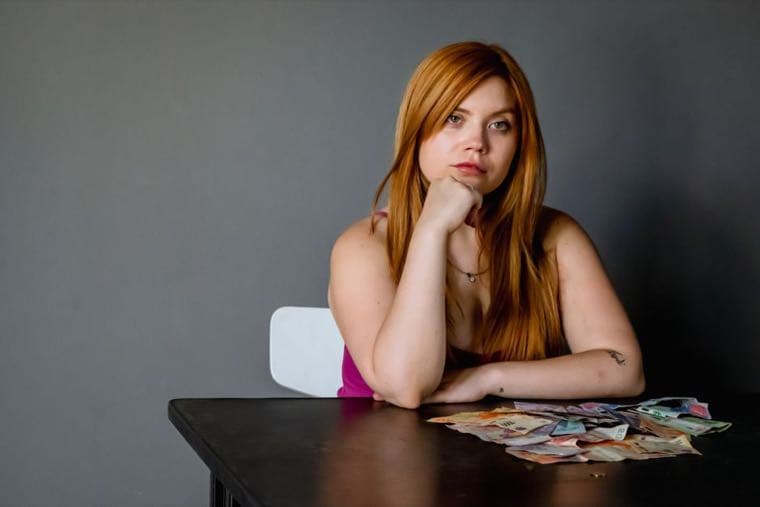
Deinfluencing and Money: What the "Don't Buy This" Trend Actually Means for Your Finances
The "don't buy this" trend took over TikTok. Here's what deinfluencing actually means, why it works, and the real financial lessons behind it.
Loss Aversion: Why Losing $100 Hurts More Than Gaining $100 Feels Good
Losing $100 feels about twice as bad as gaining $100 feels good. How loss aversion quietly shapes Australian money decisions, and how to work with it.