

Financial Nihilism: Why Some Young Australians Have Given Up on Saving
Financial nihilism is the belief that traditional saving and planning no longer work. Here's what's driving it in Australia, why the frustration is valid, and what you can still do about it.
 By Timothy Hirou GaschereauPublished
 10 min read
Try it yourself
You've probably felt it, even without a name for it. Doing the maths on a house deposit. Looking at what your parents owned at your age. Something goes quiet, and then a thought arrives: what's the point. That thought has a name, financial nihilism, and it's one of the more honest responses to what young Australians are actually facing right now. This is part of a wider guide to money mindset on Snowball Invest.
This article is general information only, not personal financial or medical advice. If you're concerned about your financial situation or your mental health, please speak with a qualified professional.
Quick answer
Financial nihilism is the belief that traditional financial planning and delayed gratification are pointless, because the system feels too broken for them to work. In Australia, the conditions driving it are real: record-low housing affordability, a widening generational wealth gap, and years of cost-of-living pressure. The frustration is valid. But there's a meaningful difference between "the system has real problems" and "therefore nothing I do matters," and that second claim is where the real risk sits.
In this guide
- →What financial nihilism actually is, and where the term comes from
- →The structural conditions in Australia that make the feeling make sense
- →The two opposite ways it tends to show up, disengagement and speculation
- →Why the worldview carries real risks, even when the frustration is valid
- →A path forward that doesn't dismiss what you're feeling
🤷 What is financial nihilism?
Financial nihilism is the belief that traditional financial planning, saving diligently, investing steadily, delaying gratification, is essentially pointless given the structural conditions of the economy. It's not pessimism about one bad year. It's a broader worldview: the system no longer rewards prudence, so why bother playing by its rules.
The term is commonly attributed to economist and podcast host Demetri Kofinas, who used it in a February 2020 episode of his Hidden Forces podcast titled "Financial Nihilism: Price Discovery in a World Where Nothing Matters," recorded with Grant Williams and Ben Hunt. The original framing was narrower, describing how speculative assets had become untethered from fundamentals, with price becoming self-referential and narrative mattering more than underlying value. Since then, the concept has broadened considerably, picked up by outlets including the World Economic Forum and Fortune to describe something more generational: a widespread loss of faith in whether the financial system can work for ordinary people at all.
Financial nihilism is not the same as doom spending. Doom spending is a specific behaviour, spending on non-essentials as a coping response to economic anxiety, and it's behavioural and anxiety-driven. Financial nihilism is a worldview, a settled belief that the conventional path is closed. You can be financially nihilistic without doom spending (a careful spender who simply doesn't believe saving will ever get them a house), and you can doom spend without being a financial nihilist (an emotional reaction, not a philosophy).
| Doom spending | Financial nihilism | |
|---|---|---|
| What it is | A behaviour | A worldview |
| What drives it | Anxiety about the future, in the moment | A settled belief the system won't reward effort |
| How it shows up | Spending on non-essentials for relief | Disengaging from planning, or making high-risk bets |
| What actually helps | Addressing the anxiety underneath | Separating what's structurally true from what follows from it |
Financial nihilism tends to show up in two opposite ways, which is part of what makes it hard to spot. One face is complete disengagement, stopping super contributions, not saving, avoiding financial planning entirely, where "what's the point" feels like a rational conclusion rather than a failure of willpower. The other is high-risk speculation, meme coins, crypto, options, prediction markets, where the logic runs almost in reverse: if the conventional path is closed, a long-shot bet starts to look like the only rational play. Both responses are psychologically understandable. Both carry real risks, covered in more detail further down.
🇦🇺 The structural drivers: why this feeling makes sense in Australia
This is the section that matters most, because financial nihilism in Australia isn't coming from nowhere. The conditions producing it are documented and measurable.
Housing affordability has collapsed. PropTrack's Housing Affordability Report found a median-income household could afford just 14% of homes sold nationally in the 2023-24 financial year, down from 43% just three years earlier, the lowest share on record since data collection began in 1995. On top of that, ANZ and CoreLogic's Housing Affordability Report put the national average time to save a 20% deposit at 10.6 years, with mortgage repayments on a median-priced home now absorbing just over half of median household disposable income.
Wage growth has been positive, but modest. The Wage Price Index rose 3.4% in the year to June 2025, against headline inflation of 2.1% over the same period, a real wage gain of roughly 1.3 percentage points. That's genuine progress after years of wages lagging inflation, but it's a slow crawl against how far house prices and rents have moved.
The generational wealth gap is widening. KPMG's analysis of ABS household data put average Baby Boomer household net worth at around $2.375 million, compared with around $905,000 for Millennials, a figure still weighed down by around $460,000 in average household debt, the highest of any generation. Looking at what a previous generation achieved at the same age and feeling the goalposts have moved isn't imagined grievance. The goalposts have actually moved.
ASIC research found 82% of Australian Gen Z (18 to 26 year olds) feel financially stressed due to rising living costs, with 68% naming finances as a major concern, compared with 57% of older Australians. That's not a fringe feeling, it's the majority experience for an entire generation.
🎯 The essential: The frustration behind financial nihilism is not a character flaw or a failure of perspective. It's a rational response to genuinely difficult structural conditions. Validating that isn't the same as agreeing nothing can be done, it's just being honest about where the feeling comes from.
🎭 Two faces of financial nihilism
The disengagement path is quieter and harder to see. Not checking your super balance. Not setting up a savings account. Not thinking about the future because thinking about it hurts. The "I'll deal with it later" that quietly becomes permanent.
The speculation path is louder and more visible. ASIC's 2026 Gen Z Financial Behaviours Report found 23% of Australian Gen Z now own cryptocurrency, up sharply from 9% in 2023. Among those owners, 66% take a short-term or speculative approach to at least some of their holdings, 29% say they trade based on social media or influencer content, and 15% describe their crypto investing as "just a bit of a punt." Separately, 72% of Gen Z respondents said they'd seen social media advertising for financial products in the past 12 months.
The same underlying belief
“The conventional path won't work for me”
😶 Disengagement
“What's the point?”
- Stops super contributions
- No savings buffer
- Avoids financial planning entirely
🎲 Speculation
“Might as well swing big”
- Meme coins, speculative crypto
- Options, prediction markets
- Chasing a long-shot outcome
Different behaviours on the surface, but the same belief underneath: that saving and planning no longer pay off.
The speculation path has its own internal logic. If the conventional path, save for over a decade, buy a house, build equity, feels genuinely closed, a high-risk bet starts to look rational. The expected value calculation changes when the baseline outcome already feels like zero. Both paths are understandable. Neither is without consequence, which is what the next section is about.
⚠️ Why financial nihilism is genuinely risky, even when the frustration is valid
The frustration is valid. The worldview that flows from it can still cause real harm.
Compounding still works, even on small amounts, even if homeownership never happens. Super is the clearest example. Disengaging from super contributions in your 20s because "what's the point" costs an enormous amount over a working life, not because it gets you a house, but because it's one of the few wealth-building mechanisms that still works for most Australians regardless of what property prices do. The cost of complete disengagement is real even when the original goal feels impossible.
The speculation path carries genuine financial harm. Losing money on speculative crypto or meme stocks isn't just a missed gain. It's money that can't be recovered, and in some cases debt that compounds, financial damage that makes the baseline situation worse, not better.
The belief that "nothing I do matters" can become self-fulfilling. This is where a concept from developmental psychology becomes relevant. Building on Erik Erikson's work on identity formation, psychologist James Marcia described what's sometimes called defensive foreclosure, the preemptive closing off of possibilities in response to anxiety, settling into a fixed identity defined by refusal rather than working through the uncertainty. A July 2026 Fortune feature drew a direct line between that idea and the financial nihilism showing up among younger people, a way of shutting the process down before it can hurt you.
The cruel irony is that defensive foreclosure closes off options that were still open. A financial decision that never gets made because someone has already decided it won't matter. A super balance that doesn't grow because contributions stopped early.
🌱 A path forward that doesn't dismiss the frustration
The goal here isn't to tell you to think positive and save harder. It's to separate two claims that often get bundled together as if they're the same thing.
What's true
- ✓Housing unaffordability is real, documented and severe
- ✓The generational wealth gap is real and measurable
- ✓Years of cost-of-living pressure are real
- ✓Individual action alone isn't the full answer, structural change genuinely matters
What doesn't follow automatically
- ✕That therefore nothing you do matters
- ✕That super contributions are pointless without a house
- ✕That an emergency fund isn't worth building
- ✕That a long-shot bet is more rational than steady progress
A useful reframe: homeownership isn't the only measure of financial progress. Super, an emergency fund, small investments and reducing debt all compound and build options, even if a house is never the destination. The point isn't to dismiss the scale of the problem, it's to show that partial engagement still beats disengagement. A modest amount invested regularly at a reasonable average return over 30 years becomes meaningful, not "buy a house in Sydney" meaningful, but "future-me has options" meaningful. That's not nothing.
📈 Compound Interest Calculator
See what a modest, regular amount actually becomes over 30 years, even without a house at the end of it.
Worth knowing, too: coverage of NAB's Australian Wellbeing Survey found 94% of Gen Z women and 93% of Gen Z men are actively trying to save, both above the national average. If that's true for you as well, the nihilistic framing captures a real feeling but overstates the case for most people. The underlying frustration is real. Total disengagement is less common than the online discourse suggests. If part of what's underneath this for you feels more like unconscious avoidance than a considered worldview, our guide to money scripts covers how those patterns form and how to work with them.
A practical reframe worth sitting with: "I can't control whether I'll ever afford a house in a major city. I can control whether future-me has options." Not toxic positivity, just a more useful question.
If the emotional weight of all this feels heavy, that's worth taking seriously on its own terms. Our guide to financial anxiety covers what that looks like and what helps. And if the pattern for you looks less like disengaging and more like spending to cope with the hopelessness, our guide to doom spending covers that specific pattern, without judgment. If the "what's the point" feeling traces back further than the current economy, to a harder financial upbringing or a major money shock in your past, our guide to financial trauma covers how that history shapes present-day money behaviour, and how to start healing from it.
🎯 The essential: Free support is available. National Debt Helpline 1800 007 007 (free financial counselling, weekdays). Beyond Blue 1300 22 4636 (mental health support, 24/7). Lifeline 13 11 14 (crisis support, 24/7).
🎯 The bottom line
Financial nihilism is a rational response to genuinely difficult conditions, record-low housing affordability, a widening generational wealth gap, and years of cost-of-living pressure. None of that is imagined. But the belief that nothing you do matters can become self-fulfilling in a way that closes off options that were still genuinely open. The system has real problems, and that's worth saying plainly. It doesn't follow that saving, investing or building an emergency fund are pointless, they're some of the few things still fully within your control, even when the biggest goal on the list feels out of reach.
SnowLetter
Australia's money news and our best reads, once a week.
❓ Frequently asked questions
What is financial nihilism?
+
Financial nihilism is the belief that traditional financial planning, saving, investing and delaying gratification, is pointless because the economic system no longer rewards it. It's a worldview, not just a bad mood, and it's become more prominent among younger people facing housing unaffordability and years of cost-of-living pressure.
Is financial nihilism the same as doom spending?
+
No. Doom spending is a behaviour, spending on non-essentials as a coping response to economic anxiety. Financial nihilism is a worldview, the belief that the conventional financial path is closed. You can hold nihilistic beliefs without doom spending, and you can doom spend without being a financial nihilist. The distinction matters because what helps differs in each case.
Why is financial nihilism more common among younger Australians?
+
Because the structural conditions they're facing are genuinely harder. PropTrack found a median-income household could afford just 14% of homes sold nationally in 2023-24, down from 43% three years earlier and the lowest share since records began in 1995. ASIC research has found 82% of Gen Z Australians feel financially stressed by rising living costs. These aren't imagined grievances, they're documented conditions.
Does financial nihilism lead to riskier investing?
+
For some people, yes. ASIC's 2026 Gen Z Financial Behaviours Report found 23% of Gen Z now own cryptocurrency, up from 9% in 2023, and among those owners, 66% take a speculative approach to at least some of their holdings. The internal logic is that if the conventional path is closed, a high-risk bet starts to look rational. The problem is that speculative losses make the baseline situation worse, not better.
Can financial nihilism become a self-fulfilling prophecy?
+
Yes, and this is the most important risk. When financial nihilism leads to disengaging from super, skipping savings, or avoiding financial planning entirely, it can close off options that were still genuinely open. The belief that nothing matters can help make that true.
What can I actually do if I feel financially nihilistic?
+
Start by separating two claims: "the system has real problems" (true) from "therefore nothing I do matters" (not necessarily true). Reframe financial progress away from homeownership as the only metric. Super contributions, an emergency fund, small investments and reducing debt all build options, even if a house isn't the destination. If the emotional weight feels heavy, our financial anxiety guide covers what helps.
📚 Recommended reading
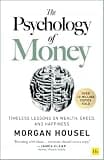
The Psychology of Money
Morgan Housel
The Psychology of Money
19 short stories on how people actually think and feel about money, not just the maths of it.
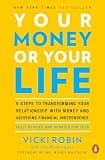
Your Money or Your Life
Vicki Robin
Your Money or Your Life
The book that basically kicked off the FIRE movement, reframing money as 'life energy' you trade your hours for. The nine-step program is pure gold, just swap the US retirement-account chapter for super.
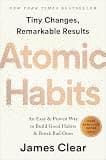
Atomic Habits
James Clear
Atomic Habits
Tiny changes, remarkable results. Clear shows how 1 percent improvements compound, and the same system that fixes your gym routine works on your saving habits too.
Some links above are affiliate links. If you buy through them, Snowball Invest may earn a small commission at no extra cost to you. We only recommend books we'd suggest anyway.
Sources
- 1. Financial Nihilism: Price Discovery in a World Where Nothing Matters, Hidden Forces podcast (Demetri Kofinas, with Grant Williams and Ben Hunt), 24 February 2020
- 2. Housing affordability hits record low, PropTrack Housing Affordability Report coverage, Mortgage Professional Australia
- 3. ANZ CoreLogic Housing Affordability Report 2024
- 4. Wages rise 3.4% in the year to June 2025, Australian Bureau of Statistics
- 5. Consumer Price Index, Australia, June Quarter 2025, Australian Bureau of Statistics
- 6. Gen X have most wealth in property as Baby Boomers move to cash, KPMG media release, January 2026
- 7. 23-302MR Gen Z more concerned about finances than any generation in Australia, ASIC
- 8. 26-049MR ASIC urges Gen Z to 'sense-check' money advice as social media fuels riskier financial decisions, ASIC MoneySmart Gen Z Financial Behaviours Report 2026
- 9. Gen Z was 'jaded about employment before we ever entered the workforce', now psychologists say the stare has hardened into something worse, Fortune, 6 July 2026
- 10. Forget smashed avo, Gen Z are now Australia's top savers, NAB Australian Wellbeing Survey coverage
- 11. National Debt Helpline, Financial Counselling Australia
Was this article useful?
Put it to your own numbers
Every calculator runs entirely in your browser, with nothing stored. See what these numbers look like for your own situation.
Try the Compound Interest calculator →General information only. This article is educational and does not constitute personal financial advice. It does not account for your circumstances. Consider your own situation and seek advice from a licensed adviser before acting. Read our full disclaimer.

Timothy Hirou Gaschereau
Founder of Snowball Invest, not a financial adviser.
I write about what I'm learning myself, because nobody ever taught us how to take control of our own money. It's a skill, not a mystery, and it's never too late to learn it. The best day to start was yesterday, the second best is today.
LinkedIn →Related articles

Tall Poppy Syndrome and Money in Australia
Tall poppy syndrome in Australia goes beyond the workplace. It quietly suppresses financial ambition, investing and salary negotiation, and what to do about it.

Financial Trauma: How Your Past Shapes Your Money Behaviour (and How to Heal)
Grew up poor, survived bankruptcy, or lost everything? Learn how financial trauma shapes your money behaviour and how to heal, with AU resources.

Loss Aversion: Why Losing $100 Hurts More Than Gaining $100 Feels Good
Losing $100 feels about twice as bad as gaining $100 feels good. How loss aversion quietly shapes Australian money decisions, and how to work with it.