

Financial Anxiety: What It Is, Why It Happens, and How to Manage It
Financial anxiety affects Australians at every income level. Learn what it is, how it differs from stress, and practical strategies to manage money anxiety today.
 By Timothy Hirou GaschereauPublished
 9 min read
Money worry is one of the most common, and least talked-about, experiences in Australian life. If you've ever lain awake running numbers in your head, avoided opening your banking app, or felt a knot in your stomach at the mention of bills, you already know what financial anxiety feels like. This is part of a wider guide to money mindset on Snowball Invest.
This article explains what financial anxiety actually is, why it's so widespread right now, and what you can do about it. It's educational information, not financial or medical advice. If you're concerned about your mental health or financial situation, please speak with a qualified professional.
Quick answer
Financial anxiety is persistent, often disproportionate worry about money. It's different from ordinary financial stress, and it can affect people at any income level. Practical steps like a regular "money date," a simple financial snapshot, and talking openly about money can meaningfully reduce it. Free support is available in Australia through Beyond Blue, Lifeline, and the National Debt Helpline.
In this guide
- →What financial anxiety is, and how it differs from ordinary financial stress
- →Why it's become so common in Australia right now
- →The physical, behavioural and cognitive signs to look out for
- →Why it isn't just a "low-income" problem
- →Practical strategies that can genuinely help
- →Where to get free, confidential support
🧠 What is financial anxiety?
Financial anxiety is a persistent pattern of worry, fear, and avoidance centred on money. It's not a formal clinical diagnosis, but it is a well-recognised set of emotional and behavioural responses that researchers and mental health professionals take seriously. For the bigger picture of how money and wellbeing feed into each other, see our guide to money and mental health in Australia.
The key word is "persistent." Financial anxiety doesn't switch off when the immediate pressure eases. It can sit in the background constantly, colouring how you feel about the future, your relationships, and your sense of security.
Crucially, financial anxiety is not the same as being in financial difficulty. It's about your emotional relationship with money, not the number in your bank account. People with comfortable savings can experience it just as intensely as people living paycheque to paycheque.
For some people, that worry isn't really about the emotion at all, it's that the picture in their head simply doesn't match the numbers. Our guide to money dysmorphia covers that specific mismatch, and how to check your perception against reality.
For some people, that emotional relationship traces back further than the present situation, to a childhood short on money, a bankruptcy, or another major financial shock. If that sounds familiar, our guide to financial trauma looks at how past hardship shapes present-day money behaviour, and what actually helps you heal from it.
⚖️ Financial anxiety vs. financial stress: what's the difference?
Financial stress is typically triggered by a specific, real financial problem (for example, "I can't pay rent this month") and tends to ease when that problem resolves. It is focused on present circumstances and tends to prompt problem-solving.
Financial anxiety, by contrast, can exist with or without a real problem. It's future-focused ("what if I can never afford anything, even when things are fine?"), persists even after the situation improves, and tends to prompt avoidance, rumination, and hypervigilance rather than problem-solving.
Financial stress: tied to a real trigger
Rises when a specific problem appears, eases once it's resolved
Financial anxiety: persists regardless
Stays elevated even when your finances are objectively fine
Both are valid and both deserve attention. But if you notice that your worry about money doesn't ease even when your circumstances improve, that's a signal worth paying attention to.
📊 Why is financial anxiety so common right now?
A lot of real pressures are colliding at once, and Australia isn't well equipped culturally to talk about them.
AMP's 2024 Financial Wellness Report found around two in three working Australians (66%) are experiencing some degree of financial stress, the highest level since the study began in 2014. The report also found a sharp rise in stress among higher earners, those on $100,000 to $149,999 in the moderate-to-severe stress category jumped from around 9% in 2020 to roughly 24% in 2024.
Cost-of-living and housing pressures are real. Mortgage repayments, rent, groceries, and energy bills have all risen faster than many people's incomes for an extended period. These aren't imagined threats, and when real financial pressure is sustained over years, it's entirely rational for anxiety to take root.
Interest rate rises compounded the pressure. Multiple consecutive rate rises between 2022 and 2024 pushed household budgets to the edge for many Australians, particularly mortgage holders.
Social comparison culture makes it worse. Scrolling through curated images of renovated homes, overseas holidays, and investment wins creates a distorted picture of what "normal" finances look like, and social media has been identified as a significant source of financial misinformation.
The money taboo keeps us isolated. Research suggests a large share of Australians avoid talking about their financial situation with the people closest to them, with discomfort, feeling overwhelmed, and embarrassment among the most common reasons. Silence breeds anxiety. When we can't compare notes with people we trust, our worst-case thinking fills the gap. It's a similar dynamic to the one behind tall poppy syndrome and money in Australia, a cultural discomfort with talking openly about how we're actually doing financially, in either direction.
For some people, that persistent worry hardens into something more settled: a belief that saving and planning simply won't work anymore. Our guide to financial nihilism covers that worldview specifically, why it's become more common in Australia, and why the frustration behind it is valid even though it carries its own risks.
🚩 Signs and symptoms of financial anxiety
Physical symptoms include disrupted sleep (lying awake running through numbers or worst-case scenarios), tension headaches, a tight chest, stomach issues, and general fatigue. These aren't weakness. They're your nervous system responding to a perceived threat.
Behavioural symptoms are often the most visible: avoiding opening bank statements, bills, or your banking app; obsessively checking your account balance multiple times a day; overspending as emotional relief; under-spending to the point of deprivation even when you can afford basic comforts, which can harden into an outright fear of spending money; avoiding financial conversations with a partner, family member, or friend; and putting off important financial decisions indefinitely.
Cognitive symptoms include catastrophising ("If I lose my job, I'll lose everything and never recover"), all-or-nothing thinking ("I'll never get ahead, so why bother budgeting?"), and a constant background hum of "what if" thinking about money.
That "overspending as emotional relief" pattern has a name of its own when it's specifically tied to pessimism about the future. Our guide to doom spending covers exactly what that looks like, and how to work with it without shame.
"Avoiding opening bank statements" and "avoiding financial conversations" are also two of the clearest signs of a related but distinct pattern, one where the avoidance is driven less by worry about the future and more by a painful belief that your finances say something is wrong with you. Our guide to financial shame covers that specific feeling, and how to break the avoidance cycle it tends to create.
💼 Financial anxiety isn't just a "low-income" problem
This is one of the most important things to understand about financial anxiety, and one of the most commonly misunderstood.
High earners can experience severe money anxiety. Lifestyle inflation (spending rising to match income) means that a high salary can feel just as precarious as a modest one when expenses have scaled up to match. There's also the fear of losing status, imposter syndrome around wealth ("I don't deserve this, and it will disappear"), and anxiety about maintaining a lifestyle that others now expect.
People with savings can catastrophise about losing them. Someone with a healthy offset account balance can lie awake worrying about a market crash, a job loss, or a health emergency that wipes it out. The savings don't dissolve the anxiety.
🎯 The essential: No one should feel embarrassed about experiencing money anxiety relative to their income. Comparing your anxiety to someone "worse off" is a trap, your experience is valid regardless of your bank balance.
🛠️ Practical strategies to manage financial anxiety
These strategies won't fix a genuine financial crisis on their own, but they can meaningfully reduce the emotional weight of money anxiety. Think of them as tools, not cures.
- Name it as anxiety, not reality. The first step is recognising that what you're experiencing is an anxiety response, not an accurate forecast of the future. When the catastrophic thought arrives, try labelling it: "That's my anxiety talking, not a fact."
- Create a "money date" ritual. Schedule a specific, bounded time each week or fortnight to look at your finances. During that time, check your accounts, review your budget, and do any financial admin. Outside that window, give yourself permission not to think about it.
- Build a simple financial snapshot. Uncertainty feeds anxiety. A one-page budget or a basic net worth tracker (assets minus liabilities) gives you a factual picture to work from instead of a vague, frightening fog. ASIC's MoneySmart website has free, straightforward budgeting tools.
- Limit financial doom-scrolling. Social media comparison culture is a documented driver of money anxiety. Set deliberate limits on the time you spend consuming financial content online, particularly content that makes you feel behind or inadequate.
- Talk about it. Given how many Australians keep financial worries entirely to themselves, simply talking about money anxiety with a trusted friend, partner, or community is a meaningful act. You don't need to share exact numbers.
- Celebrate small wins. Putting money into an emergency fund, paying off a small debt, or sticking to your budget for one week are all genuine wins worth acknowledging. Small, consistent actions compound over time.
- Seek professional support when needed. Sometimes the anxiety is too entrenched to manage alone, and that's not a failure. A financial counsellor can help you create a practical plan if your anxiety is tied to real debt or financial difficulty. A therapist or psychologist can help you work through the underlying thought patterns.
A lot of that anxiety is fed by pretending everything's fine in front of other people. Our guide to loud budgeting covers exactly how to say no to spending you can't justify, without the guilt or the performance.
🤝 When to seek support
If financial anxiety is significantly affecting your sleep, your relationships, your work, or your daily functioning, it's worth talking to someone. You don't need to be in crisis to reach out.
🎯 The essential: Free, confidential support is available across Australia, 24 hours a day for crisis support.
Beyond Blue
1300 22 4636
Mental health support, available 24/7, including a dedicated financial wellbeing section and a free Money and Mental Health Quiz.
Lifeline
13 11 14
Free, confidential crisis support, 24 hours a day, 7 days a week. You can also text 0477 13 11 14 or chat online.
National Debt Helpline
1800 007 007
Free, independent, qualified financial counsellors. Weekdays 9:30am to 4:30pm, with live chat weekdays 9:00am to 8:00pm.
The National Debt Helpline is particularly useful if your money anxiety is tied to real debt stress, a financial counsellor can help you build a concrete plan and, where needed, negotiate with creditors on your behalf.
🎯 The bottom line
Financial anxiety is common, understandable, and manageable. It affects Australians across every income bracket, every life stage, and every postcode. The goal isn't to never think about money. It's to build a relationship with money that feels less like a threat and more like something you can work with. That takes time, and it usually takes some help. But it's genuinely possible.
SnowLetter
Australia's money news and our best reads, once a week.
❓ Frequently asked questions
Is financial anxiety a mental illness?
+
No. Financial anxiety is not a clinical diagnosis or a formal mental illness. It's a recognised pattern of emotional and behavioural responses to money that can range from mild to severely disruptive. That said, if money anxiety is significantly affecting your daily life, it's worth speaking with a mental health professional, as it can overlap with or contribute to anxiety disorders.
Can you have financial anxiety even if you have savings?
+
Absolutely. Financial anxiety is about your emotional relationship with money, not the amount you have. People with substantial savings can catastrophise about losing them, fear they're not saving "enough," or feel persistent dread about financial security despite being objectively comfortable.
How do I stop obsessing over money?
+
A few things help: scheduling a specific "money date" so financial thinking has a container, building a simple financial snapshot to replace vague fear with actual facts, and limiting financial doom-scrolling on social media. If the obsessive thinking is severe or persistent, speaking with a therapist can help.
What's the difference between financial anxiety and financial stress?
+
Financial stress is typically triggered by a specific, real financial problem and tends to ease when that problem resolves. Financial anxiety is more persistent and can exist even when your finances are objectively fine.
Is financial anxiety common in Australia?
+
Yes. AMP's 2024 Financial Wellness Report found around two in three working Australians are experiencing some degree of financial stress, the highest level since the study began in 2014.
When should I see a professional about financial anxiety?
+
If money anxiety is consistently disrupting your sleep, affecting your relationships, interfering with your work, or leading you to make financial decisions driven by fear rather than reason, it's time to seek support. You don't need to be in crisis to deserve help.
📚 Recommended reading
The Psychology of Money
Morgan Housel
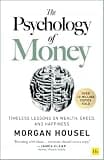
The Psychology of Money
19 short stories on how people actually think and feel about money, not just the maths of it.
Atomic Habits
James Clear
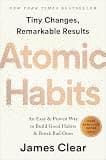
Atomic Habits
Tiny changes, remarkable results. Clear shows how 1 percent improvements compound, and the same system that fixes your gym routine works on your saving habits too.
Your Money or Your Life
Vicki Robin
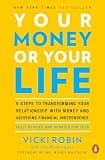
Your Money or Your Life
The book that basically kicked off the FIRE movement, reframing money as 'life energy' you trade your hours for. The nine-step program is pure gold, just swap the US retirement-account chapter for super.
Some links above are affiliate links. If you buy through them, Snowball Invest may earn a small commission at no extra cost to you. We only recommend books we'd suggest anyway.
Sources
Was this article useful?
Put it to your own numbers
Every calculator runs entirely in your browser, with nothing stored. See what these numbers look like for your own situation.
Explore the calculators →General information only. This article is educational and does not constitute personal financial advice. It does not account for your circumstances. Consider your own situation and seek advice from a licensed adviser before acting. Read our full disclaimer.

Timothy Hirou Gaschereau
Founder of Snowball Invest, not a financial adviser.
I write about what I'm learning myself, because nobody ever taught us how to take control of our own money. It's a skill, not a mystery, and it's never too late to learn it. The best day to start was yesterday, the second best is today.
LinkedIn →Related articles

Poverty Mindset: What It Is, Where It Comes From, and How to Shift It
A poverty mindset is a deep set of money beliefs shaped by real hardship. Learn the signs, the causes, and steps to build a healthier money mindset.

Fear of Spending Money: When Saving Becomes a Source of Stress
Fear of spending money is more common than you think. Learn the signs, the causes, and practical steps to ease the anxiety and spend with confidence.

Money and Mental Health: Breaking the Cycle of Financial Stress in Australia
Money stress and mental health are deeply connected. How to break the cycle with practical steps, free Australian support, and real strategies.