

Loud Budgeting: How to Say No Without Guilt
Loud budgeting is the practice of openly and unapologetically stating your financial limits, without making excuses. Here's what it means, why it resonates in Australia right now, and the exact scripts to use in real social situations.
 By Timothy Hirou GaschereauPublished
 9 min read
Try it yourself
The group chat lights up. Someone's booked a dinner, $120 a head once drinks are added, and everyone's already replied with a thumbs up. You look at what you've spent this month and know exactly how that number should end. You say yes anyway, because explaining yourself feels worse than the bill. That gap, where the social discomfort of saying no outweighs the financial cost of saying yes, is exactly what loud budgeting is designed to close. This article is part of a wider guide to money mindset on Snowball Invest.
This article is general information only, not personal financial advice. If you need guidance tailored to your own situation, speak with a licensed financial adviser.
Quick answer
Loud budgeting means openly and unapologetically stating your financial limits, instead of making excuses or quietly going along with spending you can't justify. The core reframe: "I don't want to spend that right now" instead of "I can't afford it." One signals agency, the other signals scarcity. It's not about being blunt or oversharing, it's about honesty without the performance.
In this guide
- →What loud budgeting actually is, and where the term came from
- →Why it's resonating with Australians specifically, right now
- →The psychology behind why we hide financial limits in the first place
- →How loud budgeting differs from just being blunt about money
- →Real scripts for dinners, trips, hens and bucks events, and everyday catch-ups
- →The genuine psychological and financial benefits, and how to start
📣 What loud budgeting actually is
Loud budgeting is the practice of publicly and unapologetically stating your financial limits, rather than hiding them behind excuses or going along with spending that doesn't serve your goals. The term was coined by American comedian and writer Lukas Battle in a viral TikTok video posted in late December 2023, framed as his "in vs. out" prediction for the year ahead. It went on to pick up mainstream coverage from outlets including CNN and Bloomberg in early 2024.
Battle described loud budgeting as the deliberate opposite of "quiet luxury", the aesthetic trend built around understated, logoless wealth. Where quiet luxury signals that money is no object, loud budgeting signals that your money has a purpose, and you're choosing where it goes.
The key linguistic shift is small but powerful: "I don't want to spend that right now" is a statement of values and priorities, and it closes the conversation with confidence. "I can't afford it" positions you as a victim of circumstance, which tends to invite pity or follow-up questions you never wanted to answer in the first place.
🇦🇺 Why it hits different right now in Australia
The trend landed at a moment of genuine financial pressure on younger Australians. ABS figures for the year to June 2026 show headline inflation running at 3.8%, while the Housing group, which covers rent, new dwellings and electricity, rose 6.8% over the same period, roughly double the headline rate. Rents specifically were up 3.6% over the year. Housing costs have been outpacing general inflation for some time now, and that gap is a big part of why budgeting has become something people are willing to talk about openly rather than quietly manage in the background.
Regulator research backs up the mood on the ground. ASIC's Moneysmart research into Gen Z financial behaviours has repeatedly found cost-of-living pressure sitting at or near the top of young Australians' financial concerns, with cutting back on discretionary spending among the most common responses. Money management content has also picked up serious engagement on platforms like TikTok among Australians working through the same pressure.
NAB reported that younger Australians embracing "loud budgeting" were saving an average of roughly $450 a month by cutting back on things like eating out, food delivery, streaming and casual coffees, and that more than half were redirecting that money straight into a savings account rather than letting it disappear into everyday spending. The point isn't the exact number, it's the direction: loud budgeting in Australia isn't just a social media fad, it's a rational response to a real financial squeeze.
It also isn't the only TikTok-born trend pushing in this direction. A year or so earlier, deinfluencing had creators openly telling their followers not to buy specific viral products, which made saying no to a single purchase feel normal. Loud budgeting takes that further, into saying no to spending in general, out loud, without an apology attached.
🧠 The psychology behind hiding financial limits
Money shame is learned, not innate. Shame around money is a social construct, not a character flaw. From a young age most people absorb the message that financial struggle is a private, quietly-managed matter. Families often don't discuss it, schools barely teach it, and the cultural script says look fine, spend fine, be fine. So when someone isn't fine financially, the instinct is to perform fineness anyway, saying yes to the dinner, splitting the Airbnb, buying the round, because admitting otherwise feels like admitting failure, even though the pressure is often structural and shared by plenty of other people at the table.
The tall poppy problem in reverse. Australia has a well-documented cultural tendency to cut down people who appear to rise above the group, something we've covered in detail in our guide to tall poppy syndrome and money in Australia. Loud budgeting deals with the mirror image of that fear: being seen as "less than." If you admit you're watching your spending, will people think you're struggling, feel awkward around you, or stop inviting you altogether? That fear keeps people locked in a cycle of performative spending just to avoid being perceived as unable to keep up. Loud budgeting names that dynamic directly and refuses to play along with it.
The exhausting performance of "I'm fine." There's a real cognitive cost to hiding financial limits. Saying yes to something you can't really justify means tracking the story, managing the follow-up, and coming up with a reason for the next thing, and the thing after that. All of it consumes mental energy that could otherwise go toward actually solving the underlying problem. This ongoing mental effort compounds the longer it's kept up.
Money shame
Financial struggle feels like a private failure to hide
Performance
Say yes anyway, keep up appearances
Cognitive load
Track the excuses, manage the follow-up, repeat
Loud budgeting
Say it once, clearly, and you're done
Hiding a limit costs more energy the longer it's kept up. Saying it once removes the loop entirely.
🎭 Loud budgeting vs. just being blunt
There's a version of this that goes wrong, and it's worth naming clearly. Loud budgeting isn't announcing your financial situation to anyone who'll listen, and it isn't making other people feel guilty for spending money you don't have. The difference is tone and framing, not just content.
Blunt
“That restaurant is way too expensive, I don’t know why you’d even suggest it.”
Makes the other person’s choice the problem
Loud budgeting
“That one’s out of my budget this month. Can we find somewhere a bit more low-key?”
States the budget as context, then offers a way forward
One version makes the other person the problem. The other keeps your budget as the context, stated neutrally, without drama. You also don't owe anyone a full financial breakdown, loud budgeting is about honesty, not oversharing. "I'm keeping my spending tight this month" is a complete sentence, you don't need to explain your rent, your savings goal or your credit card balance. The point is to close the loop cleanly, not open a negotiation.
| Situation | Blunt | Loud budgeting |
|---|---|---|
| Turning down a dinner | "I'm broke, I literally can't come." | "I'm not spending on dinners out this month, but I'd love to catch up another way." |
| Reacting to a pricey suggestion | "That's so expensive, who has that kind of money?" | "That's a bit over my budget. I'll sit this one out." |
| Setting a general limit | "I can't afford any of this." | "I'm keeping things tight right now. Happy to suggest something cheaper if you're keen." |
🎯 The essential: The loud budgeting version is warm, direct and final. It states the limit and moves on, it doesn't invite a debate.
💬 Practical scripts: what to actually say
This is the part that matters most. Knowing the concept is one thing, having the actual words ready when the moment arrives is another.
Turning down a dinner or night out. Short: "I'm keeping my spending low this month, so I'll skip this one. Let's catch up soon though." Fuller: "Honestly, I've been trying to be a bit more intentional with where I'm spending, and a big dinner out doesn't fit right now. I'd genuinely love to see everyone though. Could we do something lower-key next time, like someone's place or a park catch-up?" Notice what's missing: no apology, no over-explanation, no "I wish I could." You're stating a preference and offering an alternative, not asking permission.
Skipping a holiday or group trip. Group trips carry the most social pressure, planning is visible and opting out can feel like letting everyone down. Short: "A trip like that is outside my budget right now. I hope you all have an amazing time." Fuller: "I've been saving hard for a specific goal, so I'm not in a position to do a big trip this year. I really hope it's incredible. Let's plan something I can actually make work when you're back." Mentioning a savings goal is optional, but it reframes the decision as intentional rather than reluctant.
Navigating hens and bucks contributions. These events escalate quickly in Australia, a weekend away can become a large commitment before anyone's actually agreed to anything. Short: "I can do the dinner, but the full weekend is outside my budget. I don't want to miss celebrating, so let me know what I can contribute to." Fuller: "I want to be there and I'm absolutely in for the celebration. The full weekend isn't something I can swing financially right now, but I'd love to join for the dinner or the day activity. Can we work out what that looks like?" It's honest, keeps you in the celebration, and doesn't put the organiser in an awkward position.
The ongoing friendship maintenance version. Sometimes it's not one big event but the steady drip of coffees, lunches and casual drinks eroding a budget. Short: "I'm doing a low-spend stretch at the moment. Can we do a walk or hang at mine instead?" Fuller: "I've been trying to cut back on the casual spending, coffees and lunches out and that kind of thing. I still really want to catch up. Want to come over, or find a free thing to do together?" It's honest about the pattern, not just the one occasion, and it signals you value the friendship, not just the activity.
🥧 50/30/20 Budget Calculator
See exactly what you can spend on wants each month, so the number behind your 'no' is a real one.
✨ The real benefits, psychological and financial
Removing the stress of the spending facade. The most immediate benefit is the hardest to quantify: relief from not managing a lie. When you stop pretending your finances are fine and start being honest about your limits, cognitive load drops, you're not tracking excuses, dreading the next invitation, or arriving at dinner already anxious about the bill. There's also an authenticity effect, being honest about priorities tends to make relationships more genuine, and the friends who respond well are worth keeping close. If the discomfort around money runs deeper than one conversation, our guide to financial anxiety goes further into managing that.
The peer normalisation effect. This is what makes loud budgeting more powerful than a personal habit, it's contagious. When one person in a group is honest about a financial limit, it gives everyone else permission to be honest too, and the whole group recalibrates toward what people can actually afford. Australians who are cutting back on discretionary spending, eating out, coffees, food delivery, entertainment, streaming, have reported redirecting a meaningful chunk of those savings straight into a savings account, which over a year adds up to real progress toward a home deposit, an emergency fund, or whatever the goal happens to be. If the idea of saving less rigidly, and spending some of what's left with intention rather than guilt, appeals to you, our guide to soft saving covers how to do that without shortchanging your future.
🧭 How to start practising loud budgeting
Start with one trusted person before trying it on a group, and notice the world doesn't end. Practise the phrasing out loud a few times before using it for real, it feels less foreign once it's been in your mouth before. Reframe it as values-based spending, not deprivation, you're not saying no to the dinner, you're saying yes to whatever the dinner money is going toward instead. Don't over-explain, one or two sentences is plenty, more than that starts to sound like you're asking for permission. And know that it gets easier: the first time feels enormous, by the fifth time it's just a thing you do, and the feared social consequences almost never materialise. If you haven't got a working budget structure behind the numbers you're saying no with, our guide to the 50/30/20 rule is a good, simple place to start.
Loud budgeting is a cultural shift as much as a financial one, a collective decision to stop pretending money is too uncomfortable a topic to name, and to start treating financial honesty as a normal, even admirable, thing to practise out loud. The cost-of-living pressure that's made this trend resonate in Australia isn't disappearing quickly, and the social pressure to spend, keep up and never say no hasn't eased either. What loud budgeting offers is a way to hold your ground without holding a grudge, to say no to the spending without saying no to the people. For a lot of Australians right now, it might be one of the most useful financial skills to develop.
SnowLetter
Australia's money news and our best reads, once a week.
❓ Frequently asked questions
What does loud budgeting mean?
+
Openly and unapologetically telling people when you're choosing not to spend money on something because it doesn't fit your budget or financial goals. It was coined by comedian Lukas Battle on TikTok in late December 2023 and went viral in early 2024. The core idea: say "I don't want to spend that right now" rather than "I can't afford it," framing the decision as a choice rather than a limitation.
How do you say no to spending without feeling guilty?
+
Guilt usually comes from believing you're letting people down or being judged. Reframing helps: you're saying no to a specific expense, not to the people. Keep your response warm, brief and final, offer an alternative where you can, and remember the discomfort in the moment is almost always worse than the actual social consequence.
Is loud budgeting rude?
+
No, when done with the right tone. It's about honesty, not bluntness. The difference is framing: stating your own financial priorities rather than criticising other people's spending choices. A warm, direct "that's outside my budget this month" is clear communication, not rudeness.
What do you do if someone pushes back or offers to pay for you?
+
Stay calm and keep it simple. "That's really kind, but I'm genuinely happy to sit this one out" is usually enough. If they keep pushing, try: "I'm making some intentional choices with money right now and this one doesn't fit. I appreciate the offer though." No further justification needed.
Does loud budgeting only work if you're on a low income?
+
No. It's about intentional spending, not just low income, and works at any income level because the core issue isn't how much you earn, it's the social pressure to spend in ways that don't align with your actual priorities. Someone on a good salary saving for a home deposit has just as much reason to practise it as someone on a tighter income.
What are some loud budgeting examples for everyday situations?
+
Turning down a dinner: "I'm keeping my spending low this month, so I'll skip this one." Skipping a group trip: "That's outside my budget right now. Hope you all have an amazing time." Navigating a hens or bucks event: "I can do the dinner, but the full weekend doesn't work for me financially. Let me know what I can contribute to." Suggesting a cheaper catch-up: "I'm doing a low-spend stretch. Want to do a walk or hang at mine instead?"
📚 Recommended reading
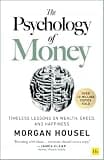
The Psychology of Money
Morgan Housel
The Psychology of Money
19 short stories on how people actually think and feel about money, not just the maths of it.
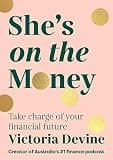
She's on the Money
Victoria Devine
She's on the Money
Written for millennials, walks through budgeting, clearing debt, saving, investing and buying property with real stories.
The Barefoot Investor
Scott Pape

The Barefoot Investor
Australia's best-selling money book ever. A simple system for accounts, budgeting, debt and a real emergency fund in one.
Some links above are affiliate links. If you buy through them, Snowball Invest may earn a small commission at no extra cost to you. We only recommend books we'd suggest anyway.
Sources
- 1. Loud budgeting is in, quiet luxury is out. Meet the TikToker who started the financial trend, CNN Business
- 2. Gen Z Aussies embrace 'loud budgeting' in response to soaring living costs, Australian Broker
- 3. 26-049MR ASIC urges Gen Z to 'sense-check' money advice as social media fuels riskier financial decisions, ASIC
- 4. CPI rose 3.8% in the year to June 2026, Australian Bureau of Statistics
Was this article useful?
Put it to your own numbers
Every calculator runs entirely in your browser, with nothing stored. See what these numbers look like for your own situation.
Try the Budget Planner calculator →General information only. This article is educational and does not constitute personal financial advice. It does not account for your circumstances. Consider your own situation and seek advice from a licensed adviser before acting. Read our full disclaimer.

Timothy Hirou Gaschereau
Founder of Snowball Invest, not a financial adviser.
I write about what I'm learning myself, because nobody ever taught us how to take control of our own money. It's a skill, not a mystery, and it's never too late to learn it. The best day to start was yesterday, the second best is today.
LinkedIn →Related articles

Loss Aversion: Why Losing $100 Hurts More Than Gaining $100 Feels Good
Losing $100 feels about twice as bad as gaining $100 feels good. How loss aversion quietly shapes Australian money decisions, and how to work with it.

Anchoring Bias: Why the First Number You Hear Decides What You Pay
The first number you hear sets the price you think is fair, from auction guides to salary talks. How anchoring works in Australia, and how to beat it.

Mental Accounting: Why You Treat a Tax Refund Differently to Your Salary
A refund dollar buys the same groceries as a salary dollar, but your brain disagrees. How mental accounting costs Australians money, and how to flip it.