

Soft Saving: The Money Trend That Puts Today Before Tomorrow (and What It Gets Right)
Soft saving is the Gen Z money trend rejecting aggressive saving. Here's what it means, why it resonates with Australians, and how to do it without wrecking your future.
 By Timothy Hirou GaschereauPublished
 11 min read
Try it yourself
Somewhere between "save 70% of your income and retire at 38" and "I'll never afford a house anyway, so I may as well book the trip," a generation landed on a quieter philosophy. They called it soft saving. This is part of a wider guide to money mindset on Snowball Invest.
This article is general information only and does not constitute financial advice.
Quick answer
Soft saving means prioritising present quality of life over aggressive long-term saving, without abandoning saving altogether. It resonates with Australian Gen Z because the economic environment genuinely is brutal, a median dwelling value north of $800,000 and years of cost-of-living pressure will do that. The real risk isn't the philosophy itself, it's the version that slides into doing nothing: no emergency fund, no super engagement, no baseline savings habit at all. The middle ground is automating a baseline savings rate first, then spending the rest with intention.
In this guide
- →What soft saving actually means, and how it differs from FIRE
- →Where the trend came from, and how it spread from 'soft life' culture
- →Why the economic data makes it feel like a rational response, not a fad
- →The psychology behind why present spending feels so much easier to justify
- →The real risks, including what a decade of delay actually costs you
- →A practical middle ground that doesn't shortchange either version of you
🌤️ What is soft saving, exactly?
Soft saving is the idea that your finances should support your life now, not just your life at 65. The Guardian described it in January 2024 as adherents who "preach using finances to support one's quality of life, travel, for instance, or on expenses related to a hobby or goal." They say it's good to save, but better to prioritise a life well lived over money sitting in the bank.
It sits in direct contrast to the FIRE movement (Financial Independence, Retire Early), which typically requires saving 50 to 75% of income to retire in your 30s or 40s. Soft saving doesn't ask you to sacrifice everything for a future that feels abstract. It asks you to save, just less rigidly, and to spend the rest on things that actually matter to you now. For some people, that permission to spend is exactly what's missing, especially if they've developed a genuine fear of spending money.
It also sits alongside a cluster of related trends that all reflect the same generational mood: loud budgeting (openly saying no to spending you can't afford, which we cover in detail in our guide to loud budgeting), underconsumption core (buying less, using what you already own), and doom spending (the opposite, spending impulsively to self-soothe financial anxiety).
Soft saving is not "no saving." It's "saving differently," with shorter-term goals, less rigid targets, and deliberate room for present enjoyment built in on purpose.
📱 Where did it come from?
The term emerged on TikTok and FinTok in late 2023 as a financial offshoot of the "soft life" trend, a philosophy rooted in Nigerian and West African online culture that spread globally on TikTok and Instagram from around 2022 onwards. It centres on ease, comfort, rest and low stress over hustle and grind, and it was popularised globally by Black women creators pushing back against hustle culture.
By January 2024, The Guardian was writing about soft saving. CNBC had already covered it in October 2023. By mid-2024, ABC News and mainstream Australian outlets were picking it up too. And by July 2025, The Guardian's travel desk was writing about Gen Z embracing soft saving specifically around travel and experiences, noting Gen Z averages three leisure trips per year despite 60% earning under $50,000 annually. The approach: meticulous budgeting for the things that matter, cutting back on the things that don't.
🇦🇺 Why Australian Gen Z is drawn to it
Housing affordability has collapsed. The ANZ/CoreLogic Housing Affordability Report from November 2024 found the median dwelling value in Australia hit $807,000 in September 2024. At a 15% annual savings rate, it now takes the median-income household 10.6 years to save a 20% deposit. Servicing a new mortgage on that median dwelling requires 50.6% of gross household income, well above the 30% benchmark generally considered affordable. Only 10% of the housing market is genuinely affordable to a median-income household, down from 40% in March 2022. For the 25th percentile income household, that figure is zero.
Financial stress isn't a personality trait. ASIC MoneySmart's research found 82% of Australian Gen Z feel financially stressed due to rising cost of living. The MLC Financial Freedom Report 2024 found 49% of Gen Z worry about finances "all the time or often." Monash University's 2024 Australian Youth Barometer found 86% of young Australians experienced financial difficulties in the past 12 months.
Superannuation feels like a foreign concept. The CSBA Superannuation Whitepaper 2024 found 85% of Gen Z say retirement feels very distant. Only 3% of Gen Z would invest a $10,000 windfall into super, according to ASIC's 2026 research.
The "what's the point" logic isn't irrational. When a house deposit takes over a decade to save and retirement feels abstract, shorter goals feel more achievable and more motivating. Financial counsellor Kumiko Love, speaking to ABC News, put it well: "It's understandable that younger people are questioning this idea that they should sacrifice everything today for a future that may feel very uncertain."
🧠 The psychology behind it
Financial burnout is real, and all-or-nothing thinking makes it worse. Rigid saving plans that feel impossible tend to get abandoned entirely. When saving is framed as "perfectly or not at all," one small slip can trigger complete abandonment of the plan.
Present bias is hardwired. Behavioural economist Dan Ariely put it directly: "The future simply doesn't tempt us as much as the present does." UCLA researcher Hal Hershfield's work on future-self continuity explains why. When people feel disconnected from their future self, that person can feel like a stranger. Hershfield's research found that framing savings in daily amounts ($5 a day) rather than monthly amounts ($150 a month) quadruples enrolment in savings programs.
There's a genuine wellbeing case for present spending. Andy Reed, a financial behaviour expert at Vanguard, told The Guardian in 2025: "When people spend on experiences, they typically derive more pleasure than when they spend on things." Sofia Qistina, 22, speaking to The Guardian, captured the soft saving philosophy neatly: "I don't want to miss out on opportunities when I am young, but I also don't want to go into debt."
⚠️ The real risks (read this before you lean in)
Compound interest is unforgiving, and every year of delay has a real dollar cost. Consider two investors, both earning a 7% average annual return. Investor A puts in $300 a month from age 22 to 32, then stops. Total contributions: $36,000. Balance at 65: $522,587. Investor B waits until 32 and invests $300 a month for 33 straight years. Total contributions: $118,800. Balance at 65: $438,626. Investor A ends up with $83,961 more, despite contributing roughly a third as much, simply because of the 10-year head start. That's not a trick, that's exponential maths. Every year of delay from age 22 costs roughly $80,000 to $90,000 in lost compound growth by retirement.
Both earning a 7% average annual return. Balance shown at age 65.
$522,587
Investor A
$300/mo from age 22 to 32, then stops
$36,000 contributed
$438,626
Investor B
$300/mo from age 32 to 65, keeps going
$118,800 contributed
Investor A ends up with $83,961 more than Investor B, despite contributing $82,800 less overall. A 10-year head start beats 23 extra years of contributions.
📈 Compound Interest Calculator
Plug in your own numbers and see what a decade's head start is actually worth by 65.
Superannuation is not optional in Australia, but it's not enough on its own. The superannuation guarantee sits at 12%, its final legislated rate. That's a floor, not a plan. The CSBA 2024 report found 41% of Gen Z lack confidence they'll have enough for a comfortable retirement.
The emergency fund gap is the most immediate risk. ING's 2025 research found only 19% of Australian Gen Z maintain a three-month emergency fund, compared with 25% of Millennials and 24% of Baby Boomers. Without a buffer, one unexpected expense forces high-cost debt.
There's a meaningful difference between soft saving and doom spending. Soft saving, done well, means consciously allocating money to present wellbeing while still automating a baseline savings rate. Doom spending means spending everything because the future feels hopeless, a pattern that can shade into something closer to financial nihilism if it isn't kept in check.
🎯 The essential: Saving itself improves wellbeing, regardless of the balance. University of Bristol research from July 2024 found people who save regularly report significantly higher life satisfaction than non-savers, 63% of those saving £300 to £399 a month were "mostly or completely satisfied" with life, compared with 47% of non-savers. The same research found 82% of young adults who saved regularly across six survey waves became homeowners after ten years, compared with just 15% of non-savers.
🌱 The middle ground: how to soft save without shortchanging your future
You don't have to choose between full FIRE-style sacrifice and giving up entirely. Here's a practical way to hold both.
🛟 Future security
- Emergency fund (3 months of expenses)
- Super voluntary contributions
- Long-term investing
🌤️ Present wellbeing
- Travel and experiences
- Hobbies that matter to you
- The occasional guilt-free splurge
The baseline transfer to bucket one is automated first. Whatever's left is spent, on purpose, in bucket two.
- Automate the baseline first. Before anything else, set up an automatic transfer to savings on payday. Even $50 to $100 a fortnight invested consistently from your early 20s compounds dramatically.
- Use the two-bucket approach. One bucket for future security, an emergency fund target of three months of expenses, voluntary super contributions if you can manage it, and long-term investing. One bucket for present wellbeing, travel, experiences, hobbies. Give both buckets a name and a purpose.
- Set shorter-term saving goals. ING's 2025 research found 71% of Gen Z Australians are already saving for something specific, whether that's travel, education or a car. A six-month goal feels achievable. A 30-year goal feels abstract.
- Reframe super as your future self's soft life fund. The money in super isn't locked away forever, it's funding the version of you who no longer has to work. AustralianSuper's 2024 research found 74% of Gen Z say the cost-of-living crisis encouraged greater interest in super. The MoneySmart retirement planner at moneysmart.gov.au is a genuinely useful tool for making that feel less abstract.
- Avoid the all-or-nothing trap. You don't have to choose between FIRE and doing nothing at all. A 10% savings rate isn't aggressive, it's a starting point. Increase it by 1 percentage point each year as your income grows.
- Track your spending without shame. NAB's 2024 research found Gen Z Australians were saving an average of $403 a month by cutting back on non-essentials. Awareness is the first step, not the whole plan.
- Build the emergency fund before optimising anything else. Three months of expenses in a high-interest savings account is the single most important financial buffer you can build, before you worry about which ETF or super fund is technically optimal.
🎯 The bottom line
Soft saving gets something right that pure FIRE-style sacrifice sometimes misses: a life spent entirely deferring joy for a future that may or may not arrive on schedule isn't automatically the smart choice. But the version of soft saving that quietly becomes no savings habit at all is genuinely risky, the compound interest math doesn't care how understandable your reasons were. The workable middle ground isn't complicated. Automate a baseline savings rate first, so the future-you bucket is never actually empty, then spend what's left on the life you actually want to be living right now. That's soft saving done right.
SnowLetter
Australia's money news and our best reads, once a week.
❓ Frequently asked questions
Is soft saving the same as not saving at all?
+
No. Soft saving still involves saving, just with less rigidity and more room for present enjoyment. The key distinction is intention: soft saving means consciously allocating money to both present wellbeing and future security, rather than maximising every dollar for retirement.
Can I soft save and still build wealth over time?
+
Yes, if you automate a baseline savings rate and invest consistently. Even small amounts invested early compound significantly over time. The risk isn't the philosophy, it's the version of it that abandons baseline saving entirely.
How does soft saving fit with superannuation in Australia?
+
Superannuation is compulsory, so the 12% superannuation guarantee is already working away in the background whether you think about it or not. Soft saving doesn't mean ignoring super, it means being realistic that super alone may not be enough, especially if you're renting in retirement.
What's the difference between soft saving and doom spending?
+
Soft saving is intentional: you choose to spend on experiences and present wellbeing while maintaining a baseline savings habit. Doom spending is reactive: you spend impulsively to cope with financial anxiety, without a plan behind it.
Is soft saving a good idea if I want to buy a house one day?
+
It depends how you define it. If soft saving means maintaining a savings habit while also spending on experiences, it's compatible with saving for a deposit, just slower. The ANZ/CoreLogic data is sobering: it already takes 10.6 years to save a 20% deposit at a 15% savings rate. Dropping that savings rate stretches the timeline further.
How do I know if I'm soft saving or just avoiding my finances?
+
Ask yourself two questions. First: do I have an automatic savings transfer set up? Second: do I know roughly what I spend each month? If the answer to both is yes, you're probably soft saving with intention, not avoiding anything.
📚 Recommended reading
Die With Zero
Bill Perkins
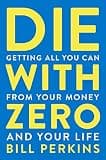
Die With Zero
Stop hoarding cash for a someday that never comes. Perkins makes the case for spending on experiences while you are still young enough to enjoy them.
The Psychology of Money
Morgan Housel
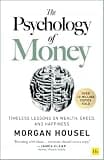
The Psychology of Money
19 short stories on how people actually think and feel about money, not just the maths of it.
Your Money or Your Life
Vicki Robin
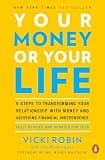
Your Money or Your Life
The book that basically kicked off the FIRE movement, reframing money as 'life energy' you trade your hours for. The nine-step program is pure gold, just swap the US retirement-account chapter for super.
Some links above are affiliate links. If you buy through them, Snowball Invest may earn a small commission at no extra cost to you. We only recommend books we'd suggest anyway.
Sources
- 1. Are you loud budgeting or doom spending? Finance, according to Gen Z, The Guardian, 31 January 2024
- 2. Gen Z travel and soft saving, The Guardian, 11 July 2025
- 3. Soft saving trends reshape Gen Z, millennials' personal finance goals, CNBC, 23 October 2023
- 4. Move over FIRE method, Gen Z is embracing 'soft saving', ABC News (Good Morning America)
- 5. ASIC MoneySmart Gen Z Financial Behaviours Report 2026
- 6. ANZ CoreLogic Housing Affordability Report, November 2024
- 7. MLC Financial Freedom Report 2024
- 8. Gen Z's money balancing act: confident, yet only 1 in 5 are prepared for the unexpected with an emergency fund, ING, 2025
- 9. Gen Z and Millennials take charge of their super, AustralianSuper, 2024
- 10. CSBA/FEAL Superannuation Whitepaper: How Australians View Retirement, 2024
- 11. The new 2024 financial trend that has Gen Z Aussies loud budgeting, NAB, 2024
- 12. Understanding the Role of Savings in Promoting Positive Wellbeing, Personal Finance Research Centre, University of Bristol, July 2024
- 13. The 2024 Australian Youth Barometer, Monash University
- 14. Inside Gen Z's Soft Saving Movement: Are They Trading Future Security for Present Comfort?, Investopedia
Was this article useful?
Put it to your own numbers
Every calculator runs entirely in your browser, with nothing stored. See what these numbers look like for your own situation.
Try the Compound Interest calculator →General information only. This article is educational and does not constitute personal financial advice. It does not account for your circumstances. Consider your own situation and seek advice from a licensed adviser before acting. Read our full disclaimer.

Timothy Hirou Gaschereau
Founder of Snowball Invest, not a financial adviser.
I write about what I'm learning myself, because nobody ever taught us how to take control of our own money. It's a skill, not a mystery, and it's never too late to learn it. The best day to start was yesterday, the second best is today.
LinkedIn →Related articles

Loss Aversion: Why Losing $100 Hurts More Than Gaining $100 Feels Good
Losing $100 feels about twice as bad as gaining $100 feels good. How loss aversion quietly shapes Australian money decisions, and how to work with it.

Anchoring Bias: Why the First Number You Hear Decides What You Pay
The first number you hear sets the price you think is fair, from auction guides to salary talks. How anchoring works in Australia, and how to beat it.

Mental Accounting: Why You Treat a Tax Refund Differently to Your Salary
A refund dollar buys the same groceries as a salary dollar, but your brain disagrees. How mental accounting costs Australians money, and how to flip it.