
Deinfluencing and Money: What the "Don't Buy This" Trend Actually Means for Your Finances
The "don't buy this" trend took over TikTok. Here's what deinfluencing actually means, why it works, and the real financial lessons behind it.
 By Timothy Hirou GaschereauPublished
 11 min read
Try it yourself
Deinfluencing exploded on TikTok in early 2023: creators telling their followers exactly what not to buy, and racking up more than 1.3 billion views in the process. For Australians who've had a viral product land in their cart after five seconds of scrolling, it's worth understanding what the trend actually is, and what it really teaches about money. This is part of a wider guide to money mindset on Snowball Invest.
Quick answer
Deinfluencing is a social media trend where creators tell audiences not to buy certain viral, overhyped or overpriced products. It began on TikTok in late 2022, went viral in January and February 2023, and had racked up over 1.3 billion views by early 2024. Roughly 40% of Australians, about 8.4 million people, have bought something online after seeing it on social media, spending an average of $420 a year. The trend is still influencing, just in the opposite direction, and the real financial lesson isn't about any specific product. It's about understanding why you want something before you buy it.
In this guide
- →What deinfluencing actually means, and how it differs from a normal review
- →Where the trend came from, including the "Mascaragate" scandal that helped launch it
- →How fast it spread, and the Australian survey data behind the social spending it's reacting to
- →The psychology of why a video telling you not to buy something feels so trustworthy
- →The honest caveats: deinfluencing is still influencing, and it still often ends in a purchase
- →How deinfluencing evolved into underconsumption core, and what the real financial lessons are
🚫 What is deinfluencing?
Deinfluencing is a social media trend where creators tell their audiences not to buy certain viral, overhyped, or overpriced products. It started on TikTok in late 2022, exploded in early 2023, and racked up over 1.3 billion views by early 2024. The format is simple: a creator looks down the camera and says, don't buy the Dyson Airwrap, the Stanley cup, the Charlotte Tilbury Wand, the UGG Minis, the AirPods Max, here's why. Sometimes they'll recommend a cheaper alternative. Sometimes they'll just tell you to save your money.
Deinfluencing isn't anti-consumption in the way it first sounds. It's a specific, reactive pushback against individual viral products, not a broader shift away from buying things. That distinction matters a lot for what it can and can't teach you.
📅 Where did deinfluencing come from?
The term first appeared in late December 2022. Creator @maddiebwells posted one of the earliest videos using the hashtag on 30 December 2022. By January 2023, the format was spreading fast, with creators including @michelleskidelsky, Alyssa Kromelis (@alyssastephanie), and @katiehub.org all posting "don't buy this" content.
Two things turbocharged the trend at the same time. First, "Mascaragate." In January 2023, beauty influencer Mikayla Nogueira posted a sponsored video for L'Oreal's Telescopic Lift Mascara. Viewers accused her of wearing false lashes to exaggerate the product's results, and the backlash was enormous. It crystallised a simmering distrust of sponsored content that had been building for a while.
Second, the cost-of-living squeeze. Inflation was biting and grocery prices were climbing. Alyssa Kromelis put it bluntly in her viral video: "There's no longer a need for us to be buying $45 blush when eggs are $8 a dozen." That line landed because it was true, and the timing wasn't coincidental.
📈 How the trend worked, and why it spread so fast
Michelle Skidelsky, who built a following of 173,000 with her "Deinfluencing things you DO NOT NEED" series, described the pull of social media shopping with uncomfortable accuracy: "It's very easy to fall into the rabbit hole of buying things you see online in the hopes of buying yourself into a better life."
#deinfluencing views on TikTok, over roughly a year
160M
Late Jan 2023
281M
28 Feb 2023
322M
Mar 2023
730M
Jul 2023
1.3B+
Early 2024
From around 160 million views in late January 2023 to more than 1.3 billion by early 2024, fuelled by Mascaragate and the cost-of-living squeeze.
For Australian audiences, the numbers behind that rabbit hole are significant. A Compare the Market survey of 1,001 adult Australians (September 2024) found that 50.1% of respondents made purchasing decisions based on what they saw on their social media feeds. Among Gen Z, that figure jumped to 84%. Among Millennials, 66%.
A separate Finder survey of 1,009 respondents (November 2024) found that 40% of Australians, equivalent to 8.4 million people, had bought something online after seeing it on social media. The average social media shopper spent $420 over the past year, adding up to $3.5 billion nationally. The top purchases were clothing (25%), beauty products (16%), electronics (15%), and accessories (12%). Australia's influencer marketing industry was worth AU$800 million in 2024, up from AU$690 million the year before.
In early 2023, the ACCC conducted an internet sweep of 118 Australian influencer accounts across Instagram, TikTok, Snapchat, YouTube, Facebook, and Twitch. The finding was stark: 81% of those influencers raised concerns under Australian Consumer Law, mostly for failing to disclose brand relationships clearly. In the fashion sector specifically, 96% of influencers swept raised concerns. The ACCC's requirements are clear: disclosures must be upfront, obvious, and use language consumers understand, such as #ad, "paid partnership," or "sponsored." Vague labels like #sp or "gifted" alone aren't enough.
Jordan Santos, an influencer marketing veteran quoted in Vogue UK, described the shift: "Customers are feeling influencer fatigue and they're becoming more savvy and aware that many of the items they see on an influencer's page are gifted or sponsored."
🧠 The psychology behind "don't buy this" content
Why does a video telling you not to buy something feel so refreshing? A few things are going on at once.
Negativity bias. We pay more attention to warnings and criticism than to praise. A creator saying "this product is garbage" triggers more engagement than "this product is fine."
Trust through authenticity. When a creator says "don't buy this," audiences infer they have nothing to gain from the advice. That inference lowers the usual scepticism about commercial motives. Paradoxically, saying "don't buy" can make a creator more credible, which makes them more influential.
Persuasion knowledge activation. Deinfluencing content makes viewers more aware of marketing tactics generally, prompting critical evaluation rather than automatic acceptance. Flinders University researchers have examined this as a "framing effect."
Solitaire Townsend, co-founder of sustainability consultancy Futerra, described the underlying dynamic in an NPR interview: "We've known for decades that the number one influence on your behaviours is your friends and family. It turns out we have a close relationship with creators. We hold them in that same friends-and-family bubble."
🎯 The essential: Jasmine Enberg, a social media analyst at Insider Intelligence, named the strategic dimension clearly: "Deinfluencing is still influencing. Creators are using their power to sway the purchasing decisions of a broader population. They've just adapted the trend to resonate with consumers during an economic downturn."
🤨 The honest caveats: what deinfluencing gets wrong
It's still influencing. Social media analyst Kris Ruby was blunt about this: "To be deinfluenced, you have to be influenced to begin with." She drew the parallel clearly: saying "don't buy this" is structurally identical to saying "buy this." Both are forms of persuasion. Karen Wu, who posts as @cakedbybabyk, acknowledged the irony from the inside: "It's definitely ironic because you're still influencing people by telling people what to do." Alyssa Kromelis, one of the trend's early voices, was candid: "Whether I'm telling somebody to not buy something, to buy something, to buy this versus that, it's going to be seen as influencing either way."
"Don't buy this, buy that instead." A significant portion of deinfluencing content doesn't actually tell people to stop buying, it redirects them. Creator Mikayla Farwig described the pattern in an NPR interview: "They were like, 'Hey, I'm going to de-influence you from this lip gloss because this lip gloss is $42. How about you buy this $10 lip gloss instead?' It was still promoting this overconsumption." Creator Hannah Rosato, speaking to Forbes, was direct about the dupe culture problem: recommending cheaper alternatives is "still advocating for consumption," and it can come off as "predatory" when influencers have affiliate links to the "duped" products in their bios.
Trend-hopping and performative anti-consumption. Alex Paquin, founder of ad agency Zerotrillion, identified the business risk: "Brands have to ask themselves, what is this influencer's propensity to turn on us in the event that their followers don't like the content they make for us?" Isaias Hernandez, an environmental educator, put the structural limitation plainly: "Deinfluencing is a really great conversation starter to try to talk about the belly of the beast which is over-consumerism. However, deinfluencing, in my opinion, doesn't really serve a larger purpose in addressing systemic issues."
🔄 From deinfluencing to underconsumption core
By mid-2024, the conversation had shifted. The specific product callouts were still happening, but a broader aesthetic and lifestyle movement was emerging alongside them: underconsumption core. We've covered underconsumption core in depth separately, the trend that came after deinfluencing and covers the related "use what you have, buy less" shift. This article focuses on deinfluencing itself, but the two are connected: deinfluencing was the gateway, and underconsumption core was where many people ended up.
Creators like Sabrina Pare (@sabrina.sustainable.life), who had amassed nearly 15 million likes on her videos, were posting content showing minimal wardrobes, secondhand finds, and worn-in everyday items, a step beyond just avoiding one overhyped product. Aja Barber, author of Consumed: The Need for Collective Change and often described as the original deinfluencer for her decade of anti-consumption messaging, identified why the conversation matters even when it's imperfect: "If you can get people to start thinking about the things that they buy, they start thinking about a lot of the bigger topics as well."
| Deinfluencing | Underconsumption core | |
|---|---|---|
| The message | "Don't buy this specific overhyped product" | "Use what you have, buy less as a general practice" |
| The scope | Reactive, product-specific | A broader shift in orientation toward consumption itself |
| What it often leads to | A different purchase, just a cheaper one | Fewer purchases overall, ideally none |
| When it peaked | January to February 2023 | July 2024 onward |
💡 What deinfluencing actually means for your money
Lesson 1: the 48-hour rule for viral product purchases. Before buying anything you saw online, wait 48 hours. The desire to buy a viral product is often driven by FOMO and social proof, not a genuine need, and most of the time the urge passes on its own. If the pull to buy is really about not wanting to feel left out, our guide to loud budgeting has scripts for saying no without the guilt. If viral purchases are a recurring pattern rather than a one-off, running a no-spend challenge for a month tends to reset the habit more effectively than resisting one purchase at a time.
Lesson 2: recognise the hype premium. Viral products carry a price premium that has nothing to do with their functional value. Ask yourself: am I buying the product, or am I buying the feeling of being someone who owns it?
Lesson 3: audit your feed's financial impact. Finder's data puts the average Australian social media shopper's annual spend at $420. It's worth actually tracking what you've bought after seeing it on social media over the past six months. If the pattern feels closer to anxiety-driven spending than genuine desire, our guide to doom spending goes deeper on that link between economic anxiety and impulse purchases.
Lesson 4: distinguish deinfluencing from financial advice. Deinfluencers are not financial advisers. A creator telling you the Stanley cup isn't worth $60 is giving you a product opinion, not a financial plan.
Lesson 5: ask why, not just whether. Christina Mychaskiw, a former shopaholic who once carried more than $120,000 in student debt, described what made deinfluencing content genuinely useful: "It was sort of a refreshing take to see, 'Hey, this thing didn't change my life. This thing didn't work the way it was supposed to. It didn't live up to the hype. Save your money.'" The real question isn't "should I buy this viral product?" It's "why do I want it?" Aja Barber framed the gateway quality of these conversations well: "The conversation about fast fashion and consumer goods, I find it's like a gateway. People are like, 'Oh, it's just a frivolous dress,' and then they start to learn a little bit more about what's behind it, and it just keeps going."
🥧 50/30/20 Budget Calculator
See exactly how much room a 48-hour pause on impulse buys actually frees up, before it disappears into something else by default.
SnowLetter
Australia's money news and our best reads, once a week.
❓ Frequently asked questions
What does "deinfluencing" mean?
+
Deinfluencing is a social media trend where content creators tell their audiences not to buy certain products, usually because those products are overhyped, overpriced, or don't deliver on their marketing promises. It's the inverse of traditional influencer marketing.
When did the deinfluencing trend start?
+
The hashtag #deinfluencing first appeared in late December 2022, with creator @maddiebwells posting one of the earliest videos on 30 December 2022. The trend went viral in January and February 2023, partly triggered by the "Mascaragate" controversy involving beauty influencer Mikayla Nogueira. By February 2023, the hashtag had 281 million views on TikTok.
Is deinfluencing actually effective at reducing spending?
+
The evidence is mixed. Research suggests a single deinfluencing video may not significantly change brand perceptions or purchase intentions. Repeated exposure to critical content does, however, appear to increase consumer scepticism about influencer marketing more broadly.
Are deinfluencers trustworthy?
+
Some are, some aren't. Many deinfluencers recommend cheaper alternatives with affiliate links, earning commission on those recommendations. The ACCC's 2023 sweep found that 81% of 118 Australian influencers reviewed raised concerns under Australian Consumer Law, primarily for failing to disclose brand relationships. The same scepticism you'd apply to a "buy this" recommendation should apply to a "don't buy this" one.
How is deinfluencing different from underconsumption core?
+
Deinfluencing is product-specific and reactive, it targets particular viral items and argues they're not worth buying. Underconsumption core is a broader lifestyle orientation that emerged in mid-2024, promoting using what you already own, buying secondhand, repairing items, and generally consuming less. We've explored underconsumption core in detail separately.
How can I protect my finances from social media spending pressure?
+
A few practical approaches: apply a 48-hour pause before buying anything you saw online, track your social media purchases over a few months to see the actual dollar figure, audit which accounts in your feed consistently make you want to spend money (and consider muting them), and distinguish between genuine need and FOMO-driven desire. If you're concerned about your broader spending patterns, a financial counsellor can help, and the National Debt Helpline (1800 007 007) offers free, confidential advice.
📚 Recommended reading
Mindful Money
Canna Campbell

Mindful Money
A calmer, values-first approach to investing and financial wellbeing from a certified financial planner.
Atomic Habits
James Clear
Atomic Habits
Tiny changes, remarkable results. Clear shows how 1 percent improvements compound, and the same system that fixes your gym routine works on your saving habits too.
You Are a Badass at Making Money
Jen Sincero
You Are a Badass at Making Money
Jen Sincero brings loud, funny, kick-in-the-pants energy to your money mindset and the stories that quietly keep you broke. Less spreadsheets, more courage, and a good pick when your biggest blocker is the voice in your own head.
Some links above are affiliate links. If you buy through them, Snowball Invest may earn a small commission at no extra cost to you. We only recommend books we'd suggest anyway.
Sources
- 1. ACCC Social Media Influencer Sweep Report, December 2023
- 2. ACCC Guidance on Influencer Testimonials and Endorsements
- 3. New spend trend: half of Aussies purchasing items because of social media, Compare the Market, September 2024
- 4. Social media impulse purchases 2025, Finder, November 2024
- 5. The sudden dawn of the deinfluencer, The Guardian, February 2023
- 6. The surprising effect social media de-influencers might have on the environment, NPR, March 2024
- 7. Rise of the deinfluencer, Forbes, March 2023
- 8. Deinfluencing shapes how we think about shopping, and our economy, The Conversation
- 9. The deinfluencing trend reflects a growing desire for authenticity online, The Conversation
- 10. Understanding de-influencing: a framing effect perspective, Flinders University
- 11. Deinfluencers on social media: how do they shape consumer behavior, Macquarie University
- 12. Digital 2024 Australia highlights: a power shift towards social media, We Are Social
- 13. National Debt Helpline, free financial counselling, 1800 007 007
This article is general information only and does not constitute financial advice.
Was this article useful?
Put it to your own numbers
Every calculator runs entirely in your browser, with nothing stored. See what these numbers look like for your own situation.
Try the Budget Planner calculator →General information only. This article is educational and does not constitute personal financial advice. It does not account for your circumstances. Consider your own situation and seek advice from a licensed adviser before acting. Read our full disclaimer.

Timothy Hirou Gaschereau
Founder of Snowball Invest, not a financial adviser.
I write about what I'm learning myself, because nobody ever taught us how to take control of our own money. It's a skill, not a mystery, and it's never too late to learn it. The best day to start was yesterday, the second best is today.
LinkedIn →Related articles

Doom Spending: Why We Spend More When the Future Feels Uncertain
Doom spending is spending money on non-essentials as a coping response to economic anxiety. Here's what's driving it in Australia and how to address it without shame.

Underconsumption Core: The Anti-Spending Trend That's Actually About Contentment
Underconsumption core went viral in 2024 for good reason. Here's the financial psychology behind why buying less feels so right now.
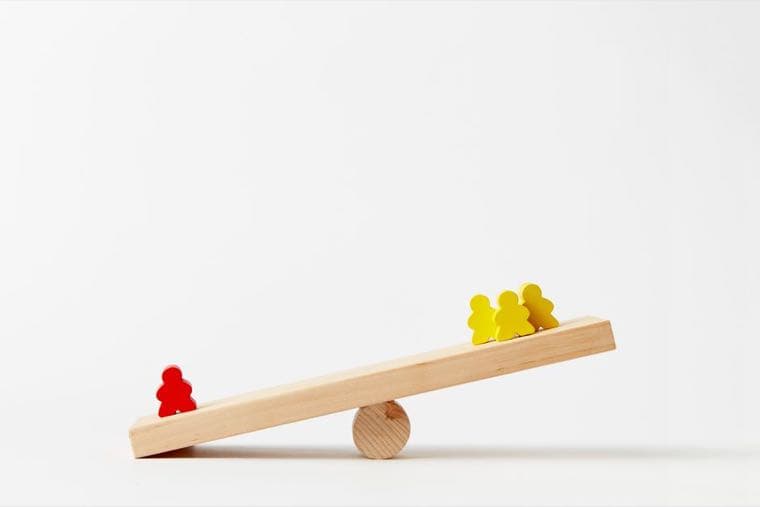
Loss Aversion: Why Losing $100 Hurts More Than Gaining $100 Feels Good
Losing $100 feels about twice as bad as gaining $100 feels good. How loss aversion quietly shapes Australian money decisions, and how to work with it.