

You Are a Badass at Making Money by Jen Sincero: A Review
Our honest You Are a Badass at Making Money review: Jen Sincero's money-mindset pep talk, why it's not a finance guide, and what Australians should pair it with.
 By Timothy Hirou GaschereauPublished
 8 min read
You Are a Badass at Making Money is a decent mindset book dressed up as a finance book, and that distinction matters a lot. Jen Sincero writes with real energy and humour, and if your biggest block around money is psychological, this could genuinely shift something. But if you're after budgeting frameworks, investing basics, or anything remotely relevant to Australian super, you'll finish it inspired and completely unprepared. It's part of our personal finance book reviews on Snowball Invest.
Quick answer
A fun, punchy read for people with genuine money-mindset blocks, not a practical finance guide. Best for anyone who feels emotionally stuck around money, earns less than they think they should, or needs a kick up the backside to start thinking bigger. Skip it if you want budgeting, investing, super guidance or evidence-based financial planning. Our rating: 3.5 out of 5.
Want to read You Are a Badass at Making Money?
Jen Sincero brings loud, funny, kick-in-the-pants energy to your money mindset and the stories that quietly keep you broke.
In this guide
- →What the book is about: money mindset, limiting beliefs and manifestation
- →The genuine strengths and the honest weaknesses
- →Who it's for, and who needs practical tools instead
- →What critics and readers say
- →The Australian angle: why it's not a substitute for a real financial plan
📖 What is You Are a Badass at Making Money about?
At its core, this is a book about your relationship with money, not money itself. Jen Sincero's argument is simple: most of us are held back by a scarcity mindset and deep-seated limiting beliefs about what we deserve, what's possible, and whether wanting more money makes us a bad person. Fix the mindset, she says, and the money follows. It's a follow-up to her bestseller You Are a Badass, narrowing the focus to wealth, and it draws on her own story of going from broke and directionless in her 40s to a financially successful author and speaker. That personal candour is one of the book's genuine strengths.
The approach leans heavily into what you might call law-of-attraction-adjacent thinking: lots of talk about universal energy, getting clear on what you want, visualising outcomes, and taking bold action to signal your intentions to the universe. It sits somewhere between self-help and manifestation, with a healthy dose of "stop making excuses." To be clear, this is explicitly a mindset book: there's no budgeting framework, no investing chapter, no discussion of compound interest. Go in expecting a motivational read about changing how you think and feel about money, and you'll get exactly that.
⚖️ Strengths and weaknesses
What it gets right
- ✓Genuinely motivating for people with money blocks: if you grew up hearing that wanting more makes you greedy, Sincero's reframe is useful.
- ✓Accessible and funny writing, like a sharp, slightly sweary friend, easy to finish in a weekend with no prerequisite knowledge.
- ✓Her personal story is honest: broke and embarrassed in her 40s before things changed, which makes it feel like a conversation, not a lecture.
- ✓It reframes money as neutral, a tool rather than a moral judgement, which can be genuinely freeing for readers who've internalised the opposite.
Where it falls short
- ✕Light on practical strategy: no budgeting, saving or investing guidance; what to do with money once you have it is your problem.
- ✕The law-of-attraction framing is not evidence-based, and readers who find manifestation thinking unconvincing will struggle with large chunks.
- ✕It gets repetitive, stretching a good core message across 200-plus pages until it feels thin by the halfway mark.
- ✕The examples are US-centric, so Australian readers do their own translation throughout.
- ✕The manifestation framing can be dismissive of real structural barriers: not everyone who isn't wealthy is simply thinking the wrong thoughts.
👤 Who should read it, and who should skip it?
Read it if you
- ✓Have genuine money anxiety or deeply held limiting beliefs about wealth.
- ✓Feel emotionally blocked around earning more, asking for a raise, or charging what you're worth.
- ✓Are a self-help fan who wants a light, motivating finance-adjacent read.
- ✓Already have your practical financial basics sorted and want to work on the psychological layer.
Skip it if you
- ✕Want practical investing, budgeting or super advice.
- ✕Are already comfortable with your money mindset and want strategy, not encouragement.
- ✕Find manifestation and law-of-attraction framing frustrating or unconvincing.
- ✕Are in genuine financial hardship and need concrete tools, not a pep talk.
🔍 What do critics say?
Critical reception is genuinely mixed, and it's worth knowing that going in. Sceptical reviewers have likened it to a try-hard version of The Secret, capturing something real: the book's relentless positivity can tip into exhausting. On the more favourable side, mainstream outlets have described it as a cheerful manifesto on removing the obstacles between you and the income you want, and an accessible read for anyone looking to hit the restart button on their finances, which is probably the fairest take. The honest summary: if you're sympathetic to mindset-first approaches, you'll find plenty to like; if you're sceptical of that framing, the book will confirm your scepticism pretty quickly.
💬 What do readers say?
On Goodreads it holds around 3.9 out of 5, well-liked but not universally loved, and the reviews reflect a real split. Supporters say the book shifted something for them: they felt motivated, less ashamed about wanting money, and more willing to act on income goals. Critics call it derivative, a repackaged version of The Secret, and readers who find the manifestation framing thin tend to come away frustrated.
The pattern is consistent: readers who already buy into the mindset-first approach to money tend to love it, and readers who don't tend to find it frustrating. Knowing which camp you're in before you buy is probably the most useful thing this review can tell you.
🇦🇺 The Australian angle
The mindset content is universal: limiting beliefs about money, scarcity thinking and the psychological barriers to earning more are not uniquely American problems. Our piece on money scripts covers similar territory with a bit more structure. But here's the thing, there is zero Australia-specific financial content in this book. No superannuation, no ETFs, no ATO, no ASIC, no franking credits, no First Home Super Saver Scheme. Sincero's world is entirely American, and the practical examples reflect that.
If you're an Australian trying to build actual wealth, you'll need to pair this book with real resources, starting with something as simple as setting actual financial goals. One moment worth flagging: Sincero describes hiring a life coach on credit as a pivotal turning point. It worked out for her, but it's not a strategy we'd suggest anyone replicate without very careful thought about their own situation, especially with high-interest debt like a personal loan or credit card. This book is not a substitute for a real financial plan, think of it as the warm-up, not the workout. For the practical Australian foundations, our Barefoot Investor review is the natural companion, and for a more grounded take on the psychology of money, our Psychology of Money review is the stronger read.
💰 The verdict
If you have genuine psychological blocks around money, yes, read it: it's a fun, fast read that makes a real case for treating money as a neutral tool rather than a moral test, and Sincero's honesty about her own story gives it credibility. But go in with clear eyes. This is a mindset book, not a finance book: it won't teach you how to invest, budget, or build long-term wealth in any practical sense, the law-of-attraction framing will put some readers off entirely, and the repetitiveness means the second half covers ground the first half already did. For Australian readers, pair it with evidence-based resources if you actually want to move the needle. The mindset shift can be a useful first step, it's just not the whole staircase. Our rating: 3.5 out of 5.
Want to read You Are a Badass at Making Money?
If your biggest blocker is the voice in your own head, grab a copy, then pair it with a practical Aussie money guide.
SnowLetter
Australia's money news and our best reads, once a week.
❓ Frequently asked questions
Is You Are a Badass at Making Money a practical finance book?
+
No. It's a mindset book. There's no budgeting framework, no investing advice, and no practical financial strategy. The focus is entirely on changing how you think and feel about money, not on what to do with it once you have it. If you want practical guidance, look elsewhere.
Who is Jen Sincero?
+
Jen Sincero is an American author, success coach and speaker. She spent much of her adult life in financial difficulty before turning things around in her 40s. Her first book, You Are a Badass, became a major bestseller, and this is the more finance-focused companion.
Do I need to read You Are a Badass first?
+
No. The two books are related in tone and philosophy, but You Are a Badass at Making Money stands on its own. You don't need any background in Sincero's work to follow along. If you enjoy this one, the original is worth picking up.
Is the law-of-attraction approach evidence-based?
+
No. The idea that the universe responds to your energy and intentions is a philosophical or spiritual belief, not a claim supported by scientific evidence, and the book leans into that framing throughout. Whether you find it useful or unconvincing depends on your worldview. The mindset-and-behaviour elements are on firmer ground than the manifestation elements.
Is it relevant for Australian readers?
+
The mindset content is universal and applies just as well here. The practical examples, however, are entirely American, with no mention of super, the ATO, ASIC or any Australian financial context. Australian readers will need to supplement it with local resources for anything practical.
What should I read alongside it for practical money advice?
+
For Australian-specific, evidence-based guidance, ASIC's MoneySmart is a free and reliable starting point. For investing basics, look at resources covering index funds and building a diversified portfolio suited to Australian conditions. A good budgeting framework will also take you further than any mindset book alone.
📚 Get the book (and two grounded companions)
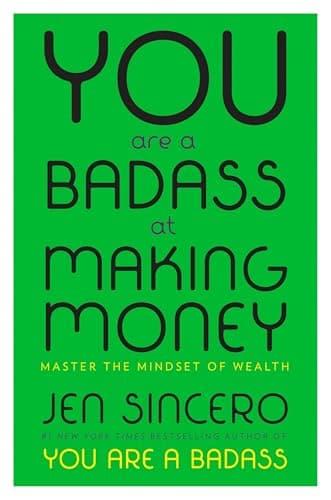
You Are a Badass at Making Money
Jen Sincero
You Are a Badass at Making Money
Jen Sincero brings loud, funny, kick-in-the-pants energy to your money mindset and the stories that quietly keep you broke. Less spreadsheets, more courage, and a good pick when your biggest blocker is the voice in your own head.
The Psychology of Money
Morgan Housel
The Psychology of Money
19 short stories on how people actually think and feel about money, not just the maths of it.
The Barefoot Investor
Scott Pape
The Barefoot Investor
Australia's best-selling money book ever. A simple system for accounts, budgeting, debt and a real emergency fund in one.
Some links above are affiliate links. If you buy through them, Snowball Invest may earn a small commission at no extra cost to you. We only recommend books we'd suggest anyway.
Sources
Was this article useful?
Put it to your own numbers
Every calculator runs entirely in your browser, with nothing stored. See what these numbers look like for your own situation.
Explore the calculators →General information only. This article is educational and does not constitute personal financial advice. It does not account for your circumstances. Consider your own situation and seek advice from a licensed adviser before acting. Read our full disclaimer.

Timothy Hirou Gaschereau
Founder of Snowball Invest, not a financial adviser.
I write about what I'm learning myself, because nobody ever taught us how to take control of our own money. It's a skill, not a mystery, and it's never too late to learn it. The best day to start was yesterday, the second best is today.
LinkedIn →Related articles

Atomic Habits Summary: The Four Laws, Explained Properly
The four laws of behaviour change, habit stacking, the two minute rule and identity based habits, distilled. Plus what each one looks like applied to your money.

Never Split the Difference Review: Does It Work in Australia?
Chris Voss's negotiation book is genuinely useful for pay rises, rent and car yards. The catch is that his most theatrical tactics land badly in an Australian room.

Rich Dad's Guide to Investing Review: Read It Critically
The reframe is genuinely useful: investing is a plan, not a product. The structures, the tax and the investor categories are American, and a lot of it does not cross the Pacific.