

Poverty Mindset: What It Is, Where It Comes From, and How to Shift It
A poverty mindset is a deep set of money beliefs shaped by real hardship. Learn the signs, the causes, and steps to build a healthier money mindset.
 By Timothy Hirou GaschereauPublished
 8 min read
Money beliefs run deep. If you grew up watching your parents stress about bills, or you've spent years in survival mode yourself, those experiences don't just disappear when your circumstances change. They shape how you think and behave around money, often without you noticing. That's what a poverty mindset is, and recognising it, without shame, is the first step to changing it. This is part of our wider guide to money mindset on Snowball Invest.
This article is general information only, not personal financial or medical advice. Consider your own circumstances, and reach out to a qualified professional if you need support.
Quick answer
A poverty mindset is a set of deep-seated beliefs about money, often formed by growing up or living with very little, and it can stick around long after your bank balance improves. Common signs include avoiding your bank account, feeling guilty spending on yourself, and assuming investing is "not for people like me." Shifting it takes awareness, small practical wins, and (sometimes) addressing the real structural barriers too.
In this guide
- →What a poverty mindset is, and how it differs from a scarcity mindset
- →Where it comes from: childhood, family patterns, and structural factors
- →The signs, and how they quietly limit earning, saving and investing
- →Practical, non-preachy ways to shift toward a healthier money mindset
🧭 What is a poverty mindset?
A poverty mindset is a set of deeply held beliefs about money formed through real experiences of financial hardship. Things like "money is scary," "wealth is for other people," "I don't deserve to earn more," or "it's only a matter of time before this falls apart." These aren't random thoughts. They're conclusions your brain drew from lived experience, and they made sense at the time.
It's worth separating this from the scarcity mindset, a related but distinct concept. A scarcity mindset is more of a cognitive state, the tunnel vision that kicks in when you're under financial pressure right now. A poverty mindset is older and deeper: the money beliefs that persist long after the pressure eases. You can earn a solid income, have a stable job, and still carry one that quietly undermines your financial life.
🌱 Where it comes from
Childhood experiences. Research on financial socialisation shows children begin forming money beliefs as young as four to six, with attitudes largely crystallising by around age seven. If you grew up watching parents argue about bills or absorbing the message that money was shameful or dangerous, those experiences leave a mark. It's not just what parents said, it's what you observed: the stress, the secrecy, the relief when payday arrived.
Intergenerational patterns. Poverty doesn't only pass down through income. It passes down through beliefs. The money scripts we carry into adulthood are often absorbed from the people who raised us, not conclusions we reached ourselves. Our guide to money scripts digs into that. That's not blame, it's just how humans learn.
Structural and systemic factors. A poverty mindset doesn't develop in a vacuum. Low wages, insecure work, high housing costs, and limited access to financial education are real. The ABS General Social Survey (2025) found 25% of Australian households experienced at least one cash-flow problem in the past 12 months, up from 21% in 2020. Acknowledging the structural stuff matters, because mindset work alone isn't enough if the barriers are still there.
🔎 Signs you might have one
These aren't character flaws. They're patterns. See if any feel familiar.
- You avoid looking at your bank balance. Not knowing feels safer than knowing, but avoidance usually makes things worse.
- You believe wealthy people are just lucky, or dishonest. This keeps wealth at arm's length by making it feel morally off-limits.
- You feel guilty spending money on yourself. Even small, affordable treats come with a side of shame.
- You self-sabotage when you get ahead. A pay rise triggers a spending spree, because some part of you expects it not to last.
- You don't negotiate your salary. "I'm lucky to have a job" is a thought that costs Australians thousands a year.
- You dismiss investing as "not for people like me." The share market feels like a club you weren't invited to.
- You assume any financial improvement is temporary. Good months feel like flukes; bad months feel permanent.
🪤 How it quietly holds you back
Earning. Not asking for a raise. Undercharging for your work. Staying in a job that pays below market rate because it feels safer than risking rejection. These are the logical outputs of a mindset that says "you don't deserve more."
Saving. Spending windfalls immediately because "it won't last anyway." Not building an emergency fund because saving feels pointless. The result is a permanent feeling of financial fragility, even when the numbers say otherwise.
Investing. Avoiding the share market entirely. "Too risky." "That's for rich people." These thoughts mean missing out on compounding, genuinely the most powerful wealth-building tool available to ordinary Australians. Every year of avoidance has a real cost. None of this is about blame, awareness is the point.
🌤️ How to shift toward a healthier mindset
This is the practical bit. No vision boards, no toxic positivity.
Name the belief, then question it. Cognitive reframing, identifying a thought and examining the evidence for and against it, is one of the best-supported techniques in psychology for changing unhelpful patterns. When you catch yourself thinking "investing is not for people like me," ask: who told me that? Is it actually true? What would I need to believe instead?
Start with tiny wins. Automate $20 a week into savings. Open a brokerage account with $50. The goal isn't the amount, it's the identity shift: "I am someone who saves. I am someone who invests."
Get free financial education. ASIC's Moneysmart is genuinely excellent and completely free. Scott Pape's The Barefoot Investor is a practical, plain-English starting point that resonates with a lot of Australians.
Change your money environment. The people you talk to about money matter. Communities and podcasts that normalise investing and saving on ordinary incomes can shift your frame of reference over time. An abundance mindset grows in the right environment.
Acknowledge the structural stuff. If your income is genuinely low right now, mindset shifts alone won't pay the rent. Pair the inner work with practical steps: check your Centrelink entitlements at servicesaustralia.gov.au, look into wage negotiation, explore upskilling. Mindset and structural action work together, not instead of each other.
You can't change a pattern you haven't named. Get specific about the exact belief and the exact behaviour it drives, then take one small action that contradicts it.
🎯 The essential: A poverty mindset is a rational response to hard circumstances, not a moral failing. Recognising it is useful; blaming yourself for it is not.
SnowLetter
Australia's money news and our best reads, once a week.
❓ Frequently asked questions
Is a poverty mindset the same as a scarcity mindset?
+
No, though they're related. A scarcity mindset is a cognitive state triggered by active financial pressure, the tunnel vision that narrows your thinking when you're focused on an urgent shortage. A poverty mindset is deeper and older. It's a set of ingrained money beliefs, often formed in childhood, that can persist long after the financial pressure has lifted.
Can you have a poverty mindset even if you earn a good income now?
+
Absolutely. This is one of the most common patterns. Someone might earn $120,000 a year and still avoid looking at their bank account, feel guilty spending on themselves, or refuse to invest because 'that's not for people like me.' Income and mindset are separate things. The beliefs were formed earlier, and they don't automatically update when the pay cheque does.
How long does it take to change a poverty mindset?
+
There's no fixed timeline. What the research on financial socialisation suggests is that these beliefs were formed over years, so shifting them takes consistent, repeated exposure to new experiences and new evidence. Small wins, regular reflection, and a supportive environment all help. Think months to years, not weeks.
Is it my fault if I have a poverty mindset?
+
No. Full stop. A poverty mindset is a rational response to difficult circumstances, often circumstances you had no control over, especially as a child. Structural factors like low wages, housing costs, and limited financial education are real contributors. Recognising the mindset is useful. Blaming yourself for having it is not.
What is the first step to overcoming a poverty mindset?
+
Name it. Specifically. Not 'I'm bad with money' but 'I believe investing is only for wealthy people, and that belief stops me from opening a brokerage account.' The more specific you can get about the exact belief and the behaviour it drives, the easier it becomes to question and replace it. Then take one small action that contradicts the belief.
📚 Recommended reading
The Psychology of Money
Morgan Housel
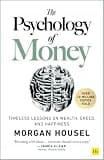
The Psychology of Money
19 short stories on how people actually think and feel about money, not just the maths of it.
The Barefoot Investor
Scott Pape

The Barefoot Investor
Australia's best-selling money book ever. A simple system for accounts, budgeting, debt and a real emergency fund in one.
Atomic Habits
James Clear
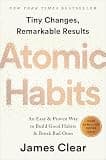
Atomic Habits
Tiny changes, remarkable results. Clear shows how 1 percent improvements compound, and the same system that fixes your gym routine works on your saving habits too.
Some links above are affiliate links. If you buy through them, Snowball Invest may earn a small commission at no extra cost to you. We only recommend books we'd suggest anyway.
Sources
- 1. General Social Survey: Summary Results, Australia, 2025, Australian Bureau of Statistics.
- 2. The Science of Scarcity (2014), APA Monitor on Psychology.
- 3. A Framework for the Psychology of Poverty, CEGA, UC Berkeley.
- 4. Why Your Money Story Begins Before Age 7 (2026), Psychology Today.
- 5. Moneysmart, free financial education tools, Australian Securities and Investments Commission.
Was this article useful?
Put it to your own numbers
Every calculator runs entirely in your browser, with nothing stored. See what these numbers look like for your own situation.
Explore the calculators →General information only. This article is educational and does not constitute personal financial advice. It does not account for your circumstances. Consider your own situation and seek advice from a licensed adviser before acting. Read our full disclaimer.

Timothy Hirou Gaschereau
Founder of Snowball Invest, not a financial adviser.
I write about what I'm learning myself, because nobody ever taught us how to take control of our own money. It's a skill, not a mystery, and it's never too late to learn it. The best day to start was yesterday, the second best is today.
LinkedIn →Related articles

Fear of Spending Money: When Saving Becomes a Source of Stress
Fear of spending money is more common than you think. Learn the signs, the causes, and practical steps to ease the anxiety and spend with confidence.

Money and Mental Health: Breaking the Cycle of Financial Stress in Australia
Money stress and mental health are deeply connected. How to break the cycle with practical steps, free Australian support, and real strategies.

Hedonic Adaptation: Why More Money Rarely Feels Like Enough
Hedonic adaptation keeps you chasing the next buy no matter how much you earn. The psychology, the real cost, and four ways to break the cycle.