

Money Dysmorphia: When Your Finances Don't Match How You Feel
Feel financially behind even when the numbers say otherwise? You might have money dysmorphia. Here's what it is, why it happens, and how to close the gap.
 By Timothy Hirou GaschereauPublished
 10 min read
You know that feeling where you check your bank balance, see a number that's objectively fine, and still feel vaguely broke? Or the opposite, spending freely because everything feels okay, only to be genuinely surprised by your credit card statement? That gap between financial feeling and financial fact has a name: money dysmorphia. This article explains what it is, why it happens, and, most importantly, what you can actually do about it. It's part of a wider guide to money mindset on Snowball Invest.
This article is general information only, not personal financial or medical advice. If you're concerned about your finances or mental health, please speak with a qualified professional.
Quick answer
Money dysmorphia is a distorted perception of your financial situation that doesn't match reality, you might feel broke when you're actually okay, or feel fine when you're genuinely in trouble. It's not a clinical diagnosis, but it's a useful framework for understanding why your feelings about money can be so disconnected from the facts. It's driven by social comparison, childhood money messages, and the economic anxiety baked into growing up in Australia right now. The fix isn't more money, it's closing the gap between your perception and your actual financial picture.
In this guide
- →What money dysmorphia actually is, and why it can run in two directions
- →How it differs from financial anxiety and financial shame
- →Why it's so common in Australia right now, backed by the data
- →How it shows up day to day, whichever direction it runs
- →Practical, evidence-based ways to check your perception against reality
🪞 What is money dysmorphia?
Money dysmorphia is a persistent, distorted perception of your own financial situation that doesn't match your actual financial reality.
The term borrows from body dysmorphia, a condition where someone's perception of their body doesn't reflect what's actually there. The same logic applies to money: the mental picture you carry of your finances is out of step with the objective facts.
It's worth being clear upfront: money dysmorphia is not a clinical diagnosis. You won't find it in the DSM. It's a framework, a useful shorthand for a very real experience that a lot of Australians are having right now.
It can go in two directions.
- Feeling perpetually poor, insecure, or behind, even when you're objectively in a reasonably stable financial position. This is the more commonly discussed direction, and the one that tends to affect younger Australians most acutely.
- Feeling falsely secure or confident, spending and behaving as though everything is fine, while the actual numbers tell a different story.
Both are forms of financial dysmorphia. Both can cause real harm.
The numbers can keep improving while the feeling of being financially behind stays exactly the same. That gap is money dysmorphia.
Australian media has been picking up on this trend. The Sydney Morning Herald ran a piece in February 2026 asking whether the rising cost of living was giving Australians money dysmorphia, and a Val Morgan Digital study published via the Australian Marketing Institute in April 2024 identified distorted financial perceptions among over 1,000 Gen Z and Millennial Australians, finding contradictory and potentially harmful financial behaviours driven by a warped sense of their own financial health.
The data backs up why this is such a live issue here. ASIC's 2026 MoneySmart Gen Z survey found that 92% of Gen Z have concerns about their financial future, and yet, objectively, their savings position had actually improved between 2023 and 2025, with average Gen Z personal savings rising from $12,862 to $14,567. The anxiety persists even as the numbers improve. That's the dysmorphia at work.
⚖️ How money dysmorphia differs from financial anxiety and financial shame
These three concepts often get lumped together, but they're meaningfully different, and the distinction matters for working out what's actually going on for you.
| What it is | Can it be accurate? | |
|---|---|---|
| Financial anxiety | An emotional state: fear, worry, dread about money | Yes, it can be entirely rational if your situation genuinely is precarious |
| Financial shame | Identity and self-judgment, "I'm bad with money" | It's about worth and character, not the accuracy of the facts |
| Money dysmorphia | A distorted perception of the actual financial facts | No, by definition the perception doesn't match reality |
Financial anxiety is an emotional state: fear, worry, dread about money. Crucially, it can be entirely rational. If you're genuinely struggling to pay rent, feeling anxious about money is an accurate response to your circumstances. There's nothing distorted about it.
Financial shame is about identity and self-judgment. It's the "I'm bad with money" story, the sense that your financial situation reflects something fundamentally wrong with you as a person. It's tied to worth and character, not just circumstance.
Money dysmorphia is different from both. It's a distorted perception of the actual financial facts, the map doesn't match the territory. You might feel financially behind when the numbers say you're not. Or you might feel financially secure when the numbers say you're not. The emotion might be anxiety or confidence or shame, but the defining feature of dysmorphia is that the underlying perception is inaccurate relative to the facts.
You can have accurate financial anxiety, genuinely struggling, feel anxious, that's appropriate. Dysmorphia is when the perception itself is the problem, not just the feeling.
They often co-exist and feed each other. Chronic financial shame, for instance, can distort how you perceive your financial position. Financial trauma from childhood can lay the groundwork for dysmorphic thinking in adulthood.
🎯 The essential: If financial anxiety resonates more with your experience, we cover it in depth in our article on financial anxiety. If you recognise the shame piece, see our article on financial shame. And if you suspect your money patterns have deeper roots, our article on financial trauma explores how early experiences shape the way we relate to money as adults.
🔍 Why does money dysmorphia happen?
There's no single cause. It's usually a combination of external pressures and internal wiring, and for Australians right now, several of those factors are running hot simultaneously.
1. Social media and the comparison trap. We're benchmarking our financial lives against the most polished, curated version of other people's lives. The holiday content, the renovation, the restaurant, none of it comes with a mortgage balance or a credit card statement attached.
ASIC's 2023 Gen Z survey found that 56% of Gen Z use social media for financial information, compared to just 23% of non-Gen Z. And ASIC's 2026 report found that 72% of Gen Z have seen social media ads encouraging them to invest in crypto in the past 12 months alone. We're not just comparing lifestyles on social media, we're getting our financial cues from it.
When your reference point for "normal" is an algorithmically curated feed of people spending money, it's very easy to feel like you're falling behind, even when you're not.
2. Generational economic anxiety. Younger Australians came of age through a cost-of-living crisis, housing unaffordability that has made homeownership feel genuinely out of reach for many, and a period of rapid interest rate rises. That context creates a baseline expectation of financial precarity, and that expectation can persist even after the objective situation improves.
AMP's 2024 Financial Wellness Report found 66% of Australians were feeling financially stressed, the highest proportion since 2014. Beyond Blue's 2022 research found 46% of Australians named financial pressure as a key factor in their distress. And NAB's Q4 2025 Wellbeing Survey found the financial stress index for 18-29 year olds sat at 53.6, compared to just 31.7 for Australians over 65. That's not a small gap, it reflects a genuinely different lived experience of money.
When financial stress is the water you've been swimming in, it can be hard to notice when the temperature changes.
3. Family-of-origin money scripts. The messages we absorbed growing up about money run on autopilot. "We can't afford that." "Money doesn't grow on trees." "Don't talk about money." These scripts, sometimes called money scripts, shape our financial perception long before we have any financial reality to compare them to.
If you grew up in a household where scarcity was the dominant theme, your nervous system learned to treat money as precarious. That conditioning doesn't automatically update when your bank balance does. It takes conscious work to notice and revise those inherited beliefs.
4. The benchmarking problem. Even when we're not scrolling social media, we often compare ourselves to unrealistic benchmarks. A Compare the Market survey from April 2025 found that 72% of Gen Z experience anxiety or depression exacerbated by money, the highest of any generation. When the people around you, or the people you follow online, seem to be doing better, the gap between perception and reality widens.
👀 How money dysmorphia shows up in real life
The signs look different depending on which direction the distortion runs.
If you tend to feel poorer than you are:
- Compulsive balance-checking, refreshing your banking app multiple times a day, not because you need to, but because the anxiety demands it
- Guilt or anxiety about normal, reasonable spending, feeling bad about a $15 lunch when you have a healthy emergency fund
- Chronic under-spending or excessive saving that limits your quality of life beyond what's objectively necessary
- The goalposts keep moving, you hit a savings target and immediately feel like it's not enough, the sense of "enough" never arrives
- Avoiding spending on things that would genuinely improve your life because they feel unaffordable, even when the numbers say otherwise
If you tend to feel more secure than you are:
- Financial avoidance, not checking accounts, not opening bills, not looking at statements
- Spending beyond your means while feeling like everything is basically fine
- Genuine surprise at debt balances or account statements when you do look
- Difficulty connecting present spending to future consequences, the credit card bill feels abstract until it arrives
Both patterns can cause real financial harm. The first can lead to under-investing, under-spending on things that matter, and a chronic low-grade anxiety that doesn't serve you. The second can lead to debt accumulation and financial instability that creeps up quietly.
🚫 3 common misconceptions about money dysmorphia
1. "Money dysmorphia only affects people who are doing well financially."
The reality: it goes both directions. Someone who is genuinely struggling can also have a distorted perception, feeling falsely secure, for instance, or catastrophising in ways that don't accurately reflect their options. Financial dysmorphia isn't a privilege problem, it's a perception problem.
2. "It's just being frugal or financially cautious."
The reality: the distinguishing feature is whether the perception is accurate. Genuine frugality is a conscious, informed choice made with a clear-eyed view of your financial situation. Money dysmorphia is when the underlying perception is distorted, when you're restricting spending not because the numbers require it, but because your mental model of your finances is out of step with reality.
3. "More money (or more savings) will fix it."
The reality: because money dysmorphia is a perception problem rather than a facts problem, the feeling often persists even as the numbers improve. This is exactly what the ASIC data shows, Gen Z savings rose between 2023 and 2025, yet 92% still have concerns about their financial future. AMP's 2024 report found that even Australians earning $100,000-$150,000 reported 24% moderate or severe financial stress. More money helps with genuine financial hardship. It doesn't automatically fix a distorted perception of your financial situation.
✅ How to check your perception against reality
This is the practical part. The goal is to create an objective anchor, something you can return to when the distorted perception kicks in.
- Calculate your actual net worth. This is the single most grounding exercise you can do. It gives you one clear number that reflects where you actually stand, rather than how you feel. We walk through exactly how to do this in our article on what is net worth, start there if you haven't already.
- Compare to realistic benchmarks, not social media. Use ABS data, age-based savings benchmarks, or the free tools at moneysmart.gov.au to get a realistic picture of where you stand relative to your actual peers, not the curated highlight reel. ASIC's MoneySmart is an independent, government-backed resource with calculators and guides designed specifically for Australians.
- Keep a written financial facts sheet. Create a simple document, even a notes app entry, with your actual income, savings, debt, and net worth. When the distorted perception kicks in ("I'm so behind," "I'm fine, I don't need to worry"), you have something concrete to refer back to. Feelings are real. Facts are also real. Both can exist at the same time.
- Get an outside perspective. A financial counsellor can give you an objective read on where you actually stand, and free financial counselling is available in Australia through the National Debt Helpline on 1800 007 007, or via moneysmart.gov.au/managing-debt/financial-counselling. This isn't just for people in crisis, it's for anyone who wants a clear-eyed, independent view of their financial situation. A financial adviser can also help if you're looking for more personalised planning support.
- Notice the pattern, not just the feeling. Try journalling or simply tracking when the distorted perception tends to kick in. After scrolling social media? After a big purchase? After a conversation about money with family? Identifying your triggers is the first step to interrupting the pattern. The goal isn't to stop having feelings about money, it's to stop letting those feelings be the only input into your financial decisions.
SnowLetter
Australia's money news and our best reads, once a week.
❓ Frequently asked questions
Is money dysmorphia a real medical condition?
+
No. Money dysmorphia is not a clinical diagnosis and doesn't appear in any medical or psychiatric classification system. It's a useful framework, a term that captures a genuinely common experience, but it's not a disorder in the clinical sense. If your financial anxiety or distorted thinking is significantly affecting your daily life, it's worth speaking with a mental health professional.
How do I know if I have money dysmorphia or if I'm just genuinely struggling financially?
+
The key question is whether your perception matches your actual financial situation. If you're genuinely struggling, income doesn't cover expenses, debt is growing, you can't meet basic costs, then your financial anxiety is likely accurate, not distorted. Money dysmorphia is specifically about a mismatch between the facts and how you perceive them. Calculating your net worth and comparing it to realistic benchmarks, not social media, is a good starting point for working out which situation you're in.
Can money dysmorphia affect people on high incomes?
+
Absolutely. AMP's 2024 Financial Wellness Report found that nearly one in four Australians earning $100,000-$150,000 reported moderate or severe financial stress. Income is one factor in financial wellbeing, but it's not the only one, and it doesn't protect against distorted financial perception. Money scripts, social comparison, and generational anxiety don't disappear with a pay rise.
Is money dysmorphia the same as being anxious about money?
+
Not quite. Financial anxiety is an emotional response, it can be entirely rational and accurate if your situation genuinely is precarious. Money dysmorphia is specifically about a distorted perception of your financial facts. You can have accurate financial anxiety without dysmorphia. And you can have money dysmorphia without feeling particularly anxious, the "falsely secure" direction is also a form of dysmorphia, even if it doesn't feel distressing.
What's the link between money dysmorphia and social media?
+
It's significant. Social media exposes us to a constant stream of curated financial content, lifestyle spending, investment wins, property purchases, without the context of debt, stress, or financial trade-offs. ASIC's 2023 survey found 56% of Gen Z use social media for financial information, and the 2026 report found 72% have seen social media ads encouraging crypto investment. When your reference point for "normal" is algorithmically selected to show you the best version of other people's finances, it's easy for your own financial perception to become distorted.
Can money dysmorphia be fixed?
+
"Fixed" might be the wrong frame, but it can absolutely be improved. Because it's a perception problem rather than a facts problem, the most effective approaches involve creating objective anchors, like tracking your net worth, identifying and challenging distorted thinking, understanding your money scripts, and, where needed, working with a financial counsellor or mental health professional. It takes time, but the gap between perception and reality can close.
Where can I get help in Australia?
+
National Debt Helpline: free financial counselling, call 1800 007 007 or visit moneysmart.gov.au/managing-debt/financial-counselling. MoneySmart: free tools, calculators and guides from ASIC at moneysmart.gov.au. Beyond Blue: mental health support including resources on financial wellbeing at beyondblue.org.au/mental-health/financial-wellbeing. Lifeline: crisis support on 13 11 14.
📚 Recommended reading
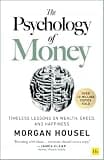
The Psychology of Money
Morgan Housel
The Psychology of Money
19 short stories on how people actually think and feel about money, not just the maths of it.
Atomic Habits
James Clear

Atomic Habits
Tiny changes, remarkable results. Clear shows how 1 percent improvements compound, and the same system that fixes your gym routine works on your saving habits too.
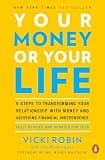
Your Money or Your Life
Vicki Robin
Your Money or Your Life
The book that basically kicked off the FIRE movement, reframing money as 'life energy' you trade your hours for. The nine-step program is pure gold, just swap the US retirement-account chapter for super.
Some links above are affiliate links. If you buy through them, Snowball Invest may earn a small commission at no extra cost to you. We only recommend books we'd suggest anyway.
Sources
- 1. Gen Z Financial Behaviours Report, 2026, ASIC MoneySmart
- 2. 23-302MR Gen Z more concerned about finances than any generation in Australia, ASIC, 2023
- 3. AMP Financial Wellness Report 2024
- 4. NAB Australian Wellbeing Survey Q4 2025
- 5. Beyond Blue: Cost of Living Crisis and Financial Wellbeing
- 6. How Money Stress Is Impacting Australians, Compare the Market, 2025
- 7. Money Dysmorphia Among Young Australians, AMI / Val Morgan Digital Study, April 2024
- 8. Is the rising cost of living giving you money dysmorphia? Sydney Morning Herald, February 2026
- 9. ASIC MoneySmart
Was this article useful?
Put it to your own numbers
Every calculator runs entirely in your browser, with nothing stored. See what these numbers look like for your own situation.
Explore the calculators →General information only. This article is educational and does not constitute personal financial advice. It does not account for your circumstances. Consider your own situation and seek advice from a licensed adviser before acting. Read our full disclaimer.

Timothy Hirou Gaschereau
Founder of Snowball Invest, not a financial adviser.
I write about what I'm learning myself, because nobody ever taught us how to take control of our own money. It's a skill, not a mystery, and it's never too late to learn it. The best day to start was yesterday, the second best is today.
LinkedIn →Related articles

Poverty Mindset: What It Is, Where It Comes From, and How to Shift It
A poverty mindset is a deep set of money beliefs shaped by real hardship. Learn the signs, the causes, and steps to build a healthier money mindset.

Fear of Spending Money: When Saving Becomes a Source of Stress
Fear of spending money is more common than you think. Learn the signs, the causes, and practical steps to ease the anxiety and spend with confidence.

Money and Mental Health: Breaking the Cycle of Financial Stress in Australia
Money stress and mental health are deeply connected. How to break the cycle with practical steps, free Australian support, and real strategies.