

The W-8BEN Form for Australian Investors
Buying US shares or ETFs from Australia? Here is what the W-8BEN form is, when you need one, and how it cuts your US dividend withholding from 30% to 15%.
 By Timothy Hirou GaschereauPublished
 7 min read
If you have ever signed up to a broker like Stake or Interactive Brokers and been asked to fill in a W-8BEN form, you are not alone. It sounds intimidating but is actually pretty straightforward once you know what it does. Here is the plain-English version. This is part of our wider getting started with investing guide on Snowball Invest. General information only, not personal financial or tax advice; verify current rates with the ATO or a registered tax agent.
Quick answer
The W-8BEN is a US tax form that proves you are not a US resident, unlocking a reduced withholding tax rate on US dividends. Without it, the US withholds 30% of your dividends. With it, Australian residents generally pay 15% under the Australia-US tax treaty (rates subject to change). You only need one if you buy US-listed securities directly. If you only hold ASX-listed, Australian-domiciled ETFs like VGS or BGBL, you never touch this form. Your broker collects it during onboarding; you do not send it to the ATO.
In this guide
- →What the W-8BEN actually is and why it exists
- →When you need one, and when you genuinely do not
- →The step-by-step process through your broker
- →How to claim the US tax back on your Australian return
- →Why US estate tax is a separate issue entirely
📄 What is the W-8BEN form?
The W-8BEN is an official US Internal Revenue Service (IRS) form. Its full name is the Certificate of Foreign Status of Beneficial Owner for United States Tax Withholding and Reporting (Individuals). That is a mouthful. All it really means is: I am not a US person, and I want the reduced tax rate I am entitled to.
Here is why it matters. The US government withholds tax on dividends paid to foreign investors. The default rate is 30%. That is a big chunk of your income gone before it even hits your account. But Australia has a tax treaty with the United States. Under the Australia-US Double Tax Agreement, Australian residents can generally access a reduced withholding rate of 15% on dividends instead of 30%. The W-8BEN is how you claim that treaty benefit.
Without a W-8BEN, you pay 30%. With one, you generally pay 15%. That is the whole point of the form. These rates are subject to change, the treaty rate applies to dividends and may differ for other income types, so always verify with the ATO or a registered tax agent before acting.
✅ When do you need one?
You need a W-8BEN when you are buying US-listed securities through a broker that gives you direct access to US markets. This includes:
- US-domiciled ETFs listed on a US exchange, such as IVV on NYSE Arca (the US-listed version of the iShares S&P 500 ETF) or Vanguard US ETFs like VTI.
- Individual US shares directly, such as Apple, Microsoft or Nvidia, bought through a broker with direct US market access.
Brokers like Stake and Interactive Brokers typically prompt you to complete the W-8BEN as part of onboarding. You fill it in once, and they take care of the rest. One thing to know: the form goes to your broker, not to the ATO. It is a US tax document collected by the US withholding agent, the entity responsible for deducting tax at source.
The W-8BEN is generally valid until the end of the third calendar year after you sign it. So if you signed it in March 2024, it would typically expire at the end of 2027, after which your broker will ask you to renew it. These timeframes are subject to change per IRS rules. Set a calendar reminder, because an expired W-8BEN means you could slip back to the 30% default rate.
🚫 When you do NOT need one
This is the part most Australian investors miss. If you only buy ASX-listed, Australian-domiciled ETFs, you do not need a W-8BEN at all.
🎯 The essential: When you buy an ASX-listed ETF like VGS, BGBL, NDQ, VAS, or the ASX-listed version of IVV, the fund itself is the entity that holds the underlying US shares. The fund deals with the IRS. You deal with the fund. You do not file a W-8BEN and you do not interact with the IRS.
This is actually one of the big practical advantages of buying the ASX-listed version of a global ETF rather than the US-listed version directly: less paperwork, no W-8BEN, and no US estate tax exposure (more on that below). Most Australian retail investors buying ETFs through platforms like CommSec, SelfWealth or Pearler are buying ASX-listed, Australian-domiciled funds. If that is you, you will likely never need to touch a W-8BEN. Our guide on how to buy international shares from Australia covers both routes.
🛠️ How it works in practice
If you do need a W-8BEN, here is what the process looks like step by step.
- Your broker prompts you. During account setup, or when you first try to trade US securities, your broker will ask you to complete the W-8BEN.
- You fill in the basics. Your full legal name, country of residence (Australia), your Australian Tax File Number or other tax identification details, and the treaty article you are claiming under.
- You sign and submit. Most brokers handle this digitally. No printing, no posting.
- Your broker sends it to the US withholding agent, the entity responsible for deducting tax before your dividends are paid out.
- US dividends are withheld at the treaty rate, generally 15% for Australian residents rather than the default 30%. Rates are subject to change.
You do not send the form to the ATO. It is purely a US tax document. Once it is done, it sits in the background and does its job automatically. The only thing you need to actively manage is renewal every three years or so.
| Situation | Withholding rate |
|---|---|
| No valid W-8BEN | 30% (default) |
| Valid W-8BEN under the treaty | 15% (generally) |
🔄 Claiming the US tax back
Here is the good news. The US withholding tax you pay is not just gone. You can generally claim it as a foreign income tax offset on your Australian tax return. The foreign income tax offset (FITO) reduces your Australian tax bill, dollar for dollar, up to the amount of Australian tax payable on that income. So you are not being taxed twice on the same income; you are paying tax once, just across two countries. How it works in practice:
- You declare the gross foreign dividend income on your Australian tax return, before any US withholding.
- You then claim the US withholding tax paid as a foreign income tax offset.
- The offset reduces your Australian tax liability on that income.
For amounts of $1,000 or less in foreign tax paid, the ATO generally allows you to claim the full amount without a complex calculation. For larger amounts, you need to work out the FITO limit. For personalised advice, especially if you hold significant US share positions, speak to a registered tax agent. The rules have nuances that depend on your individual circumstances.
📈 Compound Interest Calculator
Model how your international dividends compound over time, so you can weigh the extra admin of holding US-listed shares directly.
🏛️ A note on US estate tax
This section is not meant to alarm you. For most everyday investors with a few hundred or a few thousand dollars in US shares, US estate tax is not a pressing concern. But it is worth knowing about, and it is a separate issue from the W-8BEN. The W-8BEN only covers withholding tax on income (dividends). It does not protect you from US estate tax.
Non-US persons who hold US-situs assets, including US shares and US-domiciled ETFs, above the US$60,000 threshold at the time of death may be subject to US estate tax. The threshold is much lower than the one that applies to US citizens, which is why it catches some Australian investors off guard. If you hold a large portfolio of direct US shares or US-domiciled ETFs, this is worth discussing with an estate planning lawyer or a tax adviser with US expertise. The W-8BEN is simply the wrong tool for that job.
SnowLetter
Australia's money news and our best reads, once a week.
❓ Frequently asked questions
Do I need a W-8BEN in Australia?
+
Only if you are buying US-listed securities through a broker with direct US market access. This means US-domiciled ETFs listed on a US exchange, or individual US shares like Apple or Microsoft. If you only buy ASX-listed ETFs, you do not need one.
What happens if I do not complete a W-8BEN?
+
The US withholding agent will apply the default 30% withholding rate on any US-sourced dividends or distributions. With a valid W-8BEN, Australian residents generally pay 15% under the Australia-US tax treaty. Rates are subject to change; verify with the ATO or a registered tax agent.
Does VGS need a W-8BEN?
+
No. VGS is an ASX-listed, Australian-domiciled ETF managed by Vanguard Australia. The fund handles its own US tax obligations. You do not file a W-8BEN to hold VGS.
How long is a W-8BEN valid?
+
Generally until the end of the third calendar year after you sign it. After that, your broker will ask you to renew it. Check current IRS rules or your broker's guidance, as timeframes can change.
Do I still pay Australian tax if I pay US withholding tax?
+
Yes. You declare the gross foreign income on your Australian tax return. You can generally claim the US withholding tax as a foreign income tax offset to avoid double taxation. Speak to a registered tax agent for advice specific to your situation.
Does the W-8BEN protect me from US estate tax?
+
No. The W-8BEN covers withholding tax on income (dividends). US estate tax on non-US persons holding US-situs assets is a completely separate issue and requires separate advice from an estate planning lawyer or a tax adviser with US expertise.
📚 Recommended reading
The Simple Path to Wealth
JL Collins
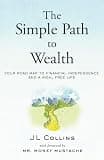
The Simple Path to Wealth
The friendliest on-ramp to index investing there is, born from letters a dad wrote his daughter. It makes 'buy the whole market and chill' feel obvious, just map his US fund picks onto Aussie equivalents and super.
The Bogleheads' Guide to Investing
Taylor Larimore, Mel Lindauer & Michael LeBoeuf
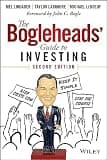
The Bogleheads' Guide to Investing
The friendly community bible of low-cost, buy-and-hold index investing, written by everyday investors rather than salespeople. The core philosophy is timeless for Aussies, just read the tax-advantaged account bits as super.
The Little Book of Common Sense Investing
John C. Bogle
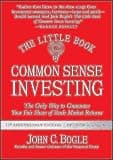
The Little Book of Common Sense Investing
From the man who invented the index fund, this is the short, sharp case for low-cost investing that has aged like fine wine. The maths on fees is universal, just think ETFs and super instead of his US funds.
Some links above are affiliate links. If you buy through them, Snowball Invest may earn a small commission at no extra cost to you. We only recommend books we'd suggest anyway.
Sources
Was this article useful?
Put it to your own numbers
Every calculator runs entirely in your browser, with nothing stored. See what these numbers look like for your own situation.
Explore the calculators →General information only. This article is educational and does not constitute personal financial advice. It does not account for your circumstances. Consider your own situation and seek advice from a licensed adviser before acting. Read our full disclaimer.

Timothy Hirou Gaschereau
Founder of Snowball Invest, not a financial adviser.
I write about what I'm learning myself, because nobody ever taught us how to take control of our own money. It's a skill, not a mystery, and it's never too late to learn it. The best day to start was yesterday, the second best is today.
LinkedIn →Related articles
U100 ETF Australia: Global X's US Giants ETF Explained
U100 is Global X's low cost US 100 ETF on the ASX, holding 100 US giants. What it holds, its 0.18% fee, currency risk, and how U100 compares to NDQ.
ETF vs Managed Fund: Which Structure Actually Suits You?
ETFs or managed funds? We break down the real differences in cost, tax, flexibility and auto-investing so you can pick the right structure for your money.
How ETFs Are Taxed in Australia
How ETFs are taxed in Australia: yearly distributions, capital gains, the AMIT regime, AMMA statements, franking credits and foreign income tax offsets.