

Just Keep Buying by Nick Maggiulli: An Honest Review
Our honest Just Keep Buying review for Australians: Nick Maggiulli's data-driven approach to saving and investing, what maps to the ASX and super, and what to skip.
 By Timothy Hirou GaschereauPublished
 10 min read
Short verdict: yes, buy it. The philosophy is timeless, the writing is clear, and the data-backed framework will genuinely shift how you think about building wealth. Just go in knowing that a chunk of the specifics (retirement, housing, tax) are written for Americans. It's part of our personal finance book reviews on Snowball Invest.
Quick answer
A data-backed philosophy for building wealth consistently, without obsessing over market timing. Best for beginner-to-intermediate investors who overthink when to buy. Key limitation: it's heavily US-centric in places (retirement, housing and tax chapters), which need mental translation for Australians. Our rating: 4 out of 5.
Want to read Just Keep Buying?
Data over vibes: Maggiulli crunches the numbers to show consistent buying beats timing the market, and it's easier than you think.
In this guide
- →What the book is about: the saving problem, the investing problem and just keep buying
- →The genuine strengths and the honest weaknesses
- →Who it's for, and who needs local mechanics too
- →What critics and r/fiaustralia readers say
- →The Australian angle: mapping it to VAS, VGS, super and franking
📖 What is Just Keep Buying about?
The book is built around one core idea: buy income-producing assets continuously and automatically, regardless of what markets are doing. Don't wait for a dip. Don't try to time the bottom. Just keep buying. Maggiulli, author of the Of Dollars and Data blog and COO of Ritholtz Wealth Management, structures it around a genuinely clarifying distinction:
- The saving problem: on a lower income, your biggest lever is cutting costs and growing your income. Obsessing over investment strategy at this stage is a distraction.
- The investing problem: earning well and already saving, but unsure how to deploy capital. This is where most of the book's investing content lives.
Other key ideas:
- Lump sum vs dollar cost averaging. His data shows investing a lump sum all at once beats DCA roughly two-thirds of the time, because markets tend to rise. He also acknowledges DCA is psychologically fine, and for regular income it's the only practical option anyway.
- Don't fear buying at market highs. Historically, buying at all-time highs has produced returns similar to buying at any other time. The fear of "buying at the top" is mostly noise.
- The 2x rule. If you can invest the same amount you're about to spend on something, spend freely. A practical heuristic for guilt-free spending that avoids extreme frugality.
- Time in the market beats timing the market, backed by actual data rather than just asserted.
The one-line summary: grow your income, convert it into assets, and never stop.
⚖️ Strengths and weaknesses
What it gets right
- ✓Data-driven throughout: it shows you the numbers behind the advice, from someone who actually ran the analysis.
- ✓Accessible writing: for a data-heavy book, it reads easily, no finance degree required.
- ✓Challenges conventional wisdom usefully: 'save more' isn't always the answer, and buying at highs isn't as scary as it feels.
- ✓The saving-problem-versus-investing-problem framework helps you see which game you're actually playing.
- ✓The 2x rule is memorable and practical.
- ✓Short and readable: you can get through it in a weekend.
Where it falls short
- ✕Heavily US-centric: the 401(k), Roth IRA, Social Security and US tax chapters are written for Americans.
- ✕The housing and pension logic needs significant translation, built as it is around US Social Security.
- ✕Some find the data presentation repetitive, with the same point illustrated by several charts.
- ✕The lump-sum-beats-DCA finding is correct but needs careful reading (most Australians DCA by default anyway).
- ✕Limited depth on international diversification, a gap for non-US readers.
👤 Who should read it, and who should skip it?
Read it if you
- ✓Are a beginner-to-intermediate investor who overthinks market timing.
- ✓Have ever sat on cash waiting for the 'right time' to invest.
- ✓Want a data-backed philosophy for consistent investing.
- ✓Feel guilty spending money on things you enjoy (the 2x rule helps).
Pair it with local resources if you
- ✕Are a complete beginner who needs Australian mechanics (how super works, opening a brokerage account, CGT on ETFs).
- ✕Want Australian tax or super guidance specifically.
- ✕Are after a step-by-step setup guide rather than a philosophy.
🔍 What do critics say?
The professional reception has been consistently positive, with respected personal finance sites describing it as one of the best modern investing books they've read and placing it alongside The Simple Path to Wealth. The consistent theme across reviews: data-driven, practical and evidence-based. The consistent limitation flagged: US-centric in parts. That's a fair and accurate summary.
💬 What do readers say? Goodreads and Reddit
On Goodreads it holds around 4.1 out of 5 from thousands of ratings, with most readers giving it four or five stars. Common praise: accessible, data-driven, and genuinely useful for anyone who overthinks investing. Common criticism: very US-centric, with several non-US readers noting the housing and pension chapters can largely be skipped.
On r/fiaustralia the one-line verdict is basically "good, but some of it is more relevant to the US," which is about right for an Australian audience. On r/Bogleheads the philosophy is seen as essentially Boglehead-compatible, which makes sense: buy low-cost index funds regularly and don't try to time the market.
🇦🇺 The Australian angle
Here's how the ideas map to the Australian context:
- The philosophy maps perfectly to VAS and VGS on the ASX. Regular, scheduled contributions to a low-cost ETF portfolio are exactly what Maggiulli advocates. If you're dollar cost averaging into Australian and global equities monthly, you're already doing what the book recommends.
- Your super is already doing this for you. Every super guarantee contribution is invested automatically, regardless of markets. That's just keep buying in action, and salary sacrifice adds to it.
- Franking credits add a layer the US framework doesn't have. Australian dividend-paying ETFs like VAS come with franking credits attached, which can boost the effective return for Australian investors.
- Swap the 401(k)/Roth IRA chapters for this: max your concessional super contributions (currently a $32,500 cap for most people, taxed at 15% inside super, but check the current figure), then invest additional savings in low-cost ETFs via a brokerage account.
- Social Security becomes the Age Pension, which is assets-tested, so the private wealth you accumulate can affect your government support in retirement, a materially different dynamic to the US system.
The saving-problem-versus-investing-problem framework is just as valid here: young Australians on lower incomes should focus on growing their income rather than agonising over $50 a month. For a deeper single-author take on the same buy-and-hold-index philosophy, our Simple Path to Wealth review pairs well with it.
💰 The verdict
Just Keep Buying is an excellent philosophy book. It's data-backed, readable, and the core message is timeless: buy income-producing assets consistently, don't try to time the market, and focus on growing your income before you obsess over optimising your portfolio. Those ideas work in any country with access to low-cost index funds, Australia included. The US-specific chapters are the only real limitation, and if you go in knowing the 401(k), Roth IRA and Social Security sections need mental translation, they won't frustrate you. For Australians, the application is straightforward: read it for the mindset, then apply it through super contributions and regular ETF purchases on the ASX. Our rating: 4 out of 5.
Want to read Just Keep Buying?
Prone to waiting for the 'right time' to invest? Grab a copy and let the data cure you of it.
SnowLetter
Australia's money news and our best reads, once a week.
❓ Frequently asked questions
Is Just Keep Buying suitable for Australian investors?
+
Yes, with some caveats. The core philosophy (buy income-producing assets consistently and don't try to time the market) is fully applicable here. The US-specific chapters on 401(k)s, Roth IRAs and Social Security don't translate directly, but they're a small part of the book. Read it for the mindset and apply it through super and ASX ETFs.
What is the main idea of Just Keep Buying?
+
Continually buy income-producing assets (like shares or ETFs) regardless of market conditions. Don't wait for a dip, don't try to time the market, and don't let fear of buying at a high stop you from investing. Just keep buying.
How does the strategy work with Australian superannuation?
+
It already does, automatically. Every time your employer makes a super guarantee contribution, that money is invested regardless of conditions, which is dollar cost averaging in action. You can amplify it with voluntary salary sacrifice up to the concessional cap (currently $32,500 a year for most people, taxed at 15% inside super, though always check the current cap).
Is lump sum investing better than dollar cost averaging?
+
According to Maggiulli's data, lump sum investing beats dollar cost averaging roughly two-thirds of the time, because markets tend to rise over time and waiting costs you returns. That said, for most people investing regular income, dollar cost averaging (say, fortnightly into VAS and VGS) is simply what happens by default, and it's a perfectly sound approach with a real psychological benefit.
Who is Nick Maggiulli?
+
Nick Maggiulli is the COO of Ritholtz Wealth Management and the author of the Of Dollars and Data blog, which applies data analysis to personal finance questions. He published Just Keep Buying in 2022 and is one of the more prominent data-driven voices in personal finance globally.
How does it compare to The Barefoot Investor?
+
The Barefoot Investor is Australia-specific and focused on practical mechanics (which accounts to open, how to structure your money, getting out of debt). Just Keep Buying is more philosophical and data-driven, focused on the investing mindset. If you're starting from scratch, Barefoot first, then Maggiulli. If you've got the basics sorted, go straight to Just Keep Buying.
📚 Get the book (and two companions)
Just Keep Buying
Nick Maggiulli
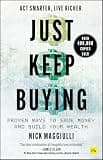
Just Keep Buying
Data over vibes. Maggiulli crunches the numbers to show that consistently buying assets beats trying to time the market, and it is easier than you think.
The Simple Path to Wealth
JL Collins
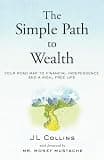
The Simple Path to Wealth
The friendliest on-ramp to index investing there is, born from letters a dad wrote his daughter. It makes 'buy the whole market and chill' feel obvious, just map his US fund picks onto Aussie equivalents and super.
The Psychology of Money
Morgan Housel
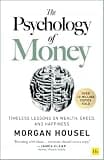
The Psychology of Money
19 short stories on how people actually think and feel about money, not just the maths of it.
Some links above are affiliate links. If you buy through them, Snowball Invest may earn a small commission at no extra cost to you. We only recommend books we'd suggest anyway.
Sources
Was this article useful?
Put it to your own numbers
Every calculator runs entirely in your browser, with nothing stored. See what these numbers look like for your own situation.
Explore the calculators →General information only. This article is educational and does not constitute personal financial advice. It does not account for your circumstances. Consider your own situation and seek advice from a licensed adviser before acting. Read our full disclaimer.

Timothy Hirou Gaschereau
Founder of Snowball Invest, not a financial adviser.
I write about what I'm learning myself, because nobody ever taught us how to take control of our own money. It's a skill, not a mystery, and it's never too late to learn it. The best day to start was yesterday, the second best is today.
LinkedIn →Related articles

Money Master the Game by Tony Robbins: An Honest Review
Our honest Money Master the Game review for Australians: Tony Robbins's 7-step plan, the sound core message on fees and index funds, and the US-heavy padding.

The Simple Path to Wealth Review: JL Collins for Australians
Our honest Simple Path to Wealth review for Australians: what JL Collins gets right, what doesn't apply here, and how to use the philosophy with local ETFs and super.

The Little Book of Common Sense Investing: Honest Review
Our honest review of John Bogle's The Little Book of Common Sense Investing: its real strengths, genuine weaknesses, and what Australian investors should take from it.