

Retirement Income & Age Pension Calculator
See roughly what your total retirement income could look like, your own super and savings plus an estimated Age Pension entitlement, based on the income and assets tests.
Built and checked byTimothy Hirou GaschereauFigures verified at the source on
Your details
Estimated total retirement income
$38,197
Age Pension (fortnightly)
$700
Age Pension (per year)
$18,197
Your own drawdown (4% rule)
$20,000
Per week
$735
Per fortnight
$1,469
Per month
$3,183
Your pension is set by the assets test
Centrelink pays whichever test gives the lower amount. Your assets are deemed to earn $14,914/yr for the income test, regardless of what they actually return.
You're in the assets-test taper zone: every extra $1,000 of assessable assets cuts your pension by about $78 a year. That's an effective 7.8% "return" lost on assets in this range, which is why spending down, home improvements or gifting (within limits) can sometimes lift your total income.
Based on Age Pension rates and thresholds for March-September 2026. Assumes you've reached Age Pension age and meet residency requirements, and applies current deeming rates to your assessable assets for the income test rather than their actual return. Does not account for gifting rules, defined benefit income, or other Centrelink payments. Rates and thresholds change periodically. This calculator gives an estimate only, is not financial or Centrelink advice, and doesn't replace a Services Australia assessment.
How to use this calculator
- 1. Your expected super and savings balance at retirement, plus any other assessable assets. Your home itself is exempt and shouldn't be included.
- 2. Whether you own your home, whether you're single or a couple, and any other income you expect outside your own assets.
- 3. The calculator applies the income test and assets test the same way Centrelink does, pays whichever gives the lower result, and adds it to your own 4% drawdown.
Who actually gets the Age Pension
Age Pension age is 67, and has been since July 2023, for anyone born on or after 1 January 1957. There's no legislated plan to push it higher. You also need to meet residency rules: at least 10 years living in Australia, including 5 years in a row, with some exceptions if you've lived in a country that has a social security agreement with Australia.
As of the June 2026 rates, the maximum pension is $1,200.90 a fortnight for a single person (about $31,223 a year) and $1,810.40 a fortnight combined for a couple (about $47,070 a year), including the Pension Supplement and Energy Supplement, before tax. Services Australia updates these rates twice a year, on 20 March and 20 September, benchmarked against inflation and wage measures. It's not a huge amount on its own, but stacked with your own super drawdown it usually gets you a long way. For the full rundown on eligibility and how payments actually work, see our guide to the Age Pension in Australia.
How the means test actually works: two tests, one result
Every time Centrelink assesses your Age Pension, it runs two separate calculations. The income test looks at what you earn, the assets test looks at what you own, and you get whichever result is lower. That single rule is the foundation of this retirement income calculator, and it's the thing most people misunderstand.
The assets test tapers your pension by $3 a fortnight for every $1,000 of assessable assets above the full-pension threshold. As of 1 July 2026, a single homeowner can hold up to $333,000 and still get the full pension, with the part pension cutting out entirely around $733,500. A homeowner couple can hold a combined $499,000 for the full pension, cutting out around $1,102,500. Non-homeowners get higher thresholds again, up to $600,000 for a single non-homeowner, to roughly account for the fact they're still covering rent from their own pocket. Your family home is always exempt, no matter what it's worth, everything else generally counts.
The income test doesn't look at what your super or savings actually earned. It uses deeming: Centrelink assumes your financial assets return 1.25% on the first $66,800 (single) or $110,600 (couple combined), and 3.25% on anything above that, regardless of your real returns. The first $226 a fortnight of assessable income (single) or $396 combined (couple) is ignored, then your pension drops by 50 cents per dollar over that for a single person, or 25 cents per dollar per person for a couple. Still working a bit? The Work Bonus exempts the first $300 a fortnight of employment income from the income test, on top of a $4,000 income bank new pensioners get straight away, so plenty of part-time workers in their late 60s still qualify for a decent part pension.
The super drawdown trap, and the opportunity inside it
This calculator shows something counterintuitive: drawing down your super faster doesn't hurt your Age Pension the way most people fear, it can actually improve it over time. When you spend your super on living costs, that money leaves your assessable assets, and a lower balance means a higher pension entitlement under the assets test. The withdrawal itself doesn't trigger an income test hit either, because Centrelink uses deeming to assess account-based pensions, not your actual drawdown amount.
Once your super is in pension phase, the ATO also sets a minimum you have to draw down each year, starting at 5% between ages 65 and 74 and stepping up to 14% from 95 onward. The practical upshot: a retiree who draws down at a healthy rate in early retirement can end up with a larger combined income stream than one who draws the bare minimum and lets assets sit untouched. We break down the full rules, including what happens on a transition-to- retirement pension, in how much super you can withdraw after 60.
What does a comfortable retirement actually cost?
The ASFA Retirement Standard is the closest thing Australia has to an official benchmark, published quarterly by the Association of Superannuation Funds of Australia for homeowners aged 65 to 84. As at the March 2026 quarter, a comfortable retirement costs about $55,923 a year for a single person and $78,566 a year for a couple, covering private health cover, regular travel, a decent car and home maintenance. A modest retirement, which is basically a step up from the Age Pension alone, costs around $36,434 (single) and $52,473 (couple).
ASFA estimates you'd need roughly $630,000 in super at 67 as a single person, or $730,000 as a couple, to fund a comfortable retirement, assuming you also draw a partial Age Pension as your balance runs down. They're not a hard target, more a useful sanity check. We go through how to work out your own number in how much super you need to retire in Australia.
Worked example: a couple with $600,000 combined
Take a homeowner couple, both 67, with $600,000 combined in super and savings and no other income. Under the assets test, that's $101,000 over the $499,000 threshold, so the pension tapers by $303 a fortnight, down to $1,507.40 a fortnight (about $39,192 a year). Under the income test, that $600,000 is deemed to earn $17,288 a year, which works out to roughly $1,676 a fortnight (about $43,573 a year) after the taper. The assets test gives the lower number, so it applies, landing on an estimated pension of about $39,192 a year.
Add this calculator's 4% drawdown on their $600,000 ($24,000 a year) and this couple lands on roughly $63,192 a year in total retirement income, a bit short of the $78,566 ASFA comfortable benchmark. That gap isn't fixed, though: as they spend down their super over the years, their assessable assets fall and their Age Pension entitlement rises to help fill it in. Plug your own numbers into the calculator above to see how your situation plays out.
Common misconceptions worth clearing up
"My home counts against me." It doesn't. The family home is fully exempt from the assets test no matter what it's worth, a $3 million house in Sydney counts for exactly $0.
"I need to be broke to get anything." Not even close. A homeowner couple can hold up to $1,102,500 in assessable assets and still receive a part pension.
"My super is always counted." Only once it's in pension phase. Super sitting in accumulation phase, before you've started drawing it, isn't counted at all if you're under Age Pension age.
"Once I'm on it, my pension is fixed." Your entitlement is reassessed regularly. As your super balance draws down over retirement, plenty of people end up on a higher pension in their 80s than they received at 67. Services Australia doesn't backdate missed payments, so it's worth checking your numbers again every so often rather than assuming a first assessment is the final word.
FAQ
What age can I get the Age Pension in Australia?
Age Pension age is 67 for anyone born on or after 1 January 1957. That's been the qualifying age since July 2023, with no legislated plan to raise it further. You can apply up to 13 weeks before you reach it through Services Australia.
How much is the Age Pension right now?
As of the June 2026 rates, the maximum is $1,200.90 a fortnight for a single person (about $31,223 a year) and $1,810.40 a fortnight combined for a couple (about $47,070 a year), including the Pension Supplement and Energy Supplement, before tax. Services Australia updates rates on 20 March and 20 September each year.
Why does this calculator use two different tests?
Because Centrelink does. The income test estimates your income using deemed rates on financial assets, not their actual return, and the assets test looks at what you own. Whichever test gives the lower pension is the one that applies, so this calculator runs both and shows you which is binding.
What assets are exempt from the assets test?
Your principal home, no matter its value, is fully exempt. Also exempt: funeral bonds up to $15,000, accommodation bonds paid to an aged care facility, gifts within the allowable limits, and super still in accumulation phase if you're under Age Pension age. Pretty much everything else, financial assets, investment property, vehicles, counts.
What does 'deemed income' mean?
For the income test, Centrelink doesn't look at what your super or savings actually earned. It assumes a set rate of return, currently 1.25% on the first $66,800 (single) or $110,600 (couple combined) of financial assets, and 3.25% above those thresholds, regardless of your real investment performance.
Does my super count toward the Age Pension means test?
It depends on the phase. Super in accumulation phase, before you've started drawing it, isn't counted at all if you're under Age Pension age. Once it becomes an account-based pension, it's counted at face value in the assets test and via deeming in the income test.
Why doesn't my own drawdown affect my Age Pension?
Because the income test uses deemed income, not your actual withdrawals. How much you choose to draw down from your own super each year doesn't change your Age Pension entitlement, only your total assessable assets and the deeming rate do.
Why does home ownership change the result?
Your family home is exempt from the assets test entirely. Non-homeowners get a higher assets test threshold instead, to roughly account for the fact they still need to cover rent or other housing costs from their own resources.
Can I still get the Age Pension if I'm working?
Yes. The Work Bonus exempts the first $300 a fortnight of employment income from the income test, and new pensioners get a $4,000 income bank on top of that straight away. Plenty of part-time workers in their late 60s and early 70s still qualify for a meaningful part pension, but you do need to report all employment income to Services Australia.
What is the ASFA Retirement Standard?
It's a quarterly benchmark from the Association of Superannuation Funds of Australia estimating what a 'comfortable' and 'modest' retirement cost for homeowners aged 65 to 84. As at March 2026, comfortable is about $55,923 a year for a single person and $78,566 for a couple. Modest, basically a step up from the Age Pension alone, is around $36,434 (single) and $52,473 (couple).
How much super do I need for a comfortable retirement?
ASFA estimates around $630,000 at age 67 for a single person, or $730,000 for a couple, assuming you're a homeowner and also draw a partial Age Pension as your balance runs down. It's a useful anchor, not a hard target, use the calculator above to model your own starting balance.
How often do the pension rates and thresholds change?
Payment rates are indexed twice a year, on 20 March and 20 September, benchmarked against inflation and wage measures. Assets test thresholds and income test free areas are reviewed even more often, in March, July and September. Always check servicesaustralia.gov.au for the current figures before relying on an exact number for a real decision.
Related reading
What Is an SMSF? A Beginner's Guide to Self-Managed Super
Thinking about an SMSF in Australia? Learn how they work, the pros, the cons, and whether your super balance makes one worth it.

Super Withdrawal Tax: What You'll Actually Pay (or Not)
How much tax you pay on a super withdrawal, by age and component. The low rate cap, lump sums vs income streams, early access, and death benefits explained.

Binding Death Benefit Nominations: The Super Decision Most Australians Ignore
Your super doesn't automatically go to your family when you die. Here's what a binding death benefit nomination is, who you can nominate, and why it matters.
Where these numbers come from
Every rate and threshold in this calculator was read off the official page, not copied from another calculator. Check them yourself, they change.
📚 Recommended reading
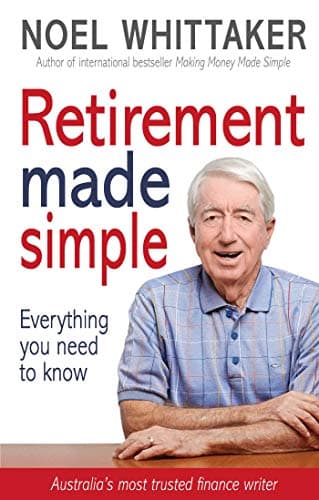
Retirement Made Simple
Noel Whittaker
Retirement Made Simple
Australia's godfather of personal finance demystifies super, the pension and making your savings last. The plain-English retirement handbook every Aussie should read before they stop working.
Die With Zero
Bill Perkins
Die With Zero
Stop hoarding cash for a someday that never comes. Perkins makes the case for spending on experiences while you are still young enough to enjoy them.
Some links above are affiliate links. If you buy through them, Snowball Invest may earn a small commission at no extra cost to you. We only recommend books we'd suggest anyway.
SnowLetter
Australia's money news and our best reads, once a week.
Disclaimer
This calculator estimates the Age Pension using rates and thresholds for March-September 2026: maximum rates, income test free areas and taper, assets test thresholds and taper, and deeming rates, all set by Services Australia and subject to change. It assumes you meet Age Pension age and residency requirements, and does not account for gifting rules, defined benefit income streams, other Centrelink payments, or a partner's individual circumstances. This tool provides estimates only, is not financial or Centrelink advice, and does not replace an official assessment from Services Australia.