

Retirement Made Simple by Noel Whittaker: An Honest Review
Our honest Retirement Made Simple review: Noel Whittaker's plain-English guide to super, the Age Pension and Australian retirement, its strengths, and who it's for.
 By Timothy Hirou GaschereauPublished
 9 min read
Verdict up front: this is the clearest, most practical guide to the Australian retirement system you'll find in a single book. The Australian retirement system is genuinely complicated (compulsory super, Centrelink means tests, account-based pensions, franking credits, transfer balance caps) and Noel Whittaker has spent decades answering reader questions about exactly this stuff. It's part of our personal finance book reviews on Snowball Invest.
Quick answer
The clearest plain-English guide to the Australian retirement system, covering super, the Age Pension, tax, estate planning and the psychology of a happy retirement. Best for Australians aged 50+ approaching or already in retirement. Dense with detail, but that's the point. Our rating: 4 out of 5.
Want to read Retirement Made Simple?
Australia's godfather of personal finance demystifies super, the pension and making your savings last. The plain-English retirement handbook.
In this guide
- →What the book covers: super, the Age Pension, tax, estate planning and more
- →The genuine strengths and the honest weaknesses
- →Who it's for, and who should read something else first
- →What critics and r/AusFinance readers say
- →The Australian angle: super, Centrelink means tests and franking
📖 What is Retirement Made Simple about?
Retirement Made Simple is Noel Whittaker's plain-English guide to the full Australian retirement landscape, kept up to date across editions. It's a substantial book, and it covers a lot:
- Investing basics for retirees (cash, property, shares, alternatives).
- Investor psychology and scam awareness (risk and behavioural traps).
- Designing your retirement (timing, downsizing, budgets, when to get advice).
- Tax for retirees (income tax, CGT, tax-free investments, franking credits).
- Superannuation strategies (contributions, TTR pensions, account-based pensions, the Age Pension means tests).
- Estate planning (wills, enduring powers of attorney, binding financial agreements).
- Aged care basics (an introductory overview of funding and decisions).
- The psychology of a happy retirement (ageing well, relationships, purpose).
The book draws on decades of reader questions from Whittaker's newspaper columns, which matters: the topics aren't chosen arbitrarily, they're the questions real Australians actually ask. Whittaker (a Member of the Order of Australia, adjunct professor at QUT, and one of Australia's most recognised money commentators) has been explaining this system in plain English for four decades. This isn't a celebrity author cashing in on a trend.
⚖️ Strengths and weaknesses
What it gets right
- ✓Plain English that actually works: complicated rules explained clearly without being dumbed down.
- ✓Genuinely Australian: the income test, assets test, deeming, franking refunds, account-based pensions and the transfer balance cap, no 401(k) noise.
- ✓Broad coverage in one book: investing, psychology, retirement design, tax, super, estate planning, aged care and lifestyle, a rare one-stop reference.
- ✓Kept up to date across editions, which matters enormously for a topic where thresholds change every year.
- ✓Draws on real reader questions, so it answers what Australians actually ask, not what an author thinks they should.
Where it falls short
- ✕Figures date quickly: even with updates, thresholds change, so always verify current numbers with Services Australia and the ATO.
- ✕Breadth over depth: at this length, some sections are necessarily introductory; specialist topics (SMSFs, aged care funding) need dedicated resources.
- ✕Not for personal finance beginners generally: it assumes you're at or near retirement, not building wealth from scratch.
- ✕The early investing chapters can feel long if you've been investing for decades; skim to the super and Age Pension content.
👤 Who should read it, and who should skip it?
Read it if you
- ✓Are 50+ and starting to think seriously about retirement.
- ✓Want a single plain-English reference covering the full Australian retirement landscape.
- ✓Have questions about super, the Age Pension, account-based pensions or estate planning, and want a starting point before seeing an adviser.
- ✓Want to understand how the Centrelink income and assets tests actually work.
- ✓Have heard terms like 'transition to retirement pension' and want them explained clearly.
Skip it if you
- ✕Are in your 20s or 30s and focused on building wealth (start with passive investing and ETF basics).
- ✕Want deep specialist advice on a single topic like SMSFs or aged care funding.
- ✕Need current figures for a specific decision (always check Services Australia and the ATO directly).
🔍 What do critics say?
Critical reception has been consistently positive, praising the book for both accessibility and comprehensiveness. Australian media and respected finance commentators, including voices in the local FIRE community, have described it as a well laid-out, comprehensive view of what every Australian needs to know approaching retirement. No reviewer has called it too simple. The common criticism, where it exists, is that it's broad rather than deep, which is fair but also arguably the whole point of the book.
💬 What do readers say? Goodreads and Reddit
The signal is strong. On Goodreads it holds around 4.3 out of 5, with the large majority of readers giving it four or five stars, and it rates similarly well on Amazon AU. The recurring themes: readers didn't realise how complicated retirement was until they read it, the breadth of information is well presented and easy to understand, and it's dense enough to reward several re-reads as your circumstances change.
On Reddit, it comes up regularly in r/AusFinance and r/fiaustralia as a foundational read before seeing a financial adviser. The general consensus: read it first, then go see a professional with better questions.
🇦🇺 The Australian angle
The Australian retirement system is genuinely unlike any other. Compulsory super, the Age Pension means tests, franking credit refunds, account-based pension drawdown rules, the transfer balance cap: none of this exists in the US or UK in any comparable form. American retirement books talk about 401(k)s and Roth IRAs; British books talk about ISAs and state pensions. Neither is remotely useful for an Australian working out how their super interacts with their Centrelink entitlements.
This is the gap Retirement Made Simple fills, covering the Centrelink income and assets tests in detail, explaining super contributions, walking through transition-to-retirement strategies, and covering estate planning under Australian law. For a thought-provoking companion on the spending-down side (how much is "enough" and the case for enjoying it), our Die With Zero review pairs well with it. And for Whittaker's foundational title, see our Making Money Made Simple review.
💰 The verdict
If you're approaching retirement and want a single, plain-English, Australian reference book to read before (or alongside) seeing a financial adviser, Retirement Made Simple is the obvious choice. It won't replace professional advice, specific figures change, and your situation is your own, so always verify current thresholds with Services Australia and the ATO before acting on anything. But as a structured, readable, comprehensive overview of the Australian retirement landscape, it's hard to beat. Our rating: 4 out of 5.
Want to read Retirement Made Simple?
Retirement on the horizon? Grab the latest edition and read it before your next adviser appointment.
SnowLetter
Australia's money news and our best reads, once a week.
❓ Frequently asked questions
Is Retirement Made Simple up to date?
+
It's kept current across editions, with updates reflecting recent super and pension changes. That said, specific thresholds (Age Pension limits, super caps, deeming rates) change regularly, so always cross-check current figures with Services Australia and the ATO before making any decisions. The book is a framework, not a live rulebook.
Is this book suitable for someone in their 40s?
+
It can be useful for forward planning, but it's primarily aimed at Australians aged 50+ approaching or already in retirement. If you're in your 40s and focused on wealth-building, start with the basics of passive investing, ETFs and super contributions first, then come back to this when retirement is closer.
Does the book cover the Age Pension?
+
Yes, in detail. Whittaker covers the income test, the assets test, deeming, and strategies around your Age Pension entitlement. It's one of the book's strongest sections, and it's the content most Australians find hardest to understand from official sources alone.
Does it cover superannuation strategies?
+
Yes. The book covers concessional and non-concessional contributions, transition-to-retirement (TTR) pensions, account-based pensions, and how super interacts with the Age Pension means tests. It's a solid starting point for understanding your options before speaking with a financial adviser.
Does it cover aged care?
+
Yes, at an introductory level. Whittaker covers the basics of aged care funding and the key decisions involved. For deeper specialist guidance, his separate book on aged care goes into considerably more detail.
Where can I buy Retirement Made Simple?
+
It's available on Amazon AU and directly from Noel Whittaker's website, in print and digital formats. Get the latest edition so the figures are as current as possible.
📚 Get the book (and two companions)
Retirement Made Simple
Noel Whittaker
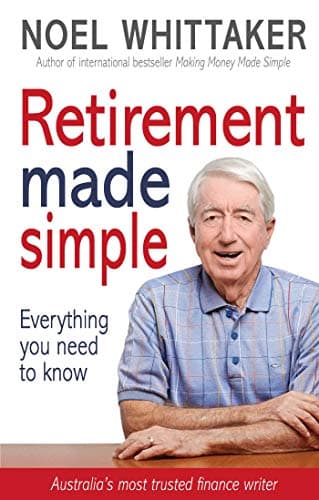
Retirement Made Simple
Australia's godfather of personal finance demystifies super, the pension and making your savings last. The plain-English retirement handbook every Aussie should read before they stop working.
Making Money Made Simple
Noel Whittaker

Making Money Made Simple
Australia's classic, comprehensive money guide covering tax, super and investing, updated for today.
Die With Zero
Bill Perkins
Die With Zero
Stop hoarding cash for a someday that never comes. Perkins makes the case for spending on experiences while you are still young enough to enjoy them.
Some links above are affiliate links. If you buy through them, Snowball Invest may earn a small commission at no extra cost to you. We only recommend books we'd suggest anyway.
Sources
Was this article useful?
Put it to your own numbers
Every calculator runs entirely in your browser, with nothing stored. See what these numbers look like for your own situation.
Explore the calculators →General information only. This article is educational and does not constitute personal financial advice. It does not account for your circumstances. Consider your own situation and seek advice from a licensed adviser before acting. Read our full disclaimer.

Timothy Hirou Gaschereau
Founder of Snowball Invest, not a financial adviser.
I write about what I'm learning myself, because nobody ever taught us how to take control of our own money. It's a skill, not a mystery, and it's never too late to learn it. The best day to start was yesterday, the second best is today.
LinkedIn →Related articles

The Barefoot Investor Review: Honest, Unfiltered, Australian
Our honest Barefoot Investor review covers the bucket system, the 9 steps, the real criticisms, and whether Scott Pape's book is still worth it for Australians.

She's on the Money Review: Honest and Actually Useful
Our honest She's on the Money book review: what Victoria Devine gets right, where it falls short, and whether it's worth your time as an Australian reader.

Rich Dad Poor Dad Review: The Good, the Bad, and the Australian Reality
Our honest Rich Dad Poor Dad review: what Robert Kiyosaki gets right, the real criticisms, and why Australians need to read it with a very specific filter.