

How Much Super Do You Need to Retire in Australia?
Real Australian retirement benchmarks, not a guess, how the Age Pension fits in, and how to work out your own number for a comfortable retirement.
 By Timothy Hirou GaschereauPublished
 10 min read
Try it yourself
This is the question that actually matters, and it's also the one most commonly answered with a scary, made-up round number. The real answer depends on the retirement you actually want, not a headline figure. This is part of a wider guide to retirement and FIRE on Snowball Invest.
Quick answer
There's no single correct number, it depends on the lifestyle you want and whether you'll get some Age Pension alongside your super. As a benchmark, ASFA estimates a couple retiring at 67 needs around $730,000 combined for a "comfortable" retirement, or around $120,000 for a "modest" one, both assuming you own your home outright.
In this guide
- →Why there's no single correct answer, and the ASFA benchmarks worth using instead
- →Where the 25x / 4% rule of thumb actually comes from, and its real limitations
- →How the Age Pension factors into how much of your own balance you actually need
- →Working it out with your own numbers, including a FIRE-style calculation
- →The specific levers that close the gap if you're currently short
🤔 The honest answer: it depends
"How much do I need to retire" doesn't have one universal answer because retirement itself isn't one universal thing. Someone happy living modestly needs a very different balance to someone who wants to travel internationally every year. What actually matters is your own expected spending, how long your retirement needs to last, and how much of it the Age Pension will cover.
📊 The ASFA Retirement Standard
The most widely used Australian benchmark comes from the Association of Superannuation Funds of Australia (ASFA), updated quarterly. It models two standards of living, "modest" and "comfortable", for both singles and couples, assuming you own your home outright and are in relatively good health.
| Modest, single | Modest, couple | Comfortable, single | Comfortable, couple | |
|---|---|---|---|---|
| Annual spending | $36,434 | $52,473 | $55,923 | $78,566 |
| Approx. lump sum needed at retirement | $110,000 | $120,000 | $630,000 | $730,000 |
$36k
Modest, single
$52k
Modest, couple
$56k
Comfortable, single
$79k
Comfortable, couple
The "comfortable" lump sums already assume you'll draw down your balance over time and receive at least a partial Age Pension eventually, they're not the total amount you'd need if super was your only income source for the rest of your life.
✖️ A rule of thumb: the 25x multiplier
🎯 The essential: Both the 4% rule and the 25x multiplier trace back to two specific pieces of US research, not a universal law of retirement maths.
A simpler way some people estimate a target: multiply your desired annual spending by 25. This comes from the idea that withdrawing around 4% of a balance each year has historically had a good chance of lasting 30 or more years, based on US research from the 1990s, an idea that's become a cornerstone of the FIRE movement.
The figure traces back to two specific pieces of research. Financial adviser William Bengen first proposed it in a 1994 paper in the Journal of Financial Planning, testing a 50/50 stock-and-bond portfolio against historical US market returns and finding a 4.15% starting withdrawal rate had never run out of money within 30 years. Three professors at Trinity University, Philip Cooley, Carl Hubbard and Daniel Walz, extended the analysis in 1998 using actual US stock and bond returns from 1926 to 1995, in the study that gave the "Trinity Study" its name.
It's a useful sanity check, not a guarantee, it was built on historical US market returns over a 30-year retirement, and doesn't account for the Age Pension safety net that most Australian retirees can eventually draw on. Treat it as a rough starting point, not a precise target. Once you're actually drawing a pension from super, the ATO also sets its own minimum withdrawal rate by age, which is worth knowing alongside any target you set yourself.
🏛️ Factor in the Age Pension
Most Australian retirees don't fund retirement from super alone, the Age Pension is means-tested but widely accessed, and it quietly does a lot of the heavy lifting for modest and even some comfortable retirements. The less of your own balance you're relying on, the smaller your personal savings target can reasonably be.
🏛️ See your estimated retirement income, including the Age Pension
Combines your own super with an estimate of what Age Pension you'd be eligible for.
🔢 Work it out with your own numbers
Benchmarks are a starting point, your actual number depends on your own spending, timeline, and when you can actually access your super. If you're aiming to retire earlier than the standard Age Pension age, the FIRE-style calculation below is a more useful starting point, since it doesn't assume any Age Pension support.
Sticking to a fairly standard retirement age instead? Our Retirement Savings Calculator projects your own balance forward from your actual contributions and an expected growth rate, a more useful reality check than any single benchmark figure.
🎯 Work out your own FIRE number
Based on your annual spending and a safe withdrawal rate you choose.
🪜 Ways to close the gap
If your projected balance falls short of your target, the levers are the same handful every time: start earlier so compounding has longer to work, increase your contributions through salary sacrificing into super, or adjust your target spending. None of these are exciting, but they're the actual mechanics behind almost every retirement plan that works.
If retiring earlier than a standard retirement age is the actual goal, not just retiring comfortably at 67, there's a specific movement built entirely around that question.
🔥 What Is FIRE?
Financial Independence, Retire Early, explained for an Australian super system.
SnowLetter
Australia's money news and our best reads, once a week.
Curious how your super compares for your age? Take the 2-minute quiz.
❓ Frequently asked questions
Do I really need a million dollars to retire in Australia?
+
Not necessarily. ASFA's benchmark for a comfortable retirement lump sum (for a couple retiring at 67, expecting to live to about 85) is around $730,000, not $1 million, and a modest retirement needs far less again, especially once the Age Pension is factored in.
Does the Age Pension count toward how much super I need?
+
Yes, in practice most retirees receive at least a partial Age Pension alongside their own super, which reduces how much of your income needs to come from your own savings. ASFA's benchmarks already assume some Age Pension eligibility for a comfortable retirement.
What's the difference between a modest and a comfortable retirement?
+
Modest covers the basics, a slightly better standard of living than the Age Pension alone, with limited spare spending. Comfortable allows for things like private health insurance, a reasonable car, regular leisure activities and the occasional domestic and international trip.
Is the 4% rule relevant to Australian super?
+
The underlying idea, that a retirement balance can sustainably support a percentage withdrawal each year, applies conceptually, but it was built on US market data and doesn't account for the Age Pension safety net Australians also have, so it's a rough guide here, not a precise formula.
What if I'm going to retire earlier than 60 or 67?
+
You'll generally need a larger balance, or other assets outside super, since you're funding more years of retirement without the Age Pension (which isn't available until Age Pension age) and, depending on your age, without access to your super at all yet. This is exactly the situation the FIRE movement is built around.
📚 Recommended reading
Retirement Made Simple
Noel Whittaker
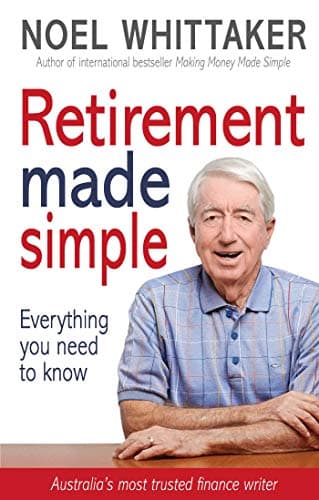
Retirement Made Simple
Australia's godfather of personal finance demystifies super, the pension and making your savings last. The plain-English retirement handbook every Aussie should read before they stop working.
Your Money or Your Life
Vicki Robin
Your Money or Your Life
The book that basically kicked off the FIRE movement, reframing money as 'life energy' you trade your hours for. The nine-step program is pure gold, just swap the US retirement-account chapter for super.
Super Made Simple
Noel Whittaker
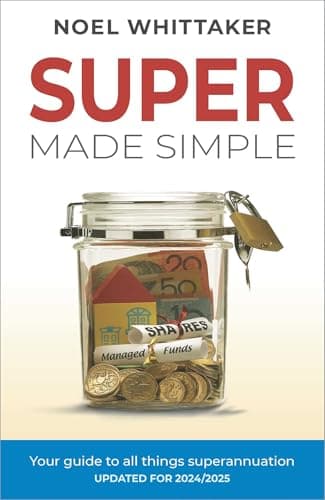
Super Made Simple
A focused, up-to-date guide to actually understanding your superannuation, from one of Australia's most trusted finance writers.
Some links above are affiliate links. If you buy through them, Snowball Invest may earn a small commission at no extra cost to you. We only recommend books we'd suggest anyway.
Sources
- 1. ASFA Retirement Standard, Association of Superannuation Funds of Australia
- 2. Work out how much you need to retire, Moneysmart, Australian Securities and Investments Commission
- 3. Age Pension, Services Australia
- 4. Determining Withdrawal Rates Using Historical Data, Bengen, Journal of Financial Planning
- 5. Retirement Spending: Choosing a Sustainable Withdrawal Rate, Cooley, Hubbard & Walz (the "Trinity Study"), AAII Journal
Was this article useful?
Put it to your own numbers
Every calculator runs entirely in your browser, with nothing stored. See what these numbers look like for your own situation.
Try the Superannuation calculator →General information only. This article is educational and does not constitute personal financial advice. It does not account for your circumstances. Consider your own situation and seek advice from a licensed adviser before acting. Read our full disclaimer.

Timothy Hirou Gaschereau
Founder of Snowball Invest, not a financial adviser.
I write about what I'm learning myself, because nobody ever taught us how to take control of our own money. It's a skill, not a mystery, and it's never too late to learn it. The best day to start was yesterday, the second best is today.
LinkedIn →Related articles

What Age Can You Retire in Australia? (Preservation Age vs Age Pension Age)
There's no legal retirement age in Australia. Here's what preservation age and Age Pension age actually mean, and the gap between them.

Age Pension Australia: Rates, Eligibility, and How It All Works
How much the Age Pension pays, who's eligible, how the income and assets tests actually work, how it interacts with your super, and when to apply.

Salary Sacrifice Super: How It Works (And Is It Worth It?)
How salary sacrificing into super actually reduces your tax bill, the concessional cap limit to watch, and whether it's worth it for your situation.