

What is the Age Pension?
Quick answer
The Age Pension is a fortnightly government payment for Australians aged 67 and over who meet residency requirements, means-tested against both your income and your assets. It's not all or nothing, most recipients get a part pension rather than the full rate, and the thresholds are higher than a lot of people assume.
Who's eligible
You need to meet three things at once. You must be 67 or older (the qualifying age for anyone born on or after 1 January 1957). You need to meet Australian residency rules, generally at least 10 years of residence, including one stretch of at least 5 continuous years. And you need to pass the means test, both the income test and the assets test are applied, and whichever produces the lower payment is the one that counts.
How much you can get
The maximum fortnightly rate is $1,200.90 for a single person and $1,810.40 combined for a couple. Rates are reviewed twice a year, in March and September, so always check Services Australia for the current figure. The Age Pension is taxable income, though most recipients pay little to no tax on it thanks to the tax-free threshold and the Seniors and Pensioners Tax Offset.
The income and assets tests
Under the income test, you can earn up to $226 a fortnight (single) or $396 combined (couple) before your pension starts reducing, by 50 cents for every dollar over that for a single person. Under the assets test, a single homeowner can hold up to $333,000 in assessable assets (outside the family home) before the pension starts tapering, or $600,000 as a non-homeowner. For couples, it's $499,000 (homeowner) or $766,000 (non-homeowner) combined. Above those thresholds, the pension reduces by $3 a fortnight for every $1,000 of assets over the limit, eventually cutting out altogether. Your own numbers depend on both tests together, our Retirement Income & Age Pension Calculator runs both and shows you which one binds.
What counts as an assessable asset
Your principal home is exempt from the assets test entirely, it doesn't matter how much it's worth. But whether you own a home changes which threshold applies to you, homeowners have lower limits than non-homeowners, on the assumption they aren't also carrying rent. Assessable assets include super (once you reach Age Pension age), savings, shares, investment properties, and most other things you own. Before you reach 67, your super generally isn't counted at all.
How deeming works
For the income test, Centrelink doesn't look at what your financial assets, like super, savings and term deposits, actually earn. Instead it applies a deeming rate, a set rate it assumes they earn: 1.25% on the first $66,800 (single) or $110,600 (couple combined), and 3.25% on anything above that. A single pensioner with $100,000 in savings would be deemed to earn (1.25% × $66,800) + (3.25% × $33,200) = around $1,914 a year, roughly $73.60 a fortnight, regardless of the account's actual interest rate. If your assets genuinely earn more than the deeming rate, the extra doesn't count against you. If they earn less, you're still deemed at the set rate either way.
The Work Bonus
You can work and still receive the Age Pension. The Work Bonus lets you earn up to $300 a fortnight from employment without it counting toward the income test. Unused amounts build up in a Work Bonus balance, up to a cap of $11,800, and new claimants start with $4,000 already in the bank. That balance then offsets employment income in fortnights you earn more, useful if your work is seasonal or irregular.
Common misconceptions
"I own my home, so I won't qualify." The family home is exempt from the assets test entirely, its value doesn't count at all. Plenty of homeowners with substantial equity still receive a full or part pension based on their other assets.
"It's all or nothing." It isn't. A part pension applies across a wide range of asset and income levels, and even a small entitlement is often worth claiming, since it can come with a Pensioner Concession Card and access to cheaper healthcare, utilities and transport.
"Deeming rates reflect what I actually earn." They don't. Centrelink applies the set deeming rate regardless of your real return. If your term deposit pays more than the deeming rate, the difference works in your favour, it isn't counted as extra income.
Applying
You can lodge a claim through myGov (linked to Centrelink) up to 13 weeks before you turn 67. Applying early matters, your payment generally starts from the date you submit the claim, not the date it's approved, and processing can take several weeks.
📚 Recommended reading
Retirement Made Simple
Noel Whittaker

Retirement Made Simple
Australia's godfather of personal finance demystifies super, the pension and making your savings last. The plain-English retirement handbook every Aussie should read before they stop working.
Die With Zero
Bill Perkins
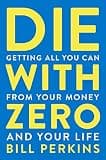
Die With Zero
Stop hoarding cash for a someday that never comes. Perkins makes the case for spending on experiences while you are still young enough to enjoy them.
Some links above are affiliate links. If you buy through them, Snowball Invest may earn a small commission at no extra cost to you. We only recommend books we'd suggest anyway.
🧮 Retirement Income & Age Pension Calculator
Estimate your likely Age Pension payment based on your own assets and income.
The Age Pension in Australia, in full
A deeper walkthrough of eligibility, the tests, super, and how to apply.
Frequently asked questions
What age can I get the Age Pension in Australia?
You need to be 67 or older, this applies to everyone born on or after 1 January 1957. There are no current plans to raise the qualifying age further.
Does owning my home affect my Age Pension?
Your home itself is exempt from the assets test, it isn't counted no matter its value. But being a homeowner does mean a lower assets test threshold applies to you than a non-homeowner, since the government assumes you aren't also paying rent.
Does superannuation count toward the Age Pension?
Not before you reach Age Pension age. Once you turn 67, your super balance becomes an assessable asset and is also subject to deeming under the income test, the same as your other financial assets.
What is the deeming rate?
It's the rate Centrelink assumes your financial assets earn for the income test, regardless of what they actually return. It's currently 1.25% up to a threshold and 3.25% above it, set by the government and reviewed periodically. Confirm the current rate at servicesaustralia.gov.au.
Can I work and still get the Age Pension?
Yes. The Work Bonus lets you earn up to $300 a fortnight from work without it affecting your income test, and unused amounts build up in a balance (capped at $11,800) that can offset higher-earning fortnights later.
Sources
Disclaimer
This is general information only, not personal financial or Centrelink advice. Age Pension rates, thresholds and deeming rates are set by the government and change periodically, always confirm current figures at servicesaustralia.gov.au or with a Financial Information Service officer before making decisions about your retirement income.