

What is the Deeming Rate?
Quick answer
The deeming rate is a standardised assumed return Centrelink applies to your financial assets under the Age Pension income test, regardless of what those assets actually earn. There's a lower rate on the first tranche of your assets and a higher rate above it. Rates are set by government and reviewed periodically, so always check Services Australia for the current figure.
How it works
Rather than tracking what every account actually earns, Centrelink applies a fixed formula to your total financial assets to produce a "deemed" income, which then feeds into the income test regardless of your real returns. There are two rates split at a threshold: a lower rate on assets up to the threshold, and a higher rate on anything above it. It applies to bank accounts, term deposits, shares, managed funds, and super in accumulation phase once you reach Age Pension age. It doesn't apply to your home, investment properties (rental income is assessed separately), or physical assets like cars and furniture.
Current rates and thresholds
As of the current 2026 rates, the lower deeming rate is 1.25%, applied to the first $66,800 of a single person's financial assets or $110,600 for a couple combined, with 3.25% applied above that. These rates are set by the Minister for Social Services on the recommendation of the Australian Government Actuary, and reviewed at least every six months, so check Services Australia for the exact current figures before relying on them.
Worked example
Margaret is single with $180,000 in financial assets. The first $66,800 is deemed at 1.25%, $835 a year. The remaining $113,200 is deemed at 3.25%, $3,679 a year. Total deemed income: $4,514 a year, around $173.60 a fortnight, and that's what Centrelink counts toward her income test, regardless of what her accounts actually earned.
Why it matters
Deemed income is added to any other assessable income and compared against the income test free area. Every dollar of assessed income above that free area reduces the pension. So even if your real returns are lower than the deeming rate suggests, the deemed amount is still what counts, and if your returns are higher, you're only assessed at the deeming rate either way. Our Retirement Income & Age Pension Calculator factors deeming in automatically when it estimates your pension.
📚 Recommended reading
Retirement Made Simple
Noel Whittaker
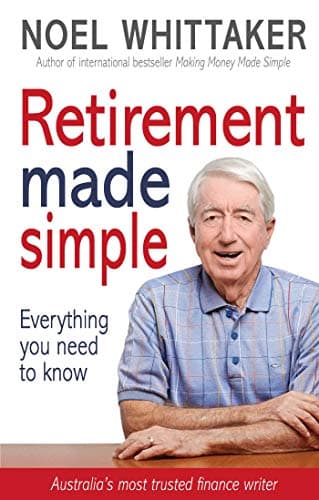
Retirement Made Simple
Australia's godfather of personal finance demystifies super, the pension and making your savings last. The plain-English retirement handbook every Aussie should read before they stop working.
The Barefoot Investor
Scott Pape

The Barefoot Investor
Australia's best-selling money book ever. A simple system for accounts, budgeting, debt and a real emergency fund in one.
Some links above are affiliate links. If you buy through them, Snowball Invest may earn a small commission at no extra cost to you. We only recommend books we'd suggest anyway.
🧮 Retirement Income & Age Pension Calculator
See how deeming affects your estimated Age Pension based on your own assets.
The Age Pension in Australia, in full
A deeper walkthrough of eligibility, the tests, deeming, super, and how to apply.
Frequently asked questions
Does deeming apply to my super before I retire?
No. Super in accumulation phase isn't counted under either test while you're under Age Pension age. It becomes an assessable financial asset, subject to deeming, once you reach Age Pension age.
What if I earn more than the deeming rate?
Centrelink only assesses the deemed amount, so outperformance has no effect on your pension. If your real returns are lower than the deeming rate, the reverse applies, you're still assessed at the deeming rate.
How often do deeming rates change?
They're reviewed at least every six months by the Australian Government Actuary, though they can change outside that cycle if markets move significantly. The dollar thresholds are separately indexed.
Related terms
Sources
Disclaimer
This is general information only, not personal financial or Centrelink advice. Deeming rates and thresholds are set by the government and reviewed periodically, always confirm current figures at servicesaustralia.gov.au or with a Financial Information Service officer before making decisions about your retirement income.