

The Index Investment Option in Your Super: Should You Use It?
An index option in super tracks a market index at a fraction of the fees of active management. Here is what it means, how fees compound, and who it suits.
 By Timothy Hirou GaschereauPublished
 11 min read
Try it yourself
Most Australians are in their fund's default option and have never given it a second thought. That is normal, but it also means the single biggest lever on your retirement, fees, is often sitting untouched. The index investment option is that lever.
It is not flashy, and it will not make you rich overnight. But it can quietly save tens of thousands in fees over a working life, and the evidence for it is genuinely strong. It is also not right for everyone. Here is the honest picture.
🎯 The essential: An index option in super passively tracks a market index (like the ASX 200 or a global shares index) instead of paying a manager to pick stocks, so fees are much lower, often 0.1 to 0.3% vs 0.5 to 1.0%+ for active or default options. Over decades that gap compounds into tens of thousands. Switching options does not change your fund, account, or insurance. But index options are usually close to 100% shares, so you wear full market volatility, which may not suit those near retirement. This is general information, not personal advice.
What an index option actually is
An index option is an investment choice inside your fund that passively tracks a market index rather than relying on a manager to pick assets. A market index is basically a list of companies ranked by size: the ASX 200 is Australia's 200 largest listed companies; a global index like the MSCI World spans thousands of companies worldwide. Your money is spread across the index in proportion to company size.
- The fund holds the index. Nobody decides to overweight BHP or underweight the banks; the index decides.
- You get the market return, no more and no less.
- With no active stock-picking, the cost is much lower. That is the whole point.
Most funds offer an Australian shares index, an international shares index, and a diversified index blend. This differs from your default MySuper option, which is usually actively managed across many asset classes including unlisted property and infrastructure.
Why index options are popular: the fee advantage
The main reason people switch is fees, and the reason fees matter so much is compounding. Index options typically charge around 0.1 to 0.3% a year, versus 0.5 to 1.0%+ for active or default balanced options. That gap looks tiny. It is not.
The investment fee is only part of the picture: most funds also charge a flat admin fee (often $50 to $100 a year) that applies whatever option you pick. The index option wins on the investment fee specifically, so always check the total cost in the PDS, not just one number. Our fees calculator shows how a small percentage compounds.
Index option vs the default balanced option
| Feature | Index option | Default balanced / MySuper |
|---|---|---|
| Investment fee | Low (0.1 to 0.3%) | Higher (0.5 to 1.0%+) |
| Asset classes | Listed shares only | Shares, bonds, property, infrastructure, private equity, cash |
| Reported volatility | Full market swings, in real time | Smoother (unlisted assets valued periodically) |
| Who manages it | Nobody, it tracks the index | A professional investment team |
| Suits | Long horizon, cost-conscious, comfy with volatility | Diversification, a smoother ride, closer to retirement |
One nuance on volatility: default options hold unlisted assets that are revalued periodically, not priced daily, so their returns look smoother. That does not mean they are less risky, just that the volatility is less visible. An index option shows you every market move in real time, which can feel more uncomfortable even when the long-term risk is similar.
Does active management beat indexing?
For Australian equities, the evidence is fairly clear. S&P's SPIVA scorecard measures how many active managers beat their benchmark after fees, and the consistent finding is that the majority underperform over the long run. The arithmetic behind it is simple: before fees, the average active manager must equal the index (they collectively hold the market); after fees, the average must trail it.
Some managers do beat the index, but picking them in advance is genuinely hard, and past outperformance is a weak predictor. An index option gives you the market return: you will never beat it, but you will never badly trail it either. The honest caveat is that some asset classes (unlisted infrastructure, private equity) cannot be indexed inside super and can add real diversification, which is why default balanced options are not simply worse. See active vs passive investing for the fuller debate.
How to switch your investment option
- Log in to your fund's member portal or app.
- Find "Investment options" or "Switch investments" (wording varies).
- Review the index options: the asset allocation, fee, risk level, and suggested timeframe.
- Decide your mix. Some funds offer a single diversified index; others let you build your own (say 70% Australian, 30% international).
- Choose where it applies: your existing balance, future contributions, or both.
- Confirm. Most switches process in 1 to 3 business days.
Switching your investment option is not the same as changing funds. You stay in the same fund, same account, same insurance. Only how your money is invested changes. Compare funds first with the ATO YourSuper tool if you are unsure your fund even offers a good index option.
Who it suits (and who it may not)
An index option is a good fit if you have a long horizon (10+ years), are cost-conscious, are comfortable with full share-market swings, and are happy to set your own asset allocation. It may not suit you if you:
- Are close to retirement (within 5 to 10 years), where a big fall just before you stop working can do lasting damage (sequence-of-returns risk).
- Want professional diversification across unlisted assets an index cannot hold.
- Find crashes emotionally hard: if a 30% fall would tempt you to switch out at the bottom, the index option will cost you more than the fee saving is worth.
Check these before you switch
- Asset allocation: many index options are 100% shares. Great for a long runway, possibly too aggressive within 10 to 15 years of retirement. Check the fact sheet.
- Insurance: unaffected by an investment switch. Your cover stays the same. This is a common but unfounded worry.
- Tax: switching options inside super is not a personal CGT event; the fund handles internal tax.
- Total fees: compare investment plus admin plus other costs in the PDS, not just the headline investment fee.
Frequently asked questions
What is an index investment option in super?
+
An index option passively tracks a market index, such as the ASX 200 or a global shares index, rather than paying a fund manager to pick stocks. Because there is no active selection, fees are typically much lower. Your return mirrors the index: when the market rises your balance rises, and when it falls, it falls.
Is an index option better than the default MySuper option?
+
It depends on your circumstances. Index options generally win on fees, and SPIVA data shows most active managers underperform their benchmark after fees over the long run. But default MySuper options add diversification through unlisted assets like infrastructure and private equity that a pure index option cannot hold. Neither is universally better.
Will switching to an index option affect my insurance?
+
No. Switching your investment option inside your fund does not touch your insurance. Your life, TPD, and income protection cover stay exactly the same. The investment option and the insurance are separate parts of your account, and this is a very common but unfounded worry.
How do I switch my super investment option?
+
Log in to your fund's member portal or app, find Investment options or Switch investments, review the available index options, set your asset allocation, and confirm. Most switches let you apply the change to your existing balance, future contributions, or both, and usually process in 1 to 3 business days.
Is switching investment options a capital gains tax event?
+
Not for you personally. The fund handles any internal tax when it buys and sells assets to implement your switch, so you do not trigger a personal capital gain by changing options within your fund. That is one of the genuine advantages of making investment changes inside super rather than in a personal account.
What happens to my super if the index crashes?
+
Your balance falls in line with the index, so a 30% market fall means roughly a 30% fall if you are in a 100% shares index option. The most important thing is not to switch out at the bottom. Locking in losses by moving to cash during a crash is one of the most damaging things a super investor can do.
Can I mix an index option with other options?
+
Yes, most funds let you split your balance across options, for example 80% in an international shares index and 20% in cash or bonds to dial down risk. Check your fund's investment menu and PDS for the available options and any minimum allocation requirements.
Keep reading
Books worth reading
📚 Recommended reading
The Barefoot Investor
Scott Pape

The Barefoot Investor
Australia's best-selling money book ever. A simple system for accounts, budgeting, debt and a real emergency fund in one.
The Simple Path to Wealth
JL Collins

The Simple Path to Wealth
The friendliest on-ramp to index investing there is, born from letters a dad wrote his daughter. It makes 'buy the whole market and chill' feel obvious, just map his US fund picks onto Aussie equivalents and super.
The Psychology of Money
Morgan Housel
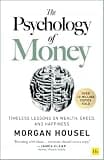
The Psychology of Money
19 short stories on how people actually think and feel about money, not just the maths of it.
Some links above are affiliate links. If you buy through them, Snowball Invest may earn a small commission at no extra cost to you. We only recommend books we'd suggest anyway.
Sources
- ASIC Moneysmart, super investment options
- ASIC Moneysmart, superannuation calculator
- ATO, YourSuper comparison tool
- S&P Global, SPIVA Australia scorecard
General information only, not personal financial advice. It does not take your circumstances into account, and past performance is not a reliable indicator of future returns. Read the relevant Product Disclosure Statement and consider a licensed financial adviser before acting.
Was this article useful?
Put it to your own numbers
Every calculator runs entirely in your browser, with nothing stored. See what these numbers look like for your own situation.
Try the Net Fees calculator →General information only. This article is educational and does not constitute personal financial advice. It does not account for your circumstances. Consider your own situation and seek advice from a licensed adviser before acting. Read our full disclaimer.

Timothy Hirou Gaschereau
Founder of Snowball Invest, not a financial adviser.
I write about what I'm learning myself, because nobody ever taught us how to take control of our own money. It's a skill, not a mystery, and it's never too late to learn it. The best day to start was yesterday, the second best is today.
LinkedIn →Related articles

What Is an Index Fund? A Plain-English Guide for Australians
What an index fund actually is, how it tracks a market index, why fees matter, and the difference between unlisted funds and index ETFs.

The Rule of 72: How Long Until Your Money Doubles
Divide 72 by your return and you get the years until your money doubles. Worked Australian examples for super, ETFs, savings accounts and fees.

Concessional vs Non-Concessional Super: The Plain-English Guide
Concessional or non-concessional super contributions? The real difference, the 2025-26 caps, the tax treatment, and which one suits you, in plain English.