

Payday Super Explained: What It Means for Your Retirement
From 1 July 2026, employers must pay super with every pay run, not quarterly. Here's what the payday super change means for employees and employers alike.
 By Timothy Hirou GaschereauPublished
 9 min read
Try it yourself
Payday super started on 1 July 2026, and it's the biggest change to how super actually gets paid since the system began. It doesn't change how much you're owed, but it changes when it has to land in your fund, and that timing shift matters more than it sounds. This is part of a wider guide to retirement and FIRE on Snowball Invest.
Quick answer
Payday super means employers must now pay your super every time they pay your wages, not once a quarter. The money must reach your super fund within 7 business days of each payday, with a 20-business-day allowance for a new employee's first contribution or the first contribution to a new fund. The Super Guarantee rate is still 12%, employers who miss the deadline face serious penalties, and the ATO is taking a risk-based approach for the first year while the law itself applies from day one.
In this guide
- →How the old quarterly system worked, and how much super went unpaid because of it
- →What payday super actually requires, and the two 20-business-day exceptions to the 7-day rule
- →Why the government made the change, for both employees and the ATO's ability to catch non-payment
- →What it means day-to-day for employees, and for employers running payroll
- →The exact penalties for missing the deadline, and the ATO's first-year compliance approach
- →What to check on your own payslip and super account right now
📅 What was the old system?
Before 1 July 2026, employers were only required to pay the super guarantee quarterly, due 28 days after each quarter ended. In practice that meant contributions for work done in, say, April could legally sit unpaid until late July, a lag of up to four months between earning the money and it actually reaching your fund. That gap made it genuinely hard to notice if an employer had simply stopped paying, and if an employer went under mid-quarter, months of unpaid super could disappear along with the business.
The ATO estimates $6.25 billion in super went unpaid in 2022-23, roughly 6% of the total amount owed, spread across 14.9 million eligible workers. The Super Members Council has put the figure even higher using its own methodology, around $5.7 billion for 2022-23 and $6.3 billion for 2023-24.
💳 What is payday super?
Payday super requires employers to pay super contributions at the same time as wages, with the money reaching the employee's fund within a tight window. It's now law: the Treasury Laws Amendment (Payday Superannuation) Act 2025 received royal assent on 6 November 2025 and commenced 1 July 2026, amending the Superannuation Guarantee (Administration) Act 1992 and the Superannuation Guarantee Charge Act 1992.
In practice, that means every payday now triggers a super obligation, the money has to reach the fund within 7 business days with enough information for the fund to actually allocate it, and the Super Guarantee rate itself hasn't changed, it's still 12% of qualifying earnings. Two situations get a longer 20-business-day window instead: a new employee's very first contribution, and the first contribution to a new fund for an existing employee. The ATO's Small Business Superannuation Clearing House was also retired around 1 July 2026, so small businesses that relied on it need an alternative compliant clearing house or to pay funds directly.
| Old system | Payday super | |
|---|---|---|
| Payment frequency | Quarterly | Every payday |
| Deadline for super to land | 28 days after quarter end | 7 business days after payday |
| Longest realistic lag | Up to ~119 days | A little over a week |
| SG rate | 12% | 12%, unchanged |
| How easily you'd notice a gap | Could take months | Within about a week |
🤔 Why did the government change it?
Payday super was announced in the 2023-24 Budget as part of the Securing Australians' Superannuation Package. The reasoning is fairly simple: employees can now track their contributions near real-time instead of waiting up to four months, and money that arrives early in a pay cycle has more time to compound than money arriving right at quarter-end, a real difference over a 40-plus year working life. It also gives the ATO a much faster way to catch non-payment, since it can now match Single Touch Payroll data against fund records after every single pay run instead of once a quarter. Around 8.9 million employees stand to benefit from earlier, more frequent contributions across their working lives.
Payday super isn't the only major super law change landing around this time. The other is Division 296 tax, a new tax on super balances above $3 million that also commenced from 1 July 2026, though unlike payday super it only affects a small slice of very high-balance members.
🧑💼 What payday super means for employees
🎯 The essential: Your day-to-day work doesn't change, pay still arrives the same way, but what happens to your super afterwards changes a lot.
Previously, super could sit with your employer for up to three months before reaching your fund. Now it has to arrive within 7 business days. That difference means more of your career-long contributions spend extra time actually invested and compounding, rather than waiting to be paid.
Old system: quarterly
Super only had to reach your fund within 28 days of the end of the quarter
New system: payday super
Super must reach your fund within 7 business days of that payday
Same pay, same job, up to around 110 extra days a year of your super sitting in your fund and compounding instead of waiting with your employer.
The bigger practical win, though, is how much easier it is to spot a problem. Under the old system you might not notice a stopped employer contribution for three or four months, by which point the shortfall could be substantial and harder to recover if the employer was in financial trouble. Now you can check your super account after every single pay run, and if a contribution isn't showing within about a week of payday, something's wrong and you can act on it quickly. The ATO can do the same thing on its end, matching payroll data against fund records after every payday rather than waiting for a quarter to close. If you've never checked whether all of your past super actually made it into one place, it's worth doing a quick lost-super check while you're at it.
🏢 What payday super means for employers
Super is no longer a quarterly task scheduled around BAS lodgements, it's now a per-pay-run obligation with a genuinely tight deadline.
Super must be received by the employee's fund, not just sent or lodged with a clearing house, within 7 business days of each payday. Employers using a clearing house need to account for its processing time on top of that window. A transition rule applied during July 2026: super received 1-28 July 2026 counted first toward the June 2026 quarter under the old rules (deadline 28 July 2026), and from 29 July 2026 onward, every contribution is a payday super obligation.
Reporting changed too. From 1 July 2026, employers must report both qualifying earnings and the super liability for each employee through Single Touch Payroll-enabled software, lodged on or before each payday, and the ATO cross-references this against what funds report to spot gaps. The ATO's Small Business Superannuation Clearing House has been retired, so employers who relied on it need to have already moved to an alternative.
If super isn't received on time, the employer becomes liable for the Super Guarantee Charge (SGC), which has three components: the SG shortfall itself; notional earnings, daily compounding interest calculated at the general interest charge rate (11.43% p.a. for the July-September 2026 quarter, reviewed each quarter); and an administrative uplift of up to 60% of the shortfall plus notional earnings. That uplift can be reduced through a prompt voluntary disclosure, up to 40 percentage points off if it's made within 30 days of the qualifying earnings day, tapering to a smaller reduction the longer it takes, plus a further reduction if the employer hasn't had an SGC assessment in the previous 24 months.
On top of the SGC itself, if the assessed amount isn't paid within 28 days of the ATO's notice, a late payment penalty applies, 25% of the outstanding amount, rising to 50% for an employer who's copped the same penalty in the previous 24 months.
🎯 The essential: For 1 July 2026 to 30 June 2027, PCG 2026/1 sorts employers into low, medium or high risk, but that's about where the ATO points its resources, not a free pass on the law itself.
The ATO has published its first-year compliance approach in PCG 2026/1, covering the period 1 July 2026 to 30 June 2027. It's risk-based rather than a grace period: employers who make a genuine effort to pay on time, fix late contributions promptly and end up with no remaining shortfall are treated as low risk and won't have compliance resources directed at them. Employers whose final SG shortfalls are still nil within 28 days of the end of the relevant quarter sit in the medium-risk band. Employers with shortfalls still outstanding after that 28-day window are high risk, and that's exactly where the ATO's attention goes first. The law applies from 1 July 2026 regardless of which band an employer falls into, PCG 2026/1 just indicates where compliance resources are focused during the first year.
✅ What you should check right now
Start with your most recent payslip and check the super amount calculated for that pay period, asking payroll or HR if it's missing. Log in to myGov and check your linked ATO super services to see the contributions your employer has actually reported. Then check directly with your super fund's own portal or app, or call them, looking for a contribution matching your last pay run's amount and timing, you should see something land within roughly a week under payday super.
If something looks off, raise it with your employer or payroll team first, it may just be a processing delay or a data error. If your employer genuinely isn't paying, you can report it to the ATO through the "Report unpaid super contributions from my employer" online tool, or by calling 1800 060 062, and a confidential tip-off option is available if you'd rather your employer not know you reported them.
🔍 How to Find and Consolidate Lost Super
A free, five-minute myGov check for any super that's gone missing from old jobs.
SnowLetter
Australia's money news and our best reads, once a week.
❓ Frequently asked questions
What is payday super?
+
Payday super is the rule, in force from 1 July 2026, requiring employers to pay super contributions at the same time as wages, received by the employee's fund within 7 business days of each payday, rather than once a quarter as previously required.
When did payday super start?
+
1 July 2026. The enabling legislation, the Treasury Laws Amendment (Payday Superannuation) Act 2025, received royal assent on 6 November 2025.
How do I know if my employer is paying my super correctly?
+
Check your payslip, your myGov account, and your super fund's portal or app after each pay run. Contributions should appear within roughly a week of payday. Contact your employer first if it's missing, then report it to the ATO if it isn't resolved.
What happens if my employer misses the payday super deadline?
+
They become liable for the Super Guarantee Charge, including the unpaid shortfall, daily compounding interest at the general interest charge rate, and an administrative uplift of up to 60% of the shortfall plus interest. A late payment penalty of 25% (50% for repeat offenders) also applies if the assessed charge isn't paid within 28 days of the ATO's notice.
Is the ATO strictly enforcing payday super from day one?
+
The law applies from 1 July 2026. Under PCG 2026/1 the ATO takes a risk-based approach during the first year (1 July 2026 to 30 June 2027): employers who made genuine efforts, fixed errors quickly, and have no remaining shortfall are treated as low risk and won't have compliance resources directed at them, while employers with unresolved shortfalls are high risk and the ATO's primary focus.
Does payday super apply to casual employees?
+
Yes. The super guarantee applies to most employees, including casuals who meet the eligibility criteria. Payday super's timing rules apply the same way: super must reach the fund within 7 business days of each payday on which qualifying earnings are paid.
📚 Recommended reading
Super Made Simple
Noel Whittaker
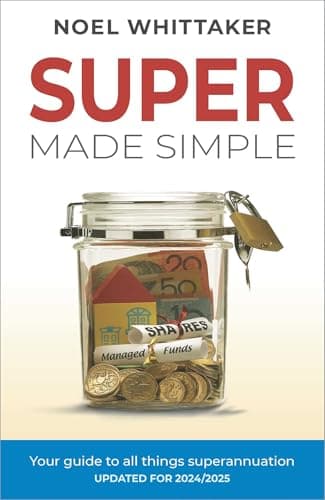
Super Made Simple
A focused, up-to-date guide to actually understanding your superannuation, from one of Australia's most trusted finance writers.
Retirement Made Simple
Noel Whittaker

Retirement Made Simple
Australia's godfather of personal finance demystifies super, the pension and making your savings last. The plain-English retirement handbook every Aussie should read before they stop working.
Some links above are affiliate links. If you buy through them, Snowball Invest may earn a small commission at no extra cost to you. We only recommend books we'd suggest anyway.
Sources
- 1. Payday superannuation, Australian Taxation Office
- 2. The new super guarantee charge, Australian Taxation Office
- 3. Compliance approach for first year of Payday Super finalised, Australian Taxation Office
- 4. General interest charge (GIC) rates, Australian Taxation Office
- 5. Treasury Laws Amendment (Payday Superannuation) Act 2025, Federal Register of Legislation
- 6. Report unpaid super contributions from my employer, Australian Taxation Office
- 7. Latest estimate and trends for the super guarantee gap, Australian Taxation Office
Was this article useful?
Put it to your own numbers
Every calculator runs entirely in your browser, with nothing stored. See what these numbers look like for your own situation.
Try the Retirement Income calculator →General information only. This article is educational and does not constitute personal financial advice. It does not account for your circumstances. Consider your own situation and seek advice from a licensed adviser before acting. Read our full disclaimer.

Timothy Hirou Gaschereau
Founder of Snowball Invest, not a financial adviser.
I write about what I'm learning myself, because nobody ever taught us how to take control of our own money. It's a skill, not a mystery, and it's never too late to learn it. The best day to start was yesterday, the second best is today.
LinkedIn →Related articles

Concessional vs Non-Concessional Super: The Plain-English Guide
Concessional or non-concessional super contributions? The real difference, the 2025-26 caps, the tax treatment, and which one suits you, in plain English.

How to Read Your Super Statement (and What Actually Matters)
Learn how to read your super statement in Australia: contributions, fees, returns, insurance and beneficiaries, in plain English. Five things to check today.

When Is Salary Sacrifice NOT Worth It in Australia?
Salary sacrifice into super is not always the smart move. Here are six situations where it is not worth it in Australia, and what to do instead.