
Best Gold ETF in Australia: A Beginner's Guide
A plain-English guide to every ASX-listed gold ETF in Australia, covering the crucial difference between physical bullion ETFs and gold miner ETFs, fees, currency hedging, tax, and how to think about gold in a beginner portfolio.
 By Timothy Hirou GaschereauPublished
 10 min read
Try it yourself
This article is general information only, not financial advice. It doesn't recommend any specific product. Read the PDS of anything you're considering, and think about talking to a licensed financial adviser if you want guidance tailored to your own situation.
Gold gets talked about a lot in investing circles, usually as "the thing you buy when everything else looks shaky". On the ASX, you don't need to buy bars or coins to get exposure to it, a gold ETF does the job in a single trade through your normal brokerage account. But "gold ETF" actually covers two quite different products, and mixing them up is an easy beginner mistake. This guide walks through what's actually on offer, what it costs, and how to think about whether gold belongs in your portfolio at all.
Quick answer
There are two very different types of gold ETF on the ASX: physically-backed bullion ETFs (which track the gold price directly) and gold miner equity ETFs (which hold shares in mining companies and behave more like stocks). The cheapest physically-backed options are PMGOLD and GXLD, both at 0.15% p.a. The largest and most liquid is GOLD (Global X) at 0.40% p.a. Gold can add diversification to a portfolio, but it produces no income, its inflation-hedging record is inconsistent, and it isn't a guaranteed safe haven. Capital gains tax applies when you sell, just like any other ASX ETF, with the 50% CGT discount for individuals holding more than 12 months.
In this guide
- →The crucial difference between physically-backed gold ETFs and gold miner ETFs
- →Every ASX-listed gold ETF compared on fees, hedging and structure
- →Whether a hedged or unhedged gold ETF makes more sense for you
- →The honest case for (and against) holding gold at all
- →How gold ETFs are taxed in Australia
- →A framework for thinking about a gold allocation, without being told a specific number
🥇 What is a gold ETF?
A gold ETF is an exchange-traded fund that gives you exposure to gold without buying, storing or insuring physical bullion yourself. You buy and sell it on the ASX through any standard brokerage account, the same way you'd buy a share.
It's priced in AUD, but the underlying gold is priced globally in USD, a currency relationship worth understanding before you invest (more on that further down). There are two fundamentally different types of gold ETF available in Australia, and understanding the distinction is the single most important thing to get right before you invest a dollar.
⚖️ Two very different types of gold ETF
🎯 The essential: One tracks the gold price directly. The other holds mining company shares and behaves more like the stock market, with gold price sensitivity layered on top.
Physically-backed gold ETFs hold actual gold bullion bars in a secure vault on investors' behalf, with each unit representing a fractional entitlement to that gold. The price tracks the gold spot price closely, minus the annual fee, which is deducted by gradually reducing the metal entitlement over time. No dividends, since gold itself earns no income. Simple in principle: if gold rises 10%, the ETF rises roughly 10%. Examples on the ASX include GOLD, PMGOLD, GXLD, NUGG, GLDN, QAU and GHLD. This is what most people actually mean when they say "gold exposure".
Gold miner equity ETFs hold shares in gold mining companies, like Newmont, Barrick Gold and Agnico Eagle, not physical gold. The price is influenced by the gold price, but also by company-specific factors: management quality, operating costs, debt levels, exploration results, and broader equity market sentiment. These funds are more volatile than gold itself, and in a sharp equity sell-off they can fall harder than the gold price does. They may also pay dividends, since mining companies can distribute profits. Examples include GDX (VanEck) and MNRS (BetaShares).
Physically-backed
Holds: Gold bullion bars in a vault
GOLD · PMGOLD · GXLD · NUGG · GLDN · QAU · GHLD
Gold price +10%
≈ +10%
Tracks the gold spot price, minus the annual fee
Gold miner equity
Holds: Shares in gold mining companies
GDX · MNRS
Gold price +10%
Could be more or less
Also moves with costs, debt, management and broad equity sentiment
Why the distinction matters: a beginner buying GDX expecting "gold exposure" might be surprised when it drops 20% during a broad equity sell-off even if the gold price itself holds steady. Miner ETFs are equity investments with gold price sensitivity layered on top, not a substitute for a bullion ETF if the goal is simply to track the gold price. Quick rule of thumb: if you want something that moves with the gold price, choose physically-backed. If you want leveraged-style exposure and you're comfortable with equity-like volatility, a miner ETF might suit, but go in understanding exactly what you're buying.
📊 Australian-listed gold ETFs compared
All fees below are the management expense ratio (MER), verified August 2026. Always check the current PDS before investing, since fees and structures can change. This comparison isn't a recommendation of any specific product.
| ETF | Issuer | Fee (p.a.) | Hedging | Vault |
|---|---|---|---|---|
| GOLD | Global X | 0.40% | Unhedged | London (JPMorgan) |
| PMGOLD | Perth Mint | 0.15% | Unhedged | Perth, WA |
| GXLD | Global X | 0.15% | Unhedged | London (JPMorgan) |
| NUGG | VanEck | 0.25% | Unhedged | Perth, WA |
| GLDN | BlackRock iShares | 0.18% | Unhedged | London (JPMorgan) |
| QAU | BetaShares | 0.59% | Hedged (AUD/USD) | London (JPMorgan) |
| GHLD | Global X | 0.35% | Hedged (AUD/USD) | London (JPMorgan) |
PMGOLD and GXLD are tied for the lowest fee at 0.15%, but GOLD has the tightest bid/ask spread on the ASX and by far the largest asset base (around $6 billion), which can matter for frequent or large traders. PMGOLD is backed by the WA Government with gold held in Perth, which some investors prefer for geopolitical or counterparty reasons, and it's redeemable for physical bullion. NUGG is the only ETF on this list backed specifically by Australian-sourced gold at the Perth Mint, also redeemable for physical bullion. QAU and GHLD are the two currency-hedged options.
| ETF | Issuer | Fee (p.a.) | Hedging | Holds |
|---|---|---|---|---|
| GDX | VanEck | 0.53% | Unhedged | ~90 global gold mining companies |
| MNRS | BetaShares | 0.57% | Hedged (AUD/USD) | Global gold mining companies (ex-Australia) |
Remember, these two are equity ETFs with gold price sensitivity, not physical gold. They can pay dividends, and they can behave very differently from the gold price over short periods, sometimes amplifying a rally, sometimes falling even when gold doesn't.
💱 Hedged vs unhedged: does currency matter?
Gold is priced globally in USD. That means an unhedged AUD gold ETF's returns depend on both the gold price in USD and the AUD/USD exchange rate. If the AUD strengthens against the USD, unhedged ETF returns are reduced in AUD terms. If the AUD weakens, unhedged returns are amplified in AUD terms. Hedged ETFs (QAU, GHLD, MNRS) use currency contracts to remove this effect, giving something closer to the pure gold price movement in AUD terms.
Who might prefer hedged exposure: investors who want clean gold price exposure without currency noise, or who are specifically hedging against a falling gold price in USD terms. Who might prefer unhedged exposure: there's a genuine diversification argument here too. The AUD tends to fall when global risk sentiment falls, since Australia is a commodity-linked economy, so an unhedged gold ETF can deliver amplified AUD returns exactly when you'd want it most. That's not guaranteed, but it's a real historical pattern.
Hedging isn't free either, it's embedded in the MER or in roll costs on the currency contracts, which is part of why QAU and GHLD carry higher fees than their unhedged equivalents. Neither hedged nor unhedged is universally better. It depends on your purpose and your view on currency risk.
🛡️ Why add gold to a portfolio (and why it's not a magic bullet)
The case for gold is a diversification case, not a "gold always goes up" case. Here's the honest split.
Reasons investors add gold
- ✓Historically low correlation to shares and bonds, which can reduce overall portfolio volatility
- ✓Has often held its value during high-inflation periods, though not consistently over shorter timeframes
- ✓Safe-haven demand during geopolitical uncertainty can push the price up
- ✓A volatility offset when combined with growth assets like shares
Reasons to be cautious
- ✕No income at all, no dividends or interest, so a heavy allocation reduces your income-generating potential
- ✕The inflation-hedging record is inconsistent, gold has sometimes lagged inflation badly over 1 to 3 year periods
- ✕Long flat or negative real-return periods are common, gold went essentially nowhere in real terms for around 20 years from 1980 to 2000
- ✕Price is driven by sentiment, central bank buying and USD movements, not earnings or cash flows, so it has no fundamental anchor the way a profitable business does
- ✕Not a guaranteed hedge against anything, gold can fall during a crisis if investors need to sell liquid assets to cover losses elsewhere
🧾 Tax treatment of gold ETFs in Australia
Gold ETFs are standard capital gains tax assets, no special or unusual tax treatment compared with any other share ETF. CGT applies when you sell, with the gain calculated as sale proceeds minus cost base. The 50% CGT discount applies for individuals and trusts holding more than 12 months.
Gold ETFs aren't treated as "collectables" by the ATO. Physical gold coins or bars can attract collectable rules in some circumstances, but ETF units are ordinary CGT assets, the same as a share or any other ETF. Distributions, if any, are taxed as income in the year received, even if reinvested through a distribution reinvestment plan. There's no CGT event from holding alone, tax is only triggered on disposal.
This is general information only, not tax advice. Speak to a registered tax agent for guidance specific to your own situation.
🧭 How to think about a gold allocation
We're not going to tell you what percentage of your portfolio should be gold, that would be personal advice, and it depends entirely on your own circumstances. Here's a framework instead.
Start with your purpose. Inflation protection favours physically-backed ETFs, since miner ETFs add equity risk on top of whatever inflation-hedging benefit gold offers. The diversification argument applies most clearly to physical gold, not miners. If you're chasing a short-term price move, be honest with yourself that it's speculation, not investing.
Consider what you already own. A broad global shares ETF likely already gives you some indirect exposure to gold miners through the materials sector, so it's worth checking your existing holdings before adding a dedicated gold position. If you're still working out your overall mix, our guide to building a simple investment portfolio is worth reading first.
Think about time horizon. Gold's diversification benefits are more apparent over long periods. Short-term gold trading is speculative, full stop.
Consider your income needs. Physically-backed gold ETFs pay no dividends, so a large allocation reduces your portfolio's overall income. Factor that in if you rely on distributions.
Physically-backed ETFs are simpler for most beginners, they track the gold price as advertised, no more and no less. Miner ETFs suit investors who understand and accept equity-like volatility on top of gold price risk. Many portfolio frameworks treat gold as a satellite holding rather than a core one, a useful mental model that sits alongside your core growth and income assets, not instead of them. If you're weighing gold against other volatile satellite ideas, our guide to ASX lithium stocks covers a very different, equally volatile commodity theme, with its own boom-bust price history worth understanding first.
📈 See how a smaller, steady contribution compounds
Whatever you decide on gold, the bulk of most beginner portfolios still does the heavy lifting through regular, long-term investing. Plug in your own numbers to see the effect.
What I actually use
Pearler
This is the broker I personally use. Do your own research and form your own opinion, but I genuinely recommend it, it's built for long-term investors rather than day traders, and makes it easy to automate regular investing. Sign up through my link or with the code TIMOTHY269825 and you'll both get a $20 cash bonus once you make your first investment (Pearler's current offer, T&Cs apply).
Sign up to Pearler →This is a referral link. If you sign up through it, I get a bonus too, at no extra cost to you.
SnowLetter
Australia's money news and our best reads, once a week.
❓ Frequently asked questions
What is the cheapest gold ETF in Australia?
+
As of August 2026, PMGOLD and GXLD are tied for the lowest management fee at 0.15% p.a., both physically-backed bullion ETFs. Trading costs (brokerage and bid/ask spread) also affect total cost. GOLD, at 0.40%, has the tightest spread on the ASX, which can make it cheaper to trade in and out of for active investors.
What is the difference between GOLD and QAU?
+
Both are physically-backed gold bullion ETFs with gold held in JPMorgan's London vaults. GOLD (0.40% p.a.) is unhedged, so its AUD returns are affected by AUD/USD movements. QAU (0.59% p.a.) is currency-hedged, which removes that effect. GOLD has listed since 2003 and holds around $6 billion in assets, QAU has listed since 2011 with roughly $1.3 billion. For pure gold price exposure without currency noise, QAU (or the newer, cheaper GHLD at 0.35%) is worth considering. If you're comfortable with currency exposure, GOLD's lower fee and higher liquidity are advantages.
Are gold ETFs safe?
+
No investment is risk-free. Gold ETFs carry market risk, the gold price can fall significantly, and physically-backed ETFs carry custodian risk, mitigated by allocated storage and regulatory oversight. They're regulated products listed on the ASX under Australian financial services law. Generally considered lower risk than individual mining stocks but higher risk than cash or government bonds. PMGOLD has the added feature of a WA Government guarantee over the metal holdings.
Do gold ETFs pay dividends in Australia?
+
Most physically-backed gold ETFs don't pay regular dividends, since gold itself earns no income. A few, like GLDN and QAU, have made occasional distributions in some years, but these are irregular and not guaranteed. Gold miner ETFs (GDX, MNRS) may pay dividends, since the underlying mining companies can distribute profits. Check the PDS and distribution history before assuming any income will be paid.
Is gold a good investment for beginners?
+
Gold can play a useful role in a diversified portfolio, but it isn't a straightforward "good investment" the way a broad index fund is. It produces no income, can have long flat periods, and its price is driven by sentiment rather than earnings. For most beginners, a broad shares ETF is a more logical starting point. If you do want gold exposure, a low-cost physically-backed ETF like PMGOLD or GXLD is simpler and more transparent than a miner ETF. Treat it as a small diversifier, not a core holding.
How are gold ETFs taxed in Australia?
+
Treated as standard CGT assets by the ATO, the same as any other ASX ETF. You pay capital gains tax when you sell, calculated as sale proceeds minus cost base. Hold more than 12 months and the 50% CGT discount applies for individuals and trusts. Distributions are taxed as income in the year received. Gold ETF units aren't classified as collectables by the ATO, so the collectable rules that can apply to physical gold coins or bars don't apply here. Speak to a registered tax agent for advice specific to your situation.
Whichever way you land on gold, the checklist and comparison above should give you enough to compare products properly rather than picking the first ticker you see mentioned online.
⚖️ VDHG vs DHHF
If gold is a satellite holding, see how the two most popular core diversified ETFs in Australia compare.
📚 Recommended reading
The Simple Path to Wealth
JL Collins
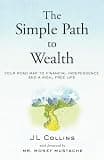
The Simple Path to Wealth
The friendliest on-ramp to index investing there is, born from letters a dad wrote his daughter. It makes 'buy the whole market and chill' feel obvious, just map his US fund picks onto Aussie equivalents and super.
The Bogleheads' Guide to Investing
Taylor Larimore, Mel Lindauer & Michael LeBoeuf
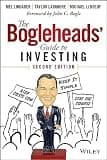
The Bogleheads' Guide to Investing
The friendly community bible of low-cost, buy-and-hold index investing, written by everyday investors rather than salespeople. The core philosophy is timeless for Aussies, just read the tax-advantaged account bits as super.
Just Keep Buying
Nick Maggiulli
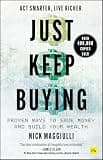
Just Keep Buying
Data over vibes. Maggiulli crunches the numbers to show that consistently buying assets beats trying to time the market, and it is easier than you think.
Some links above are affiliate links. If you buy through them, Snowball Invest may earn a small commission at no extra cost to you. We only recommend books we'd suggest anyway.
Sources
- 1. Exchange traded funds (ETFs), Moneysmart, Australian Securities and Investments Commission
- 2. Exchange traded funds, Australian Taxation Office
- 3. GXLD, Gold Bullion ETF, Global X ETFs Australia
- 4. GHLD, Gold Bullion (Currency Hedged) ETF, Global X ETFs Australia
- 5. MNRS, Global Gold Miners ETF, Betashares
- 6. QAU, Gold Bullion Currency Hedged ETF, Betashares
General information only, not financial advice or tax advice. This article doesn't recommend or endorse any specific product. Fees and AUM figures were checked in August 2026 and can change, always confirm current details in the PDS before investing.
Was this article useful?
Put it to your own numbers
Every calculator runs entirely in your browser, with nothing stored. See what these numbers look like for your own situation.
Try the Compound Interest calculator →General information only. This article is educational and does not constitute personal financial advice. It does not account for your circumstances. Consider your own situation and seek advice from a licensed adviser before acting. Read our full disclaimer.

Timothy Hirou Gaschereau
Founder of Snowball Invest, not a financial adviser.
I write about what I'm learning myself, because nobody ever taught us how to take control of our own money. It's a skill, not a mystery, and it's never too late to learn it. The best day to start was yesterday, the second best is today.
LinkedIn →Related articles

CommSec Pocket Fees: What It Costs and How It Compares
A$2 a trade up to A$1,000, then 0.20%, on buys and sells. Plus the separate HIN nobody mentions, and the order size where Pocket costs more than main CommSec.

BGBL vs VGS: Which Global ETF Belongs in Your Portfolio?
BGBL charges 0.08% and holds South Korea. VGS charges 0.18% and does not. What actually separates the two big ASX global ETFs, and how to pick one.

IVV vs VGS: All In on America, or the Whole Developed World?
This is not a fee decision, it is a concentration one. IVV is one country. VGS is 23, and the US is already most of it. How to think it through.