

Rent vs Buy Calculator
See how buying a home compares to renting and investing the difference, in dollar terms, over the time frame you're actually planning for.
Built and checked byTimothy Hirou GaschereauFigures verified at the source on
Your details
After 10 years, buying comes out ahead by
$24,680
Buyer's equity
$671,586
Renter's invested portfolio
$646,906
Property value at year 10
$1,140,226
The tipping point: buying comes out ahead if the property grows faster than about 4.8% a year over these 10 years, holding everything else fixed. You've assumed 5%. Below the tipping point, renting and investing the difference wins.
Assumes the renter invests the deposit, upfront buying costs, and any monthly saving from renting being cheaper than owning. If owning is cheaper than renting in a given month, that difference is assumed spent rather than invested by the buyer. Doesn't model stamp duty concessions, selling costs, negative gearing or capital gains tax, or rent assistance. This tool provides estimates only and is not financial advice, the right choice depends on more than just the numbers.
How to use this calculator
- 1. Enter the property price, your deposit, upfront buying costs, interest rate and loan term.
- 2. Enter what it would cost to rent a comparable property, and how you expect rent and property values to grow.
- 3. Enter the return you'd expect if you invested the deposit and any monthly saving instead of buying.
- 4. See the buyer's home equity versus the renter's invested portfolio after your chosen time horizon.
The real trade-off: renting and investing vs buying
Buying a home in Australia costs far more upfront than most people budget for. Stamp duty, conveyancing, building inspections and Lenders Mortgage Insurance can add $30,000 to $60,000 or more before a single mortgage repayment is made. That's exactly why renting and investing the difference is a legitimate wealth-building strategy, not a consolation prize for people who can't afford to buy. Over short-to-medium holding periods, the maths genuinely can favour it.
The comparison most people make, whether the mortgage repayment is bigger than the rent, misses the real picture. A buyer commits a deposit plus ongoing mortgage repayments, council rates, maintenance and insurance. A renter pays rent but keeps their deposit liquid and invested, and if renting is cheaper month to month, that gap can be invested too.
The number most buyers never think about is the opportunity cost of the deposit. A $180,000 deposit tied up in a property isn't compounding in a diversified share portfolio. Over a decade that gap becomes enormous, a real cost of buying that never shows up on a bank statement. Buying locks up capital but provides leverage and forced savings. Renting keeps capital liquid and investable, but only actually builds wealth if the renter invests the difference rather than spending it.
The true cost of buying in Australia
The upfront costs go well beyond the deposit. Stamp duty is usually the biggest single line item and varies enormously by state, on top of that budget for conveyancing ($1,500 to $2,500), a building and pest inspection ($500 to $800), and Lenders Mortgage Insurance if your deposit is under 20% (on a $900,000 property with a 10% deposit, LMI alone can add $15,000 to $25,000). Our LMI calculator and stamp duty calculator can put real numbers on both for your situation.
Here's how stamp duty for a standard, non-first-home-buyer purchase compares across three price points and the five most populous states (2025 rates):
| State | $600k | $800k | $1,000,000 |
|---|---|---|---|
| NSW | $21,412 | $30,412 | $39,412 |
| VIC | $31,070 | $43,070 | $55,000 |
| QLD | $15,925 | $24,525 | $33,850 |
| WA | $21,330 | $31,330 | $41,330 |
| SA | $26,830 | $37,080 | $47,830 |
Standard, non-first-home-buyer rates. First home buyer concessions apply in some states, NSW exempts eligible buyers up to $800,000, VIC up to $600,000. Use the calculator above for your exact figure.
Ongoing ownership costs add up too: council rates ($1,200 to $3,000 a year), strata or body corporate fees ($3,000 to $15,000 a year for apartments), maintenance (a rough rule of thumb is around 1% of the property's value a year), and landlord or building insurance. Selling costs matter as well, agent commission runs 2 to 3% of the sale price plus marketing costs of $5,000 to $15,000. On a $1,000,000 property, round-trip transaction costs can hit $80,000 to $100,000, roughly 8 to 10% of the property's value, and the property has to grow enough just to cover that before any real profit shows up.
The 5 variables that swing the answer
- Property growth rate. The national 5-year compound annual growth rate sits around 6.8% (CoreLogic/Cotality), with a 10-year average closer to 5.7%, but the spread between cities is huge, Perth rose roughly 76% between March 2020 and October 2024, while Melbourne rose only around 9.9% over the same period.
- Rental yield. Lower yield means renting is relatively cheaper. CoreLogic's July 2025 gross yields: Sydney 3.1%, Melbourne 3.3%, Brisbane 3.6%, Adelaide 3.8%, Perth 4.2%.
- Investment return on the renter's portfolio. The ASX 200 has returned roughly 10% p.a. nominal long-run including dividends, though a more conservative modelling assumption of 8-9% is worth using given returns aren't guaranteed.
- Holding period. The single most important variable, since transaction costs are largely fixed regardless of how long you hold. Breakeven is typically 7-10 years.
- Leverage. Buying with a mortgage lets you control a large asset with a fraction of your own capital, which amplifies both gains and losses. Mortgage interest is a non-equity cost, just like rent.
Where Australian markets stand right now
Median dwelling values (CoreLogic, September 2024): Sydney $1,193,000, Adelaide $809,000, Perth $805,000, Brisbane $883,000, Melbourne $779,000. Median weekly rents for houses and units (Domain Rental Report, December 2025): Sydney $800/$750, Brisbane $670/$650, Perth $700/$650, Adelaide $620/$525, Melbourne $580/$580.
Affordability has genuinely deteriorated. ANZ/CoreLogic data (September 2024) puts the national figure at 50.6% of gross household income needed to service a new mortgage, a record high, against 33.0% for median rent, and 10.6 years to save a 20% deposit at a 15% savings rate. Sydney is worst, at 62.1% of income and around 13 years to save a deposit. For the fuller picture on why that's happened and what's actually within your control, see our guide to housing affordability in Australia and our breakdown of how much deposit you actually need.
Worked example: renting and investing vs buying over 10 years
A $900,000 property in Brisbane, two people with $210,000 in starting capital either way. Assumptions: 6% p.a. property growth, a 3.6% rental yield ($670/week, or $2,903/month), a 9% p.a. investment return, a 6.2% p.a. mortgage rate over 30 years (P&I), rent growing at 3% a year, and maintenance, rates and insurance running at roughly 1% of the property's value a year.
Buyer: $180,000 deposit plus roughly $30,000 in stamp duty and conveyancing (QLD) uses the same $210,000. The $720,000 loan costs about $4,410/month. Over 10 years that's roughly $415,000 in interest and $114,000 in principal (about $529,000 in total repayments), plus around $122,000 in maintenance, rates and insurance as the property grows. At 6% p.a. growth, the property is worth around $1,612,000 after 10 years against a remaining loan balance of about $606,000. Sell and pay roughly $45,000 to $50,000 in agent commission and other selling costs, and the buyer is left with around $960,000, a net gain of roughly $750,000 on their original $210,000.
Renter: invests the same $210,000 upfront, then invests whatever gap exists each month between what the buyer is paying (mortgage plus maintenance) and what rent actually costs, starting at $2,903/month and growing with rent. Both the lump sum and the monthly top-ups compound at 9% p.a. That portfolio grows to roughly $901,000 after 10 years.
Net result: buyer around $960,000 versus renter around $901,000, the buyer ahead by roughly $60,000 in this specific 6%-growth, 9%-return, 10-year scenario. That's a much closer race than the raw property value might suggest once transaction costs and the renter's compounding are properly accounted for, and it's genuinely sensitive to the assumptions: nudge property growth down to 4% p.a. and investment returns up to 10% p.a., or shorten the hold to 5 years, and the renter comes out ahead instead. Run your own numbers, including your own city's rent and growth assumptions, in the calculator above.
Figures above are illustrative, rounded, and modelled using this calculator's own methodology (see the disclaimer below for what it does and doesn't account for), rather than a generic rule of thumb. Your actual result depends entirely on the inputs you use.
3 myths worth clearing up
"Rent is dead money." Rent buys real housing. Mortgage interest, rates, maintenance and insurance are also non-equity-building costs, only the principal portion of a mortgage repayment builds equity, and in the early years of a loan that's a small fraction of each payment.
Ignoring the opportunity cost of the deposit. A $180,000 deposit invested at 9% p.a. becomes roughly $426,000 over 10 years. That foregone growth is a real cost of buying, even though it never appears on a mortgage statement.
Ignoring transaction costs. Stamp duty plus agent commission can total 8 to 10% of the property's value round-trip. The property has to grow by that much just to break even on transaction costs alone over a short hold, which is exactly why the holding period matters so much more than most people assume.
So, should you rent or buy?
Buying tends to win with a 10+ year hold, in a high-growth market, where rental yield is low (property is expensive relative to rent), and where your life circumstances are stable. Renting and investing tends to win over a short-to-medium horizon (under 7 years), with a genuinely high-conviction investment alternative and the discipline to actually invest the difference rather than spend it, in high-transaction-cost states like Victoria, or where flexibility to relocate matters more than certainty.
Neither path is universally better, which is exactly what our rentvesting guide also gets into, since renting where you live while buying elsewhere is a genuine third option that borrows a bit from both sides of this comparison. And if you land on renting and investing, our compound interest explainer is a good next read on why starting that investing early matters so much.
FAQ
Is it always better to buy than rent in Australia?
No. Over short holding periods, in high-transaction-cost states, or with strong investment returns, renting and investing can match or beat buying. Breakeven is typically 7-10 years and varies by city and conditions.
How long do you need to hold a property before buying beats renting?
Roughly 7-10 years in most capitals, assuming 5-6% p.a. property growth and 8-9% p.a. investment returns for the renter. Breakeven extends beyond 10 years in high-transaction-cost states like Victoria or slower-growth markets.
What is the opportunity cost of a house deposit?
It's what the deposit could have earned invested elsewhere. A $180,000 deposit at 9% p.a. grows to roughly $426,000 over 10 years, wealth forgone by tying capital up in property.
Does stamp duty make buying less attractive?
Significantly, especially in Victoria (5.4% of purchase price on an $800,000 property, or $43,070). It's a sunk cost that must be recovered through capital growth before any real return, and it's lower in QLD and WA, one reason those markets attract strong investor interest.
What investment return should I use for the renting and investing scenario?
The ASX 200 has returned roughly 10% p.a. nominal long-run including dividends, so 8-9% is a reasonable conservative modelling assumption. Returns aren't guaranteed, unlike a mortgage's forced savings mechanism.
How does LMI affect the rent vs buy calculation?
LMI applies when the deposit is below 20%. On a $900,000 property with a 10% deposit it can add $15,000 to $25,000 upfront, increasing the capital needed on day one and raising the breakeven point, which makes renting relatively more attractive for smaller-deposit buyers.
Is property or shares a better investment in Australia?
Both have delivered strong long-run returns: the ASX 200 roughly 10% p.a. nominal, residential property roughly 5.7% p.a. over 10 years nationally (CoreLogic). Property benefits from leverage and accessibility, shares offer liquidity, diversification and lower transaction costs. It's genuinely close and depends on the specific property, timing and leverage used.
What rental yield makes renting more attractive than buying?
There's no single threshold, but a useful rule of thumb is that a gross yield below the risk-free rate (around 4-4.5%) suggests the property is expensive relative to its income. Sydney's 3.1% and Melbourne's 3.3% yields (CoreLogic, July 2025) sit well below that.
How does the First Home Guarantee affect the calculation?
Expanded in October 2025, it lets eligible first home buyers purchase with as little as a 5% deposit without LMI, since the government guarantees up to 15% of the loan. That saves $15,000 to $25,000 in LMI and lowers the upfront capital needed, though a smaller deposit means a larger loan and higher ongoing repayments.
What does the Snowball Invest rent vs buy calculator actually calculate?
It models two parallel wealth trajectories over your chosen holding period: the buyer's net equity (property value minus remaining mortgage and ownership costs) versus the renter's investment portfolio (the lump-sum deposit plus the monthly mortgage-vs-rent gap invested). You can adjust property growth, investment return, rental yield, mortgage rate, holding period and upfront costs to see which path wins under your own assumptions.
Related reading
Housing Affordability in Australia: The Honest Picture (and What You Can Actually Do)
The current state of housing affordability in Australia, why it got structurally harder, and the real options available to buy anyway.

How Much Deposit Do You Need to Buy a House in Australia?
The real deposit numbers: the 20% benchmark, buying with as little as 5% through government schemes, and what a smaller deposit actually costs you.
Rentvesting: How It Works (and Whether It's Worth It)
How rentvesting actually works, real Australian uptake statistics, the tax side, the related six-year CGT rule, and the genuine risks worth weighing up.
Where these numbers come from
Every rate and threshold in this calculator was read off the official page, not copied from another calculator. Check them yourself, they change.
📚 Recommended reading
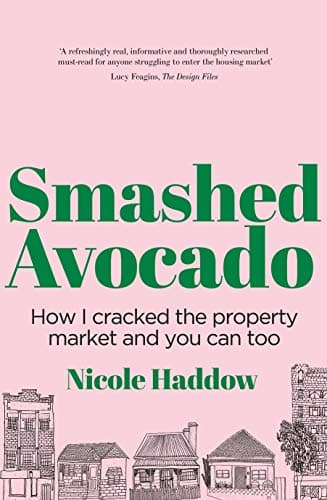
Smashed Avocado
Nicole Haddow
Smashed Avocado
A millennial who ditched the rent trap and cracked the property market by 30, told with honesty and humour. If you have ever been told your brunch is why you cannot buy a home, this Aussie story is your comeback.
The Armchair Guide to Property Investing
Ben Kingsley & Bryce Holdaway
The Armchair Guide to Property Investing
Two of Australia's most trusted property voices lay out a plain-English roadmap to building a portfolio on an average income. Practical, local, and refreshingly free of get-rich-quick hype.
Some links above are affiliate links. If you buy through them, Snowball Invest may earn a small commission at no extra cost to you. We only recommend books we'd suggest anyway.
SnowLetter
Australia's money news and our best reads, once a week.
Disclaimer
Assumes the renter invests the deposit, upfront buying costs, and any monthly saving from renting being cheaper than owning, and that a difference in favour of the buyer in any month is simply spent rather than invested. Doesn't model stamp duty concessions, selling costs, negative gearing tax benefits, capital gains tax, or rent assistance. Worked examples and market data in the content above (stamp duty rates, median values and rents, affordability figures) are sourced from CoreLogic/Cotality, Domain, ANZ/CoreLogic and ABS data current as of their stated dates, and are illustrative rather than guaranteed. Property and investment returns are not guaranteed and can go down as well as up. This tool provides estimates only, is not financial advice, and the right decision depends on more than the numbers alone.