

Ditch the Debt and Get Rich by Effie Zahos: An Honest Review
Our honest Ditch the Debt and Get Rich review: Effie Zahos's practical Aussie guide to clearing debt and building wealth, its strengths, and who should read it.
 By Timothy Hirou GaschereauPublished
 9 min read
Bottom line: this is a solid, practical starter book for Australians who are drowning in consumer debt and need a clear, friendly roadmap out. It won't turn you into a sophisticated investor, but that's not the point. If you've been Googling "how to get out of debt in Australia" at 11pm and feeling mildly panicked, this book is probably exactly what you need right now. It's part of our personal finance book reviews on Snowball Invest.
Quick answer
A warm, practical, Australian-specific guide to getting out of debt and starting to build wealth. Accessible enough for complete beginners, honest enough to be genuinely useful. Best for anyone drowning in credit card or consumer debt who wants a clear starting point. Skip it if you've read a few finance books and want deep investing theory. Our rating: 4 out of 5.
Want to read Ditch the Debt and Get Rich?
One of Australia's most trusted money journalists shows you how to crush debt and build real wealth, without giving up your flat white.
In this guide
- →What the book covers: mindset, debt, saving, investing basics and FAQs
- →The genuine strengths and the honest weaknesses
- →Who it's for, and who's better off elsewhere
- →What critics and readers say
- →The Australian angle: credit cards, offset accounts, super and HECS
📖 What is Ditch the Debt and Get Rich about?
Ditch the Debt and Get Rich is Effie Zahos's practical guide to getting your financial life in order, written squarely for an Australian audience. Published in 2021, it covers five main areas: mastering your money mindset, eliminating debt, saving for life goals, getting started with investing, and a FAQ section that ties it together.
The core argument is simple: bad debt is costing you more than you realise, and once you clear it, the cash you free up can start working for you instead of against you. Zahos walks through the difference between good and bad debt, gives concrete strategies to pay off credit cards and personal loans faster, covers budgeting and saving, explains how to use your mortgage smartly (offset accounts and redraw facilities), touches on super as a wealth-building tool, and includes real reader money-makeover case studies to keep the concepts grounded. As with her A Real Girl's Guide to Money, it carries real credibility: Zahos spent decades in Australian finance media and writes from genuine experience, not theory.
⚖️ Strengths and weaknesses
What it gets right
- ✓The Australian context is genuinely useful: local credit card traps, mortgage products and super, no 401(k) to translate.
- ✓Practical and actionable: each chapter ends with an action plan that pushes you to actually move.
- ✓It lays out five debt-reduction strategies side by side (snowball, avalanche, balance transfer, personal loan, home-loan top-up) with the maths on each.
- ✓Accessible, warm writing: clear and friendly, like she talks on TV, with no jargon.
- ✓Real reader money makeovers make it relatable: find a situation like yours and see how the advice plays out.
- ✓The good-debt-versus-bad-debt framework is a genuinely clarifying foundation for beginners.
Where it falls short
- ✕Breadth over depth: investing, super and property each get a chapter, and you'll often finish wanting more.
- ✕Familiar territory if you've read widely: budgeting basics and the debt snowball will feel like revision.
- ✕The investing section is light, an orientation rather than a guide.
- ✕Some figures and product details from 2021 will be dated, so treat specific numbers as a starting point.
If the side-by-side comparison of debt strategies is the chapter you want to dig into further, our own breakdown of the debt snowball versus the debt avalanche runs the numbers on which one actually saves you more.
👤 Who should read it, and who should skip it?
Read it if you
- ✓Are new to managing your finances and feel overwhelmed about where to start.
- ✓Are carrying consumer debt (credit cards, personal loans, buy-now-pay-later) and want a structured way to tackle it.
- ✓Have been ignoring your super and your budget and you know it.
- ✓Want a book written specifically for Australians, not one to mentally translate from American.
- ✓Want something you can actually finish in a weekend.
Skip it if you
- ✕Have already read several finance books and are comfortable with the basics.
- ✕Want advanced investing strategy, detailed property analysis or deep super guidance.
- ✕Want highly personalised advice (a book can't replace an adviser who knows your situation).
If buy-now-pay-later is part of your debt picture, it's worth reading alongside our guide to how BNPL actually affects your finances in Australia, since it's a newer category the book only touches on briefly.
🔍 What do critics say?
The reviews that exist are warm. Australian personal finance reviewers describe it as personable, approachable and easy to read, and single out the worked examples as a highlight, especially the side-by-side comparison of debt-reduction strategies, which produces some genuinely surprising results when you see the maths. The consistent, fair caveat: it's meant to be accessible and doesn't go deep, so if you want detailed information on a specific topic, it may not be the book for you.
💬 What do readers say?
On Goodreads it holds around 3.9 out of 5, a respectable score for the genre. The recurring themes: a relatable tone (like advice from a knowledgeable friend, and many readers know Zahos from television), practical tips they actually bookmarked (debt repayment, mortgage strategy, understanding their own spending personality), and some overlap with other finance books on the budgeting and emergency fund basics.
The consistent recommendation across reader responses is that it's ideal for someone just starting out on their financial journey, or as a gift for a young person entering the workforce. It hasn't generated much dedicated discussion on r/AusFinance, but that's more about the forum's demographics than the book's usefulness.
🇦🇺 The Australian angle
This is where Ditch the Debt and Get Rich earns its keep. Most popular personal finance titles come from the US, and the gap matters. American books don't cover the Australian credit card landscape (where rates can sit above 20% a year and annual fees quietly drain your account), don't explain offset accounts or redraw facilities, don't touch super (most Australians' largest wealth-building vehicle outside property), and don't address the Australian tax context, including HECS/HELP debt and how it interacts with your income.
Zahos covers all of this, not exhaustively, but enough to give an Australian reader a proper foundation. For anyone trying to become debt free in Australia, a guide that actually reflects the local system is worth a lot.
💰 The verdict
Ditch the Debt and Get Rich is a genuinely good starter book for debt-laden Australians. It's warm, practical, and written by someone who clearly understands the pressures everyday Australians face. The Australian-specific content alone makes it more useful than most overseas alternatives for someone at the beginning of their financial journey. It's not a deep-dive investing guide and it won't replace a financial adviser, and if you've read widely you may find it covers familiar ground. But for its target audience, someone who feels overwhelmed by debt and doesn't know where to start, it does exactly what it sets out to do. Use it as your foundation, not your ceiling. Our rating: 4 out of 5.
Want to read Ditch the Debt and Get Rich?
Staring down some consumer debt? Grab a copy, run the numbers on the five strategies, and pick your plan.
SnowLetter
Australia's money news and our best reads, once a week.
❓ Frequently asked questions
Who is Effie Zahos?
+
Effie Zahos is one of Australia's most recognised personal finance commentators. She edited Money magazine for around two decades and is now a familiar money voice across Australian television and media. She has decades of experience translating money concepts for everyday Australians and has written several books, including A Real Girl's Guide to Money.
Is Ditch the Debt and Get Rich suitable for beginners?
+
Yes, arguably it's best suited to beginners. The writing is jargon-free, the structure is logical, and the action plans at the end of each chapter make it easy to apply what you've read. If you've never really engaged with your finances before, it's a comfortable, non-intimidating place to start.
Does the book cover superannuation?
+
Yes, though not exhaustively. Super is covered as part of the investing and retirement section, and Zahos treats it as a real wealth-building tool. It's enough to understand the basics and why your super matters, but for deep super strategy you'll need to go further.
Is the advice specific to Australia?
+
Yes, and that's one of its genuine strengths. The book covers Australian credit card mechanics, mortgage products (including offset and redraw), super, HECS/HELP debt and the local tax context. You won't spend time mentally translating American concepts.
How does it compare to The Barefoot Investor?
+
Both target everyday Australians with a practical, accessible tone. The Barefoot Investor has a more prescriptive, step-by-step system and is the dominant title in the space. Ditch the Debt and Get Rich is more focused on the debt-elimination phase specifically, and some find Zahos's style a touch warmer and less prescriptive. They complement each other well.
Where can I buy Ditch the Debt and Get Rich?
+
It's available from major Australian booksellers and Amazon Australia. Your local library is worth checking first too, which is genuinely the most money-smart option for a debt-reduction book.
📚 Get the book (and two Aussie companions)
Ditch the Debt and Get Rich
Effie Zahos
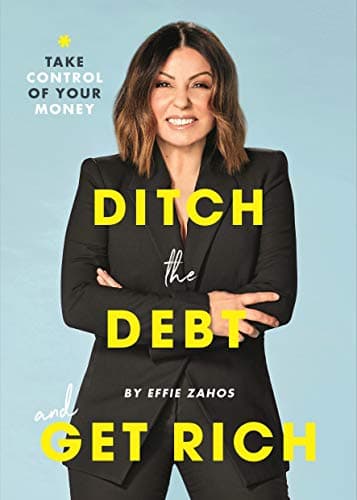
Ditch the Debt and Get Rich
One of Australia's most trusted money journalists shows you how to crush debt and build real wealth without giving up your flat white. Clear, doable steps you can start this week.
A Real Girl's Guide to Money
Effie Zahos
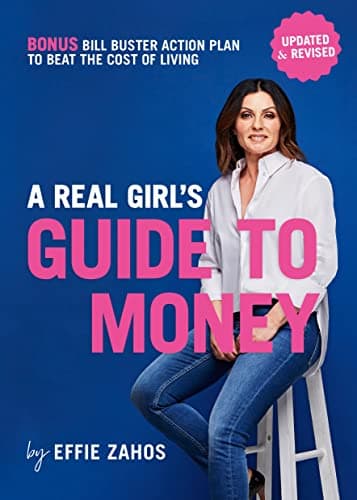
A Real Girl's Guide to Money
A practical, no-nonsense guide to sorting your money out, from one of Australia's most recognisable finance journalists.
The Barefoot Investor
Scott Pape
The Barefoot Investor
Australia's best-selling money book ever. A simple system for accounts, budgeting, debt and a real emergency fund in one.
Some links above are affiliate links. If you buy through them, Snowball Invest may earn a small commission at no extra cost to you. We only recommend books we'd suggest anyway.
Sources
Was this article useful?
Put it to your own numbers
Every calculator runs entirely in your browser, with nothing stored. See what these numbers look like for your own situation.
Explore the calculators →General information only. This article is educational and does not constitute personal financial advice. It does not account for your circumstances. Consider your own situation and seek advice from a licensed adviser before acting. Read our full disclaimer.

Timothy Hirou Gaschereau
Founder of Snowball Invest, not a financial adviser.
I write about what I'm learning myself, because nobody ever taught us how to take control of our own money. It's a skill, not a mystery, and it's never too late to learn it. The best day to start was yesterday, the second best is today.
LinkedIn →Related articles

The Barefoot Investor Review: Honest, Unfiltered, Australian
Our honest Barefoot Investor review covers the bucket system, the 9 steps, the real criticisms, and whether Scott Pape's book is still worth it for Australians.

She's on the Money Review: Honest and Actually Useful
Our honest She's on the Money book review: what Victoria Devine gets right, where it falls short, and whether it's worth your time as an Australian reader.

Rich Dad Poor Dad Review: The Good, the Bad, and the Australian Reality
Our honest Rich Dad Poor Dad review: what Robert Kiyosaki gets right, the real criticisms, and why Australians need to read it with a very specific filter.