

Buy Now Pay Later Australia: The Real Cost Before You Tap
How BNPL actually works, the fee caps under the 2025 regulation, what changed on your credit file, and how it compares to a credit card.
 By Timothy Hirou GaschereauPublished
 9 min read
Try it yourself
Afterpay, Zip, Klarna, PayPal Pay in 4, you've seen them at checkout. This sits alongside our lifestyle creep piece as a look at the spending traps that don't feel like debt until they are.
Quick answer
BNPL splits a purchase into instalments, usually four fortnightly payments, with no interest but real fees if you miss one. Since 10 June 2025, providers must hold an Australian Credit Licence and run credit checks, the "no credit check" era is over. Used carelessly, it can dent your credit file, stack up fees, and quietly inflate your monthly spending.
In this guide
- →How BNPL actually works, and where providers make their money
- →The real costs: fee caps under the new 2025 regulation
- →What changed on your credit file since June 2025
- →The spending-creep psychology nobody puts in the marketing
- →An honest comparison with using a credit card responsibly
🛒 How buy now pay later actually works
🎯 The essential: Spend now, pay later, and hope you remember when the next instalment hits.
BNPL is a short-term payment arrangement that lets you take a product home today and pay for it in instalments over a few weeks or months. The most common structure in Australia is four equal fortnightly payments, with the first due at checkout. No interest is charged if you pay on time. Providers make money from merchant fees, the retailer pays a cut, and when things go wrong, from late fees charged to you.
💸 The real costs: it's not free money
The "interest-free" pitch is technically true. Miss a payment, though, and you'll meet the fee schedule.
Under the Treasury Laws Amendment (Responsible Buy Now Pay Later and Other Measures) Act 2024 (Royal Assent 10 December 2024, effective 10 June 2025), BNPL providers are now regulated as "low cost credit contracts" under the National Consumer Credit Protection Act 2009. For the first time, fee caps apply.
| Fee type | Cap |
|---|---|
| Non-default fees (account/establishment) | $200 in the first 12-month period, $125 each period after |
| Default (late payment) fees | $120 standard cap |
Before this law, providers set their own fee structures with no legislated ceiling. The caps are a genuine improvement, but a late fee anywhere near $120 on a $150 purchase is still a brutal effective rate. Actual per-missed-payment charges vary by provider and are typically below the cap, check the current product disclosure statement for the specific figure.
📋 Your credit file: what changed in 2025
For years, BNPL was marketed partly on the basis that it wouldn't affect your credit file. That era is over. Under the new regime, providers must:
- Hold an Australian Credit Licence issued by ASIC.
- Run a negative credit check for contracts under $2,000.
- Run a more thorough, partial credit check for contracts of $2,000 or more.
- Report to credit bureaus as part of standard credit reporting obligations.
In plain English: applying for BNPL now generates a credit enquiry on your file. Multiple applications in a short window can look like financial stress to a lender. If a home loan, car loan or even a rental application is on your horizon in the next 12 months, a string of BNPL enquiries isn't a good look, see our credit score guide for how enquiries factor into your score.
One genuine upside: if a provider is assessing you for hardship, they must respond within 21 days, and industry hardship practice under the AFIA BNPL Code of Practice means fees are generally paused and no default listed while that's happening.
🧠 Spending creep: the trap nobody talks about
The psychology of BNPL doesn't show up in any fee schedule. Split a $200 purchase into four $50 payments, and $50 starts to feel like the price of the item. It isn't, the item costs $200, but your brain anchors to the instalment, not the total. It's a textbook example of the broader psychology of debt, where how borrowing feels drives the decision more than what it costs.
Today
at checkout
Wk 2
Wk 4
Wk 6
last one
Four small chunks feel painless, but the anchor in your head becomes $50, not the $200 you actually owe.
ASIC's 2020 report found 21% of BNPL users had missed a payment in the prior 12 months, and users were commonly running multiple BNPL accounts at once, making total repayment obligations genuinely hard to track across a month.
Run three BNPL accounts simultaneously and you might have six to twelve fortnightly payment dates spread across different apps and different linked cards. One failed direct debit cascades into a late fee, which hits a card that might also be running low, then a dishonour fee from your bank on top. This isn't hypothetical, it's the pattern ASIC documented.
⚖️ BNPL vs a credit card used responsibly
| BNPL (paid on time) | Credit card (paid in full monthly) | |
|---|---|---|
| Interest | None | None (if paid in full) |
| Fees | Account/late fees (now capped) | Annual fee, late payment fee |
| Credit check on application | Yes (since June 2025) | Yes |
| Repayment flexibility | Fixed instalment schedule | Minimum payment or full balance |
| Rewards/cashback | Generally none | Often yes |
The honest answer: a credit card paid in full every month is cheaper and more flexible than BNPL. You get purchase protection, potential rewards, and a single monthly payment date. The catch is that "paid in full every month" requires actual discipline, a credit card carrying a balance at 20% p.a. is dramatically worse than BNPL. The right tool depends entirely on your behaviour, not the product's marketing.
BNPL isn't inherently evil. It works fine if you use it for one purchase at a time, link it to a debit card rather than a credit card, and treat the instalment schedule like a real bill.
✅ When BNPL might actually make sense
There are legitimate use cases: spreading a necessary expense, like a car repair, when you have the income to cover it but not the cash right now, one account, debit card linked, reminders set. Smoothing cash flow across a fortnight without touching a credit card. Or a merchant that doesn't accept cards but does accept BNPL.
What it's not good for: funding a lifestyle you can't afford, stacking multiple accounts, or treating it as a substitute for an emergency fund. It's also a bad way to cover a shortfall on a big planned expense, splitting a florist or catering invoice into instalments doesn't make a wedding any cheaper, it just makes it easier to lose track of what you actually owe. Christmas is the same trap on a smaller scale, if you'd rather have the cash sitting ready than spread across instalments, our Christmas savings plan guide has the weekly numbers for whenever you start.
📈 Lifestyle Creep
BNPL is one entry point into lifestyle creep. Here's how to spot the pattern before it compounds.
SnowLetter
Australia's money news and our best reads, once a week.
❓ Frequently asked questions
Is buy now pay later regulated in Australia?
+
Yes, as of 10 June 2025. BNPL is regulated as a "low cost credit contract" under the National Consumer Credit Protection Act 2009, following the Treasury Laws Amendment (Responsible Buy Now Pay Later and Other Measures) Act 2024. Providers must hold an Australian Credit Licence and comply with responsible lending obligations.
Does BNPL affect your credit score in Australia?
+
Yes. Since June 2025, BNPL providers must run credit checks when you apply, which generates a credit enquiry on your file. Multiple enquiries in a short period can affect how lenders assess you for other credit, like a home loan.
What are the fee caps on BNPL in Australia?
+
Under the 2025 regulations, non-default fees are capped at $200 in the first 12-month period and $125 in each subsequent period. Default (late payment) fees are capped at $120. These are legislated ceilings, providers can charge less, and actual fees vary by provider, so check the current product disclosure statement.
What happens if I can't make a BNPL repayment?
+
Contact your provider and ask about hardship assistance. Under the National Credit Code, providers must respond to a hardship request within 21 days, and industry hardship practices (formalised under the AFIA BNPL Code of Practice) generally mean fees are paused and no default is listed while your request is being assessed. You can also call the National Debt Helpline on 1800 007 007 for free financial counselling.
Is BNPL better than a credit card?
+
Depends on your behaviour. A credit card paid in full each month is cheaper and more flexible. A credit card carrying a balance at 20%+ p.a. is dramatically worse than BNPL. Neither product is "better" in isolation, it comes down to how you actually use it.
Can I use BNPL if I'm on a low income?
+
Providers must now assess whether a BNPL contract is "not unsuitable" for you under responsible lending rules. That said, for contracts under $2,000 it's a lighter-touch negative credit check rather than a full income and expenditure assessment, so don't treat a provider's approval as confirmation you can genuinely afford it.
📚 Recommended reading
Ditch the Debt and Get Rich
Effie Zahos
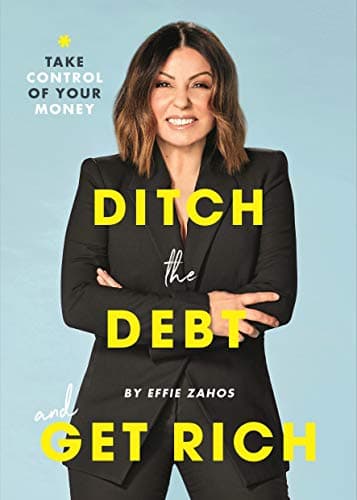
Ditch the Debt and Get Rich
One of Australia's most trusted money journalists shows you how to crush debt and build real wealth without giving up your flat white. Clear, doable steps you can start this week.
The Barefoot Investor
Scott Pape

The Barefoot Investor
Australia's best-selling money book ever. A simple system for accounts, budgeting, debt and a real emergency fund in one.
Sort Your Money Out and Get Invested
Glen James

Sort Your Money Out and Get Invested
From the host of the my millennial money podcast, a step-by-step Aussie plan to fix your spending, clear debt and actually start investing. Practical and refreshingly free of finance-bro nonsense.
Some links above are affiliate links. If you buy through them, Snowball Invest may earn a small commission at no extra cost to you. We only recommend books we'd suggest anyway.
Sources
- 1. Buy now pay later services, Moneysmart, Australian Securities and Investments Commission
- 2. Report 672, Buy now pay later: an industry update, ASIC (November 2020)
- 3. Buy now pay later credit contracts and credit licensing, ASIC (INFO 285)
- 4. Regulatory Guide 281, Low cost credit contracts, ASIC
- 5. Treasury Laws Amendment (Responsible Buy Now Pay Later and Other Measures) Act 2024
- 6. National Debt Helpline
Was this article useful?
Put it to your own numbers
Every calculator runs entirely in your browser, with nothing stored. See what these numbers look like for your own situation.
Try the Budget Planner calculator →General information only. This article is educational and does not constitute personal financial advice. It does not account for your circumstances. Consider your own situation and seek advice from a licensed adviser before acting. Read our full disclaimer.

Timothy Hirou Gaschereau
Founder of Snowball Invest, not a financial adviser.
I write about what I'm learning myself, because nobody ever taught us how to take control of our own money. It's a skill, not a mystery, and it's never too late to learn it. The best day to start was yesterday, the second best is today.
LinkedIn →Related articles

Present Bias: Why Future You Keeps Getting Stitched Up
Present bias makes $50 today beat $100 next year. How it drains your super, powers buy now pay later, and why automation beats willpower every time.
Retail Therapy: Does It Actually Work?
Does retail therapy work? The research says yes, briefly, and not for the reason you think. What it really does, and how long the lift lasts.

How Much Should You Spend on an Engagement Ring?
Forget the two months salary myth. A practical, savings-based framework for setting your engagement ring budget in Australia, with worked examples.