
How Much Should You Spend on an Engagement Ring?
Forget the two months salary myth. A practical, savings-based framework for setting your engagement ring budget in Australia, with worked examples.
 By Timothy Hirou GaschereauPublished
 8 min read
Everyone Googles this question. Almost nobody talks about it openly. You are sitting there wondering whether you are about to be wildly irresponsible or embarrassingly cheap, and the internet keeps throwing around salary percentages like they are gospel. So let us actually answer it, as part of our wider guide to money and relationships on Snowball Invest. General information only, not personal financial advice. For context on what Australians actually spend, see our average cost of an engagement ring guide.
Quick answer
There is no universal rule. The two months salary guideline was invented by De Beers in the 1980s to sell more diamonds. A smarter starting point is 10 to 20% of your liquid savings, not a percentage of your gross salary. Going into debt for a ring is generally a bad idea, since financial stress is not a great way to start an engagement. The right number is the one that feels comfortable after you account for the wedding, a house deposit, and everything else coming up.
In this guide
- →Why the two months salary rule is a marketing myth
- →A savings-based way to set your budget instead of a salary-based one
- →The real cost of financing a ring
- →A simple three-step framework with worked examples
- →How to have the conversation with your partner first
🎯 The two months salary myth
Let us kill this one quickly, because it deserves to die.
The idea that you should spend two months salary on an engagement ring was not handed down through generations of romantic tradition. It was invented by a diamond company to sell more diamonds. In the 1930s, De Beers hired the US advertising agency N.W. Ayer and Son to make diamond engagement rings feel essential. Before that campaign, only about 10% of engagement rings contained a diamond. By the end of the 20th century, 80% did.
The original suggested spend was one month's salary. Then, in the 1980s, De Beers quietly bumped it to two months. The number was not based on any financial logic. It was chosen to maximise how much people would spend. The BBC documented this history in detail. The two months salary rule is not a tradition. It is a sales target dressed up as etiquette.
💡 A better way to set your budget
Salary-based rules are dangerous for one simple reason: your salary tells you almost nothing about your financial health. Two people can earn the same income and have completely different financial pictures. One has $40,000 saved and no debt. The other has $3,000 saved, a HECS debt, a car loan, and rent eating 40% of their take-home pay.
A much more honest approach starts with your liquid savings: money you can actually access without selling assets. It does not include your super, your car, or the equity in a property. A sensible starting point is 10 to 20% of your liquid savings. Spending 10% of $30,000 means putting in $3,000 and keeping $27,000. That is a ring that means something without hollowing out your safety net.
🎯 The essential: Your savings rate is a far better indicator of your financial capacity than your gross income. Someone earning $70,000 and saving $1,500 a month is in a stronger position than someone earning $100,000 and saving nothing.
💳 Should you go into debt?
Generally, no. And we say that kindly, not judgementally.
If you finance a $5,000 ring on a personal loan at 12% interest over two years, you will pay roughly $600 to $700 in interest on top of the ring price. That is money that buys nothing. It does not make the ring bigger, shinier, or more meaningful. Beyond the interest, there is the opportunity cost: that same $5,000 invested for 10 years grows to around $13,000 at a 10% average annual return.
There is also the relationship dimension. The period right after a proposal tends to involve a lot of spending: the wedding, the honeymoon, potentially a house deposit. Carrying a ring debt into all of that adds pressure to an already expensive season of life. The exception is a very short-term plan to pay it off within two to three months from savings you are expecting, at genuinely low interest.
🧮 A simple framework with examples
Here is a three-step process for arriving at a number you can feel good about.
- Step 1: Check your liquid savings. What do you have in accessible cash right now? Not your super, not your car. Just money in the bank.
- Step 2: Set a ceiling. Take 10 to 20% of that figure as your maximum. The ceiling is a guardrail, not a target.
- Step 3: Reality-check against upcoming expenses. A wedding, a house deposit, a honeymoon. Run the numbers on how to save for a wedding and make sure your ring budget does not eat into those goals.
| Person | Liquid savings | 10 to 20% range | Comfortable ring |
|---|---|---|---|
| Alex | $8,000 | $800 to $1,600 | $1,000 to $1,500 |
| Jordan | $25,000 | $2,500 to $5,000 | $3,000 to $4,000 |
| Sam | $60,000 | $6,000 to $12,000 | $7,000 to $10,000 |
Alex, saving for a wedding in 18 months, sensibly lands at $1,000 to $1,500, where lab-grown diamonds and alternative stones look stunning. Jordan, with no consumer debt, sits comfortably at $3,000 to $4,000, close to the national average without stretching. Sam, planning a property purchase in two years, can comfortably manage $7,000 to $10,000 but should check it does not delay the deposit. The point is not the numbers themselves, it is the process: savings first, ceiling second, reality-check third.
🧮 Budget Planner
Get a clear picture of where you actually stand, including savings and upcoming costs, before you set a ring ceiling.
💬 Talk to your partner first
This is the part nobody talks about, and it is probably the most important section. Buying a ring in secret is romantic in theory. But going into significant debt, or spending a wildly different amount than your partner expects, can create tension right at the start of your engagement.
More Australian couples shop for rings together now, and there is nothing unromantic about it. If you want to keep some surprise, you can have a general money conversation without revealing the timing: something like, "If we were to get engaged, what kind of ring would you actually want?" A few practical tips: talk about expectations early, be honest about your budget range, consider shopping together, and remember that rings can be upgraded later on a milestone anniversary when finances allow.
The right amount is the one that fits your financial situation without causing stress. A ring bought with love and financial care beats a bigger ring bought with months of debt stress attached, every time.
SnowLetter
Australia's money news and our best reads, once a week.
❓ Frequently asked questions
Is the two months salary rule real?
+
No. It was created by De Beers and their advertising agency N.W. Ayer and Son, starting in the 1930s with a one-month suggestion and escalating to two months in 1980s US advertising. It was designed to increase diamond sales, not to reflect any genuine financial wisdom. The BBC has documented this history in detail. You can safely ignore it.
How much do Australians actually spend on engagement rings?
+
According to the 2025 Easy Weddings Australian Wedding Industry Report and data from Jewellery World, the national average is $5,854, with most couples spending somewhere between $5,000 and $15,000. For a full breakdown by state, stone type and style, see our average cost of an engagement ring guide.
Is it okay to buy a cheaper ring and upgrade later?
+
Absolutely. Plenty of couples do exactly this. A $1,500 ring bought with love and financial care means more than a $6,000 ring bought on a credit card with six months of stress attached. Upgrading on your fifth or tenth anniversary, when you are in a stronger financial position, is a perfectly sensible plan.
Should I finance an engagement ring?
+
Generally, no. The interest cost adds real money to the price without adding any value to the ring. If you need to finance it, it is usually a sign the ring is outside your current budget. Consider saving for a few more months, choosing a different stone (lab-grown diamonds are 70 to 90% cheaper than natural equivalents), or adjusting your expectations. Short-term, low-interest financing is a lesser evil than high-interest credit card debt, but neither is ideal.
What if my partner expects an expensive ring?
+
Have the conversation. Expectations that are not discussed become resentments. If your partner genuinely expects a ring that is beyond your means, that is a bigger conversation about financial values, and it is better to have it before the proposal than after. Most people, when they understand the full financial picture, would rather have a partner who is honest and financially responsible than a ring that causes years of debt stress.
📚 Recommended reading
The Barefoot Investor
Scott Pape

The Barefoot Investor
Australia's best-selling money book ever. A simple system for accounts, budgeting, debt and a real emergency fund in one.
She's on the Money
Victoria Devine
She's on the Money
Written for millennials, walks through budgeting, clearing debt, saving, investing and buying property with real stories.
Sort Your Money Out and Get Invested
Glen James

Sort Your Money Out and Get Invested
From the host of the my millennial money podcast, a step-by-step Aussie plan to fix your spending, clear debt and actually start investing. Practical and refreshingly free of finance-bro nonsense.
Some links above are affiliate links. If you buy through them, Snowball Invest may earn a small commission at no extra cost to you. We only recommend books we'd suggest anyway.
Sources
Was this article useful?
Put it to your own numbers
Every calculator runs entirely in your browser, with nothing stored. See what these numbers look like for your own situation.
Explore the calculators →General information only. This article is educational and does not constitute personal financial advice. It does not account for your circumstances. Consider your own situation and seek advice from a licensed adviser before acting. Read our full disclaimer.

Timothy Hirou Gaschereau
Founder of Snowball Invest, not a financial adviser.
I write about what I'm learning myself, because nobody ever taught us how to take control of our own money. It's a skill, not a mystery, and it's never too late to learn it. The best day to start was yesterday, the second best is today.
LinkedIn →Related articles
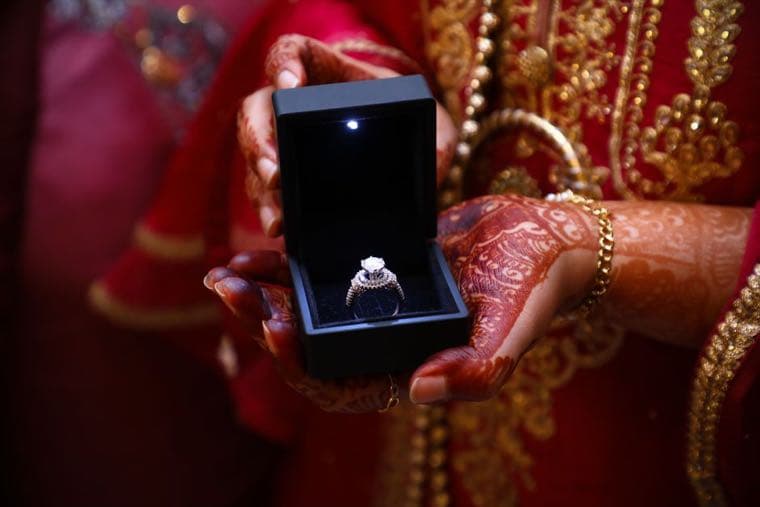
Average Cost of an Engagement Ring in Australia (2025 Price Guide)
The average engagement ring cost in Australia is $5,854. Real price tiers, natural vs lab-grown diamonds, and the moves that get you more ring for your money.
How Much to Give for a Wedding Gift in Australia
No fixed rule exists. Rough Australian cash gift ranges by relationship, plus tips for when money is tight. General info, not advice.

Moving In Together Finances Australia: The Complete Money Guide
Moving in together in Australia? How to split expenses, sign a lease safely, understand the de facto clock, and have the money conversation before you unpack.