
How to Save for a Wedding in Australia
The average Australian wedding costs $35,315. Here is how to set a realistic savings target, build a sinking fund, split it fairly, and avoid debt.
 By Timothy Hirou GaschereauPublished
 9 min read
A wedding is one of the biggest single expenses many couples ever plan for, and the number on the invoice has a habit of creeping up. Here is a calm, judgement-free way to work out what it costs, how much to put away each month, and how to get there without starting married life in the red. This is part of our wider saving and budgeting guide on Snowball Invest. General information only, not personal financial advice. Figures are sourced from industry reports and are subject to change.
Quick answer
The average Australian wedding cost $35,315 in 2025, but the range is enormous. Work out your monthly savings target with a simple formula: (total cost plus a 10% buffer, minus current savings) divided by months to the wedding. Keep the money in a high-interest savings account, not the share market, because the timeline is too short for investment risk. The guest list is your single biggest cost lever.
In this guide
- →What a wedding actually costs in Australia, line by line
- →How to set a realistic monthly savings target
- →Where to keep the money, and why a sinking fund works
- →How to split the saving fairly as a couple
- →Where the real savings are, and how to avoid debt
💍 What a wedding actually costs
The average Australian wedding cost $35,315 in 2025, according to the Easy Weddings 2025 Australian Wedding Industry Report, based on responses from more than 4,000 couples. That is up 4.5% from $33,810 in 2024. And the average couple ends up spending 28.6% over their original budget, so whatever number you set, build in a buffer.
That said, 64% of couples spend under $40,000 and 13% spend over $60,000. The range is huge, which is good news: you get to decide where you sit.
| Category | Low | Mid | High |
|---|---|---|---|
| Venue hire | $5,000 | $15,987 | $30,000+ |
| Catering and drinks (per head) | $80 | $130 | $200+ |
| Photography | $1,500 | $3,389 | $6,000+ |
| Videography | $1,200 | $2,977 | $5,500+ |
| Wedding dress | $800 | $2,502 | $6,000+ |
| Suit or tux | $400 | $2,169 | $5,000+ |
| Rings (engagement plus bands) | $2,000 | $7,500 | $15,000+ |
| Flowers and styling | $1,000 | $2,444 | $6,000+ |
| Celebrant | $500 | $924 | $1,800 |
| Entertainment (DJ or band) | $800 | $2,037 | $5,000+ |
| Invitations and stationery | $200 | $945 | $2,500 |
| Hair and makeup | $400 | $895 | $2,000+ |
| Cake | $300 | $650 | $1,500 |
| Honeymoon (optional) | $2,000 | $7,000 | $20,000+ |
Venue and catering together typically eat up around 45% of the total budget. That is the number to watch. Sydney and Melbourne weddings consistently run $5,000 to $10,000 more than the national average, so if you are flexible on location, a regional venue can shave a real chunk off the total. The rings are the one line that usually gets spent before the saving even starts, so it helps to know the typical engagement ring cost in Australia going in.
🎯 Set your target and timeline
🎯 The essential: Once you know your rough budget, the maths is straightforward. Take your target, add 10% for surprise costs, subtract what you already have, then divide by the number of months you have.
Formula: (target cost plus 10% buffer, minus current savings) divided by months to the wedding = monthly savings required. A 10% buffer is not pessimistic, it is honest. Vendors quote one price and then the final invoice arrives with extras.
| Scenario | Total needed | Current savings | Months | Monthly saving |
|---|---|---|---|---|
| Modest wedding | $27,500 | $0 | 12 | $2,292 |
| Mid-range wedding | $38,500 | $5,000 | 18 | $1,861 |
| Bigger celebration | $55,000 | $10,000 | 24 | $1,875 |
Notice how similar the mid-range and bigger celebration monthly targets are. That shows how much a longer timeline helps. If the monthly figure looks scary, that is useful information: it means the timeline needs to stretch, the budget needs to shrink, or both. Better to know now than six months before the wedding.
🧮 Budget Calculator
Map your income against your spending, find the gap, and see exactly how much you can redirect to the wedding fund each month.
🏦 Build a wedding sinking fund
A sinking fund is a pot of money you set aside for a known future expense. You know the wedding is coming and you know roughly what it costs, so you save for it deliberately, in a separate account, rather than hoping the money appears.
Use a high-interest savings account (HISA), not a brokerage account or ETF. On a 12 to 24 month horizon you cannot afford your savings dropping 20% in a market correction right before you pay deposits. Capital preservation matters here. Growth is secondary. If you have not sorted your account yet, our guide to the best high-interest savings accounts walks through what to look for.
- Automate the transfer on payday. Move the money before you can spend it. Set up a recurring transfer to land the same day your salary hits.
- Name the account "Wedding Fund". Naming a savings account after its purpose creates a psychological barrier to raiding it for other things.
- Keep it completely separate from your everyday account. Out of sight, out of mind.
- Read the fine print on bonus interest. Many banks pay a higher bonus rate only if you meet conditions like a minimum monthly deposit and no withdrawals. A missed condition can cost you a month of bonus interest.
It is the same discipline that builds an emergency fund, just pointed at a happier goal.
💑 Saving as a couple
Money conversations are awkward. Wedding money conversations are somehow more awkward. But sorting this early saves a lot of stress later. There are three common approaches.
Fully pooled: everything goes into one joint savings account. Simple and transparent, and it works well when incomes are similar. Fully separate: each partner saves their share in their own account and transfers to a shared pot on a schedule. Hybrid (proportional contribution): each partner contributes a share of the target that matches their share of the combined income. This is the fairest approach when incomes differ significantly.
If Partner A earns $80,000 and Partner B earns $40,000, the combined income is $120,000. Partner A earns 67% of that, Partner B earns 33%. On a $2,000 monthly target, Partner A puts in $1,340 and Partner B puts in $660. Neither partner is stretched beyond their means, and neither is coasting.
Set a recurring calendar event once a month to review progress together. Check the balance, review upcoming deposits, and flag any budget changes. Call it a "wedding budget date" and make it a thing. Couples who track together tend to stay on track. If you want a template to build from, our guide on how to budget for a wedding takes it further.
✂️ Cut the cost without it feeling cheap
There is a difference between a cheap wedding and a smart one. Here is where the real savings are.
Guest list: your biggest lever. Catering is typically the largest per-head cost, often $100 to $200 per person. Cut 20 guests and you save $2,000 to $4,000 in catering alone, before you factor in venue capacity, seating and stationery. Cutting 30 guests can save $3,000 to $6,000 or more. Be honest about who you genuinely want there versus who you feel obligated to invite.
Off-peak timing: 20% to 30% savings. Friday and Sunday weddings are usually cheaper than Saturdays. Winter months attract lower venue and catering rates. Regional venues cost less than city ones. Combine all three and you can save 20% to 30% on the two biggest line items without compromising on quality.
DIY: be honest about the trade-off. DIY flowers, invitations and decorations can save real money, but they cost time, and time has a value. Invitations are a good DIY candidate: templates, a home printer and nice paper stock can produce beautiful results for under $100. Flowers are harder, because they need skill, timing and market access.
Spend on what matters, cut everything else. Decide the two or three things that matter most to you as a couple and spend properly on those. Cut everything else without guilt. If the photographer matters most, book a great one and skip the videographer. Nobody remembers the centrepieces. And cap the alcohol: a drinks package with set hours, or beer, wine and one signature cocktail, keeps guests happy and avoids a horror bar tab.
⚠️ Avoid starting married life in debt
Let us be direct. Wedding debt is real, common, and worth taking seriously. According to a survey cited by Moneysmart, 60% of Australian couples took out a loan to help pay for their wedding, and 18% used a credit card.
Say you borrow $15,000 on an unsecured personal loan at 12% p.a. over 3 years. The monthly repayment is around $498, the total repaid over 3 years is around $17,932, and the total interest is around $2,932. That is nearly $3,000 you are paying for the privilege of having the wedding sooner. And that is at 12%. Some unsecured rates sit closer to 14% or higher, which pushes the interest above $3,500 on the same loan.
| Amount | |
|---|---|
| Monthly repayment | $498 |
| Total repaid | $17,932 |
| Total interest | $2,932 |
There are better options than borrowing. Extend the timeline, because an extra six months of saving can remove the need to borrow entirely. Scale down the guest list, because cutting 30 guests often saves more than a personal loan costs in interest. Or have a small legal ceremony now and celebrate later: a registry ceremony costs as little as $400 to $600 depending on the state.
If you are already carrying debt or feeling overwhelmed, speaking to a licensed financial counsellor is a smart move. The National Debt Helpline (1800 007 007) offers free, confidential advice, and if existing repayments are the real pinch, debt consolidation is worth understanding first. For personalised financial planning, speak to a licensed financial adviser.
SnowLetter
Australia's money news and our best reads, once a week.
❓ Frequently asked questions
How much should I save per month for a wedding?
+
It depends on your total budget and timeline. Use the formula: (total budget plus a 10% buffer, minus current savings) divided by months to the wedding. For a $35,000 wedding in 18 months starting from $5,000, that is roughly $1,861 a month. For a $25,000 wedding in 12 months from scratch, it is about $2,292 a month. If those numbers feel out of reach, the answer is either a longer timeline, a smaller budget, or both.
Is 12 months enough time to save for a wedding in Australia?
+
It can be, but it takes discipline and a realistic budget. Saving $25,000 to $30,000 in 12 months means putting away $2,000 to $2,500 a month as a couple. That is achievable on two decent incomes if you both commit and automate the savings from day one. If the budget is higher, 18 to 24 months is a more comfortable runway.
Should I use a personal loan to pay for my wedding?
+
Exhaust every other option first. A $15,000 personal loan at 12% p.a. over 3 years costs around $2,932 in interest. That money could go toward a house deposit, an emergency fund, or your honeymoon. If a loan is genuinely unavoidable, keep it as small as possible and have a clear repayment plan before you sign anything. For personalised advice, speak to a licensed financial adviser.
What is the cheapest way to get married in Australia?
+
A weekday registry office ceremony. Depending on the state, a basic legal ceremony at a government registry costs roughly $400 to $600. You need a celebrant or the registry's own officiant, two witnesses, and the required paperwork. Many couples do a small legal ceremony first and hold a bigger celebration later once they have saved for it.
How do I save for a wedding when I am renting?
+
Renting makes saving harder because rent is usually the biggest household expense. The approach is the same as for any goal: automate transfers on payday, treat the wedding savings as a non-negotiable expense like rent itself, and look hard at discretionary spending. Subscriptions, takeaway, and impulse buys are the first things to audit. A proportional contribution model also helps when one partner earns more.
Should I invest my wedding savings?
+
Not if the wedding is within two years. The share market can drop 20% to 30% in a correction, and you cannot afford your venue deposit disappearing in a bad quarter. Keep wedding savings in a high-interest savings account where the capital is protected. Once the wedding is paid for and you are saving for longer-term goals, investing makes sense, but a 12 to 24 month horizon is too short for share market risk.
📚 Recommended reading
The Barefoot Investor
Scott Pape

The Barefoot Investor
Australia's best-selling money book ever. A simple system for accounts, budgeting, debt and a real emergency fund in one.
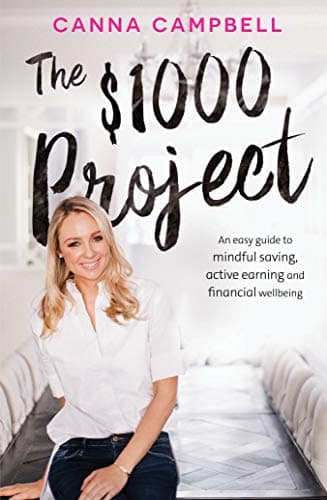
The $1000 Project
Canna Campbell
The $1000 Project
Canna Campbell's cult-favourite challenge shows how saving and investing in $1000 chunks can quietly transform your finances. Motivating, doable, and built for real Aussie budgets.
The Psychology of Money
Morgan Housel
The Psychology of Money
19 short stories on how people actually think and feel about money, not just the maths of it.
Some links above are affiliate links. If you buy through them, Snowball Invest may earn a small commission at no extra cost to you. We only recommend books we'd suggest anyway.
Sources
Was this article useful?
Put it to your own numbers
Every calculator runs entirely in your browser, with nothing stored. See what these numbers look like for your own situation.
Explore the calculators →General information only. This article is educational and does not constitute personal financial advice. It does not account for your circumstances. Consider your own situation and seek advice from a licensed adviser before acting. Read our full disclaimer.

Timothy Hirou Gaschereau
Founder of Snowball Invest, not a financial adviser.
I write about what I'm learning myself, because nobody ever taught us how to take control of our own money. It's a skill, not a mystery, and it's never too late to learn it. The best day to start was yesterday, the second best is today.
LinkedIn →Related articles
How to Save for a Holiday in Australia
Want a holiday but not sure how to save for it? A practical guide to budgeting the trip, saving faster, and spending smarter. Not financial advice.

What Is a Cash Budget?
A cash budget is a simple plan for your money in and out. How to build one, an example, and how to actually stick to it. Not financial advice.

Mental Accounting: Why You Treat a Tax Refund Differently to Your Salary
A refund dollar buys the same groceries as a salary dollar, but your brain disagrees. How mental accounting costs Australians money, and how to flip it.